• KZT/USD = 0.00210
  • TJS/USD = 0.10810
  • UZS/USD = 0.00008
  • TMT/USD = 0.29850
  • KZT/USD = 0.00210
  • TJS/USD = 0.10810
  • UZS/USD = 0.00008
  • TMT/USD = 0.29850
  • KZT/USD = 0.00210
  • TJS/USD = 0.10810
  • UZS/USD = 0.00008
  • TMT/USD = 0.29850
  • KZT/USD = 0.00210
  • TJS/USD = 0.10810
  • UZS/USD = 0.00008
  • TMT/USD = 0.29850
  • KZT/USD = 0.00210
  • TJS/USD = 0.10810
  • UZS/USD = 0.00008
  • TMT/USD = 0.29850
  • KZT/USD = 0.00210
  • TJS/USD = 0.10810
  • UZS/USD = 0.00008
  • TMT/USD = 0.29850
  • KZT/USD = 0.00210
  • TJS/USD = 0.10810
  • UZS/USD = 0.00008
  • TMT/USD = 0.29850
  • KZT/USD = 0.00210
  • TJS/USD = 0.10810
  • UZS/USD = 0.00008
  • TMT/USD = 0.29850

Viewing results 1 - 6 of 84

ADB to Help Kazakhstan Move Away from Coal Power Generation

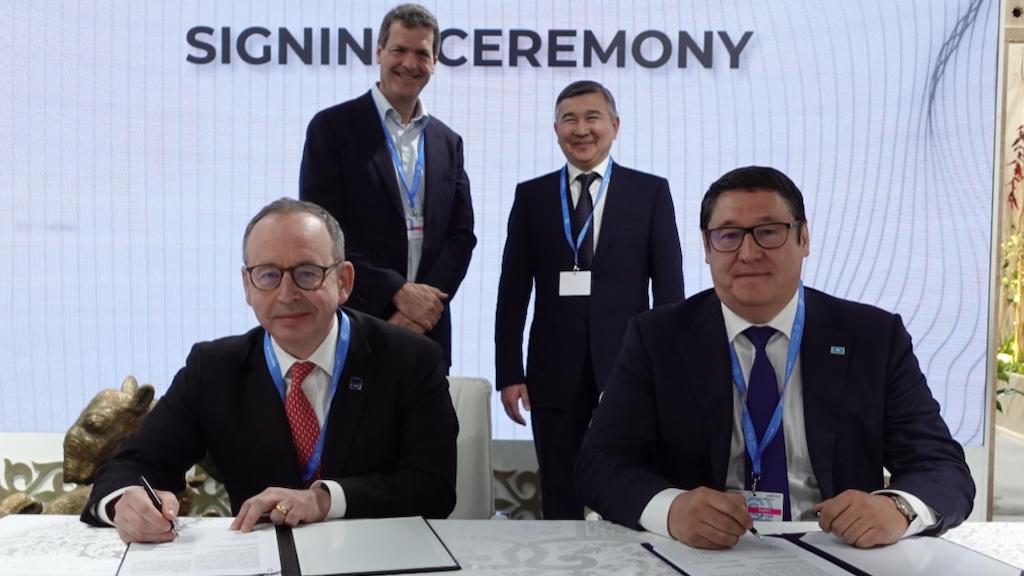
Kazakhstan’s Ministry of Energy and the Asian Development Bank (ADB) have signed a memorandum of understanding, moving closer to the possible early retirement of a coal plant in Kazakhstan under the bank’s Energy Transition Mechanism (ETM) program. Under the memorandum, the ministry and ADB will work toward a pilot transaction that will demonstrate a pathway to significantly reduce Kazakhstan’s greenhouse gas emissions by decommissioning pilot coal plants for renewables or other low-c or repurposing carbon energy technologies. A feasibility study will determine which of the country’s coal-fired power generation, combined heat and power plants and heat-only boilers could be the most viable for early retirement. ADB and Kazakhstan have also agreed to analyze the potential impact of early decommissioning or repurposing of a plant on the country’s power and heat supply, develop the country’s renewable energy generation capacity, and promote regional energy trade. ADB Director General for Central and West Asia Yevgeniy Zhukov commented: “Keeping 1.5 degrees alive means moving away from fossil fuels and toward clean energy as quickly as possible—and ADB’s ETM program aims to do that in a way that considers each country’s energy and socioeconomic development needs. As Asia and the Pacific’s climate bank, we are committed to helping Kazakhstan inclusively decarbonize its economy, and we aim to demonstrate how the clean energy transition can be accelerated in Central Asia.” Minister of Energy of Kazakhstan Almassadam Satkaliyev added, “Kazakhstan will need to develop a new approach in the power, heating, and water sectors as a single technological system, and we rely on ADB’s support and experience. I hope this program will demonstrate new systems' technological shift and reliability through ETM, which can then be replicated in other plants and regions.” Kazakhstan is a major consumer of coal, with 25 billion tons of coal reserves estimated to be the eighth largest worldwide. About 70% of the country’s electricity is produced from coal, while energy-related activity, including heat and electricity production, accounts for more than 80% of the country’s total greenhouse gas emissions. Kazakhstan’s long-term strategy for achieving carbon neutrality by 2060 involves reducing its use of fossil fuels and increasing its renewable power generation capacity.

CAREC Ministers Approve Climate Action Plan and Launch Regional Climate Fund

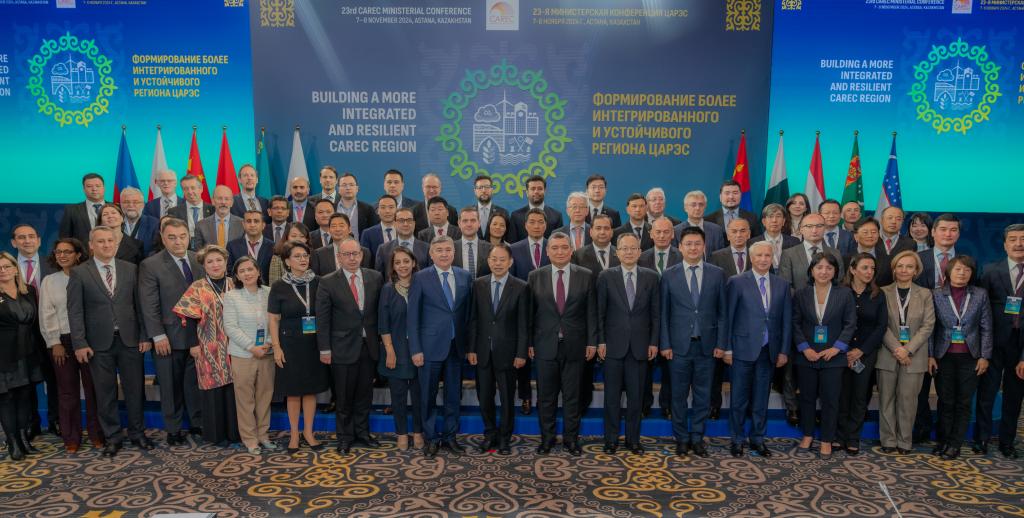
At the 23rd CAREC Ministerial Conference held in Astana on November 8, member countries of the Central Asia Regional Economic Cooperation (CAREC) Program—Afghanistan, Azerbaijan, China, Georgia, Kazakhstan, Kyrgyzstan, Mongolia, Pakistan, Tajikistan, Turkmenistan, and Uzbekistan—endorsed a new Climate Change Action Plan (CCAP) and launched the CAREC Climate and Sustainability Project Preparatory Fund (CSPPF). These initiatives aim to strengthen regional collaboration on climate resilience, low-carbon growth, and sustainable development. The CAREC Program is a partnership of 11 countries and development partners that promotes sustainable development through regional cooperation, with the Asian Development Bank (ADB) hosting the CAREC Secretariat. In his address at the conference, ADB President Masatsugu Asakawa stated, “The approval of the CAREC Climate Change Action Plan and the establishment of the Climate and Sustainability Project Preparatory Fund are significant milestones in our collective efforts to address climate change. By working together, we can build resilient infrastructure, develop early warning systems, and create a greener future powered by renewable energy.” The CCAP, covering the period from 2025 to 2027, prioritizes initiatives aligned with the CAREC Climate Change Vision and focuses on four main areas to address climate challenges in the region. It aims to enhance climate risk preparedness, strengthen the water-energy-food nexus, promote low-carbon growth by reducing emissions and expanding renewable energy, and create a CAREC climate platform. The CSPPF will support CAREC countries in developing viable regional climate projects that align with their commitments under the Paris Agreement. On November 8, ADB signed fund contribution agreements with China’s Ministry of Finance and South Korea’s Ministry of Economy and Finance, generating an initial $5 million in funding for the CSPPF. Speaking at the Ministerial Conference, Kazakhstan’s Prime Minister Olzhas Bektenov highlighted the CAREC Program’s significance for Central Asia, noting that over the past 20 years, it has mobilized about $51 billion for the region, with more than $9 billion invested in Kazakhstan. During his visit to Kazakhstan, ADB’s Asakawa met with President Kassym-Jomart Tokayev to discuss ongoing cooperation and future initiatives. From 1994 to 2024, ADB financed projects in Kazakhstan valued at approximately $7 billion. Notably, ADB participated in the construction of the Western Europe–Western China highway corridor and the reconstruction of the Aktobe–Kandyagash road.

ADB Issues First Bond Denominated in Kyrgyzstan’s Currency

The Asian Development Bank (ADB) has raised about $5 million from its first bond issued in Kyrgyzstan’s currency, the som. Arranged by Standard Chartered Bank and fully subscribed by Record Currency Management, the 3-year bond issue carries a 10.5% coupon and mitigates currency risk for an ADB project in Kyrgyzstan. The project supports micro and small enterprises (MSEs), with at least 40% of the loan channeled to women-led or owned MSEs. The project is delivered through the local Kompanion Bank, which has a strong presence in rural areas and experience supporting women entrepreneurs nationwide. ADB Assistant Treasurer Jonathan Grosvenor commented: “ADB’s maiden Kyrgyz Som bond further expands our local currency footprint and builds on our efforts to deliver foreign exchange risk mitigation solutions in all of ADB’s developing member countries.” Since Kyrgyzstan joined the ADB in 1994, the bank has committed $2.6 billion in public sector loans, grants, and technical assistance to the country.

New Guzor to Beinau Highway Brings Uzbekistan Closer to Europe

Uzbekistan has completed a new 240-kilometer section of the A380 highway connecting the cities of Guzor, Bukhara, Nukus, and Beineu, passing through the Kungirot district of Karakalpakstan. The road, built with a cement-concrete coating, is a strategic road connecting Uzbekistan with Europe. The Asian Development Bank allocated $274.9 million to the construction, while Uzbekistan contributed $108.5 million. Turkish and Azerbaijani companies managed the first 120 kilometers of the road, with Chinese companies managing the rest. The highway aims to boost the capacity and quality of international and national highways, cutting road maintenance costs by 2.5 times. This new road will reduce travel time by 2.2 times, double transit traffic, cut fatal accidents by half, and contribute to regional GDP growth. It will also reduce Uzbekistan's international transport distance to 1,000 kilometers, lowering shipping costs by 25%. New trade and service centers are planned alongside the highway, initially creating 2,000 jobs and an additional 5,000 expected. This development is projected to boost Karakalpakstan’s annual transit and service revenue by $200 million and exports by at least $300 million.

Tajikistan and ADB Sign Grant for Green Corridor Initiative

On November 1, Tajikistan's Ministry of Finance signed a grant agreement worth $86.6 million with the Asian Development Bank (ADB) for a “Green Corridor Demonstration Project”. This project aims to reconstruct 49 kilometers of Tajikistan's Dangara-Gulistan highway, expand it to four lanes with a "Green Road" element, add 48.8 kilometers of bicycle lanes, and build two charging roads. The AIIB has approved a $75.5 million loan for Tajikistan to build a 920-meter bridge, connecting 350,000 people in the northeast to Dushanbe and regional towns and the border of Kyrgyzstan.

Report Addresses Air Pollution in Almaty

On October 30, the United Nations Development Programme (UNDP) in Kazakhstan, together with the Urban Center of Almaty Management University, presented the results of their joint efforts within the Green and Safe Streets Initiative, which aims to address air pollution in Kazakhstan’s largest city, Almaty. This initiative is part of the regional City Experiment Fund program funded by the Ministry of Finance of Slovakia. The Green and Safe Streets Initiative included three interrelated clusters of activities: a social impact campaign, tactical urban actions on Berezovsky, Turgut Ozal, and Kazybek bi streets in Almaty, and the installation of air pollution measuring devices, which resulted in the development of methodological recommendations. These actions helped identify further steps to address the complex challenge of improving air quality in Almaty. The actions and approaches implemented within the City Experiment Fund framework are expected to help reduce air pollution by increasing green spaces, introducing energy-efficient technologies in the housing sector, improving infrastructure for pedestrians and cyclists, and prioritizing public transport. According to IQAir, Almaty, along with the industrial city of Karaganda, has the highest level of air pollution in Kazakhstan and is among the 25 most polluted cities in the world. The primary sources of air pollution in Almaty are motor vehicles and private-sector and municipal heating that burns coal. During the winter, Almaty is covered by a deep smog that causes severe health problems and a high prevalence of respiratory diseases in the local population. According to an Asian Development Bank report, the decline in Almaty’s air quality is attributable to the city’s population growth, rapid urbanization, inefficient public transportation, and heavy reliance on coal for power generation and residential heating. The city’s valley setting exacerbates these factors, creating ideal conditions for solid temperature inversions during the late fall and winter that trap pollutants in the lower atmosphere. Additionally, the ADB report concludes that the city’s low wind speeds cause pollutants to accumulate and recirculate at the city's surface level.