Viewing results 1 - 6 of 84
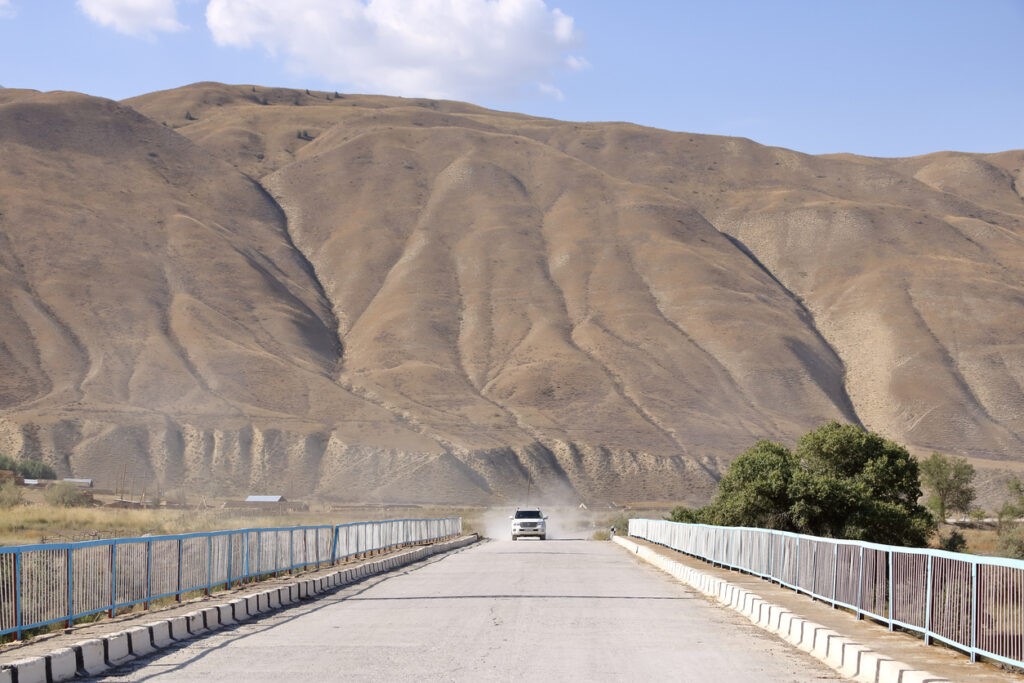
The Asian Development Bank (ADB) has approved a sovereign-guaranteed local currency loan of up to $291.49 million for KazAvtoZhol, the company overseeing the planning, construction, operation, and maintenance of Kazakhstan's national highways. This loan will support reconstructing a 208-kilometer road connecting Kyzylorda and Zhezkazgan in central Kazakhstan. The project will upgrade the existing two-lane highway to a higher-standard, climate-resilient two-lane road, providing all-weather access and reducing travel time from 4 to 2 hours. The reconstruction will also improve domestic and regional connectivity and road safety and promote national and international trade. ADB Director General for Central and West Asia Yevgeniy Zhukov commented: “By improving the Kyzylorda–Zhezkazgan corridor, we are addressing critical infrastructure constraints that hinder Kazakhstan’s economic growth and balanced regional economic development. The project road is also crucial for leveraging Kazakhstan’s geostrategic advantage and boosting regional and global integration.” Kazakhstan, the largest economy in Central Asia, is well-positioned to become a bridge between Asia and Europe. However, due to inefficiencies and high transport and logistics costs, the country needs help leveraging its strategic position. The country has also seen a high traffic fatality rate, with 12.2 deaths per 100,000 people in 2021. The ADB project incorporates rumble strips, safer pedestrian crossings, and interchanges to improve road safety. These measures are expected to significantly reduce accidents and enhance the overall safety of the road corridor.
The Asian Development Bank (ADB) has approved a $86.67 million grant to help Tajikistan expand its degraded two-lane 49-km Dangara–Guliston highway to four lanes. Commenting on the move, ADB Director General for Central and West Asia Yevgeniy Zhukov said: “ADB, in partnership with other organizations, promotes safe, accessible, and green transport infrastructure and services in our developing member countries. The Dangara–Guliston road, constructed in the 1930s and reconstructed in the 1970s, will become the first road in Tajikistan to incorporate climate adaptation and elements specific to women's needs." The project will fund two pilot charging stations and develop investment frameworks to catalyze private sector investment in Tajikistan's national charging infrastructure rollout. Safety is a high priority and to this end, the newly reconstructed road will include dedicated cycleways, wide sidewalks for people with children and disabilities, improved lighting and well-marked pedestrian crossings. Special toilets and changing facilities will be provided for mothers and babies, while public transport facilities will include preferential seating for people with disabilities. In addition to the above, the fund will incorporate training programs for women living in and around the project area to open and run small businesses, and award entrepreneurship grants to selected participants. The Tajikistan government has pledged $23 million towards the realization of the project whilst subject to its Board’s approval in early 2025, the European Bank for Reconstruction and Development (EBRD, will provide a $40 million co-financing loan. Tajikistan’s Ministry of Transport plans to complete the project in 2030.
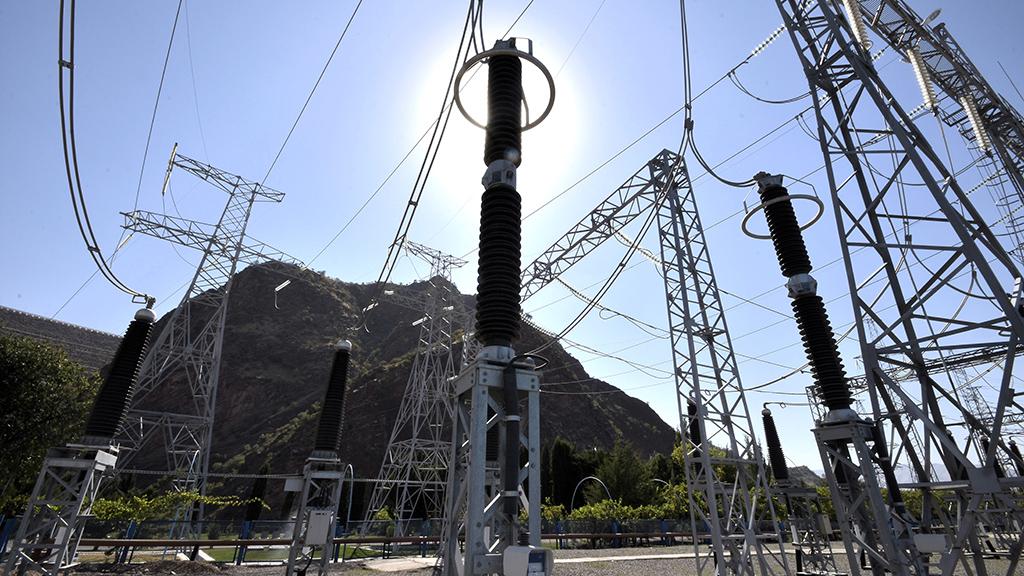
The Asian Development Bank (ADB) has approved a grant of $15 million for a project to reconnect Tajikistan’s power lines to the Central Asian unified electricity grid. The reconnection, it is reported, will be carried out through mutual relations with Uzbekistan. “Through the Central Asia Regional Economic Cooperation (CAREC) program, ADB actively promotes regional power trade among countries in Central Asia and beyond,” said ADB Director General for Central and West Asia Yevgeniy Zhukov. “Our support improves the sustainability of the regional power system and helps reduce greenhouse gas emissions in the region.” The additional funding will build a new 22-kilometer, 500-kilovolt power line in northern Tajikistan, connecting the Sughd substation to the New Syrdarya substation in Uzbekistan. This will increase the ability to send and receive electricity between Kazakhstan, Kyrgyzstan, Tajikistan, and Uzbekistan and improve the infrastructure to prevent blackouts. The project will also help ensure that Tajikistan’s energy system is ready to provide regulatory opportunities for the continued integration of renewable energy in the region. In the long term, it will become a key component of the electricity evacuation scheme for the Rogun hydropower plant in Tajikistan. Previously, ADB approved $17.5 million in grant assistance to improve women's agricultural skills and ensure food security in Tajikistan.
The Asian Development Bank (ADB) announced on September 19 that it had approved $109.5 million in financing to renovate the highway around Lake Issyk-Kul. The lake is one of the most popular tourist destinations in Kyrgyzstan, and a strategic location that connects to neighboring Central Asian countries. ADB’s Issyk-Kul Ring Road Improvement Project will construct 75.2 kilometers of the road traversing the Barskoon to Karakol section of the Issyk-Kul Ring Road, which connects the Central Asia Regional Economic Cooperation (CAREC) Corridor 1. The project will widen the two-lane roadway to four lanes to meet increasing traffic demand, while incorporating climate-adaptation measures into the road design and construction materials. Rest areas, bus stops, streetlights, and safer access for pedestrians will also be constructed. The ADB funding comprises an $87 million concessional loan and a $22.5 million grant from the Asian Development Fund. ADB Principal Transport Specialist Oyunchimeg Erdene commented: “The Barskoon–Karakol road section [on the southern shore of Lake Issyk-Kul] is the remaining portion of the Issyk-Kul Ring Road for improvement. Completing this will mean eliminating congestion and boosting tourism that will support the growth of businesses in the area.” Kyrgyzstan’s Deputy Minister of Transport, Beknazar Bazaraliev, earlier said that the rehabilitation of the Issyk-Kul Ring Road is to be completed in 2028. The rehabilitation of the 440 km long Issyk-Kul Ring Road was divided into several parts and is financed by the government and international financial organizations.
The Asian Development Bank (ADB) announced its new country partnership strategy for Turkmenistan on August 28. The strategy is designed to help the country develop a competitive, diversified, and knowledge-based economy driven by an innovative private sector. Under the new strategy, which spans from 2024 to 2028, the ADB’s assistance will focus on three strategic priorities: supporting the green transition to a sustainable and climate-resilient economy, promoting economic competitiveness through diversification with an emphasis on private sector and human capital development, and promoting structural reforms and institutional development. The ADB Director General for Central and West Asia, Yevgeniy Zhukov, commented: “ADB and Turkmenistan have a longstanding partnership, and the new strategy underscores our unwavering commitment to the country’s development. We will continue working closely with the government and Turkmenistan’s development partners to help the country realize its ambitious long-term development goals.” The ADB will support Turkmenistan’s green transformation with investments in energy efficiency, renewable energy, low-carbon pilot projects, and policy reforms. The bank will continue to help Turkmenistan develop long-term decarbonization plans and reduce methane emissions. The ADB will also support the development of sustainable and integrated transport networks focusing on railways along crucial trade corridors. Recognizing the critical role of the private sector in driving inclusive economic growth in Turkmenistan, the ADB will help build an export-oriented private sector and continue supporting domestic financial institutions, including improving access to capital for small and medium-sized enterprises targeting export markets. To support human capital development, the ADB will help reform the country’s healthcare sector to improve access, quality, and the range of services.
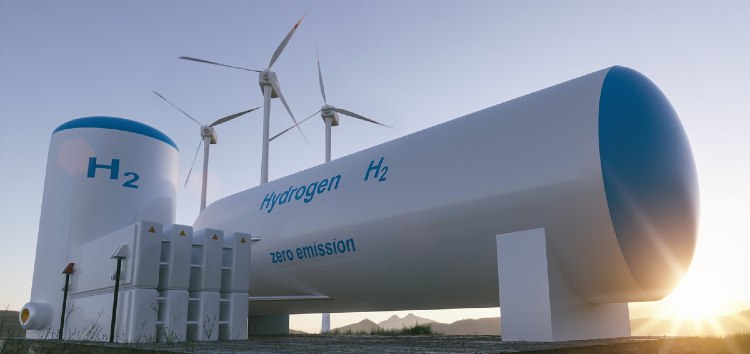
The European Bank for Reconstruction and Development (EBRD) will finance Central Asia's first renewable hydrogen production project in Uzbekistan. The project includes the installation of a 20 MW electrolyzer and constructing a new 52 MW wind farm. The EBRD is providing a $65 million (€58 million) financing package to ACWA Power UKS Green H2, which is developing, designing, constructing, and operating the facility. This company is jointly owned by ACWA Power and Uzkimyosanoat (UKS), a large state-owned chemical holding company. Financing includes a $55 million senior loan from the EBRD and $10 million in concessional financing from Canada through the High Impact Partnership on Climate Change Special Fund (HIPCA). The EBRD also plans to provide an equity bridge loan of up to $5.5 million (€4.9 million) and up to $5.5 million (€4.9 million) for the project. The project, supported by the Japan-EBRD Cooperation Fund, will help replace “grey” hydrogen, derived from natural gas and widely used in producing ammonia fertilizers in Uzbekistan, with renewable hydrogen. The latter is recognized as a critical alternative for decarbonizing the fertilizer sector. The facility is expected to make up to 3,000 tons of hydrogen annually, reducing annual CO2 emissions by 22,000 tons. The Bank also noted that Uzbekistan, the leading recipient of EBRD financing in Central Asia, has already received about €5 billion under 164 projects, most of which support private entrepreneurship. The Times of Central Asia has previously written that the Asian Development Bank (ADB) has announced the launch of a five-year partnership strategy with Uzbekistan from 2024 to 2028. The strategy will support Uzbekistan's reforms in promoting the country's transition to a green economy, supporting private sector development and competitiveness, and stimulating investment in economic capital.