• KGS/USD = 0.01144 0%
  • KZT/USD = 0.00212 0%
  • TJS/USD = 0.10778 -0.28%
  • UZS/USD = 0.00008 0%
  • TMT/USD = 0.28490 0%
  • KGS/USD = 0.01144 0%
  • KZT/USD = 0.00212 0%
  • TJS/USD = 0.10778 -0.28%
  • UZS/USD = 0.00008 0%
  • TMT/USD = 0.28490 0%
  • KGS/USD = 0.01144 0%
  • KZT/USD = 0.00212 0%
  • TJS/USD = 0.10778 -0.28%
  • UZS/USD = 0.00008 0%
  • TMT/USD = 0.28490 0%
  • KGS/USD = 0.01144 0%
  • KZT/USD = 0.00212 0%
  • TJS/USD = 0.10778 -0.28%
  • UZS/USD = 0.00008 0%
  • TMT/USD = 0.28490 0%
  • KGS/USD = 0.01144 0%
  • KZT/USD = 0.00212 0%
  • TJS/USD = 0.10778 -0.28%
  • UZS/USD = 0.00008 0%
  • TMT/USD = 0.28490 0%
  • KGS/USD = 0.01144 0%
  • KZT/USD = 0.00212 0%
  • TJS/USD = 0.10778 -0.28%
  • UZS/USD = 0.00008 0%
  • TMT/USD = 0.28490 0%
  • KGS/USD = 0.01144 0%
  • KZT/USD = 0.00212 0%
  • TJS/USD = 0.10778 -0.28%
  • UZS/USD = 0.00008 0%
  • TMT/USD = 0.28490 0%
  • KGS/USD = 0.01144 0%
  • KZT/USD = 0.00212 0%
  • TJS/USD = 0.10778 -0.28%
  • UZS/USD = 0.00008 0%
  • TMT/USD = 0.28490 0%

Viewing results 1 - 6 of 4

Kyrgyzstan Moves Taxi Licensing Online

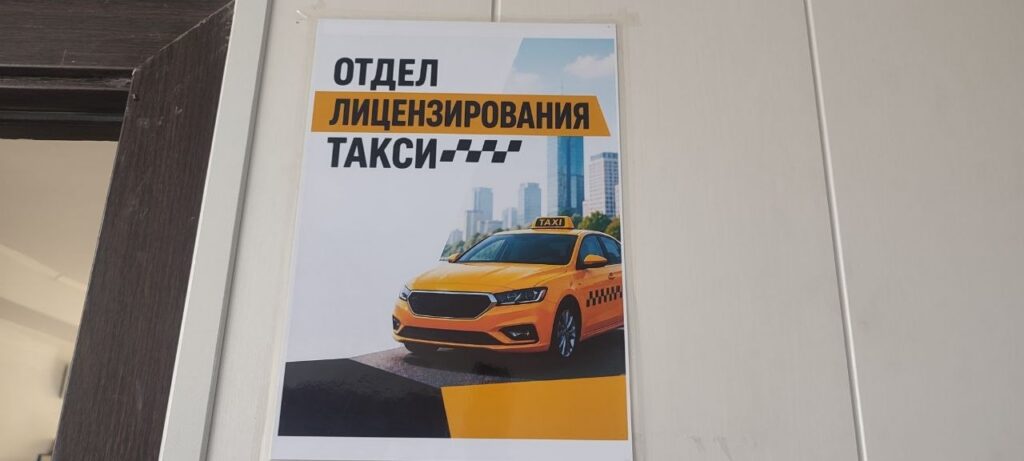
Private taxi drivers in Kyrgyzstan can now apply for operating licenses online. The new system removes the need to visit the Main Directorate for Road Traffic Safety (GUOBDD) to submit paperwork and applications in person. Drivers can apply through mobile apps, although long queues for taxi licenses have yet to ease. According to Chairman of the Cabinet of Ministers Adylbek Kasymaliev, the government introduced the digital system to create more transparent and convenient conditions for taxi and minibus drivers. Kasymaliev said the reform frees drivers from paper bureaucracy and simplifies the licensing process. “We have created the most convenient and transparent digital conditions. Now the task is to explain the process to every driver, including mandatory medical and technical inspections. At the same time, transport operators must clearly understand that starting from July 1 this year, taxi drivers working without proper licenses will face strict liability under the law,” he said. The licensing change follows recent moves to tighten passenger transport regulations in Kyrgyzstan. GUOBDD told The Times of Central Asia that around 300 people applied online on the first day of the new system, including 120 in Bishkek. According to Nurdin Sambaev, head of the department for transport activity licensing and technical supervision at GUOBDD, drivers need to register in the app and complete identity verification before applying. “Once the driver enters their taxpayer identification number, the system automatically requests all necessary documents from other state agencies. This includes criminal record certificates, vehicle registration documents, and other paperwork required for licensing,” Sambaev said. Some steps still require a physical visit. Drivers must appear at the department for vehicle inspections. They must also undergo a medical examination to obtain the Form 083 certificate of professional fitness. The results of these checks will be uploaded directly into the government’s Tunduk app, where the license itself will also be displayed. The simplified process has not yet won over all drivers. According to offline licensing officers, queues have remained long since authorities announced that fines would be imposed on drivers without licenses from July 1. Taxi drivers interviewed by The Times of Central Asia said submitting documents in person still feels more reliable and familiar. Many also noted that other drivers can help explain the paperwork if questions arise. Some said they had not yet figured out how to use the app, while others said their online applications had failed, forcing them to return to the traditional method. GUOBDD staff welcomed the change, saying the digital format will reduce paperwork and simplify the processing of applications.

Bishkek Launches Second Phase of Waste-to-Energy Plant

Bishkek has begun construction of the second phase of its waste-to-energy plant, a project city officials say will significantly expand waste processing capacity and add to the Kyrgyz capital’s energy supply. The groundbreaking ceremony took place on June 11. The facility, located at Bishkek’s main sanitary landfill, is the first waste-to-energy plant in Central Asia. Its first phase was officially inaugurated in December 2025 and was designed to process 1,000 tons of municipal solid waste per day. The plant was built by China’s Hunan Junxin Environmental Protection Co., Ltd., which invested $95 million in the project. The second phase will include a second production unit with capacity of up to 2,000 tons of waste per day and a 60-megawatt power generation complex. According to Bishkek’s city administration, once the second phase is completed, the facility will generate around 307 million kilowatt-hours of electricity annually, enough to supply roughly 100,000 homes. Officials say the project uses modern thermal waste processing technologies and a multi-stage emissions treatment system that complies with international environmental standards. The expansion is expected to improve waste management in Bishkek, reduce pressure on the city’s overburdened landfill, and improve environmental conditions in the capital. Construction of the second phase is expected to take three years. Once fully completed, the plant will be able to process up to 3,000 tons of municipal solid waste per day and generate up to 90 megawatts of electricity. The launch ceremony was attended by Kyrgyz Prime Minister Adylbek Kasymaliev, Bishkek Mayor Aibek Junushaliev, and Chinese Ambassador to Kyrgyzstan Liu Jiangping. Kasymaliev described the project as strategically important for Bishkek’s environmental future. “The start of the second phase continues a large-scale initiative aimed at radically improving the environmental situation in Bishkek and creating a green, clean and modern metropolis,” he said. Kasymaliev said the project would help solve Bishkek’s waste disposal problem while adding a source of green energy and improving air quality and public health. He also said the second phase is expected to reduce annual carbon dioxide emissions by approximately 312,000 tons. The project forms part of Kyrgyzstan’s efforts to modernize urban infrastructure and address environmental challenges as Bishkek’s population and waste volumes continue to rise.

Kyrgyzstan Signs Deal to Acquire Two Airbus A321 Aircraft

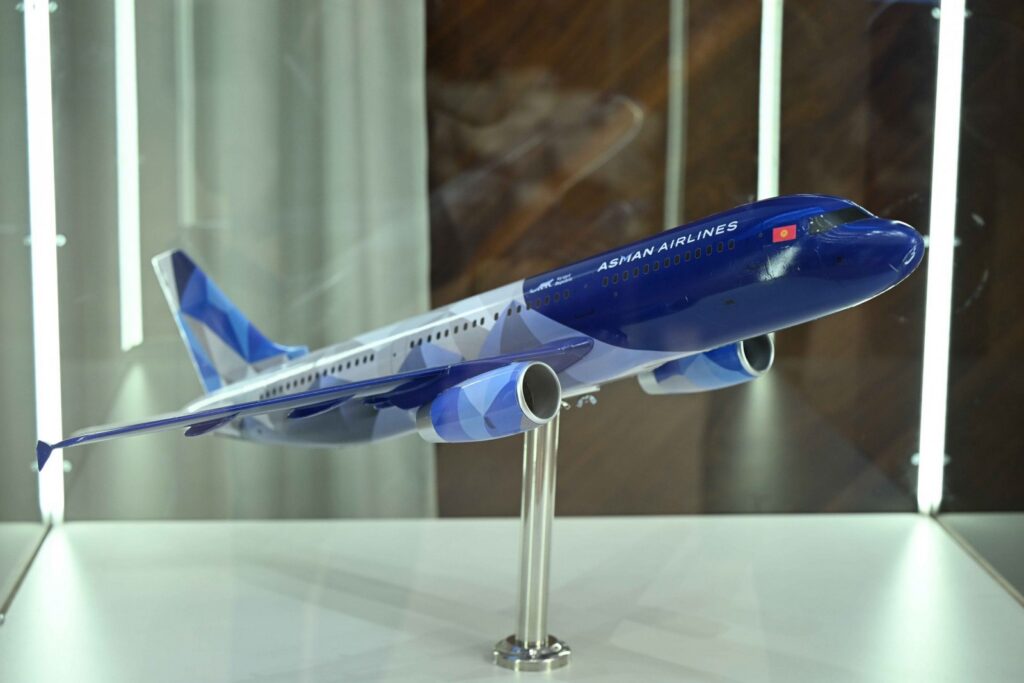
Kyrgyzstan has signed an agreement to acquire two Airbus A321ceo aircraft as part of efforts to expand the country’s civil aviation sector and launch new international routes. The signing ceremony took place on March 5 in Bishkek, where the agreement was signed by Manasbek Samidinov, chairman of the board of Airports of Kyrgyzstan OJSC, and Maurice Prendergast, senior vice president of BBAM Aircraft Leasing & Management. The event was attended by Johan Pelissier, president of Airbus Europe, and Kyrgyz Prime Minister Adylbek Kasymaliev. According to the agreement, the aircraft will be delivered to Kyrgyzstan by the end of 2026. They are intended for the state-owned carrier Asman Airlines, a subsidiary of Airports of Kyrgyzstan. The new aircraft are expected to support the launch of international flights and improve operational capacity. Asman Airlines currently operates three Dash 8 Q400 aircraft, Canadian-made short-haul turboprop planes capable of carrying up to 80 passengers over distances of up to 2,000 kilometers. These aircraft serve domestic routes across Kyrgyzstan after the airline recently restored air connections between Bishkek and several remote regional centers. Speaking at the ceremony, Kasymaliev said that the acquisition of modern and efficient aircraft would help raise Kyrgyzstan’s civil aviation sector to a new level of development. He added that between 2021 and 2025 the number of passengers served at Kyrgyzstan’s airports on domestic and international routes increased by 52%, while the number of flights rose by 53%. Kasymaliev also noted that audits conducted by the International Civil Aviation Organization (ICAO) in 2023-2024 confirmed that Kyrgyzstan’s aviation system complies with international standards. According to the latest audit, the aviation security compliance rate reached 85.76%, a significant improvement compared with previous results. “These achievements create the necessary conditions for Kyrgyzstan to be removed from the European Union’s aviation safety blacklist,” the prime minister said, adding that the final audit by the European Commission is expected in the coming days. Later the same day, President Sadyr Japarov met with Johan Pelissier and Maurice Prendergast to discuss the development of Kyrgyzstan’s aviation sector. During the meeting, Japarov highlighted the rapid modernization of airport infrastructure and the expansion of domestic air routes. While previously only four airports in the country were fully operational, all 11 airports in Kyrgyzstan are now functioning. Construction of a new international airport in Jalal-Abad is also underway. The president also confirmed that Kyrgyzstan is in the final stage of the process to be removed from the European Union’s aviation safety blacklist, with the final inspection expected later this month.

Kyrgyzstan Seeks to Deepen Economic Ties with Germany

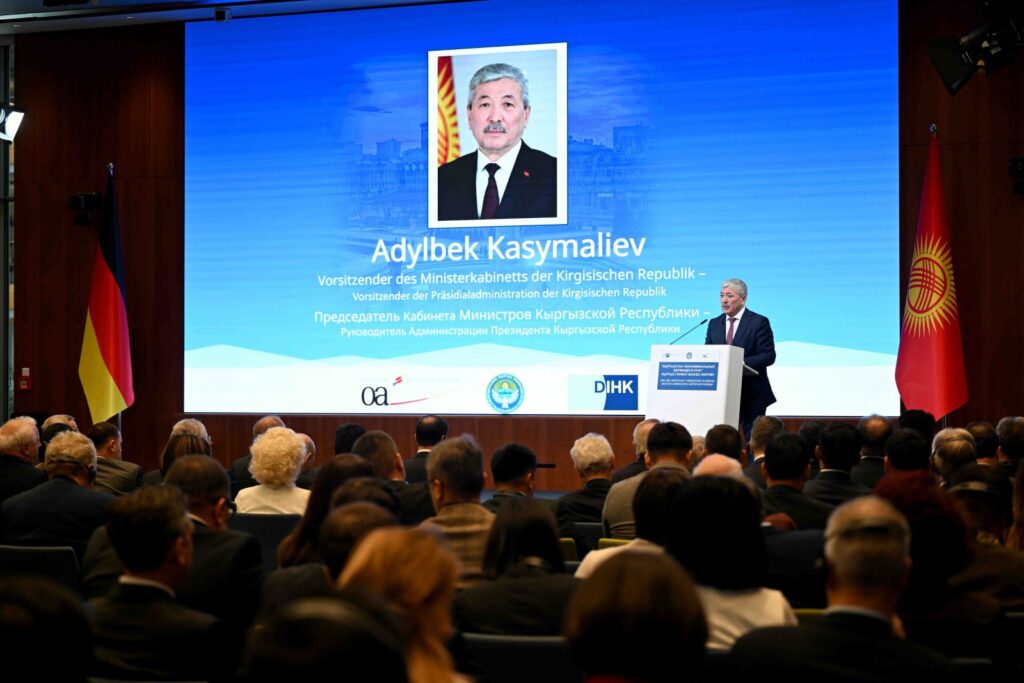
On November 28, Berlin hosted the Kyrgyz-German Business Forum and the fifth meeting of the Kyrgyz-German Business Council, with the participation of Adylbek Kasymaliev, Chairman of the Cabinet of Ministers of Kyrgyzstan. The event was organized by Kyrgyzstan’s National Investment Agency, the Eastern Committee of the German Economy, and the German Chamber of Commerce and Industry. It brought together over 300 participants from government agencies, financial institutions, and business sectors of both countries. Key areas of cooperation included the implementation of a dual vocational education system based on the German model, legal and organized labor migration from Kyrgyzstan to Germany, and joint projects in energy, green technologies, information technology, and agriculture. During the forum, Kasymaliev called on German companies to deepen engagement with Kyrgyzstan, from supplying equipment to investing in sustainable and green development initiatives. The primary purpose of Kasymaliev’s visit was to launch the second cycle of the “Days of the Economy of Kyrgyzstan and Germany,” a bilateral initiative aimed at strengthening economic cooperation and attracting foreign investment. At the Business Council meeting, Kasymaliev outlined three priority areas for collaboration. The first is financial and banking integration. He proposed establishing direct correspondent banking relationships between Kyrgyz and German financial institutions to enhance trade transparency, expedite transactions, and ensure greater security in bilateral trade. The second priority is cooperation in education and vocational training. Kyrgyzstan seeks to expand partnerships between universities, vocational schools, and industry centers, as well as to develop academic exchange and joint educational programs modeled on Germany’s experience. The third area of focus is labor migration. “Kyrgyzstan proposes to jointly develop targeted training programs, including professional and language training, as well as mechanisms for recognizing professional qualifications,” Kasymaliev stated. He emphasized that such cooperation would ensure fair working conditions and safeguard the rights of Kyrgyz citizens while addressing labor shortages in Germany. On November 29, Kasymaliev also visited the international postal exchange center of Kyrgyz Pochtasy (Kyrgyz Post) OJSC in Berlin. He noted that the establishment of such a center in the heart of Europe represents an important step toward boosting Kyrgyzstan’s export potential and expanding access for Kyrgyz businesses to European markets.