• KGS/USD = 0.01144 0%
  • KZT/USD = 0.00215 0%
  • TJS/USD = 0.10641 0%
  • UZS/USD = 0.00008 0%
  • TMT/USD = 0.28530 0%
  • KGS/USD = 0.01144 0%
  • KZT/USD = 0.00215 0%
  • TJS/USD = 0.10641 0%
  • UZS/USD = 0.00008 0%
  • TMT/USD = 0.28530 0%
  • KGS/USD = 0.01144 0%
  • KZT/USD = 0.00215 0%
  • TJS/USD = 0.10641 0%
  • UZS/USD = 0.00008 0%
  • TMT/USD = 0.28530 0%
  • KGS/USD = 0.01144 0%
  • KZT/USD = 0.00215 0%
  • TJS/USD = 0.10641 0%
  • UZS/USD = 0.00008 0%
  • TMT/USD = 0.28530 0%
  • KGS/USD = 0.01144 0%
  • KZT/USD = 0.00215 0%
  • TJS/USD = 0.10641 0%
  • UZS/USD = 0.00008 0%
  • TMT/USD = 0.28530 0%
  • KGS/USD = 0.01144 0%
  • KZT/USD = 0.00215 0%
  • TJS/USD = 0.10641 0%
  • UZS/USD = 0.00008 0%
  • TMT/USD = 0.28530 0%
  • KGS/USD = 0.01144 0%
  • KZT/USD = 0.00215 0%
  • TJS/USD = 0.10641 0%
  • UZS/USD = 0.00008 0%
  • TMT/USD = 0.28530 0%
  • KGS/USD = 0.01144 0%
  • KZT/USD = 0.00215 0%
  • TJS/USD = 0.10641 0%
  • UZS/USD = 0.00008 0%
  • TMT/USD = 0.28530 0%

Viewing results 1 - 6 of 53

Kazakhstan Will Not Extend Wheat Import Ban

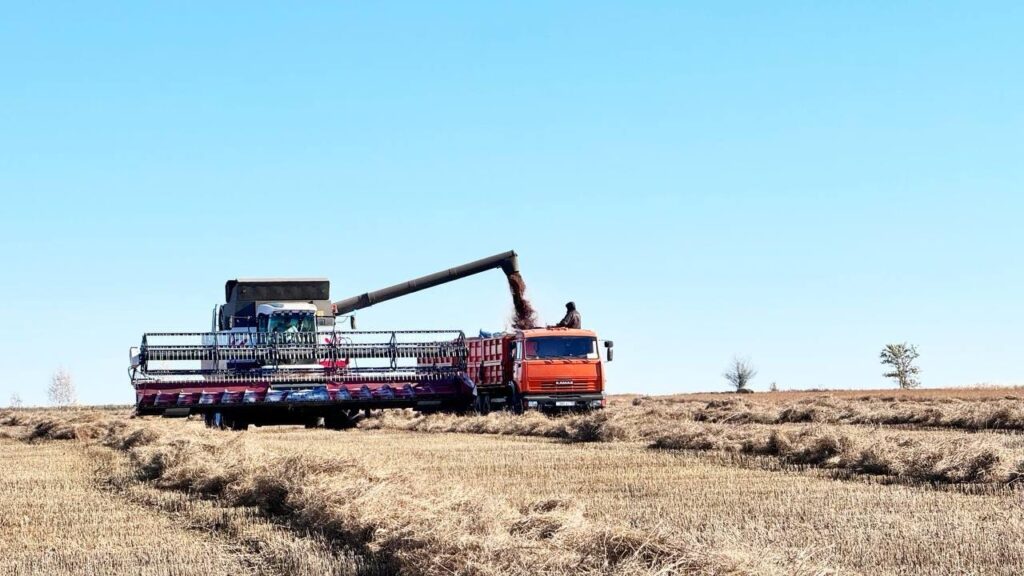
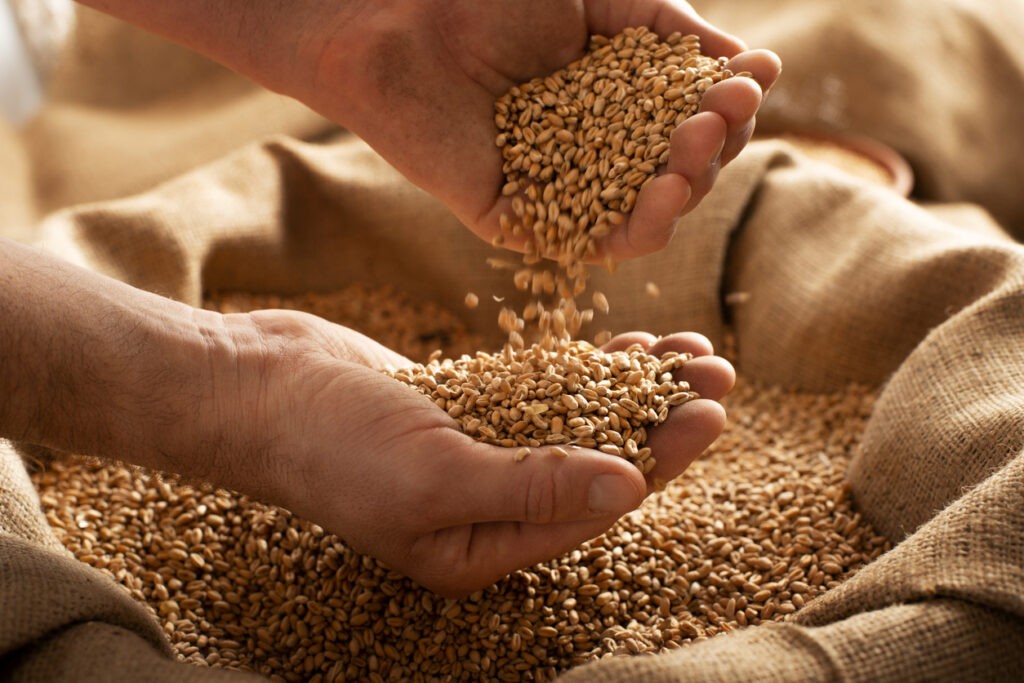
Kazakhstan’s Ministry of Agriculture has announced that the country will not extend the ban on wheat imports, which was in effect from August 21 to December 31, 2024. However, officials have not ruled out the possibility of reintroducing such measures in the future to safeguard the interests of domestic grain producers. “From August 21 to December 31, 2024, there was a ban on the import of wheat into the territory of the Republic of Kazakhstan (RK) from third countries and from the EAEU countries by all means of transport, except for the transit of wheat through the territory of Kazakhstan. Thus, from January 1, 2025, the ban on imports of wheat into Kazakhstan and imports will be carried out without restrictions,” stated the Ministry of Agriculture. The ministry noted that future decisions on non-tariff measures regulating wheat imports would depend on the situation in the grain market. This leaves open the possibility of reintroducing temporary bans on imported wheat if necessary. The current ban was introduced to stabilize domestic grain prices. In October, Deputy Prime Minister Serik Zhumangarin explained that earlier attempts to regulate imports through less restrictive measures had failed. Wheat continued to enter Kazakhstan through unofficial channels at prices lower than the cost of domestically produced grain, disrupting the local market. “We needed this ban to determine the price on the domestic market, to give a message to the domestic market on price,” Zhumangarin stated. He added that the authorities have now stabilized prices and plan to monitor wheat pricing at the border to avoid the need for future blanket bans. The ban had a significant impact on wheat imports from Russia. In the first half of 2024, 1.3 million tons of Russian wheat were imported, often labeled as feed for poultry farms or raw materials for Kazakhstan’s flour milling industry. This figure sharply contrasts with Kazakhstan’s annual grain consumption of 1.7 million tons, based on per capita consumption of 64 kg annually. Kazakhstan entered the ban period with robust grain reserves of 5.1 million tons and anticipated a record harvest of 25 million tons in 2024. In reality, the harvest exceeded expectations, reaching 26.5 million tons, according to the Ministry of Agriculture. Despite these gains, the competitiveness of domestic grain within the country remains a concern. The Times of Central Asia previously reported Kazakhstan’s ambitious export plans, aiming to ship up to 12 million tons of grain from the new harvest to international markets. However, competition with Russian wheat has complicated these efforts. In response to Kazakhstan’s ban, Russia imposed partial restrictions on importing Kazakh agricultural products in October 2024. More critically, Russia began redirecting its wheat exports to third countries that have traditionally been key markets for Kazakh farmers.

Kazakhstan’s Lamb Gaining Ground in Arab Markets

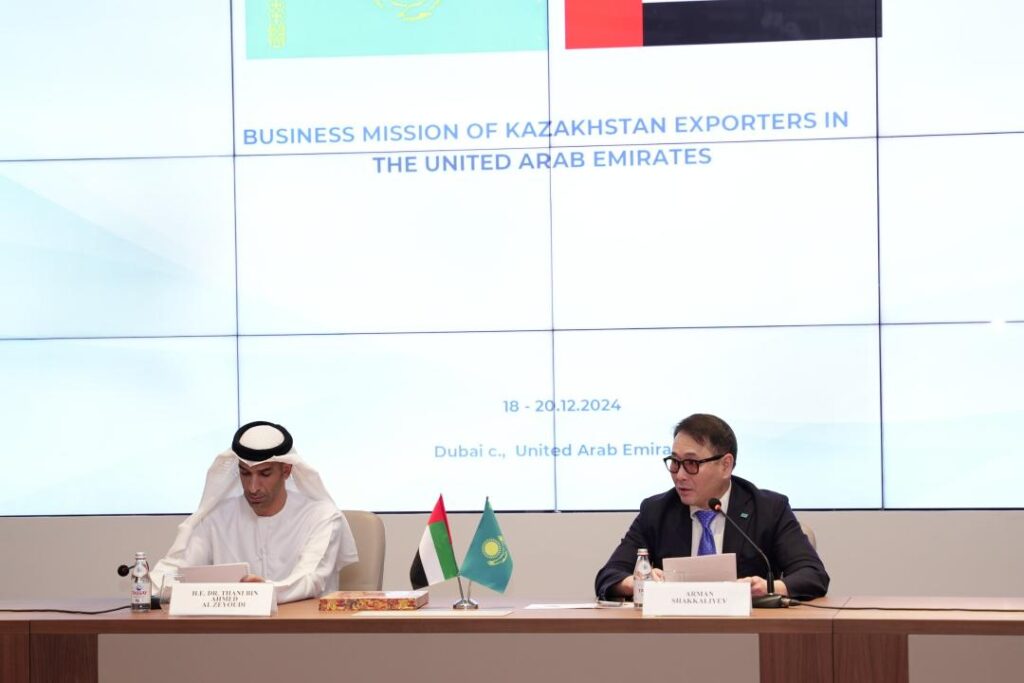
Demand for Kazakh food products is on the rise in the United Arab Emirates (UAE), which imports over $23 billion worth of agricultural goods annually. Kazakhstan’s agricultural exports to the UAE were a key focus during a meeting in Dubai between Kazakhstan’s Minister of Trade and Integration, Arman Shakkaliyev, and UAE Minister of State for Foreign Trade, Thani bin Ahmed Al Zeyoudi​. Shakkaliyev reaffirmed Kazakhstan’s readiness to supply organic agricultural products, with chilled lamb emerging as a standout item in the UAE market. During the first ten months of 2024, Kazakhstan exported 13,300 tons of lamb to the UAE, valued at $45.3 million. This marks a twofold increase in export volume and a 64% rise in revenue compared to the same period in 2023. In addition to lamb, Shakkaliyev highlighted Kazakhstan’s capacity to export high-quality flour, sunflower oil, confectionery, and dairy products to the UAE. The minister also emphasized Kazakhstan’s commitment to developing halal certification for its agricultural products. “Since 2014, more than 1,800 domestic and foreign companies have been certified, demonstrating the high quality and compliance of Kazakhstani products with international standards,” he noted. As part of the meeting, a tasting session showcased Kazakhstani lamb, confectionery, and apples, further promoting the country's agricultural offerings. Kazakhstan’s lamb exports have also seen significant growth in other Arab markets. According to the Kazakh Ministry of Trade and Integration, lamb exports to Qatar have increased by 75% since the beginning of 2024.

Tomato Surplus in Turkmenistan and Uzbekistan Amid Low Russian Demand

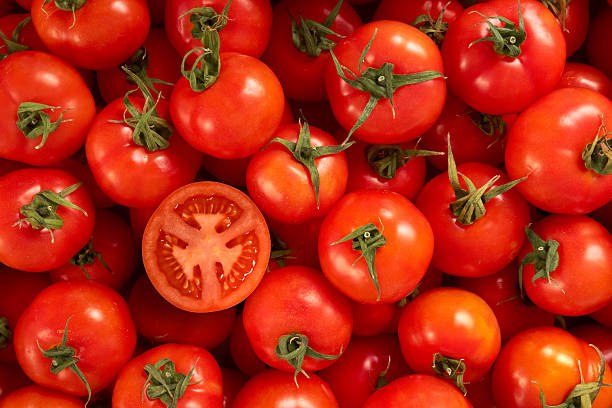
Greenhouse vegetable farmers in Turkmenistan and Uzbekistan are grappling with a significant oversupply of tomatoes due to a decline in demand from Russian buyers, according to analysts at EastFruit. Turkmenistan's greenhouse farmers are reporting extreme difficulties in selling their produce, with prices falling below $1 per kilogram. “Demand in the Russian market has dropped sharply, continuously exerting downward pressure on prices,” noted the EastFruit report. Turkmenistan has rapidly expanded its greenhouse farming sector in recent years, increasing production volumes of tomatoes. However, the sharp decline in Russian purchasing power is presenting a major challenge. Similarly, tomato prices in Uzbekistan have plummeted, averaging 32% lower than last year. Wholesale prices for red, round greenhouse tomatoes stand at $1.17 per kilogram for smaller quantities, with export prices similar to those in Turkmenistan. Despite these low prices, Uzbekistan often prioritizes exporting premium-quality tomatoes, which can fetch higher prices internationally than in the domestic market. Uzbek exporters have highlighted the negative impact of the depreciation of the Russian ruble and financial instability in Russia. These factors have complicated the export of greenhouse vegetables to one of the region's largest markets, exacerbating the difficulties faced by growers.

Kyrgyzstan Seeks to Boost Food Exports to EU Markets

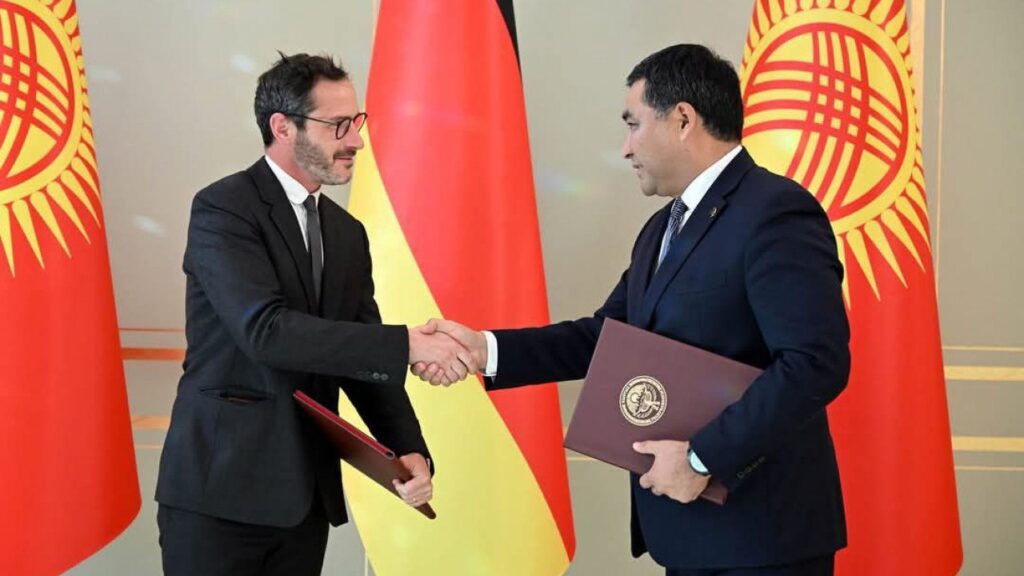
Kyrgyzstan is set to increase its agricultural exports to the European Union following an agreement with British certification company Intertek. Minister of Economy and Commerce Daniyar Amangeldiev recently met with Jeremy Gaspar, Vice President for Government and Trade Services at Intertek, in Berlin to discuss the initiative. The agreement will help Kyrgyz companies certify their products according to international standards, significantly improving their competitiveness in EU markets. The Ministry of Economy is optimistic that this collaboration will expand the country's export capacity while modernizing its quality assurance systems. Beyond agriculture, the ministry is also exploring certification opportunities for the manufacturing sector, particularly Kyrgyzstan's garment industry, which holds significant potential for international growth. As part of the next phase of the project, Intertek experts will visit Kyrgyzstan to conduct a comprehensive analysis of the country's laboratories and certification infrastructure. Intertek, a global leader in product certification and quality control, will work closely with local authorities to align Kyrgyzstan’s systems with international standards. “A visit by Intertek specialists will mark a crucial step in modernizing our laboratories and integrating Kyrgyzstan’s national certification framework into global quality assurance practices,” the ministry stated. Last month, a Kyrgyz delegation visited an Intertek laboratory in Bremen, Germany, to review European methodologies and initiate arrangements for European specialists to visit Kyrgyzstan. These specialists will evaluate the functionality of Kyrgyz laboratories and recommend improvements to ensure compliance with EU requirements. Kyrgyzstan views this partnership as a critical step toward enhancing the quality and competitiveness of its export products, ultimately strengthening its presence in international markets.

Kazakhstan Limits Re-Export of Russian Grain to Uzbekistan and China

Kazakhstan has imposed restrictions on the re-export of Russian grain to Uzbekistan and China, Prime Minister Olzhas Bektenov announced. The move aligns with Kazakhstan’s ban on wheat imports from Eurasian Economic Union (EAEU) countries, which will remain in effect until the end of 2024. The restriction was outlined in Bektenov's response to a parliamentary inquiry. He explained that the decision aims to protect Kazakhstan’s domestic agricultural market, citing concerns about maintaining local production. During a meeting of the Kazakhstan-Russia intergovernmental commission, Rosselkhoznadzor, Russia’s federal agricultural oversight agency, raised issues related to the restrictions. The commission recommended that authorities expedite the removal of these measures, highlighting their impact on bilateral agricultural trade. Bektenov noted that these restrictions were critical to safeguarding Kazakhstan’s domestic market. “To protect the domestic market, Kazakhstan banned wheat imports from EAEU countries until the end of 2024. This ban limits the re-export of Russian grain to Uzbekistan and China,” he stated. In addition to the re-export ban, Kazakhstan has raised unified tariffs for the transit of goods across its territory for EAEU countries. Notably, the tariff for transporting Russian grain to Kyrgyzstan through Kazakhstan has doubled this year, further impacting regional trade dynamics.

Turkey Ready to Buy Kazakh Meat at Twice the Price Offered by China

Kazakhstan's Ministry of Agriculture is actively working to open the Turkish market to Kazakh meat exports. Deputy Minister Amangaly Berdalin reported that Turkish partners are willing to pay twice as much for Kazakh beef as China. The Ministry of Agriculture has previously pursued access to the Chinese market for Kazakh livestock products. In February, Beijing lifted restrictions on Kazakh livestock imports, potentially enabling Kazakhstan’s southeastern regions to resume exports of frozen beef and pork to China. However, significant export volumes to China have yet to materialize. Maksut Baktibayev, head of the Meat Union of Kazakhstan, explained that the agreement between the countries only allows exports from four meat processing plants in Kazakhstan, with a combined capacity of 8,000 tons of frozen beef. According to Berdalin, Kazakh producers are not utilizing even this limited capacity due to uncompetitive pricing. Chinese buyers offer $5.5 per kilogram of Kazakh beef, which is comparable to prices in Kazakhstan’s domestic market, ranging from 2,700 to 3,000 tenge ($5.4 to $6.1) per kilogram. Given these figures, transporting Kazakh meat to China is economically unviable for producers. In contrast, Turkey is prepared to pay nearly double, or $11 per kilogram, for Kazakh beef. "Our ministry’s objective is to open as many markets as possible for our producers, particularly those offering attractive prices,” Berdalin stated at the Vet Astana 2024 International Exhibition on Feed and Veterinary in Astana. “That is why our inspectors are actively collaborating with Turkish officials to understand their export requirements.” Berdalin noted that while specific export volumes of Kazakh beef to Turkey are not yet determined, there is optimism following a recent diplomatic visit. In August, Kazakhstan’s Minister of Agriculture Aidarbek Saparov visited Ankara, where business representatives from both countries signed contracts to supply Kazakh meat to Turkey, valued at $80 million over the coming years, contingent on Kazakhstan’s successful completion of required veterinary and epidemiological procedures. The Turkish market has historically been closed to most Kazakh livestock products due to restrictions related to animal diseases, with some bans in place for approximately 20 years. Turkish authorities lifted these restrictions in June 2024. Kazakh producers are now navigating an extensive certification process to gain market access. Some required tests must be conducted in third countries, prompting Kazakhstan to rebuild its own laboratory capabilities. Berdalin shared that the Kazakh government has allocated 3.8 billion tenge ($7.7 million) this year to support veterinary laboratories. "To export to a country, we must meet all its import requirements. For instance, to export our honey, we need to conduct 43 specific tests. Currently, we handle 20 in-house, but the remaining 23 are outsourced to laboratories in Latvia and Georgia,” Berdalin explained. In addition to Turkey, the Ministry of Agriculture is working to open European markets for Kazakh meat. Last year, Kazakhstan exported over 53,000 tons of meat and meat products valued at $153 million. Poultry was the largest export category, at nearly 32,000 tons, followed by beef at 15,800 tons. Primary export destinations included Uzbekistan, the UAE, Kyrgyzstan, Iran,...