• KGS/USD = 0.01144 0%
  • KZT/USD = 0.00213 0%
  • TJS/USD = 0.10569 0.09%
  • UZS/USD = 0.00008 0%
  • TMT/USD = 0.28530 0%
  • KGS/USD = 0.01144 0%
  • KZT/USD = 0.00213 0%
  • TJS/USD = 0.10569 0.09%
  • UZS/USD = 0.00008 0%
  • TMT/USD = 0.28530 0%
  • KGS/USD = 0.01144 0%
  • KZT/USD = 0.00213 0%
  • TJS/USD = 0.10569 0.09%
  • UZS/USD = 0.00008 0%
  • TMT/USD = 0.28530 0%
  • KGS/USD = 0.01144 0%
  • KZT/USD = 0.00213 0%
  • TJS/USD = 0.10569 0.09%
  • UZS/USD = 0.00008 0%
  • TMT/USD = 0.28530 0%
  • KGS/USD = 0.01144 0%
  • KZT/USD = 0.00213 0%
  • TJS/USD = 0.10569 0.09%
  • UZS/USD = 0.00008 0%
  • TMT/USD = 0.28530 0%
  • KGS/USD = 0.01144 0%
  • KZT/USD = 0.00213 0%
  • TJS/USD = 0.10569 0.09%
  • UZS/USD = 0.00008 0%
  • TMT/USD = 0.28530 0%
  • KGS/USD = 0.01144 0%
  • KZT/USD = 0.00213 0%
  • TJS/USD = 0.10569 0.09%
  • UZS/USD = 0.00008 0%
  • TMT/USD = 0.28530 0%
  • KGS/USD = 0.01144 0%
  • KZT/USD = 0.00213 0%
  • TJS/USD = 0.10569 0.09%
  • UZS/USD = 0.00008 0%
  • TMT/USD = 0.28530 0%

Viewing results 1 - 6 of 53

Kazakhstan Begins Export of New Harvest Grain

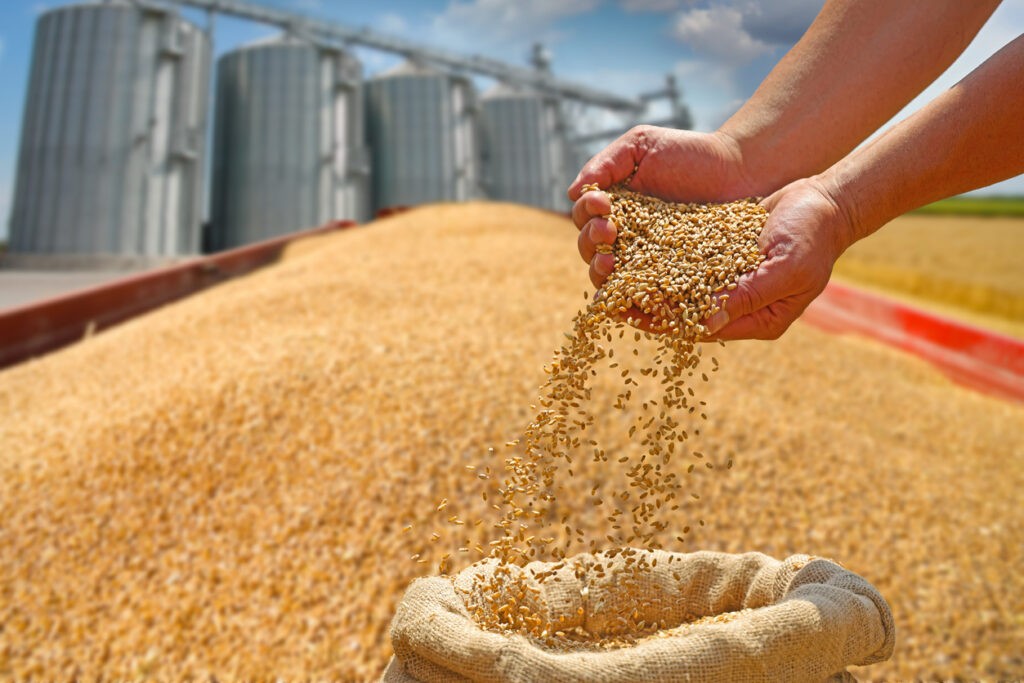
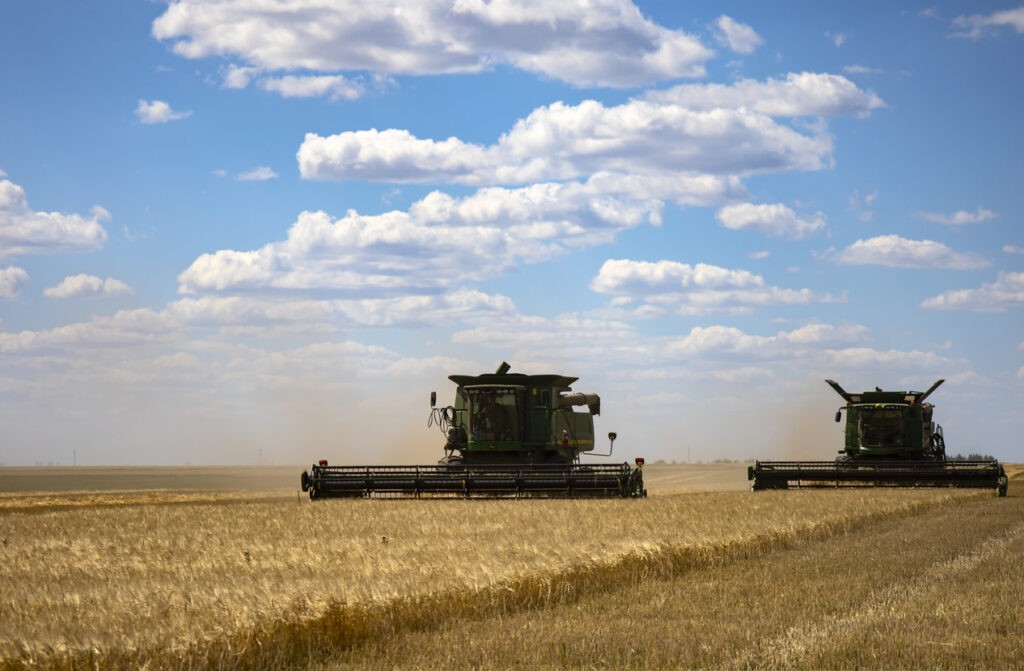
Kazakhstan has begun exporting grain from the new harvest, which totaled 26.6 million tons this year, 56% higher than in 2023. In September-October, Kazakhstan’s national railway company, Kazakhstan Temir Zholy (KTZ), transported 1.8 million tons of grain for export, 48% more than in the same period last year (1.2 million tons). During the two months, grain exports to Uzbekistan amounted to 738,000 tons (49% more than in September-October 2023), and 298,000 tons were shipped to Tajikistan (a 48% increase). Increasing grain exports were also reported to China, Afghanistan, Iran, and Kyrgyzstan. The Kazakh Ministry of Agriculture expects a significant increase in grain exports in the first half of 2025. According to KTZ, Afghanistan is ready to import about 200,000 tons of Kazakh grain, which will be transported via Turkmenistan. According to the Ministry of Agriculture, Kazakhstan plans to export about 12 million tons of the new harvest grain to traditional markets—Central Asia and Afghanistan—and new ones, such as Pakistan, Indonesia, Brazil, and Malaysia. Uzbekistan remains the primary importer of Kazakh grain, followed by Tajikistan, Afghanistan, Turkmenistan, and China.

Grain War: Has Kazakhstan Become Russia’s Victim?

The fall brought two headaches for Kazakhstani farmers: a rich grain harvest that coincided with an oversupply of grain on world markets, and Russia's ban on exporting Kazakh wheat to and transiting through Russia. Experts complain about the 40% failure of Kazakhstani grain exports, and representatives of farmer associations complain about low prices and high production costs and ask the government to buy their surplus products. The background is talk of a grain war between Moscow and Astana.   Phytosanitary ban According to Kazakhstan's Ministry of Agriculture, this year the harvested area of crops amounted to 23.3 million hectares, of which 16.7 million were sown with cereals. Fieldwork has been completed by 99.7%. 26.5 million tons of grain were threshed. Proponents of the opinion that the agricultural authorities of Kazakhstan and Russia have entered into a hidden confrontation for external grain markets argue that Kazakhstan is a victim of this trade war. They cite the restrictions imposed by Rosselkhoznadzor in October as evidence. On October 1, the Russian agency asked Kazakhstan's Ministry of Agriculture to suspend the issuance of phytosanitary certificates for grain and its products, tomatoes, peppers, and sunflower seeds exported to the Russian Federation. On October 3, journalists asked Vice-Minister of Agriculture Ermek Kenzhekhanuly about the stage of fulfillment of this wish. He replied that the Russian side received a reply letter requesting evidence of phytosanitary control violations. According to him, Rosselkhoznadzor had not responded as of October 3. On October 17, the Russian Federal Service for Veterinary and Phytosanitary Surveillance temporarily banned imports of several types of agricultural goods from Kazakhstan. Transit of wheat, lentils, and oilseed flax seeds through Russia's territory is allowed. Still, a phytosanitary certificate for the country of final destination must be issued, and grain must be transshipped directly from railcars into the ship's holds. At the same time, deliveries of tomatoes, peppers, sunflower seeds, and melons from Kazakhstan are prohibited, even for transit.   Obstacles in response to the ban However, let's carefully review the Kazakhstani press. We will find that as early as September 3rd, Kazakhstani farmers sounded the alarm—Russia is pushing our grain out of traditional markets. Representatives of the Grain Union of Kazakhstan discussed the problems Kazakh traders face with the transit of domestic grain through the territory of the Russian Federation at a session with journalists at the Agricom forum. However, they cited only two cases of such restrictions but tried to convey another message—Russia has introduced hidden obstacles because of Kazakhstan's ban on grain imports from the Russian Federation, which was imposed as early as August 1. As reported by Kazakhstan's Ministry of Agriculture, the restrictions imply a complete ban on wheat imports by all modes of transportation. Previously, the restrictive measures provided for a ban on imports of goods by road, water, and rail (except for imports to poultry and flour mills) since April. The decision was made because, despite the previous ban, grain imports from Russia exceeded 1.1 million tons in six months. Experts considered...

Kazakhstan Bans Apple Imports to Support Domestic Producers

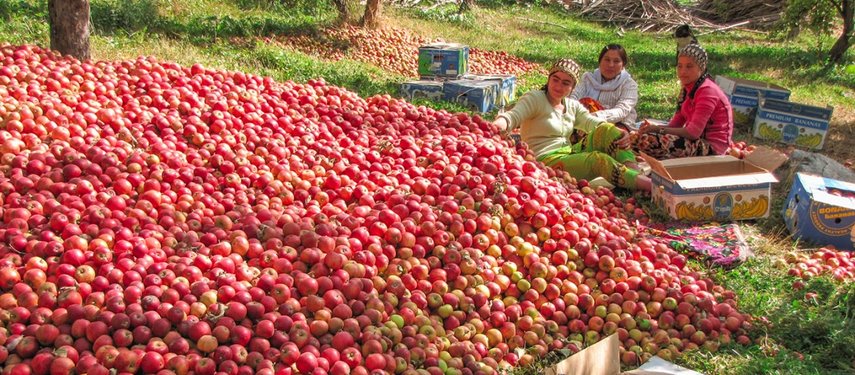
The government of Kazakhstan has temporarily banned the import of apples into the country by motor transport until the end of the year. The decision to introduce the ban was made and announced late in August, but the ban took effect on October 8. According to the Ministry of Agriculture, the ban will last during harvest to support domestic apple production. The move will allow domestic gardeners to sell apples at reasonable prices. During the off-season, apple imports will not be restricted. The government of Kazakhstan has taken support measures in the form of subsidies and preferential loans to develop domestic apple production. As a result, over the past five years, the domestic supply of apples has increased from 62.9% in 2019 to 80% in 2023. At the same time, local farmers are experiencing dumping from foreign producers. High competition with imported products reduces the profitability of domestic producers. With the parallel import of apples during harvest, Kazakhstanis need help selling their products. From January to July 2024, Kazakhstan imported about 107,000 tons of apples, 58% more than in the same period in 2023, from Poland, Iran, Uzbekistan, and China. During that period, apple imports from China increased 18-fold and from Iran — sevenfold. The ban does not apply to imports from fellow members of the Eurasian Economic Union—Armenia, Belarus, Kyrgyzstan, and Russia—or to the international transit of apples through Kazakhstan's territory. Kazakhstan is the birthplace of apples — particularly the famous aport apples, which grow in the Almaty region. Translated from Kazakh, Almaty means “place of abundance of apples.”

Kyrgyzstan Produces All Potatoes, Vegetables, Fruit, and Milk It Needs

According to government data, of the eight basic socially significant food products in Kyrgyzstan, domestic production meets the demand only for potatoes, vegetables, fruits, and milk. The demand for bread and bakery products, meat, sugar, eggs, and vegetable (cooking) oil is partly satisfied with imports. This was announced at the Council on Food Security and Nutrition meeting on October 3. From January to July 2024, the levels of self-sufficiency were 86.5% for bread and bakery products, 162.8% for potatoes, 159% for vegetables and fruits, 79.1% for meat, 116.3% for milk, 49.2% for sugar, 71.4% for eggs, and 48.5% for vegetable oil. Kyrgyzstan imports food from Russia, Kazakhstan, Belarus, Uzbekistan, and China. At the meeting, Deputy Chairman of the Cabinet of Ministers - Minister of Water Resources, Agriculture and Processing Industry Bakyt Torobaev ordered additional measures to support agricultural production and incentivize local producers. Torobaev also announced the establishment of the Research Institute of Food Security and Nutrition, which will become a center of knowledge and innovation that will help improve the country's food security. The institute's creation will allow scientific research in agronomy and veterinary science and the development of recommendations for improving agricultural product production and processing technologies. It will also cooperate with international organizations and scientific institutions to implement the best global practices in food security.

Special Report: Prospects Look Good for Kazakh Wheat Exports

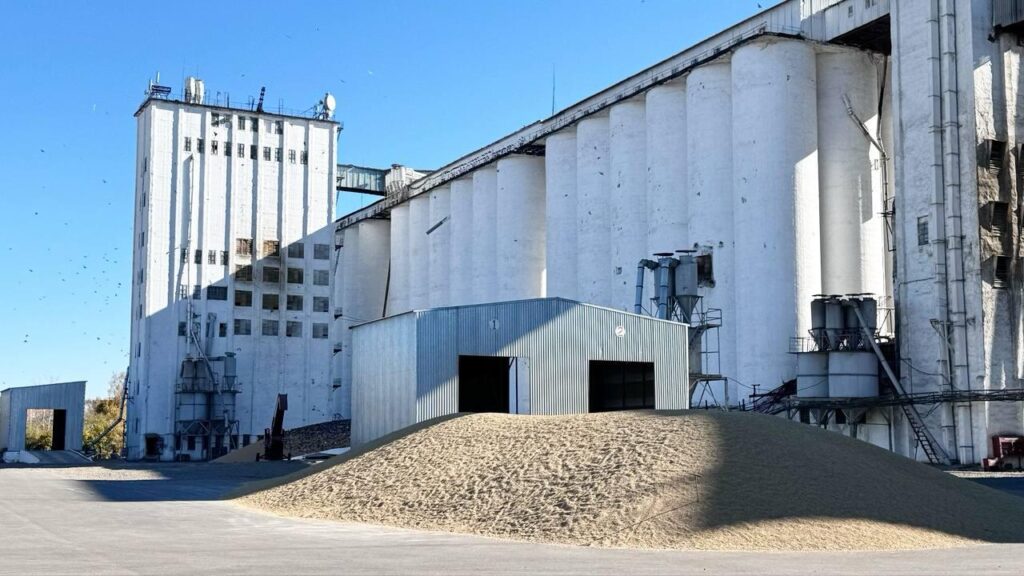
According to the International Grains Council, Kazakhstan's wheat harvest for the 2024/2025 season is expected to reach 16 million tons. As the harvesting campaign begins, the country's lack of elevator capacity and the problem of mainline railroads are concerns. Idle trains are still a problem, which leads to the introduction of regular restrictions and bans on the acceptance and shipment of wheat due to congestion on the railroad. Market participants note that the railroad cannot cope with the volume of shipments during the autumn rush, with its infrastructural ceiling on shipments at only 1 million tons of grain per month. This leads to a collapse at border railroad crossings and, consequently, a price drop in the domestic market. One obvious solution is to expand Kazakhstan's elevator capacity and grain storage facilities; this is one of the reasons for the increased load on the railroad infrastructure. Thus, according to the Ministry of Agriculture, 191 licensed grain-receiving enterprises have a total storage capacity of more than 13.2 million tons. In addition, agricultural producers have storage capacities for 15.8 million tons of grain, which, as the ministry assures, is enough to store grain considering the projected harvest. Also, according to the ministry, the construction of new grain storage facilities and the expansion of existing ones are envisaged. In 2024-2026, it plans to operate five granaries with a capacity of 30,200 tons. The national railway company Kazakhstan Temir Zholy (KTZ) has already established a grain headquarters, involving representatives from local executive bodies, the National Chamber of Entrepreneurs "Atameken," and shippers. This headquarters ensures adequate transportation for the upcoming season's harvest. As Salamat Abzhaliyev, Deputy General Director for Marketing and Planning of KTZ-Gruzovye Transportations LLP, noted during the briefing held at the end of August, for seven months of the current year, the total volume of grain loading on the network of railroads of the country amounted to 4.7 million tons. Only in Kazakhstan did wheat transportation increase by 3%, amounting to 1.1 million tons. An important factor affecting the efficiency of transporting grain and milling products is the availability of specialized wagons. In addition to boxcars, grain carriers are designed to transport these specific cargoes. Today, the total fleet of boxcars and grain cars on the railroad is about 16,000 and 12,000, respectively. According to KTZ, this fleet is sufficient to fulfill all agreed transportation plans. According to forecasts of the International Grain Council, the export of Kazakhstani wheat in the 2024/2025 season is projected at 10 million tons. During the first six months of the year, 2.4 million tons of wheat have already been shipped. The main buyers of domestic grain are traditionally Uzbekistan, China, Tajikistan, Italy, and Afghanistan. Grain exports to China have grown 5.7 times in the last three years, which makes China a key export destination. China is ready to accept large volumes of grain from Kazakhstan. Today, the country buys about 10 million tons of wheat worldwide, including from Kazakhstan. However, further development of trade is constrained by limited transportation...

Kyrgyzstan Seeks to Increase Production and Export of Fish

On August 23, Bakyt Torobayev,  Minister of Water Resources, Agriculture, and Processing Industry of Kyrgyzstan, attended ceremonies to launch the construction of two fish processing plants in the country’s northern Chui region. The first plant, to be built in the village of Leninskoye at the cost of over $4.3 million, will have an annual capacity is up to 3,000 tons of processed fish products (mainly trout) and up to 8,000 kg of black sturgeon caviar. When operational, the second in the village of Ak-Jol, will create 45 new jobs and have an annual production capacity of 1,000 tons of chilled trout, 1,000 tons of frozen trout, 800 tons of smoked fish, and 400 tons of dried fish. Kyrgyzstan currently produces about 30,000 tons of fish annually, of which only  5,000 tons are exported. Citing the fact that the country had conditions to produce 105 thousand tons and export 50 thousand tons of fish,  Torobayev recommended that emphasis be placed on the construction of processing enterprises. According to official statistics, in 2023, Kyrgyzstan produced 33,600 tons of fish and exported 5,556 tons of fish and fish products, mainly to Russia, Kazakhstan, Uzbekistan, and Lithuania. Fish (mainly trout) are produced in Kyrgyzstan at artificial ponds and fishery farms at lakes Issyk-Kul and Son-Kul.