• KZT/USD = 0.00210
  • TJS/USD = 0.10810
  • UZS/USD = 0.00008
  • TMT/USD = 0.29850
  • KZT/USD = 0.00210
  • TJS/USD = 0.10810
  • UZS/USD = 0.00008
  • TMT/USD = 0.29850
  • KZT/USD = 0.00210
  • TJS/USD = 0.10810
  • UZS/USD = 0.00008
  • TMT/USD = 0.29850
  • KZT/USD = 0.00210
  • TJS/USD = 0.10810
  • UZS/USD = 0.00008
  • TMT/USD = 0.29850
  • KZT/USD = 0.00210
  • TJS/USD = 0.10810
  • UZS/USD = 0.00008
  • TMT/USD = 0.29850
  • KZT/USD = 0.00210
  • TJS/USD = 0.10810
  • UZS/USD = 0.00008
  • TMT/USD = 0.29850
  • KZT/USD = 0.00210
  • TJS/USD = 0.10810
  • UZS/USD = 0.00008
  • TMT/USD = 0.29850
  • KZT/USD = 0.00210
  • TJS/USD = 0.10810
  • UZS/USD = 0.00008
  • TMT/USD = 0.29850

Viewing results 1 - 6 of 773

Livestock Numbers Are Growing in Kyrgyzstan as Authorities Expand Pasturelands

Spring fieldwork has begun in Kyrgyzstan, including the sowing of wheat and barley and efforts to expand the forage base for livestock farming. The Ministry of Water Resources, Agriculture, and Processing Industry has also started planting pastures with forage crops. Myktybek Kalandarov, head of the Department of Breeding Livestock Production, confirmed the work in an interview on state radio. Kalandarov said that approximately 15,000 hectares of pastureland have already been sown with forage crops this year. A further 10,000 hectares of high-altitude pastures were planted in the autumn. Authorities plan to continue expanding pasture resources, with another 10,000 hectares scheduled for planting in the coming months. About $570,000 has been allocated in 2026 to support these measures. Kalandarov added that revenue generated from pasture use should be reinvested in their restoration and development. “Revenue comes from payments for pasture use, about $0.23 per sheep or goat grazed and approximately $1.15 per cow,” he said. The increase in pasture investment is linked to rising livestock numbers. According to data from the National Statistical Committee, the country’s total livestock population has grown by 6.6% over the past five years. As of the end of 2025, farms across all categories had approximately 1.8 million cattle, a 1.7% increase compared with the previous year. The number of sheep and goats reached 6.3 million, up 0.8%. Positive trends have also been recorded in horse breeding, poultry farming, pig farming, and yak breeding. Agricultural sector representatives say growing demand for animal feed is influencing crop patterns. Zakir Koombayev, director of a farm in the Chui Region, told The Times of Central Asia that farmers are increasingly diversifying their forage crops. “Previously, we mainly planted spring crops such as wheat and barley. Now, given the growth in livestock numbers, we have ordered feed corn seeds from southern Russia,” he said. Experts note that the future development of livestock farming in Kyrgyzstan will largely depend on effective pasture management and the sustainability of the country’s feed base.

Kyrgyzstan Moves to Expand Organic Farming but Certification Barriers Limit Exports

Kyrgyzstan is stepping up efforts to expand organic agriculture, but limited access to international certification continues to pose a major obstacle to export growth. The country currently has nine agricultural cooperatives and 30 organic farmland plots covering about 61,500 hectares. Certified organic land accounts for just over 5% of total arable land. Cooperatives operating under international standards produce crops such as cotton, herbs, apricots, and grains for export to more than 30 countries. Smaller farms, however, often rely on the Participatory Guarantee System (PGS), a low-cost, community-based certification model mainly used for domestic markets. Despite strong potential for high-value organic products, including berries and vegetables, obtaining international certification remains costly and administratively complex for small producers. To address these challenges, the government adopted a development programme for 2025-2029. The strategy aims to expand organic farmland to 200,000 hectares, transition the Issyk-Kul and Naryn regions toward predominantly organic production, and increase the share of organic products to 25% of both total agricultural output and exports. Officials view organic farming as an important tool for sustainable rural development. However, further expansion of the sector will depend largely on improving access to internationally recognized certification systems.

Kazakhstan Maintains Meat Exports to the UAE and Plans to Increase Shipments

Kazakhstani producers continue to export meat products to the United Arab Emirates despite logistical complications caused by the conflict in the Middle East. Shipments are also expected to increase, according to Kazakhstan’s Ministry of Trade and Integration. Military developments in the region, including hostilities affecting Iranian territory since February 28, have disrupted logistics for several Central Asian countries. Nevertheless, Kazakhstani exporters have managed to maintain their presence in Middle Eastern markets. According to the ministry, seven tons of chilled lamb were exported to the UAE over the past week. Deliveries are being carried out with the support of the ministry and the national export development operator QazTrade. Authorities aim to raise lamb exports to a regular level of ten tons per week. Shipments are taking place amid ongoing challenges in international logistics in the Persian Gulf region. International carriers report that restrictions on air traffic and disruptions to certain transport routes continue to affect cargo transport, particularly for perishable goods. To ensure stable exports, government agencies have strengthened cooperation with industry associations, including the Union of Livestock Breeders of Kazakhstan, the Union of Poultry Breeders of Kazakhstan, and the National Association of Meat Processors. The ministry states that Kazakhstan fully meets domestic demand for meat products. Export deliveries are carried out using surplus production volumes, enabling farmers to expand their access to foreign markets. A significant share of the food market in Gulf countries relies on imports. According to estimates by international organizations, up to 85-90% of food products in the UAE are imported. By the end of 2025, Kazakhstan’s total exports to the UAE amounted to $132.9 million. Mutton accounted for about 55% of food exports. Kazakhstan has been supplying mutton to the UAE market since 2021. In recent years, the country has actively expanded food exports to Middle Eastern markets, including shipments of grain, flour, vegetable oils, and meat products. According to Kazakhstan’s Ministry of Agriculture, by the end of the 2024/2025 marketing year (September-August), exports of grain and flour in grain equivalent reached 15.3 million tons, 60% higher than the previous year. In the current marketing year, shipments of grain and flour from the new harvest have already reached 8.5 million tons, representing a 14% increase compared with the same period in 2025.

Uzbekistan to Borrow $400 Million to Accelerate Agricultural Mechanization

Uzbekistan has approved a plan to attract up to $400 million in foreign loans to finance the purchase of agricultural machinery and equipment, according to a presidential decree signed on March 13. The initiative is intended to increase the level of mechanization in the agricultural sector, with particular emphasis on cotton harvesting. Officials have set a target of achieving a 70% share of machine-assisted cotton picking in 2026, aiming to improve efficiency and reduce labor intensity. Under the decree, commercial banks will distribute foreign credit lines provided under state guarantees to farmers and agricultural enterprises. The loans will have a maturity period of up to 10 years, including a two-year grace period. Interest rates will be set at the Central Bank’s base rate plus a 4% margin charged by participating banks. Payments for cotton and grain harvesters supplied through these preferential loans and leasing arrangements in 2026 will be scheduled twice a year, on January 31 and July 31. Uzbekistan has officially abolished Soviet-era practices of forced labor and eliminated state cotton production quotas in 2020. The government has also cooperated with the International Labour Organization to monitor labor conditions in the sector. In March 2022, the international coalition Cotton Campaign lifted its boycott of Uzbek cotton, citing the elimination of systemic forced labor that had previously prompted more than 330 global brands to avoid sourcing from the country.

Spring Sowing Begins in Kyrgyzstan as Officials Stress Food Security

Spring sowing has begun in Kyrgyzstan, where agricultural crops are expected to be planted on a total of 1.25 million hectares in 2026, according to the Ministry of Water Resources, Agriculture, and Processing Industry. Of this area, about 818,000 hectares are irrigated land and 432,000 hectares are rainfed. As of March 12, sowing was underway in the southern regions of Osh, Jalal-Abad, and Batken, as well as in the Chui Valley. Fieldwork has not yet started in the colder regions of Talas, Issyk-Kul, and Naryn. Farmers have so far planted grain crops, including wheat and barley, along with potatoes and various vegetables. The ministry has recommended that farmers prioritize crops considered important for national food security. Turatbek Idrisov, head of the ministry’s Department of Plant Growing, Horticulture, and Cooperatives, said producers should focus on socially significant crops such as wheat, barley, potatoes, onions, and sugar beet. He noted that grain crops and sugar beet are included in the country’s list of strategic food reserves. According to ministry monitoring data, the expansion of livestock farming in recent years has led to increased cultivation of fodder crops, particularly barley and maize. Officials also noted that crops such as maize, raspberries, and strawberries have demonstrated relatively high profitability for farmers. The ministry is encouraging producers to adopt water-saving irrigation technologies, including drip and sprinkler systems. Farmers who implement such methods are eligible for state-supported concessional loans with reduced interest rates. Authorities say Kyrgyzstan is currently fully self-sufficient in six of nine socially significant food products, potatoes, milk, meat, vegetables, eggs, and sugar. However, the country remains partially dependent on imports of three key staples: bread products (including flour and grain), vegetable oil, and fruit.

Kazakhstan Considers Supporting Dairy Sector to Curb Inflation

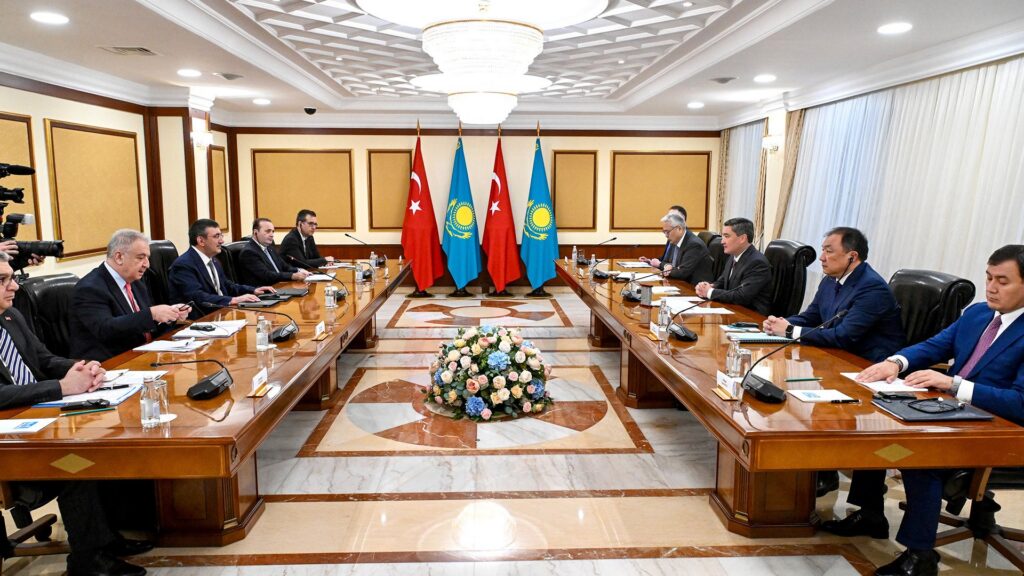
Kazakhstan’s government is considering additional support for dairy processors and bakeries as part of broader efforts to slow inflation and stabilize prices for essential food products. The proposal was discussed during a government meeting focused on inflation dynamics and price trends for socially significant food products. According to Aizhan Bizhanova, Kazakhstan’s First Vice Minister of Trade and Integration, inflation in the country has been slowing for five consecutive months, declining from 12.9% in September 2025 to 11.7% in February 2026. Food inflation has also continued to ease, falling from 13.5% in December and 12.9% in January to 12.7% in February. The ministry attributes the slowdown in part to the expansion of the list of socially significant food products subject to price regulation. The list has been expanded from 19 to 31 items, and since the beginning of the year authorities have opened more than 800 administrative cases related to violations of pricing rules. “During the first week of March, the price index for socially significant food products increased by 0.1%. At the same time, dairy products recorded price growth, mainly due to rising costs of raw milk,” the government’s press service said in a statement. Additional pressure on prices has also come from higher energy costs and increased production expenses. Dairy products account for a significant share of Kazakhstan’s food inflation, estimated at about 6.3%. The Ministry of Trade and Integration therefore proposed exploring mechanisms to support dairy processing enterprises in order to reduce production costs and stabilize prices. The government also discussed possible support measures for Kazakhstan’s bakery sector. Among the options considered were providing bakeries with discounted grain and flour and exploring the possibility of lowering railway tariffs for transporting raw materials. Officials suggested working with the national railway operator Kazakhstan Temir Zholy to reduce transportation costs for the sector. Participants at the meeting noted that prices traditionally rise in March due to seasonal factors. However, the Ministry of Trade and Integration plans to mitigate the impact through additional price discount campaigns and expanded agricultural fairs. Kazakhstan also continues to use a “green corridor” mechanism to facilitate the import of vegetables from neighboring countries. Deputy Prime Minister and Minister of National Economy Serik Zhumangarin, who chaired the meeting, instructed authorities to conduct a detailed review of pricing at 42 dairy processing enterprises operating in Kazakhstan. The aim is to identify effective mechanisms for supporting producers and stabilizing consumer prices. Officials also highlighted slow releases of vegetables from regional stabilization funds, which supply products to the market at fixed prices. The slow pace was particularly noted in the Aktobe, Zhambyl, Kyzylorda, and Ulytau regions. Zhumangarin instructed the Ministries of Agriculture and Trade to inspect regional stabilization funds and verify the actual availability of products reported by local authorities. Despite recent improvements, several international organizations expect inflation in Kazakhstan to remain elevated in 2026. S&P Global Ratings forecasts inflation will reach about 11% by the end of the year. The Eurasian Development Bank predicts inflation could fall to 9.7% by...