
• KGS/USD = 0.01144 0%
  • KZT/USD = 0.00208 0%
  • TJS/USD = 0.10516 0.77%
  • UZS/USD = 0.00008 0%
  • TMT/USD = 0.28571 0%
  • KGS/USD = 0.01144 0%
  • KZT/USD = 0.00208 0%
  • TJS/USD = 0.10516 0.77%
  • UZS/USD = 0.00008 0%
  • TMT/USD = 0.28571 0%
  • KGS/USD = 0.01144 0%
  • KZT/USD = 0.00208 0%
  • TJS/USD = 0.10516 0.77%
  • UZS/USD = 0.00008 0%
  • TMT/USD = 0.28571 0%
  • KGS/USD = 0.01144 0%
  • KZT/USD = 0.00208 0%
  • TJS/USD = 0.10516 0.77%
  • UZS/USD = 0.00008 0%
  • TMT/USD = 0.28571 0%
  • KGS/USD = 0.01144 0%
  • KZT/USD = 0.00208 0%
  • TJS/USD = 0.10516 0.77%
  • UZS/USD = 0.00008 0%
  • TMT/USD = 0.28571 0%
  • KGS/USD = 0.01144 0%
  • KZT/USD = 0.00208 0%
  • TJS/USD = 0.10516 0.77%
  • UZS/USD = 0.00008 0%
  • TMT/USD = 0.28571 0%
  • KGS/USD = 0.01144 0%
  • KZT/USD = 0.00208 0%
  • TJS/USD = 0.10516 0.77%
  • UZS/USD = 0.00008 0%
  • TMT/USD = 0.28571 0%
  • KGS/USD = 0.01144 0%
  • KZT/USD = 0.00208 0%
  • TJS/USD = 0.10516 0.77%
  • UZS/USD = 0.00008 0%
  • TMT/USD = 0.28571 0%

Viewing results 1 - 6 of 70

World Bank: Over 65,000 Premature Deaths a Year in Central Asia Linked To Air Pollution

Air pollution remains one of the most pressing environmental and public health challenges in Central Asia, with significant consequences for human life and regional economies. A new World Bank assessment highlights the scale of the crisis, linking poor air quality to more than 65,000 premature deaths in 2021 across the region. The report identifies pollution from fossil fuel combustion, especially for heating and transportation, as a major contributor to declining air quality in both urban and rural areas. Transboundary sand and dust storms are compounding the problem, affecting multiple countries simultaneously. In many Central Asian cities, concentrations of fine particulate matter (PM2.5) exceed safe limits by a wide margin. During the winter, levels can spike to six to twelve times higher than the World Health Organization’s recommended thresholds. The economic burden is also staggering: the annual health costs associated with air pollution are estimated at $15-21 billion, representing 3-5% of the region’s GDP in 2022. Human-Caused Emissions Dominate According to experts, 50-80% of PM2.5 exposure is due to human activity, primarily the burning of solid fuels for heating in households and small businesses. While natural dust is a contributing factor in some areas, anthropogenic sources remain the dominant driver. The World Bank argues that this crisis can be mitigated with the right policy interventions. Effective strategies include reducing emissions from household heating, traffic, and industrial operations, as well as expanding urban green spaces. To better coordinate efforts, the Bank advocates for an “airshed approach”, a governance model that promotes joint responsibility between national and local authorities to improve air quality. Additional recommendations include strengthening air quality laws and monitoring systems, updating standards, raising public awareness, and enhancing cross-border cooperation among Central Asian states. Impact on Children A separate report by UNICEF underscores the disproportionate toll air pollution takes on children. In 2021, approximately 6,441 children and teenagers across Europe and Central Asia died from air pollution-related causes, 85% of them under the age of one. UNICEF stressed that these deaths were entirely preventable. Experts maintain that improving air quality could yield wide-ranging benefits, including increased productivity, reduced healthcare costs, and enhanced quality of life. They urge governments to integrate air quality management into climate and development plans to unlock additional financial and technical assistance.

EDB Evaluates Environmental Projects to Combat Air Pollution in Bishkek

The Bishkek municipality and the Eurasian Development Bank’s (EDB) Fund for Digital Initiatives are considering two major environmental projects to tackle air pollution and enhance the quality of life in Kyrgyzstan’s capital. The proposals were reviewed during a meeting on May 21 between Bishkek Mayor Aibek Junushaliyev and Tigran Sargsyan, Deputy Chairman of the EDB Management Board and head of the EDB's Fund for Digital Initiatives. According to the municipal government, the first project involves establishing a comprehensive air quality monitoring system based on a digital platform. The system is designed to address the city’s chronic air pollution by providing government bodies with real-time data on key emission sources. It would also enable assessments of contributions from industrial activities and natural background pollutants. The second project envisions an intelligent transport monitoring system aimed at improving traffic flow modeling and management. The goal is to optimize the city’s public transport network, reduce congestion, and enhance urban mobility, all while improving environmental conditions. Transport and Air Quality: Pressing Challenges for Bishkek Traffic congestion and outdated public transport are among the most pressing issues in Bishkek, a city undergoing rapid population growth. According to the Ministry of Natural Resources, Ecology, and Technical Supervision, motor vehicles are responsible for 27% of the city’s air pollution. With over 600,000 registered vehicles, nearly double the city’s road infrastructure capacity of 350,000, Bishkek’s air quality continues to decline. More than 333,000 of these vehicles are over 15 years old, contributing significantly to emissions. Nonetheless, the city has taken steps to modernize its public transport fleet, including replacing aging diesel-powered buses with larger, eco-friendlier models powered by liquefied petroleum gas (LPG). Air pollution is especially severe during the winter months when coal burning for household heating, accounting for 40% of the city’s emissions, surges. As a result, Bishkek frequently ranks among the world’s top 10 most polluted cities on IQAir’s global air quality index. The proposed EDB-backed projects represent a potential turning point for Bishkek’s environmental management strategy, offering digital tools and policy solutions to address longstanding public health and urban planning challenges.

UN Human Rights Commissioner Raises Alarm Over Air Quality in Bishkek

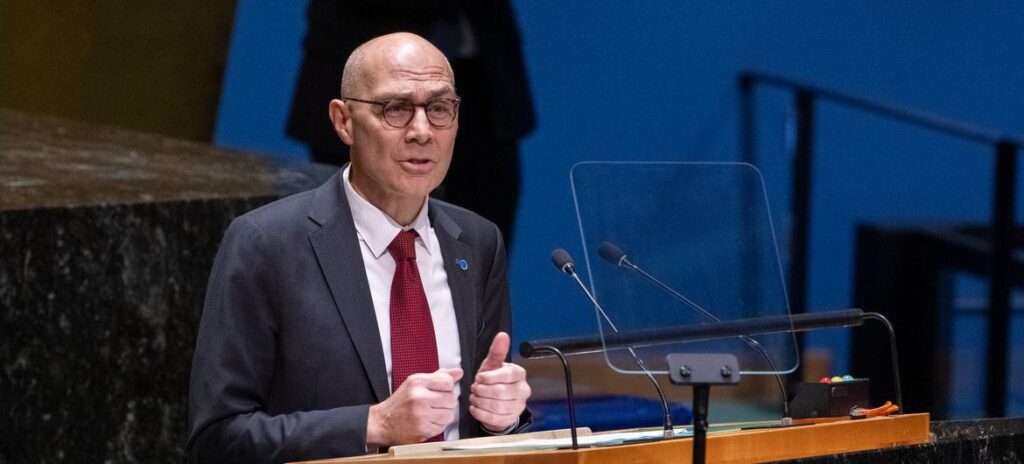
UN High Commissioner for Human Rights Volker Türk has expressed concern over deteriorating air quality in Bishkek during his official visit to Kyrgyzstan. The visit, focused on civil rights, freedom of speech, and economic development, also addressed pressing environmental issues affecting the Kyrgyz capital. Speaking at a press conference, Türk emphasized that Kyrgyzstan ranks among the most polluted countries in the region, and that air quality in Bishkek poses a serious threat to public health and the environment. “Despite some progress and financial support from international organizations, much more needs to be done to protect the environment,” he said. Türk urged Kyrgyz authorities to intensify efforts to combat climate change and to increase investment in green initiatives. He underscored the importance of climate finance and the need for comprehensive, cooperative action. “This issue must be addressed in partnership and through a climate change lens,” he said. “While there have been financial injections from international donors, they have not yet translated into sufficient results. Each country bears responsibility. Green investments are essential, not just for Kyrgyzstan, but for all nations. The government must take stronger, more effective action.” According to the 2024 World Air Quality Report from IQAir, cities across Central Asia consistently exceed World Health Organization (WHO) recommendations for fine particulate matter (PM2.5). The report notes the following annual average concentrations (in micrograms per cubic meter): Dushanbe: 46.3 Tashkent: 31.4 Bishkek: 21.2 Osh: 20.5 Almaty: 20.3 Astana: 15.4 For context, the WHO’s recommended safe limit for PM2.5 is no more than 5 micrograms per cubic meter.

Kazakhstan’s Karaganda Among World’s Most Polluted Cities as Central Asia Struggles with Air Quality

Kazakhstan’s Karaganda - the heartland of the nation's coal and metallurgical industries - was ranked as the world’s third most polluted city in 2024, according to the 2024 World Air Quality Report released by IQAir.  The report evaluates global air quality for 2024, presenting PM2.5 air pollution data collected from 8,954 cities across 138 countries, regions, and territories. PM2.5, or fine particulate matter, is measured in micrograms per cubic meter (µg/m³) and is a key indicator of air pollution. Karaganda recorded an annual average PM2.5 concentration of 104.8 µg/m³ in 2024. In comparison, Byrnihat, India, the world's most polluted city, had an average PM2.5 concentration of 128.2 µg/m³. Central Asian Cities in the Global Ranking Among the world’s most polluted cities, Central Asia’s major cities ranked as follows: Dushanbe, Tajikistan - 176th, PM2.5: 46.3 µg/m³ Tashkent, Uzbekistan - 510th, PM2.5: 31.4 µg/m³ Bishkek, Kyrgyzstan - 1009th, PM2.5: 21.2 µg/m³ Almaty, Kazakhstan - 1072nd, PM2.5: 20.3 µg/m³ Astana, Kazakhstan - 1608th, PM2.5: 15.4 µg/m³ Kazakhstan’s Regional Air Quality Standing In the ranking of the world's most polluted countries, Kazakhstan had the best air quality in Central Asia, ranking 71st globally. Other regional rankings were: Tajikistan - 6th most polluted country Uzbekistan - 19th Turkmenistan - 26th Kyrgyzstan - 41st Global Air Pollution Trends According to the report, only 17% of global cities met the World Health Organization (WHO) air pollution guideline for PM2.5. The seven countries that met the WHO’s annual average PM2.5 guideline of 5 µg/m³ were: Australia Bahamas Barbados Estonia Grenada Iceland New Zealand The five most polluted countries in 2024 were: Chad – 91.8 µg/m³ (more than 18 times higher than the WHO guideline) Bangladesh – 78.0 µg/m³ (more than 15 times higher) Pakistan – 73.7 µg/m³ (more than 14 times higher) Democratic Republic of the Congo – 58.2 µg/m³ (more than 11 times higher) India – 50.6 µg/m³ (more than 10 times higher) A total of 126 out of 138 countries (91.3%) exceeded the WHO’s annual PM2.5 guideline of 5 µg/m³. Air Pollution’s Impact on Human Health The report underscores that air pollution remains the greatest environmental threat to human health. According to the WHO, 99% of the global population lives in areas that do not meet recommended air quality levels. Air pollution is the second leading global risk factor for death and the second leading cause of death among children under five, following malnutrition. The health effects of air pollution include respiratory diseases, developmental issues, and increased mortality. In 2021 alone, 8.1 million deaths were attributed to air pollution, with 58% of those deaths caused by ambient PM2.5 pollution.

U.S. Ends Air Quality Data Sharing from Embassies

The United States has announced it will no longer share air quality data gathered from its diplomatic missions worldwide. This decision has sparked concerns among environmental groups, public health advocates, and nations that rely on this data to track pollution and safeguard public health. For over a decade, U.S. embassies and consulates have provided invaluable air quality data using state-of-the-art equipment to monitor pollutants such as PM2.5, a fine particulate matter with serious health implications at high levels. Updated hourly, this information was readily accessible online, empowering individuals and governments to make informed decisions on managing air pollution risks. The U.S. government has not provided any explanation for this decision. The Times of Central Asia has previously reported on poor air quality across the region sourcing data from U.S. embassies which saw both Tashkent and Bishkek enter the list of the ten worst cities in the world for air pollution, leading to warnings to “avoid outdoor exercise, close your windows, wear a mask outdoors, and run an air purifier.”

Magnus Carlsen Criticizes Almaty’s Air Quality After Chess Championship

Former world chess champion Magnus Carlsen has spoken about the challenges he faced while competing in the World Rapid Chess Championship in Kazakhstan. Speaking on The Joe Rogan Experience podcast, the Norwegian grandmaster revealed that Almaty’s poor air quality forced him to seek refuge in the mountains to recover and breathe fresh air. Carlsen described the tournament venue as a “strange place,” noting that Almaty suffers from severe air pollution in winter, creating an uncomfortable environment. To cope, he traveled to a mountainous area about an hour from the city, where he said the landscape resembled the Swiss Alps, with peaks reaching 3,500 meters. This trip caused Carlsen to be late for his match against Belarusian grandmaster Vladislav Kovalev. He started the game 2.5 minutes behind schedule, a significant disadvantage in a format where players have just three minutes for the entire game, plus two seconds per move. Despite the setback, Carlsen won both the match and the championship. “I was so miserable in the city that I realized if I wanted to keep playing, I needed to get out and get some fresh air. I decided to take the risk, and it worked,” he said in an interview. The tournament began on December 25, 2022, in Almaty, with a total prize fund of $1 million, fully sponsored by general partner Freedom Broker. Carlsen, widely regarded as one of the greatest chess players in history, held the world championship title from 2013 to 2023. He has won the World Rapid Chess Championship five times, claimed eight Blitz Chess titles, and secured victory in the 2023 FIDE World Cup.
