• KGS/USD = 0.01144 0%
  • KZT/USD = 0.00191 -0%
  • TJS/USD = 0.10838 0.37%
  • UZS/USD = 0.00008 0%
  • TMT/USD = 0.28571 0.28%
  • KGS/USD = 0.01144 0%
  • KZT/USD = 0.00191 -0%
  • TJS/USD = 0.10838 0.37%
  • UZS/USD = 0.00008 0%
  • TMT/USD = 0.28571 0.28%
  • KGS/USD = 0.01144 0%
  • KZT/USD = 0.00191 -0%
  • TJS/USD = 0.10838 0.37%
  • UZS/USD = 0.00008 0%
  • TMT/USD = 0.28571 0.28%
  • KGS/USD = 0.01144 0%
  • KZT/USD = 0.00191 -0%
  • TJS/USD = 0.10838 0.37%
  • UZS/USD = 0.00008 0%
  • TMT/USD = 0.28571 0.28%
  • KGS/USD = 0.01144 0%
  • KZT/USD = 0.00191 -0%
  • TJS/USD = 0.10838 0.37%
  • UZS/USD = 0.00008 0%
  • TMT/USD = 0.28571 0.28%
  • KGS/USD = 0.01144 0%
  • KZT/USD = 0.00191 -0%
  • TJS/USD = 0.10838 0.37%
  • UZS/USD = 0.00008 0%
  • TMT/USD = 0.28571 0.28%
  • KGS/USD = 0.01144 0%
  • KZT/USD = 0.00191 -0%
  • TJS/USD = 0.10838 0.37%
  • UZS/USD = 0.00008 0%
  • TMT/USD = 0.28571 0.28%
  • KGS/USD = 0.01144 0%
  • KZT/USD = 0.00191 -0%
  • TJS/USD = 0.10838 0.37%
  • UZS/USD = 0.00008 0%
  • TMT/USD = 0.28571 0.28%
11 November 2025

Viewing results 1 - 6 of 5

Made in Kazakhstan: Building an AI for a Nation

On a cold November morning at Al-Farabi University in Almaty, students gathered in a drafty lecture hall, many still wrapped in their coats. The setting was more reminiscent of a forgotten Soviet-era classroom than a venue for cutting-edge technology. But amid the peeling paint and rickety seats, some of the country’s most ambitious young researchers had come to discuss Kazakhstan’s latest steps into the world of artificial intelligence. The star billing came from the Institute of Smart Systems and Artificial Intelligence (ISSAI) at Nazarbayev University in Astana. Last year, the institute released KazLLM, its first Large Language Model (LLM), to much fanfare, inspired by a philosophy of building AI systems that understand the country’s language and culture rather than borrowing second-hand from Silicon Valley. But can Kazakhstan keep pace in the global AI race? And despite the government’s efforts to back local products, can it convince the population to use them over Western alternatives? Recent developments The Institute’s founder, Doctor Huseyin Atakan Varol, was keen to stress that steps have been taken to develop Kazakhstan’s native AI ecosystem over the past twelve months. “Since the release of KazLLM last year, we have witnessed what I would describe as a ‘Cambrian explosion’ of generative AI development,” he told The Times of Central Asia. “The KazLLM project enabled us to create the team and amass the know-how to build a new generation of multilingual and multimodal models tailored to Kazakhstan’s needs.” Among these, he lists Oylan, a multimodal language–audio-vision model; MangiSoz, a multilingual speech and text translation engine; TilSync, a real-time subtitle and translation engine; and Beynele, a text-to-image generation model. All these models have been fine-tuned to better reflect Kazakh culture and linguistic norms. “In short, we are building AI made in Kazakhstan, by Kazakhstani youth, for Kazakhstan –models that understand the language, culture, and needs of the people,” said Amina Baikenova, ISSAI’s Acting Deputy Director of Product and External Affairs, in an interview with TCA. [caption id="attachment_39061" align="aligncenter" width="1600"] The old lecture hall at Al-Farabi University, Almaty; image: TCA, Joe Luc Barnes[/caption] Much of this progress stems from the enthusiasm of a generation of students, whom Kazakhstan has invested heavily in training. Indeed, the country has become a magnet for young researchers from across Central Asia. “After completing my bachelor’s degree in Kyrgyzstan, I was looking for opportunities to build my research career. That’s why I moved to Kazakhstan,” said Adam Erik, an ISSAI student from Bishkek. “Kazakhstan has become a scientific center of Central Asia.” Erik believes strongly in building local language models. “There is a thing called bias in data sets,” he said. “Models from the U.S., China, or Europe are incredible, but they’re trained mostly on Western culture and literature. Local solutions are still necessary.” These sentiments reflect a common frustration among researchers: even the best global AI systems stumble when asked about Kazakh idioms, rural social norms, or local history. The data used to train the world’s most powerful models rarely includes more than a sliver...

OCA Magazine Shines Spotlight on Education in Eurasia

The latest edition of OCA Magazine (UK) focuses on the challenges and opportunities facing education in Central Asia, the CIS, and neighbouring regions. The special issue, OCA Magazine: Education, explores digital transformation, women’s access to higher education, and the drive to modernise universities in a fast-changing global environment. The special edition includes success stories from Kazakhstan’s Al-Farabi Kazakh National University and Saken Seifullin Kazakh Agrotechnical Research University, where AI, digital campuses, and international double-degree programmes are reshaping learning. The issue also features insights from British tourism expert, Sophie Ibbotson, who predicts that by 2033, tourism in Uzbekistan could generate over 290,000 direct jobs, making hospitality and creative education a national priority. The Methodica School and Tashkent International School, pioneers of innovative and multicultural learning, are also in the spotlight, as well as Tajikistan’s cultural renaissance, where music education and the work of composer Tolibkhon Shakhidi exemplify the fusion of tradition and modernisation. The edition, supported by Hertfordshire Press and the Eurasian Creative Guild (London), is distributed to universities, diplomatic missions, and cultural institutions worldwide. A digital version is available at ocamagazine.com.

Kazakh Archaeologists Uncover Scythian-Era Treasures

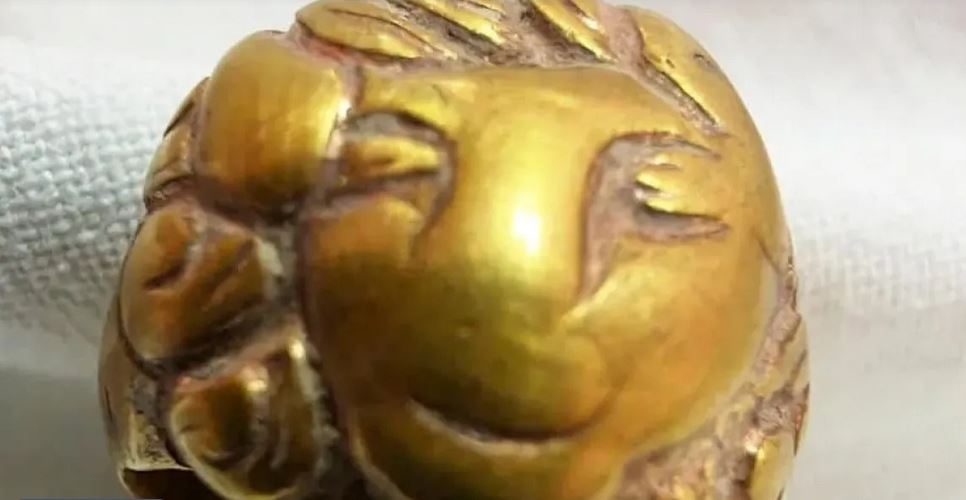
Archaeologists from Al-Farabi Kazakh National University have uncovered artifacts from the Scythian era in Kazakhstan’s Almaty region, including a rare gold ring weighing nearly eight grams. A Symbol of Power and Authority The excavations took place in the Uyghur district near the village of Togyzbulak and were led by Professor Dosbol Baigunakov, dean of the university’s history department. The team studied the Togyzbulak-1 and Togyzbulak-2 burial mound complexes, which contain more than 20 ancient burial sites. Among the most notable discoveries were burial mounds No. 3 and No. 4, which contained the remains of a man and a woman, along with ceramic vessels, iron and stone artifacts, and gold jewelry. The standout find was a gold ring engraved with a lion, a symbol of strength and authority. Researchers believe the image combines human and animal traits, reflecting the spiritual worldview of the Saka tribes in the 3rd-4th centuries BC. “These findings confirm that the territory of the modern Uyghur region was a cultural center of the Saka civilization,” the university said in a statement. Ruins of a Burned City [caption id="attachment_33402" align="aligncenter" width="931"] Image: Al-Farabi National University[/caption] Separately, a potentially groundbreaking discovery has been made in the Zhetysu region. Olga Gumirova, executive director of the Petroglyph Hunters Foundation, reported the discovery of ruins from a medieval city previously known only through historical texts. Archaeologists unearthed remnants of a tower, fragments of brick walls, and traces of fire, suggesting the city may have been destroyed during the Mongol invasion. While further research is ongoing, early comparisons are being drawn to the UNESCO World Heritage Sites of Talkhiz and Koylyk. A month earlier, archaeologists from the Saryarka Archaeological Institute discovered 25 historical and cultural sites in the Shet district of the Karaganda region. These include burial mounds, necropolises, and complexes dating to the Bronze Age, Iron Age, and Middle Ages. According to the institute’s director, Alexei Kukushkin, this marks the beginning of an extensive research campaign, with formal dating pending excavation approvals. The “Golden Man” and Buddhist Relics One of the most significant archaeological discoveries in recent years is the 2018 find in the Tarbagatay district of East Kazakhstan, where over 3,000 gold artifacts were unearthed in a burial site. Led by renowned archaeologist Zainolla Samashev, the expedition found women’s bell earrings, gemstone necklaces, and ornate horse adornments dating to the 7th-8th centuries BC, treasures of exceptional artistic and historical value. Another major discovery occurred in the Ayranada Gorge in the Merken district, where archaeologists found fragments of an ancient Buddhist temple and a carved stone head of Buddha. Anna Krokosheva, senior researcher at the Museum of Ancient Taraz, noted that the find reinforces the region’s historical importance along the Silk Road. Despite the site’s remote location at over 3,000 meters above sea level, the artifacts are well-preserved and could enhance scientific and cultural tourism in southern Kazakhstan.