• KGS/USD = 0.01144 0%
  • KZT/USD = 0.00206 0%
  • TJS/USD = 0.10736 -0.19%
  • UZS/USD = 0.00008 0%
  • TMT/USD = 0.28571 0%
  • KGS/USD = 0.01144 0%
  • KZT/USD = 0.00206 0%
  • TJS/USD = 0.10736 -0.19%
  • UZS/USD = 0.00008 0%
  • TMT/USD = 0.28571 0%
  • KGS/USD = 0.01144 0%
  • KZT/USD = 0.00206 0%
  • TJS/USD = 0.10736 -0.19%
  • UZS/USD = 0.00008 0%
  • TMT/USD = 0.28571 0%
  • KGS/USD = 0.01144 0%
  • KZT/USD = 0.00206 0%
  • TJS/USD = 0.10736 -0.19%
  • UZS/USD = 0.00008 0%
  • TMT/USD = 0.28571 0%
  • KGS/USD = 0.01144 0%
  • KZT/USD = 0.00206 0%
  • TJS/USD = 0.10736 -0.19%
  • UZS/USD = 0.00008 0%
  • TMT/USD = 0.28571 0%
  • KGS/USD = 0.01144 0%
  • KZT/USD = 0.00206 0%
  • TJS/USD = 0.10736 -0.19%
  • UZS/USD = 0.00008 0%
  • TMT/USD = 0.28571 0%
  • KGS/USD = 0.01144 0%
  • KZT/USD = 0.00206 0%
  • TJS/USD = 0.10736 -0.19%
  • UZS/USD = 0.00008 0%
  • TMT/USD = 0.28571 0%
  • KGS/USD = 0.01144 0%
  • KZT/USD = 0.00206 0%
  • TJS/USD = 0.10736 -0.19%
  • UZS/USD = 0.00008 0%
  • TMT/USD = 0.28571 0%

Viewing results 1 - 6 of 4

Tokayev Calls for Greater Role for Kazakhstani Businesses in Alatau City Development

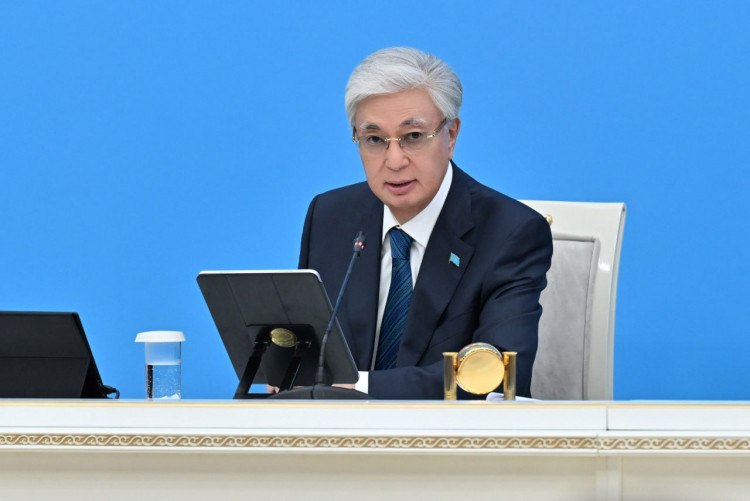
Kazakhstani entrepreneurs must become full participants in the development of Alatau City, the country’s flagship smart city project, alongside foreign investors, Kazakhstan’s president Kassym-Jomart Tokayev said. He made the remarks during a meeting on the future of what is envisioned as Kazakhstan’s first fully digital city. In 2024, Tokayev signed a decree granting city status to Zhetygen village, located approximately 50 kilometers from Almaty, Kazakhstan’s largest city. Alatau City incorporates Zhetygen as well as the settlements of Enbek, Zhanaarna, and Kuigan, along with parts of Konaev and Talgar district in Almaty Region. The project is designed as a smart city comprising four distinct zones: the Gate District, a financial and business center; the Golden District, focused on education and healthcare; the Growing District, dedicated to industrial and logistics facilities; and the Green District, intended for recreation and entertainment. Speaking at the June 2 meeting in Almaty, Tokayev said more than 50 investment projects had already been identified for Alatau City, with a combined value of approximately $4 billion and the potential to create more than 50,000 jobs. He called for the portfolio to be expanded in the next one or two years by attracting investors to priority sectors. Domestic businesses, he said, must become “full participants in the city’s development rather than mere observers.” Tokayev cited Shenzhen and special legal regimes in Hainan, Dubai, and Singapore as examples of places where governments played an early role by building core infrastructure. That approach, he added, reduces risks for businesses, creates predictable conditions for private capital, and can generate a cycle in which public infrastructure investment attracts private capital and future tax revenues. The president warned that shifting the burden of initial infrastructure investment to the private sector can reduce a project’s appeal and lead to monopolistic structures with excessive tariffs. He instructed the government to ensure stable financing for Alatau City’s core infrastructure during the initial stage and said the city could be given additional borrowing limits and authority to undertake government borrowing until it develops a sustainable revenue base. Budget funds, he said, must be used strictly for investment purposes and linked to the city’s long-term development. Tokayev directed investment toward priority sectors including information technology, industry, transport and logistics, tourism, healthcare, and education. To create a favorable investment climate, he instructed officials to follow international standards, especially in areas where national regulations lag behind global practice. He identified Alatau City as a strategic platform for the rapid development of digital assets and a new financial architecture for Kazakhstan. Additionally, he called for the quick removal of excessive barriers in the sector and the introduction of new financial instruments. These would include a clear legal status for digital assets, recognition of crypto assets as property, and the use of the digital tenge within the new system. Tokayev also proposed a zero tax rate on digital asset transactions and capital gains generated within the jurisdiction, as well as faster work to tokenize real-sector assets, including real estate, infrastructure projects, and natural...

Air Taxi Service in Kazakhstan Unlikely to Launch Commercially Before 2029

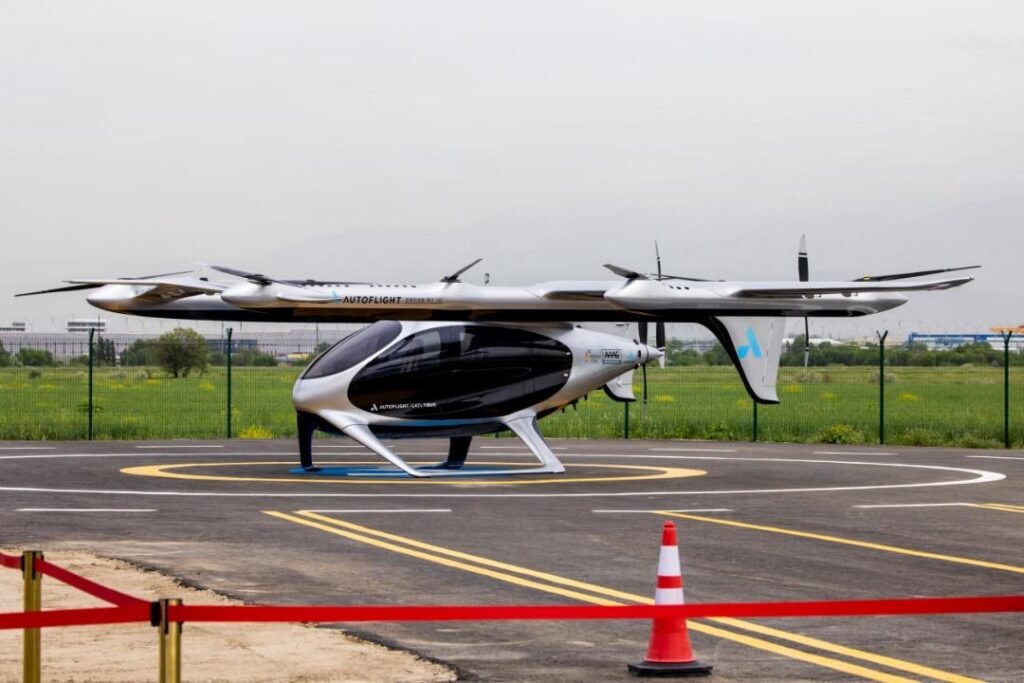
An air taxi service being developed in Kazakhstan’s Almaty Region is unlikely to begin full commercial operations before 2029, Almaty Region Governor Marat Sultangaziev said during test flights of the new transport system in Alatau, a newly established “city of the future” near Almaty. On May 19, Alatau hosted Central Asia’s first public launch of an electric vertical takeoff and landing (eVTOL) aircraft, marking the debut of air taxi technology in the region. Developers say the electric air taxi is expected to help reduce traffic congestion, connect tourist destinations, and shorten travel times. The aircraft can reach speeds of up to 200 kilometers per hour and travel distances of up to 200 kilometers on a single charge. Equipped with 13 electric motors, the air taxi is designed to carry one pilot and five passengers. In accordance with safety requirements, the first demonstration flight was conducted without passengers, the press service of the Almaty regional administration reported. Almaty Region Governor Marat Sultangaziev, who attended the launch event, described the initiative as strategically important for Kazakhstan’s transport sector. At the same time, he said the project would require infrastructure development and a comprehensive legal framework before commercial operations could begin. “Project initiators are now working on that process, and we will support them where necessary. They plan to transition from test operations to industrial-scale implementation around 2029. This initiative fully aligns with the concept of developing Alatau as a center for innovation and digitalization,” Sultangaziev said. Alisher Abdykadyrov, CEO of the Alatau City Authority state fund, said specially equipped vertiports would be used for eVTOL takeoffs and landings. The facilities would include charging and navigation systems and could be integrated into urban environments, including rooftops, transport hubs, and business districts. Construction of the first vertiport in Alatau has already begun, Abdykadyrov said, with additional facilities planned for Almaty and tourist destinations across the Almaty Region. The future network is expected to connect key transport hubs throughout the region. “Today we are witnessing a historic moment for Kazakhstan,” Abdykadyrov said. “This is not simply a demonstration of a new technology, but the beginning of a new phase in the city’s development based on innovation and digital technologies. Alatau is envisioned as a city of the future, which makes it especially symbolic that the development of air mobility and a new industry begins here.” “Our goal is not only to introduce the technology itself, but to build a complete ecosystem around it, creating infrastructure, developing engineering expertise, and generating new jobs,” he added. Regarding the legal regulation of the new mode of transport, Daniyar Uteulin, project manager at Alatau Advanced Air Group (AAAG), said the first package of regulatory proposals has already been prepared and submitted to the government for consideration. According to Uteulin, the draft regulations are based on the experience of countries where urban air mobility technologies are already developing rapidly, including the United States, China, South Korea, and several Middle Eastern countries. Kazakhstan is expected to designate a separate flight corridor...

Kazakhstan’s Kapchagay Reservoir Reaches 98% Capacity

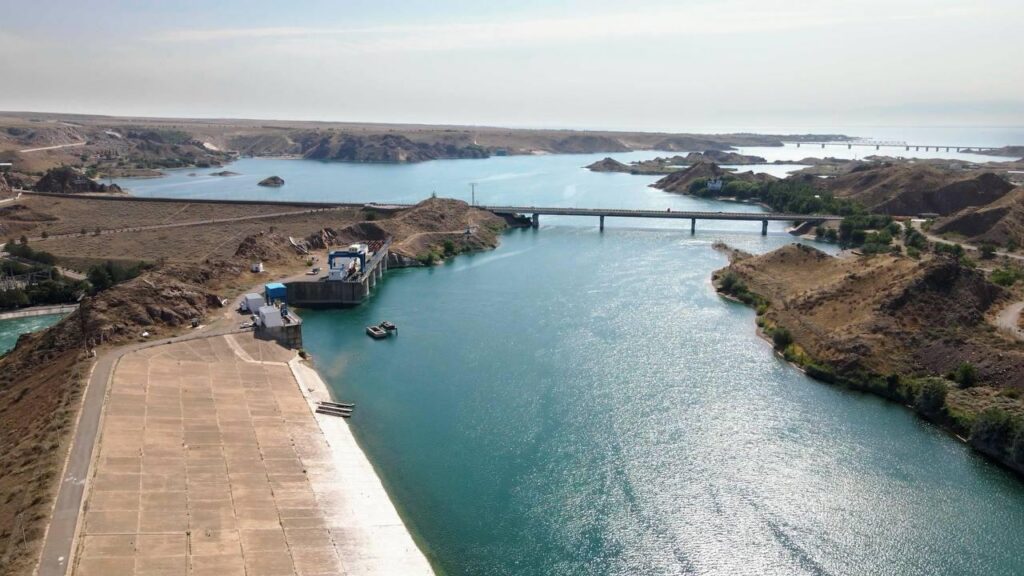
Kazakhstan’s Kapchagay Reservoir in the Almaty Region is now 98% full, holding 18.04 billion cubic meters of water, according to the Ministry of Water Resources and Irrigation. The reservoir collects water from the transboundary Ili River, which originates in China, and regulates water flow into Lake Balkhash, Kazakhstan’s largest lake. During the most recent non-growing season, approximately 4 billion cubic meters of water were released from the reservoir into Lake Balkhash. Officials say the near-full capacity of the reservoir will ensure sufficient irrigation supplies for agricultural land in the Akdala and Shengeldy rural districts of the Almaty Region. “We maintain constant communication with our Chinese colleagues on transboundary river issues, including the Ili River. Thanks to the coordinated efforts of the two countries, farmers in the Almaty Region have been provided with a stable supply of irrigation water for the third consecutive year,” said Seilbek Nurymbetov, chairman of the ministry’s Committee for Regulation, Protection, and Use of Water Resources. The Times of Central Asia previously reported that the Kapchagay Reservoir reached full capacity in August 2024 for the first time in a decade. Created in 1970 as an artificial lake stretching roughly 100 kilometers in length and up to 25 kilometers wide in some areas, the reservoir has a total capacity of more than 18 billion cubic meters of water. The reservoir was originally designed to regulate the flow of the Ili River before it reaches Lake Balkhash. Today, it also serves irrigation, fish farming, and recreational purposes. Located about an hour’s drive from Almaty, its beaches are a popular destination for tourists and local residents. Three of Kazakhstan’s major rivers, the Irtysh, Ili, and Emel, originate in China. The Ili River alone provides about 70% of the water flowing into Lake Balkhash. Located approximately 280 kilometers northwest of Almaty, Lake Balkhash is the world’s fifteenth-largest lake.

Construction Begins in Kazakhstan on a World-Class Film Studio for a Movie Starring Jackie Chan

A project has been launched in Kazakhstan’s Almaty region that could significantly transform the local film industry. Construction has begun in the city of Kaskelen on the “Dala Stage” film studio project, which is positioned as a world-class facility and is being developed with the participation of international partners. According to local authorities, one of the most notable moments at the project’s groundbreaking ceremony was the delivery of a time capsule from Jackie Chan, which was transported by helicopter. The capsule was received by director Robert Koon, who is set to work on the first production at the new site, Armor of God 4: Ultimatum. “The film industry is developing rapidly, requiring increasingly large-scale solutions and advanced technologies. This new project will allow local professionals to compete at a global level,” said Almaty Region Akim Marat Sultangaziev. Producer Li Chiu Wa conveyed greetings from Jackie Chan and said the project is progressing quickly. He said that just six months ago it was still at the discussion stage, but construction has already begun. The key parameters of the future facility have already been outlined. The total site will cover 15 hectares, with built-up space of 3,000 square meters. The project extends beyond the construction of a film studio and is intended to support the development of the national film industry, including training specialists and attracting investment.