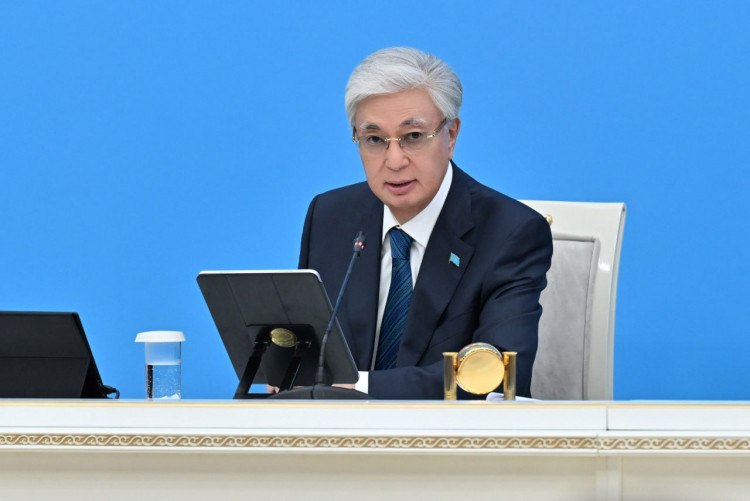
Kazakhstani entrepreneurs must become full participants in the development of Alatau City, the country’s flagship smart city project, alongside foreign investors, Kazakhstan’s president Kassym-Jomart Tokayev said. He made the remarks during a meeting on the future of what is envisioned as Kazakhstan’s first fully digital city.
In 2024, Tokayev signed a decree granting city status to Zhetygen village, located approximately 50 kilometers from Almaty, Kazakhstan’s largest city. Alatau City incorporates Zhetygen as well as the settlements of Enbek, Zhanaarna, and Kuigan, along with parts of Konaev and Talgar district in Almaty Region.
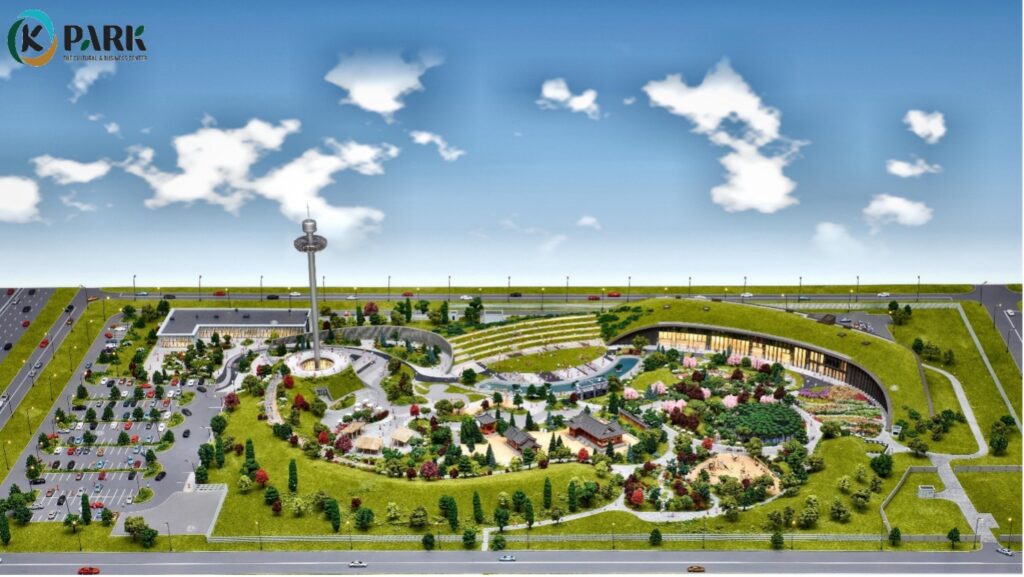
The project is designed as a smart city comprising four distinct zones: the Gate District, a financial and business center; the Golden District, focused on education and healthcare; the Growing District, dedicated to industrial and logistics facilities; and the Green District, intended for recreation and entertainment.
Speaking at the June 2 meeting in Almaty, Tokayev said more than 50 investment projects had already been identified for Alatau City, with a combined value of approximately $4 billion and the potential to create more than 50,000 jobs.
He called for the portfolio to be expanded in the next one or two years by attracting investors to priority sectors. Domestic businesses, he said, must become “full participants in the city’s development rather than mere observers.”
Tokayev cited Shenzhen and special legal regimes in Hainan, Dubai, and Singapore as examples of places where governments played an early role by building core infrastructure. That approach, he added, reduces risks for businesses, creates predictable conditions for private capital, and can generate a cycle in which public infrastructure investment attracts private capital and future tax revenues.
The president warned that shifting the burden of initial infrastructure investment to the private sector can reduce a project’s appeal and lead to monopolistic structures with excessive tariffs. He instructed the government to ensure stable financing for Alatau City’s core infrastructure during the initial stage and said the city could be given additional borrowing limits and authority to undertake government borrowing until it develops a sustainable revenue base. Budget funds, he said, must be used strictly for investment purposes and linked to the city’s long-term development.
Tokayev directed investment toward priority sectors including information technology, industry, transport and logistics, tourism, healthcare, and education. To create a favorable investment climate, he instructed officials to follow international standards, especially in areas where national regulations lag behind global practice.
He identified Alatau City as a strategic platform for the rapid development of digital assets and a new financial architecture for Kazakhstan.
Additionally, he called for the quick removal of excessive barriers in the sector and the introduction of new financial instruments. These would include a clear legal status for digital assets, recognition of crypto assets as property, and the use of the digital tenge within the new system. Tokayev also proposed a zero tax rate on digital asset transactions and capital gains generated within the jurisdiction, as well as faster work to tokenize real-sector assets, including real estate, infrastructure projects, and natural resources.
The president said such changes would require a control system based on digital identification and transparent transaction monitoring, balancing security with investment appeal.
Tokayev devoted considerable attention to Alatau City’s future energy supply. He noted that residents of the communities incorporated into the new city continue to complain about unreliable internet access, poor roads, limited centralized water supply, and frequent power outages.
Such problems persist across much of Almaty Region, highlighting the contrast between the ambitious plans for Alatau City and existing socioeconomic conditions on the ground.
“I consider this situation a shortcoming on the part of the government, particularly Deputy Prime Minister Kanat Bozumbayev and Almaty Region Governor Marat Sultangaziyev,” Tokayev said.
Tokayev described the expansion and modernization of Kazakhstan’s energy capacity as a national priority, but said the discussion should not be limited to building new power plants. He urged authorities to pay more attention to energy losses and apply the International Energy Agency’s “First Fuel” concept, which prioritizes energy efficiency and conservation.
According to Ministry of Industry data cited by Tokayev, total electricity losses exceeded 9 billion kilowatt-hours in 2024, more than the entire annual electricity consumption of Atyrau Region. He added that Kazakhstan’s economy remains one of the most energy-intensive in the world, with GDP energy intensity twice the global average and 3.5 times higher than that of OECD countries.
Tokayev attributed the sector’s problems to aging infrastructure and long transmission distances, as well as inefficient consumption practices.
“We need to explain to people that electricity should be used efficiently. Alatau City must become an example of rational and resource-saving approaches,” he said.
As previously reported by The Times of Central Asia, Deputy Prime Minister Kanat Bozumbayev said Alatau City, whose population is projected to reach 3 million by 2050, is expected to rely on a combination of gas-fired generation and renewable energy sources for its power supply.