Iran’s Ambassador in Tashkent Defends Tehran’s Position on Middle East Conflict
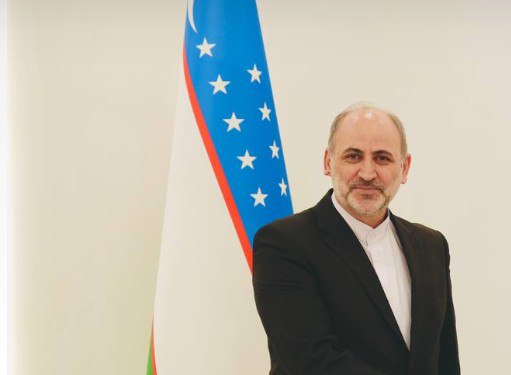
Iran’s ambassador to Uzbekistan, Mohammad Ali Iskandari, has held a press conference in Tashkent during which he sharply criticizing the United States and Israel for the escalating war in the Middle East. According to the Uzbek diplomatic news platform UzDiplomat, Iskandari spoke with journalists about Tehran’s position on the fighting and the broader political tensions. “We are fighting a mindset, the mindset that everything belongs to them,” Iskandari said on Wednesday, referring to Israel and the United States. “We did not start this war,” the ambassador said, adding that the escalation began while diplomatic negotiations were still underway. He said the conflict was closely tied to Israel’s regional policies and the decisions of its leadership. According to Uzbek journalist Sharofiddin Tulaganov, who attended the event and later described it on his Telegram channel, Iskandari said the air strike that killed Iranian Supreme Leader Ali Hosseini Khamenei was a violation of international law. Iran’s theocratic leadership has long been a source of international concern because of its nuclear program, sponsorship of proxy forces in the Middle East, and bloody crackdowns on protesters seeking more freedom. U.S. President Donald Trump and senior administration officials cited those concerns in the run-up to the air strike campaign, indicating that the United States wants a change of leadership in Iran. The Iranian ambassador also condemned an alleged air strike that hit a school in Iran, killing, by Iskandari’s account, 168 Iranian girls between the ages of seven and twelve. The U.S. military has said it is investigating the incident. The ambassador maintained that Iran’s military actions have targeted only specific facilities, including U.S. military bases and intelligence centers belonging to the United States and Israel. However, some missiles and drones fired from Iran have reportedly hit civilian locations in several Gulf Arab states, and Azerbaijan said that drones launched from Iranian territory struck Azerbaijan’s Nakhchivan Autonomous Republic on Thursday. It said one drone fell on the terminal building of Nakhchivan International Airport, while another crashed near a school in the village of Shekerabad. Governments in Uzbekistan, Kazakhstan, and other Central Asian countries have tried to maintain a balance, keeping in touch with their Iranian counterparts while expressing support for Gulf states that have activated air defense facilities because of the Iranian threat.