• KGS/USD = 0.01143 0%
  • KZT/USD = 0.00200 0%
  • TJS/USD = 0.10593 -0.19%
  • UZS/USD = 0.00008 0%
  • TMT/USD = 0.28575 0%
  • KGS/USD = 0.01143 0%
  • KZT/USD = 0.00200 0%
  • TJS/USD = 0.10593 -0.19%
  • UZS/USD = 0.00008 0%
  • TMT/USD = 0.28575 0%
  • KGS/USD = 0.01143 0%
  • KZT/USD = 0.00200 0%
  • TJS/USD = 0.10593 -0.19%
  • UZS/USD = 0.00008 0%
  • TMT/USD = 0.28575 0%
  • KGS/USD = 0.01143 0%
  • KZT/USD = 0.00200 0%
  • TJS/USD = 0.10593 -0.19%
  • UZS/USD = 0.00008 0%
  • TMT/USD = 0.28575 0%
  • KGS/USD = 0.01143 0%
  • KZT/USD = 0.00200 0%
  • TJS/USD = 0.10593 -0.19%
  • UZS/USD = 0.00008 0%
  • TMT/USD = 0.28575 0%
  • KGS/USD = 0.01143 0%
  • KZT/USD = 0.00200 0%
  • TJS/USD = 0.10593 -0.19%
  • UZS/USD = 0.00008 0%
  • TMT/USD = 0.28575 0%
  • KGS/USD = 0.01143 0%
  • KZT/USD = 0.00200 0%
  • TJS/USD = 0.10593 -0.19%
  • UZS/USD = 0.00008 0%
  • TMT/USD = 0.28575 0%
  • KGS/USD = 0.01143 0%
  • KZT/USD = 0.00200 0%
  • TJS/USD = 0.10593 -0.19%
  • UZS/USD = 0.00008 0%
  • TMT/USD = 0.28575 0%
22 February 2026

Viewing results 1 - 6 of 53

Chinese Uzbek Archaeologists Uncover Ancient City Walls at Kuva Silk Road Site

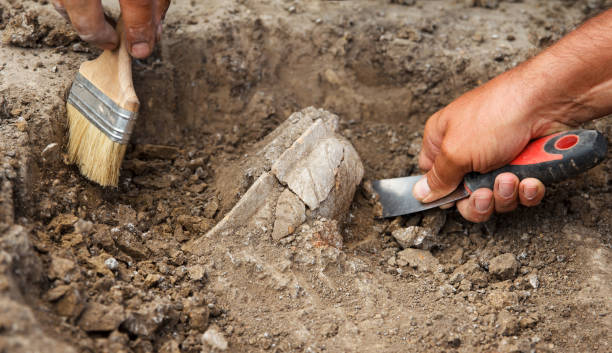
A team of Chinese and Uzbek archaeologists has uncovered a well-preserved section of city walls at the ancient settlement of Kuva in eastern Uzbekistan, dating from the 3rd century BCE to the 10th century CE, according to a report published by Xinhua. The discovery was made by the joint Luoyang-Ferghana archaeological expedition. Researchers say the find offers critical physical evidence for understanding the historical development of a Silk Road city and the enduring cultural exchange between East and West. The team also hailed the excavation as a key achievement of international cooperation under the Belt and Road Initiative. Located in the Ferghana Valley, a historic hub along the ancient Silk Road, the ruins of Kuva cover an area of approximately 110,000 square meters. Xinhua noted that the valley has maintained close ties with China for over 2,000 years. Preliminary findings indicate that the city’s fortifications were rebuilt multiple times and remained in use across several historical eras from the Parthian Kingdom and the states of Dayuan and Sogdiana to the Samanid dynasty. Liu Bin, head of the Chinese delegation to the joint expedition, said the evolving construction techniques used in the walls provide valuable insights into the architectural practices, building materials, and cultural influences of different periods. He added that such features help trace the diffusion of cultural traditions along major trade routes. The Luoyang-Ferghana team was established in 2023 as a collaboration between the Luoyang Archaeological Institute in China’s Henan Province and Ferghana State University in Uzbekistan. Since then, archaeologists have identified palaces, city gates, fortifications, residential structures, streets, and craft workshops at the site. Liu Bin noted that systematic excavations of the palace areas are planned for next year, which will further clarify the city’s layout and functional zones. As previously reported by The Times of Central Asia, similar Chinese-Uzbek archaeological partnerships are underway in Surkhandarya, Samarkand, Ferghana, and Khorezm. These projects have led to discoveries of ancient settlements, urban infrastructure, and even an Iron Age city-state, underscoring the growing scope of bilateral archaeological cooperation in Uzbekistan.

Kazakh Archaeologists Contribute to Landmark Discovery on the Origins of Dog Domestication

A groundbreaking study co-authored by Kazakh archaeologists has challenged long-held assumptions about the history of dog domestication. The research, titled “Wide Diversity of Dogs Thousands of Years Before Modern Breeding Methods,” was published in Science, the oldest scientific journal in the U.S. The study was led by researchers from the University of Exeter (UK) and France’s National Center for Scientific Research and included contributions from 40 institutions worldwide. Kazakh scientists V.K. Merz and I.V. Merz of Toraygyrov University, along with E.R. Usmanova and V.V. Varfolomeev of the E.A. Buketov Karaganda National Research University, were among the co-authors. The international team conducted a comprehensive comparative analysis of 643 dog and wolf skulls spanning the last 50,000 years from the Pleistocene to the present day. Using high-resolution 3D scanning, they analyzed over 600 specimens, revealing that dogs already displayed significant morphological diversity during the early Holocene epoch. This diversity, previously believed to be the result of 19th-century selective breeding, was shown to have originated far earlier. The analysis traced the emergence of distinct dog types, including variations in size and skull structure, as early as 11,000 years ago. By the Mesolithic and Neolithic periods, dogs had already begun to differ in form, likely reflecting specialized roles such as hunting, guarding, and herding within human societies. The researchers concluded that functional differentiation was a key driver in the development of what would eventually become distinct breeds. Their findings refute the common belief that modern breed variation is a relatively recent phenomenon. In fact, many differences in skull shape and size long predate the advent of formal breeding practices. Kazakhstan’s archaeological collections and local expertise played a significant role in the project, underscoring the country’s growing contributions to global archaeozoological research. Kazakhstan’s Broader Scientific Advances In addition to this landmark discovery, Kazakh scientists continue to make technological strides across disciplines. Researchers at the Institute of Combustion Problems have developed a device capable of converting hydrocarbon gases into 98.9% pure hydrogen and technical carbon in a single stage. Operating at plasma temperatures of up to 2,700°C, the unit requires no catalysts and consumes less energy than traditional methods. It also produces giant nanotubes with diameters reaching 100 nanometres. Meanwhile, scientists at Al-Farabi Kazakh National University have introduced a mobile preservation unit capable of drying and storing a wide range of food products from fruit to fish for up to 10 to 50 years using specialized packaging. These developments signal Kazakhstan’s expanding role in cutting-edge research and innovation across multiple scientific domains.

Medieval Wall Paintings Discovered at Ancient Kanka Site in Uzbekistan

Archaeologists in Uzbekistan have uncovered rare wall paintings dating back to the 10th-11th centuries at the ancient site of Kanka in the Tashkent region, according to a report by UzA. The excavation is being led by researchers from the Institute of History at the Academy of Sciences of Uzbekistan, with support from the Tashkent regional administration. Dilnoza Jamolova, the institute’s deputy director, stated that the mural fragments were discovered within the remains of a large caravanserai located in the shahristan (inner city) of ancient Kanka. The structure, situated approximately 60 meters south of the city’s southern gate, measures around 100 by 70 meters and is noted for its significant architectural features. Inside one of the caravanserai’s rooms, archaeologists found fragments of wall paintings that had fallen from the walls. The pieces, ranging from 15×20 to 30×35 centimeters, confirm that the building’s interior was once adorned with mural artwork. Experts say the discovery is notable evidence that wall painting, a tradition believed to have declined following the Arab conquest, experienced a revival in the Tashkent region during the 10th and 11th centuries. Similar wall paintings have been identified at other prominent Central Asian archaeological sites, including Samarkand and Ahsikent. The ongoing study, which involves restorers from the Samarkand Archaeological Institute under the Cultural Heritage Agency, also suggests the existence of a distinct mural art tradition in medieval Tashkent. In earlier excavations at Kanka in 2023, researchers discovered murals dating back to the 5th-7th centuries. The latest findings are expected to offer new insights into the cultural and artistic life of the region and to deepen scholarly understanding of Tashkent’s medieval heritage. Previously, The Times of Central Asia reported on another major archaeological discovery in southern Uzbekistan, where scientists found evidence that hunter-gatherer communities were harvesting wild barley as early as 9,200 years ago, challenging long-standing theories about the origins of agriculture in the ancient world.

Dinosaur Fossils Unearthed in Uzbekistan and Tajikistan Illuminate Central Asia’s Prehistoric Past

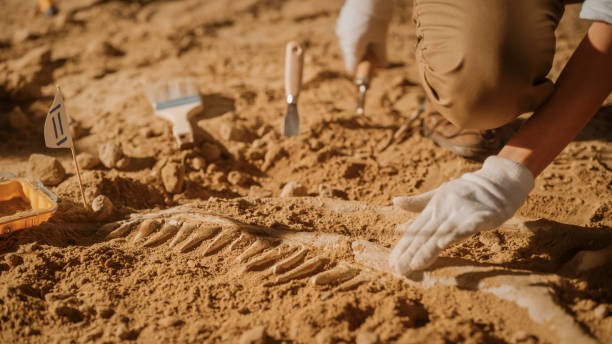
Rare dinosaur remains estimated to be around 75 million years old have been uncovered in Uzbekistan’s Karakalpakstan region, according to the State Geological Museum. The discovery adds to a growing body of paleontological evidence shedding light on Central Asia’s ancient ecosystems. On October 12, Akhmadjon Akhmedshaev, Director of the State Geological Museum, visited the excavation site near the Khodzhakul foothills in the Sultan Uvays mountain range, where the “Uzbek Geologiya Qidiruv” expedition had uncovered fossilized dinosaur bones during a geological survey. Found at a depth of approximately three meters, the remains are believed to belong to a large dinosaur from the Cretaceous period, dating back roughly 65-75 million years. The fossils include fragments of vertebrae, ribs, and leg bones, all remarkably well preserved. Scientists believe the find could offer valuable insights into the types of dinosaurs that once inhabited what is now western Uzbekistan. The region is thought to have been a humid, coastal environment during the late Cretaceous. The fossils are currently undergoing analysis at the State Geological Museum to determine their species and any potential connections to previously identified dinosaurs from Central Asia. Meanwhile, paleontologists from St. Petersburg State University have announced a second significant find, this time in Tajikistan. Researchers uncovered a well-preserved fragment of a duck-billed dinosaur skull. According to spbdnevnik.ru, the fossil’s exceptional condition may enable scientists to accurately identify the species and potentially describe a new genus. Comparative analysis is now underway with fossil collections from other countries to trace its evolutionary lineage.

Dinosaur Skull Fragment Unearthed in Tajikistan Could Signal Discovery of New Species

Paleontologists from St. Petersburg State University have uncovered a remarkably well-preserved fragment of a duck-billed dinosaur skull in Tajikistan, a rare and potentially groundbreaking find for the region. According to scientists, the skull fragment is in near-perfect condition, allowing for precise classification. Experts believe the discovery could lead to the identification of a previously unknown genus of dinosaurs. Russian researchers are now conducting a comparative analysis, examining the specimen alongside collections from other countries. The dinosaur belongs to the hadrosaur family, a group known for their distinctive elongated, duck-like snouts. These herbivorous reptiles lived during the late Cretaceous period. Researchers say the find may offer new insights into the evolutionary history of dinosaurs in Central Asia. Tajikistan is emerging as a key site for the study of the Cretaceous era. In a previous discovery near the village of Kansai in the Sughd region, paleontologists unearthed dinosaur remains estimated to be around 85 million years old. The area, often described as a “chronicle of the ancient world,” has yielded fossils not only of dinosaurs but also of turtles, crocodiles, amphibians, and ancient fish. Kansai has long been on the scientific map. In the 1960s and 1980s, expeditions led by the renowned Soviet paleontologist Anatoly Rozhdestvensky explored the region extensively. His team identified several new species, including therizinosaurs. One of the most notable finds from that era was a nearly complete femur of a therizinosaur. Many of these rare specimens are now housed in the History and Local Lore Museum of the Sogdian Region, which attracts visitors with its collection of prehistoric fossils and other ancient artifacts. Among the museum’s standout items is the jawbone of a southern elephant, estimated to be 2.5 million years old. It was discovered on the shore of the Kayrakkum Reservoir in 2013. According to museum director Mansur Boimatov, similar remains were first uncovered in 1978. At that time, local artisans created a bas-relief of the elephant, which was later installed in the Khujand Museum.

Beneath the Silk Road: China’s Archaeological Diplomacy in Uzbekistan

As China’s economic footprint expands across Central Asia, Beijing is quietly pursuing another, subtler form of influence - one that reaches beneath the soil rather than above it. Alongside highways, pipelines, and industrial parks, China is investing in archaeological diplomacy that uses shared history and cultural discovery to deepen ties with its neighbors. Uzbekistan has emerged as a key partner in this effort. Beyond trade and infrastructure, the two countries are now working hand in hand to uncover the remnants of ancient civilizations that once thrived along the Silk Road. This collaboration combines science and strategy, offering a soft power approach that complements China’s growing hard power presence in the region. Across Uzbekistan’s Surkhandarya, Samarkand, Ferghana, and Khorezm regions, joint Chinese-Uzbek teams are making discoveries. One notable example is the joint Chinese-Uzbek team working at the Chinar-Tepa site in the upper Surkhandarya River valley, where researchers have uncovered more than 30 ancient house foundations along with a rich collection of cultural artifacts. Another major project has revealed the remains of an Iron Age city-state in the Surkhandarya River basin in southern Uzbekistan. These findings are the result of three excavation seasons conducted between 2024 and 2025, during which the joint team surveyed 47 sites across the basin and identified the area as a major center of ancient Bactria. This cooperation is not just confined to the field. In October 2023, Ferghana State University and Chinese partners launched a joint archaeology department. Their subsequent joint studies of the ancient city of Kuva have revealed key insights into urban planning, including city walls, moats, and roads dating back centuries. Meanwhile, China’s funding for the restoration of the ancient city of Khiva highlights another layer of cultural collaboration on the preservation of shared heritage. For both countries, archaeology is more than an academic pursuit; it's a bridge between culture, economy, and future cooperation. For Uzbekistan, cities like Samarkand, Bukhara, and Khiva are already world-renowned tourist destinations. The government’s ambition to attract up to 15 million foreign visitors underscores tourism’s growing role in national development. Unearthing new historical sites expands this potential, offering travelers a richer experience that spans both the pre-Islamic and Islamic eras. Each discovery deepens the cultural map of Uzbekistan, and each new site means more visitors, more investment, and greater economic diversification for the state. Beyond the economic dimension, the partnership with China is also cultivating a new generation of experts in archaeology and heritage preservation. Many members of these joint excavation teams belong to the post-2000 generation, young professionals who are gaining firsthand experience through collaboration. With access to cutting-edge technologies such as drone-based aerial photography, geomagnetic surveying, and 3D modeling, Uzbek archaeologists and students are learning to combine traditional excavation with modern science. Over time, this knowledge transfer strengthens the country’s human capital base, empowering Uzbekistan to pursue its own archaeological research and heritage conservation independently on a larger scale. For China, promoting joint archaeological exploration aligns closely with the Belt and Road Initiative’s vision of soft connectivity....