• KGS/USD = 0.01144 0%
  • KZT/USD = 0.00212 0%
  • TJS/USD = 0.10549 -0.28%
  • UZS/USD = 0.00008 0%
  • TMT/USD = 0.28530 0%
  • KGS/USD = 0.01144 0%
  • KZT/USD = 0.00212 0%
  • TJS/USD = 0.10549 -0.28%
  • UZS/USD = 0.00008 0%
  • TMT/USD = 0.28530 0%
  • KGS/USD = 0.01144 0%
  • KZT/USD = 0.00212 0%
  • TJS/USD = 0.10549 -0.28%
  • UZS/USD = 0.00008 0%
  • TMT/USD = 0.28530 0%
  • KGS/USD = 0.01144 0%
  • KZT/USD = 0.00212 0%
  • TJS/USD = 0.10549 -0.28%
  • UZS/USD = 0.00008 0%
  • TMT/USD = 0.28530 0%
  • KGS/USD = 0.01144 0%
  • KZT/USD = 0.00212 0%
  • TJS/USD = 0.10549 -0.28%
  • UZS/USD = 0.00008 0%
  • TMT/USD = 0.28530 0%
  • KGS/USD = 0.01144 0%
  • KZT/USD = 0.00212 0%
  • TJS/USD = 0.10549 -0.28%
  • UZS/USD = 0.00008 0%
  • TMT/USD = 0.28530 0%
  • KGS/USD = 0.01144 0%
  • KZT/USD = 0.00212 0%
  • TJS/USD = 0.10549 -0.28%
  • UZS/USD = 0.00008 0%
  • TMT/USD = 0.28530 0%
  • KGS/USD = 0.01144 0%
  • KZT/USD = 0.00212 0%
  • TJS/USD = 0.10549 -0.28%
  • UZS/USD = 0.00008 0%
  • TMT/USD = 0.28530 0%

Viewing results 1 - 6 of 117

Asia Now Creating a Market for Central Asian Art in Paris

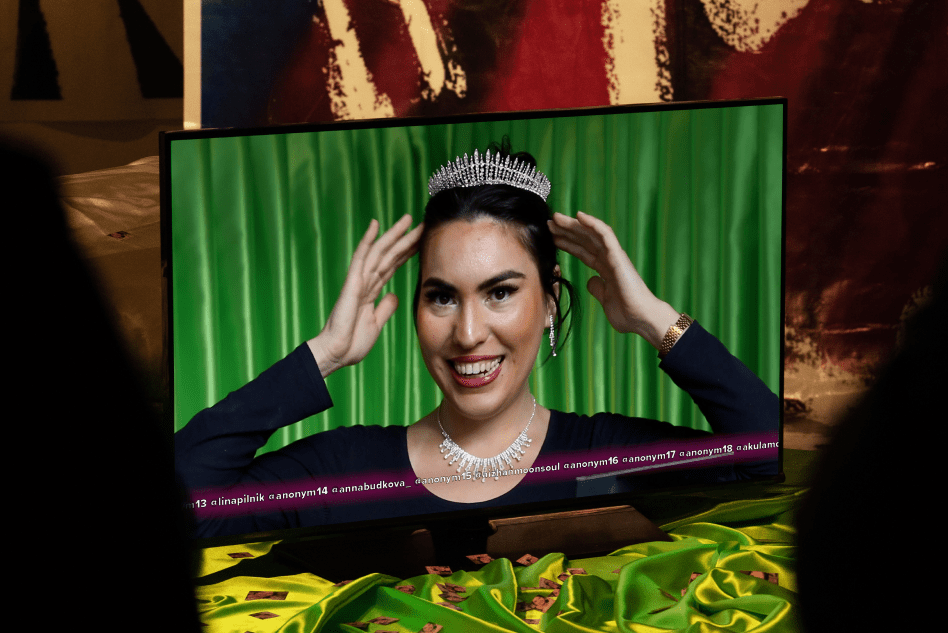
When we think about spreading knowledge of Central Asian art in Europe, we might think of exhibitions, of festivals, of panels and talks, not necessarily of an art fair. However, in the contemporary art world, it is today the market, more than art critics, which dictates the emergence of certain art scenes as a whole. For the historically underrepresented Central Asian art market, smaller fairs represent today an important alley, more than the big fairs such as Art Basel – which just had its second Paris iteration this October. Smaller “boutique fairs,” as they are called, often present curated programming which allow a wide public – not just collectors and buyers – to enjoy the art as it was an exhibition. A selling one, of course.  In Paris, the most relevant fair which has historically presented Central Asian artists to the European public is called Asia Now, and it took place in Paris from October 17 to 20. Entirely dedicated to Asian art, the fair has historically tried to fill the gap for Central Asian art in the European market in the past ten years of its existence. The fair has selected more than 70 leading and emerging contemporary art galleries from all over the world, presenting more than 220 artists coming from 26 territories from all over Asia and its diaspora, stretching from Central Asia to the Asia-Pacific, including West, South, South-East, and East Asia. Their commitment to expanding knowledge of Central Asian art in Europe culminated last year in a show which was indeed focused on Central Asia, and curated by the artist group Slav and Tatars. While seminal Central Asian galleries such as the Aspan Gallery from Almaty and Pygmalion Gallery from Astana didn’t return to Asia Now this year, the fair still presented a number of Central Asian artists and practices, interspersed between the main show, and the booths.    Central Asian Artists in the Radicant’s Main Show The main exhibition of Asia Now was curated by Radicants, a collective founded by art critic Nicolas Bourriaud, and it was centered on sacred ceremonies seen as a powerful tool for re-examining societal structures and reconnecting with ancestral roots. Called “Ceremony,” the main show was co-curated by Nicolas Bourriaud and Alexander Burenkov, a curator of Russian origins who has been working for a long time with Central Asian narratives, which are also featured prominently in the show. [caption id="attachment_25510" align="aligncenter" width="2560"] Image: TCA, Naima Morelli[/caption] The idea of ceremony ties to the tenth anniversary of the art fair, but at the same time the curators opted to explore the nuances of ritual as both a "celebration of ancestral wisdom" and a "critical tool for interrogating and redefining established traditions and power dynamics." As Burenkov noted, the decision to use the theme of ceremony emerged after conversations with Asia Now director Alexandra Fain. “The choice fell on ‘ceremony’ in all its variability and polysemy [was used] to explore the non-obvious meanings of ritual through the eyes of contemporary artists...
Very Nice? Sacha Baron Cohen Reprises Borat Role on U.S. Talk Show

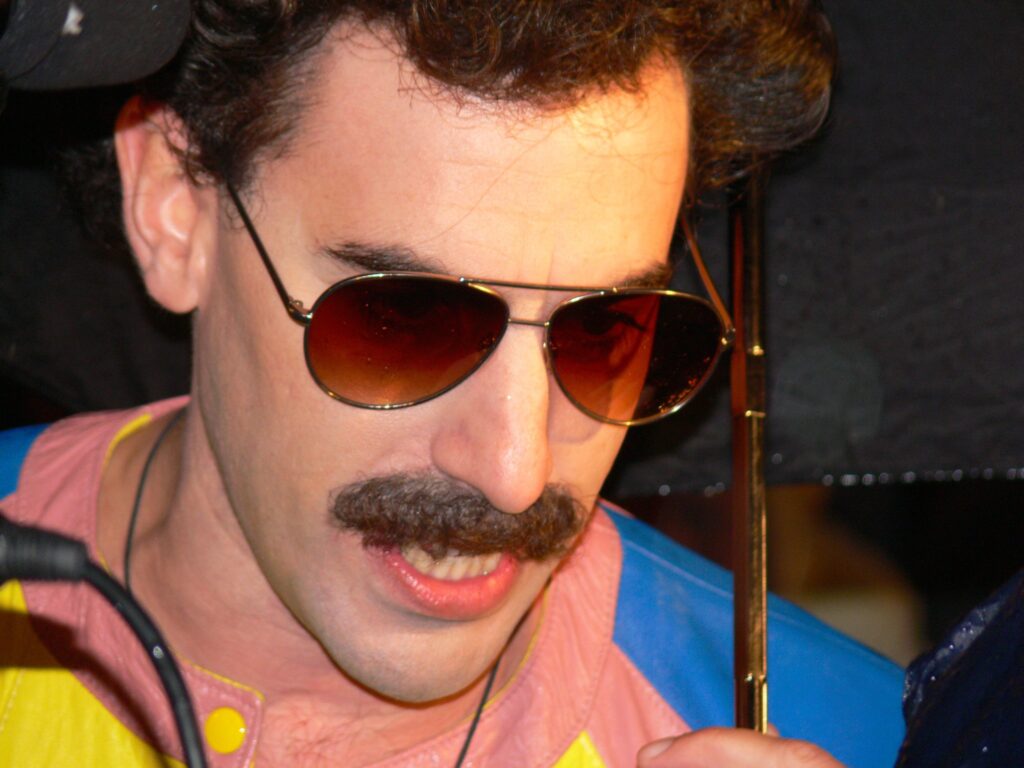
Borat is back. Briefly, at least. Actor and comedian Sacha Baron Cohen, who played the fictional journalist from Kazakhstan for laughs in films in 2006 and 2020, resurrected the character in an appearance last week on The Tonight Show with Jimmy Fallon. Fallon asked Baron Cohen, who had donned a thick, fake mustache, what Borat would say to Donald Trump and Kamala Harris. The results were, well, vintage Borat. Borat´s cringeworthy, often unscripted encounters and scatological brand of humor are either keen satire, or just tasteless and offensive, or perhaps some blend of the two, depending on the perspective. The Borat character is a crude misogynist who talks about “sexy time” with bears in his homeland. But his escapades in the United States are arguably an attempt to lampoon American life or society in general as much as to portray a country in Central Asia, repository of ancient civilizations, as a land of backward buffoons. Borat producers have said they were not trying to convey the actual conduct or beliefs of people in Kazakhstan, where the government took offense when the first movie came out. Later, some people in Kazakhstan warmed to Borat and recognized the public relations boost and even increased tourist numbers linked to Baron Cohen’s outrageous character in a boxy suit. His catchphrase “Very nice!” was the hook in a promotional video for Kazakhstan. In 2006, Erlan Idrissov, who was then Kazakhstan’s ambassador to Britain, expressed unease about Borat´s boorish persona in the successful first movie at a time when, according to the envoy, Kazakhstan was starting to emerge as an economic and political “pace-setter” in the region. “But, sadly, it is still the case that few people in Britain or America know anything about Kazakhstan or can even locate it on a map. They are in no position to judge whether Borat or his movie is remotely credible or fair. Baron Cohen exploits this ignorance to the full,” Idrissov wrote in The Guardian. In 2020, there was less fuss about the second Borat movie in Kazakhstan, whose international stature had grown over the years. “Kazakhstan has grown up, Borat hasn't,” read a headline in Emerging Europe, a regional policy and management group.

Top Five Central Asian Horror Films in the Run-up to Halloween

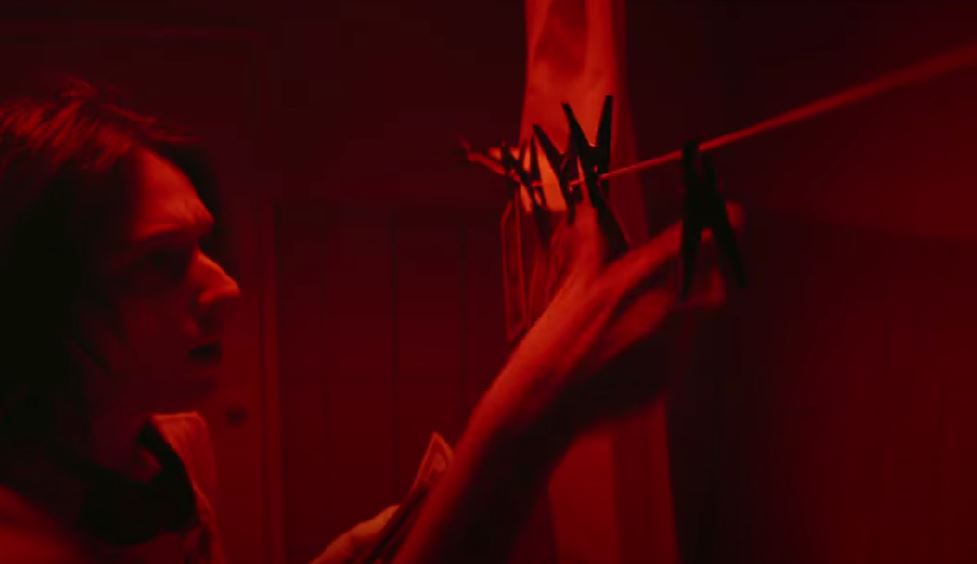
In the run-up to Halloween, TCA has compiled a short list of the best Central Asian horror films. Although the region is not widely known for its movies in the genre, here are five horror films from Central Asia that are a must-watch.   Dästür – Kazakhstan (2023) [caption id="attachment_24810" align="aligncenter" width="619"] Dästür theatrical release poster[/caption] In Dästür, the plot revolves around a girl from a remote aul (village) who is raped by the spoiled son of an influential businessman. The attacker's father does everything in his power to cover up the crime, including arranging a forced marriage in accordance with local traditions. However, after the girl moves into her husband's home, a series of strange and mysterious deaths begin to occur among those responsible for her plight.   Invisible – Uzbekistan (2011) [caption id="attachment_24825" align="aligncenter" width="374"] Invisible theatrical release poster[/caption] At the heart of Invisible is a hospital where a mysterious man arrives in critical condition. After a complicated surgery, the doctor begins to sense that something terrifying and inexplicable is affecting the patient. As events unfold, his suspicions are confirmed: some patients appear to be possessed, and he is plagued by hallucinations and unsettling nightmares.   Claustro – Kazakhstan (2023) [caption id="attachment_24811" align="aligncenter" width="539"] Claustro theatrical release poster[/caption] Kazakh horror Claustro takes viewers into the mysterious world of confined space. During a holiday party, two casual acquaintances, Kem and Max, retreat to an apartment, only to find themselves trapped as the place refuses to let them leave. Windows and doors lead to new, endless mazes of rooms, creating a feeling of complete isolation.   Albarsty – Kyrgyzstan (2017) [caption id="attachment_24812" align="aligncenter" width="524"] Albarsty theatrical release poster[/caption] Albarsty is a psychological horror that immerses viewers in the world of fear, loss, and the supernatural. The main characters, Zamir and Ainura, struggle with a deep emotional crisis following the tragic loss of their child and their inability to conceive again. Seeking comfort and renewed hope, they decide to adopt a boy, Ulan, whom they suspect has brought an unwelcome entity — a demon (albarsty) into their home.   Qash – Kazakhstan (2022) [caption id="attachment_24813" align="aligncenter" width="544"] Qash theatrical release poster[/caption] Set amidst the famine of the 1930s, Qash tells the story of a gravedigger, Isatay, who embarks on a risky journey to the nearest town to save his aul. On his way, he meets a mysterious wanderer who shows him a path that leads to nowhere. Qash delves into the theme of survival, immersing the audience in an atmosphere of despair and hopelessness while challenging the moral choices individuals make under extreme conditions.

Tajikistan Has Baked the World’s Tallest National-Themed Cake

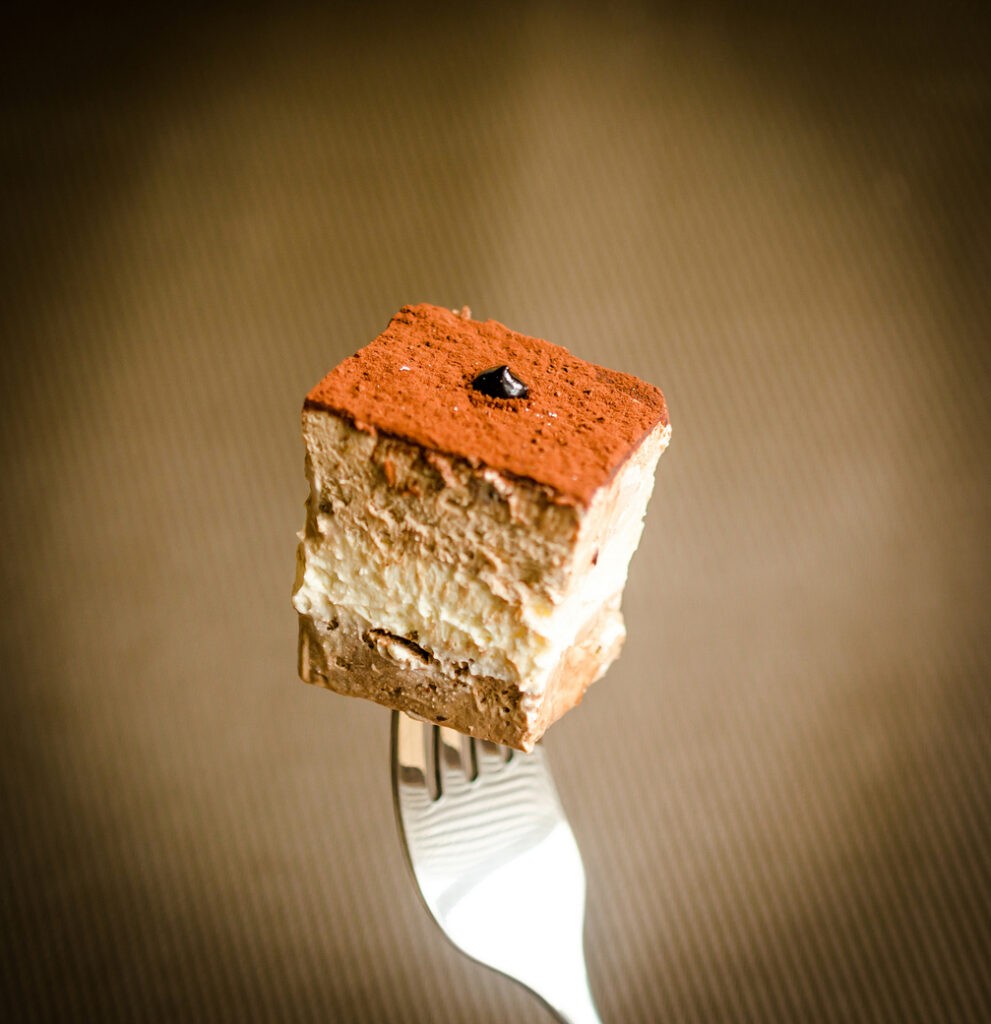
In Dushanbe, 15 pastry chefs and representatives of the World Federation of Restaurant Sports (WFRS) from Kyrgyzstan, Russia, and Tajikistan set a world record by making a cake weighing 200 kg and 2.10 meters high. This culinary masterpiece became the world's tallest nationally-themed cake, which was confirmed by the Eurasian Rating Agency (ERA). The cake was transported by truck to Abulkasim Ferdowsi Park and placed on a decorated table. A copy of the 45-centimeter-high Ismoil Somoni monument was placed on the cake, and the confectionery had a square base with a side of 1.1 m. The cake was decorated with gingerbread figures of Tajikistan's landmarks, national ornaments, and more than 300 marshmallow elements stylized as watermelons, melons, grapes, and other fruits. Pastry chef Natalie Vee said the cake is designed for 100-200 people. The team created it in four days, using 160 eggs, 25 kg of sugar, about 45 kg of sugar paste, several kilograms of flour, and about 30 liters of juice. “We have set records in Russia, Africa, and Europe. This is the first record for Tajikistan, and I hope it will remain for a long time,” said Alexander Rabinovich, chairman of the ERA's Service and Hospitality Committee and WFRS secretary general. He explained that the cake preparation coincided with World Chef's Day and the national holiday Mehrgon. On that day, Ferdowsi Park also became the center of Mehrgon celebrations, where a harvest and culinary fair was organized, offering vegetables, fruits, honey, and drinks from different regions of Tajikistan. Two cake records stand out for their impressive scale and global attention. The tallest cake, created in Indonesia for a Christmas event in Jakarta in 2008, reached an astounding 33 meters. Equally remarkable is the record for the longest cake, stretching 5,300 meters, made in India in 2020. Both cakes captivated international audiences with their sheer size and uniqueness.

Silk Roads Curators Push Boundaries in London

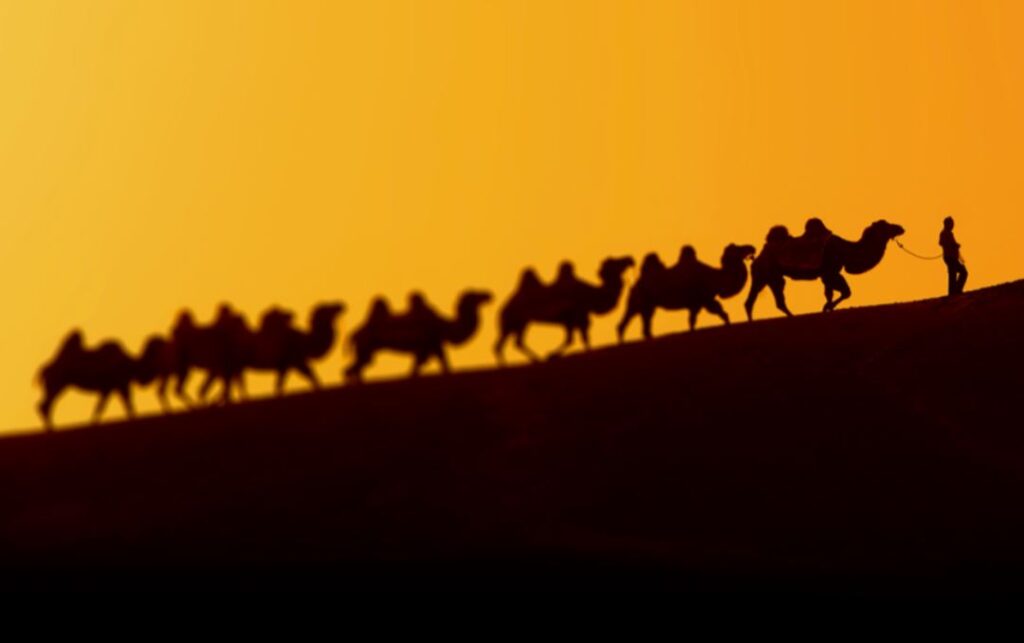
The curators of the Silk Roads exhibition at the British Museum got out of their comfort zones to create the show, which traces the intricate ties and overlapping networks linking Asia, Europe and Africa centuries ago. The lead image of the exhibition is the silhouette of a camel caravan that evokes romanticized notions of Silk Road trade, but the curators wanted to go further, exploring the geographic sweep of the routes along which people, objects and ideas moved over many generations. The London show, which opened in late September and runs until Feb. 23, 2025, includes objects from nearly all the museum’s collection departments as well as items on loan from Uzbekistan, Tajikistan and other places. Silk Roads has received generally positive reviews and some raves. There are a few critics. William Dalrymple, a prominent historian whose most recent book is “The Golden Road: How Ancient India Transformed The World,” said the show didn’t give enough attention to India. Last week, the curators said in a presentation that the connectivity and expansiveness of the project could be a model for exhibitions on other topics even as it hewed to rigorous scientific research involving British Museum experts and international specialists from other institutions. The Silk Road exhibition “goes beyound the norm in its experimental approach to tell big stories in a museum setting,” curator Luk Yu-ping said, adding that it was the first major show at the British Museum led by a team of three curators from different departments and with different fields of knowledge. “Each of us has had to step beyond our comfort zones and stretch well beyond our areas of expertise,” said Luk, an expert in Chinese paintings and prints as well as Central Asia collections. The result, she said, is an exhibition that “shows the potential for reimagining permanent displays and further developing partnerships and future projects” involving the British Museum. Another curator, Sue Brunning, said the layout of the Silk Roads show tries to evoke a winding journey through distant lands. “The design of the exhibition is quite open with no walls and  few barriers, and this is also to emphasize the connectivity between the different regions,” said Brunning, an archaeologist who specializes in early medieval European collections. Visitors can see for long distances down the gallery, and the different heights of the displays give an idea of the terrain, according to Brunning. There are also large images of the sea, mountains and other natural environments that give a sense of what people were traversing at the time, as well as an “ambient soundscape of environmental and travel sounds,” she said. The third curator is Elisabeth R. O'Connell, a specialist in ancient Egypt and the Byzantine period. She did not participate in the talk. While the Silk Roads network lasted for millennia, the British Museum is focusing on a relatively narrow slice of it - the period between AD 500 and AD 1,000, when contacts accelerated and flourished. Luk said museums in Uzbekistan and Tajikistan loaned...

Turkmen Designers Present Their Works at an Evening of Art in Brussels

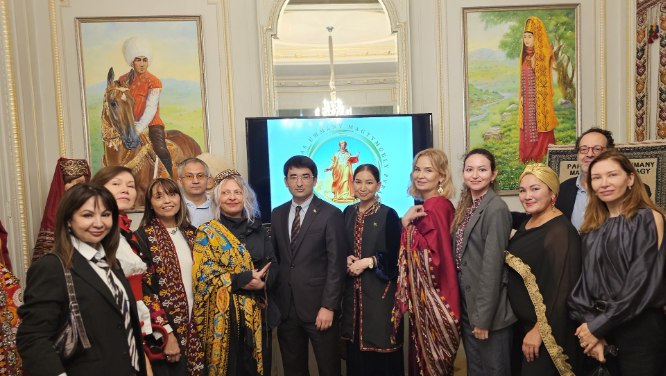
An evening dedicated to Turkmen art and traditions, organized by the Embassy of Turkmenistan within the framework of cultural exchange, was held in Brussels. The event brought together cultural sector representatives from Central Asia and Europe, including fashion and art figures. The Ambassador of Turkmenistan to Belgium, Sapar Palvanov, opened the meeting, noting that Turkmen culture is a heritage that needs to be protected and passed on to new generations. The diplomat emphasized the role of cultural diplomacy as a means of strengthening ties between peoples. “Culture has always been a neutral sphere that unites people," Palvanov stated. An essential part of the program was a speech dedicated to the 300th anniversary of the great poet, Makhtumkuli. The Ambassador spoke about how his ideas continue to inspire not only Turkmen, but people of other nations, influencing Turkmenistan's cultural ties with Europe. The evening's guests were presented with the works of talented Turkmen designers, Sheker Akiniyazova, Shemshat Tachmammedova, and Ogulbeg Berdimiradov. Their collections combined traditional elements with modern fashion. The designers also participated in the Brussels cultural program and presented at European institutions. Elena Kharitonova, founder of Caravan Cultura CreArt Agency in the Netherlands who co-organized the event emphasized the preservation of cultural values through modern projects and her support for young Turkmen designers.