• KGS/USD = 0.01144 0%
  • KZT/USD = 0.00205 0%
  • TJS/USD = 0.10429 0.29%
  • UZS/USD = 0.00008 0%
  • TMT/USD = 0.28571 0.28%
  • KGS/USD = 0.01144 0%
  • KZT/USD = 0.00205 0%
  • TJS/USD = 0.10429 0.29%
  • UZS/USD = 0.00008 0%
  • TMT/USD = 0.28571 0.28%
  • KGS/USD = 0.01144 0%
  • KZT/USD = 0.00205 0%
  • TJS/USD = 0.10429 0.29%
  • UZS/USD = 0.00008 0%
  • TMT/USD = 0.28571 0.28%
  • KGS/USD = 0.01144 0%
  • KZT/USD = 0.00205 0%
  • TJS/USD = 0.10429 0.29%
  • UZS/USD = 0.00008 0%
  • TMT/USD = 0.28571 0.28%
  • KGS/USD = 0.01144 0%
  • KZT/USD = 0.00205 0%
  • TJS/USD = 0.10429 0.29%
  • UZS/USD = 0.00008 0%
  • TMT/USD = 0.28571 0.28%
  • KGS/USD = 0.01144 0%
  • KZT/USD = 0.00205 0%
  • TJS/USD = 0.10429 0.29%
  • UZS/USD = 0.00008 0%
  • TMT/USD = 0.28571 0.28%
  • KGS/USD = 0.01144 0%
  • KZT/USD = 0.00205 0%
  • TJS/USD = 0.10429 0.29%
  • UZS/USD = 0.00008 0%
  • TMT/USD = 0.28571 0.28%
  • KGS/USD = 0.01144 0%
  • KZT/USD = 0.00205 0%
  • TJS/USD = 0.10429 0.29%
  • UZS/USD = 0.00008 0%
  • TMT/USD = 0.28571 0.28%

Viewing results 1 - 6 of 108

Contemporary Art Center Tselinny Opens in Almaty

Summer in Almaty was rich with music festivals, concerts, and public projects, and this cultural momentum appears set to continue into fall. The grand opening of the Tselinny Center for Contemporary Culture last Friday marked the start of September with a major cultural milestone for the city. A Historic Space Reimagined At a recent press conference, organizers spotlighted the significance of this new cultural landmark within the evolving discourse of Central Asian contemporary art. Director Jamilya Nurkalieva led a short tour ahead of the official opening, sharing insights into the restoration and rethinking of the historic Tselinny cinema. Reinterpreting Almaty’s first panoramic cinema, an iconic piece of Soviet-era modernist architecture, was, in her words, about creating “an architectural pearl.” She described the new space as embodying “inclusivity and acceptance, the ultimate state of tranquility, almost like a hug.” [caption id="attachment_35968" align="aligncenter" width="960"] Image: TCA[/caption] [caption id="attachment_35950" align="aligncenter" width="8605"] Image: Atelier Cauchemar[/caption] The transformation was a deeply local effort. Nurkalieva emphasized the importance of working with Kazakhstani architects, builders, and craftsmen to ensure authenticity throughout the reconstruction process. Among the most unexpected discoveries during renovation were original works by renowned Soviet graphic artist Yevgeniy Sidorkin, long believed lost. His preserved sgraffito now welcomes visitors at the entrance. “Conceptually, we didn’t want the space to become a monument to Sidorkin alone, this is a place for new artists,” said Nurkalieva. “In some areas, craftsmen recreated panels from his sketches. We chose neutral tones so the sgraffito wouldn’t dominate the space.” [caption id="attachment_35983" align="aligncenter" width="782"] Image: tselinny.org[/caption] In just its first three days, Tselinny welcomed more than 12,000 visitors. The public experienced debut exhibitions, the interdisciplinary performance BARSAKELMES, and the launch of an educational program. The former Soviet cinema, now reimagined by British architect Asif Khan, has been reborn as a cultural hub for Almaty and the wider region. Tselinny will gradually extend its hours and programming over the coming months, with full operations set to begin in January 2026. [caption id="attachment_35966" align="aligncenter" width="1280"] Image: TCA[/caption] Asif Khan’s architectural vision reflects a concept of spatial unity rooted in the Kazakh cosmological balance of Tengri (sky) and Umai (earth), representing power and growth. Drawing inspiration from the steppe landscape, Khan has preserved the spirit of the original building while opening a new horizon for each visitor. Launching a New Dialogue Three exhibition projects opened in parallel with the center itself. These include installations by Gulnur Mukazhanova and Daria Temirkhan as part of BARSAKELMES; the architectural showcase From Sky to Earth: “Tselinny” by Asif Khan (curated by Markus Lahtinenmäki); and the archival project Documentation: Imagining Central Asia on the Map of Contemporary Art (curated by Asel Rashidova). These inaugural exhibitions are intended to initiate long-term dialogue between artists, institutions, and the broader public. A full program is available on Tselinny’s official website. The Return of Tselinny Once the largest cinema in Soviet Central Asia, Tselinny has now been transformed into a multifunctional art center. The revamped complex includes exhibition spaces, workshops, a library, a bookstore,...

Recipes for Broken Hearts: Bukhara Hosts Its First Contemporary Art Biennale

The heat of Bukhara’s old city does little to deter the crowds. Tourists squeeze through narrow lanes, pausing in the shade of centuries-old madrasas or beneath towering minarets. This September, the heart of the UNESCO Creative City of Crafts and Folk Art is hosting something new: the inaugural Bukhara Biennale of contemporary art. Running from September 5 to November 20, the biennale is already being hailed as one of Central Asia’s largest and most diverse art initiatives. Its title, Recipes for Broken Hearts, reflects both its ambition and tone, blending art, history, and community in a city long known for its spiritual and cultural heritage.   A Global Effort Rooted in Bukhara The Bukhara Biennale is commissioned by Gayane Umerova, Chairperson of the Uzbekistan Art and Culture Development Foundation, which has played a pivotal role in preserving and promoting the country’s cultural legacy. Artistic director Diana Campbell sees the biennale as a continuation of Bukhara’s historic role as a center of learning and exchange. [caption id="attachment_35919" align="aligncenter" width="900"] Isiriq (wild rue) is a traditional herbal medicine also widely used in purification rituals among Uzbeks. It is often burned or hung in homes to ward off misfortune and evil. In the installation, bunches of isiriq hanging from the roof appear to reflect this age-old custom; image: TCA, Sadokat Jalolova[/caption] “The heart’s creative power comes into view when we look to tenth-century Bukhara, a time and place that offer many ways of mending heartbreaks,” said Campbell. She referenced Bukhara’s legacy as the home of polymath Ibn Sina and a crossroads on the Silk Roads. “For more than a millennium, Bukhara has been a place where people gathered to seek knowledge, healing, and hope. We believe the city holds many extraordinary recipes in its heart.” The biennale unfolds in the newly developed Bukhara Cultural District, where restored monuments are paired with modern design, featuring contributions from architects Wael Al Awar and landscape designer Günther Vogt. From Jeddah to Bukhara: Palm Waste Becomes Structure A highlight of the biennale is the AlMusalla Prize-winning installation, a reimagined musalla, or prayer space, constructed entirely from palm tree waste. Originally built in Jeddah, the structure has been transported to Bukhara as a symbol of sustainability and reuse. [caption id="attachment_35922" align="aligncenter" width="1600"] AlMusalla Prize winning installation; image: TCA, Sadokat Jalolova[/caption] Christopher Blust, engineer at AKT II, explained the origins of the project: “We were inspired by the idea of courtyards as places of gathering. Even the Prophet Muhammad’s house in Medina began with a courtyard for prayer and community.” Equally important, he said, was the material itself. “Palm fronds are discarded and often burned. We asked: Why not return to how these were used centuries ago? We shredded them, pressed them into boards, and created structural timber. This is the world’s first project to use palm waste in this way.” Architect Nicolas Fayad of East Architecture Studio noted that their design was informed by Jeddah’s traditional materials, timber, mud, and stone, reinterpreted through modern technology. “Everything visible in...

Kazakh Entrepreneur in Paris Launches Perfume Inspired by the “Kiz-Jibek” Epic

An ethnic Kazakh living in Paris has launched a perfume called Kiz-Jibek on the French market. Its founder, Nurzhan Tolegen, was born in China’s Ili Kazakh region and grew up in Kulja before eventually settling in the French capital. “I am the grandson of a nomadic people. My grandparents left their homeland during the civil war, carrying with them the soul of Kazakhstan etched into their stories, their songs, and their memories. Yet I had never set foot on those vast steppes whose grandeur my mother, a professor of literature, so often evoked,” he shares on his personal website. [caption id="attachment_35686" align="aligncenter" width="466"] Nurzhan Tolegen; image: www.tolegenparis.com[/caption] In 2021, Nurzhan traveled to Kazakhstan for the first time, spending a month reconnecting with his ancestral homeland. Those four weeks felt like a rebirth for him and marked a turning point in his life. Returning to France, he established a luxury perfume house, Tolegen Paris: a tribute to both his surname and to a heroic figure celebrated in a 16th-century Kazakh epic. In May 2025 he introduced Kiz-Jibek, describing it as “a fragrance honoring eternal love” and “a scent laced with wormwood.” The Kiz-Jibek epic, a cornerstone of Kazakh cultural heritage, reflects the values of traditional society. It emphasizes unity and loyalty to the homeland while exploring universal themes of love, virtue, honesty, and beauty. Through the character of Kiz-Jibek, one encounters the timeless image of the Kazakh woman—gentle yet resilient, modest yet dignified. [caption id="attachment_35688" align="aligncenter" width="624"] The epic characters Kiz-Jibek and Tolegen[/caption] For over five centuries, Kazakhs have sung the tale of Kiz-Jibek. Its central figures—Bazarbai, Tolegen, Kiz-Jibek, and Sansyzbai—are believed to have lived in history, with the story unfolding along the Ural River among the Jagalbaily tribe. In both the epic and the famous film, Tolegen is treacherously slain by Bekezhan, after which Kiz-Jibek, devastated by grief, throws herself into the river.

“Ergenekon Is Not Just a Myth, It’s a Cultural Bridge”: An Interview with Artist and Designer Emre Erdur

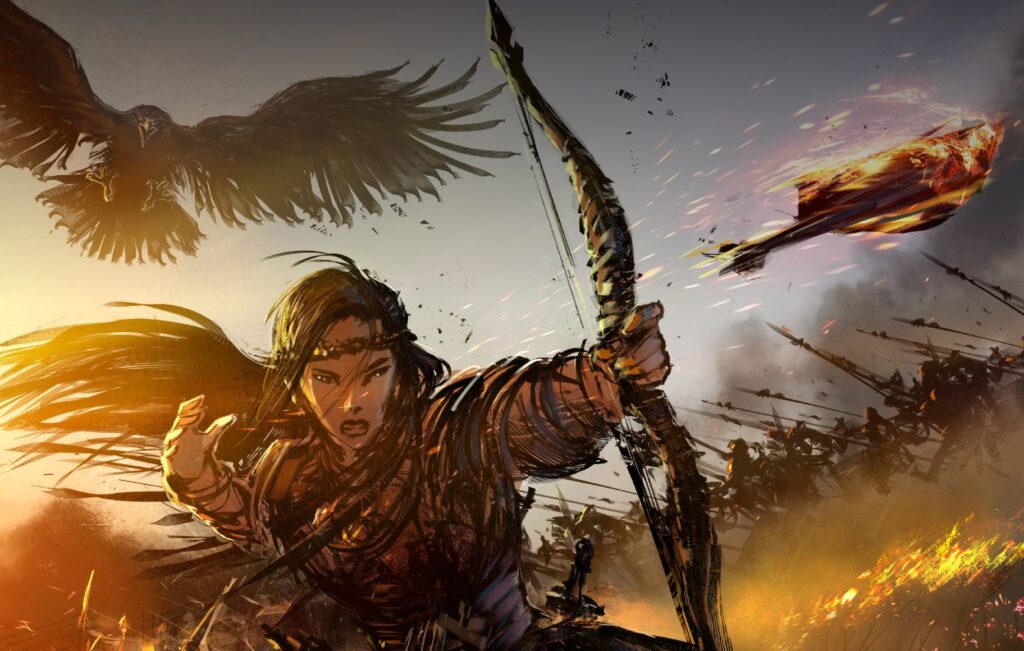
Today, comics and visual storytelling are increasingly going beyond entertainment. They are becoming part of a cultural dialogue, helping audiences reconnect with their roots. One such project is the graphic novel series The Legend of Ergenekon (Ergenekon Destanı), created by Turkish artist and designer Emre Erdur. The Legend of Ergenekon is a Turkic origin myth that tells of a people driven into a remote valley after defeat in battle, where they lived in isolation for centuries until a blacksmith forged a path through the surrounding mountains. Guided by a gray wolf, they emerged to reclaim their strength and expand across the steppe. In Central Asia, the story symbolizes resilience, unity, and renewal, often invoked as a metaphor for nations overcoming hardship to reassert independence and identity on the Eurasian crossroads. It resonates strongly in Kazakhstan, Kyrgyzstan, Turkmenistan, and Uzbekistan, where Turkic identity, language, and heritage are foundational. Born in Istanbul and trained as an architect at Mimar Sinan Fine Arts University, Emre Erdur worked for many years in the entertainment and design industries. Since 2019, however, he has dedicated himself to developing a multi-volume graphic novel series inspired by ancient Turkic history and mythology. His work was first presented at a festival in Taldykorgan. As part of his research, he visited the National Museum of Kazakhstan in Astana and collaborated with historian Assoc. Prof. Dr. Talgat Moldabay to ensure historical accuracy. [caption id="attachment_35647" align="aligncenter" width="1824"] Image: Emre Erdur[/caption] For Central Asia, Ergenekon Destanı is more than a creative project; it represents an effort to connect a shared heritage through the language of comics and popular culture. In an interview with The Times of Central Asia, Emre Erdur spoke about his inspiration, research, the role Kazakhstan plays in his work, and his plans for expanding this unique visual universe. TCA: You were born and educated in Turkey, yet you chose to dedicate yourself to wider ancient legends and Turkic history. When did you first feel drawn to this theme? Erdur: Yes, I was born in the westernmost corner of Turkic geography, but every individual in this world has cultural roots that reach out and nourish them. Naturally, as an artist, the desire to draw from and explore my own roots is an inner force. Although I was born and raised in Istanbul, you can find traces of our roots as far as Yakutia in Russia, Buryatia, Mongolia, the Altai, further south in East Turkestan, in the Gobi Desert, and even in Korea. None of these places feels separate from us; you can sense the connection. Of course, as a human being, every part of this world is valuable and fascinating; each region holds its own beauty and heritage. But there is also something called “national identity,” which is different from our individual identity. Our soul cannot be confined to this world; it knows no geography or race, it belongs beyond time and space. Yet during our lifetime on Earth, we do carry both national and individual identities, and defining them correctly...

Almaty to Open Central Asia’s First Private Museum of Contemporary Art

Almaty is preparing for a cultural milestone of international significance. In September 2025, the Almaty Museum of Arts will open its doors as the first private museum of contemporary art in Central Asia. The project is poised to reshape Kazakhstan’s cultural landscape and position Almaty as a new regional hub for artists, curators, and global audiences. Architecture and Concept The 10,000-square-meter building was designed by British firm Chapman Taylor, in collaboration with Buro Happold and Lord Cultural Resources. The architectural concept draws on Almaty’s unique identity: stone elements evoke the surrounding mountains, while metal structures reflect the city's dynamism. Together, they create a space where art exists in a dialogue with both nature and urban life. The museum will include permanent and temporary exhibition halls, artist studios, educational auditoriums, a performance venue, a restoration laboratory, a café, and a museum shop. [caption id="attachment_35388" align="aligncenter" width="657"] Image: Almaty Museum of Arts[/caption] Investment and Collection The project is valued at approximately $100 million, with $30 million allocated for construction and $70 million for building the collection and outfitting the museum. The collection already comprises more than 700 works, spanning Kazakh and Central Asian artists as well as internationally renowned figures such as Yayoi Kusama, Alicja Kwade, Richard Serra, Yinka Shonibare, and Bill Viola. One permanent installation has already captured the public's attention: Nades, a 12-meter sculpture by Spanish artist Jaume Plensa, stands at the museum's main entrance. Depicting a young girl with her eyes closed, the artwork has sparked mixed reactions. Museum founder Nurlan Smagulov described it as a symbol of the "strength, dignity, and beauty of women.” While some praised its serenity and conceptual elegance, others questioned its cost and originality. Regardless, Nades has succeeded in igniting a public discourse, something all meaningful art aspires to, making the museum a topic of national conversation before its official opening. [caption id="attachment_35389" align="aligncenter" width="527"] Image: Almaty Museum of Arts[/caption] Curators and Opening Program Meruert Kalieva, founder of Almaty’s Aspan Gallery, has been appointed artistic director. The museum’s chief curator will be Inga Lāce, formerly of the Latvian Centre for Contemporary Art and a contributor to the Venice Biennale. The inaugural program includes: “I Understand Everything” - a solo exhibition by Kazakh artist Almagul Menlibayeva, tracing her work since the 1980s, and “Qonaqtar” - a group exhibition exploring themes of hospitality and migration, curated from the museum’s growing collection. [caption id="attachment_35399" align="aligncenter" width="884"] Aisha Galimbaeva, "Shepherd's Wedding", 1965; image: Almaty Museum of Arts[/caption] Role for the City and the Region The Almaty Museum of Arts aims to serve as a bridge between Central Asia and the global contemporary art world. Beyond exhibitions, it will function as an educational platform, hosting lectures, masterclasses, and programming for children and students. The institution is expected to boost the local art scene while drawing international visitors, contributing to the creation of a new cultural district in Almaty. More broadly, it signals Central Asia’s readiness to participate fully in global artistic discourse. Almaty stands to emerge as the cultural...

QazElles Brings Kazakh Culture to France

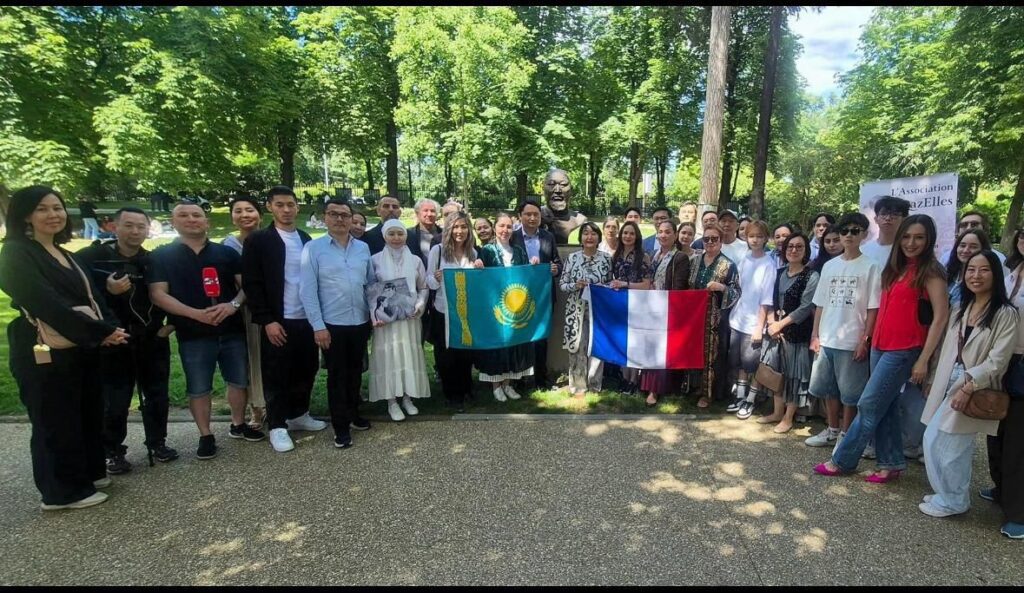
Since 2023, the Association of Kazakh Women in France — QazElles, a name blending "Kazakhstan" with the French word elles (meaning "women") — has gained international recognition for its impactful initiatives well beyond the borders of France. Today, QazElles unites 40 accomplished women living in cities across France, all of whom have personal or professional ties to Kazakhstan. Its diverse membership includes students from leading Parisian universities, engineers at prominent French companies, entrepreneurs, and professionals in the creative industries. The association was established a few years ago in cooperation with the Embassy of the Republic of Kazakhstan in France. “QazElles represents bright, strong, and accomplished daughters of their homeland who dedicate their free time to promoting Kazakh identity in France, building a supportive community of like-minded women," says Madina Kulmanova, president of QazElles, who has lived in France for over 20 years. "Many of us have no close family here in France. This association became our family." Despite its relatively recent founding, QazElles has already organized several high-profile cultural events, all carried out on a fully volunteer basis by Kazakh women living in Paris. In 2023, the group operated a chalet at La Défense, the largest Christmas market in the Paris region, for over a month. Showcasing Kazakh artisans, it quickly became a crowd favorite. Long queues formed for traditional manti (steamed dumplings filled with meat, pumpkin, and dough) and handmade felt slippers. For two consecutive years, a miniature Kazakh aul (village) has come to life during Nauryz (March 21–22) on Place des Ternes, just steps from the Arc de Triomphe. Much like in Kazakhstan, the celebration features a yurt, traditional games, folk music, and festive cuisine. This year, several thousand visitors, mostly local Parisians, many encountering Kazakh culture for the first time, explored the aul. Inside the yurt, guests experienced a guided audio tour written and narrated by Aliya Syzdykova. Outside, dancers from the Kazakh city of Shymkent performed in the square, while artisans sold out of tyubeteikas (traditional embroidered caps). Among the exhibitors was QazElles member Kamila Florenti, a jeweler who creates a distinctive line of delicate silver pieces inspired by Kazakh motifs. "We love this project because it brings people together. There was so much kindness, warmth, and friendship. I think we truly gave Parisians a little journey into a real Kazakh celebration,” shares Madina Kulmanova, her emotion clearly visible. QazElles quickly discovered that the way to a Parisian’s heart is through culinary exploration. One of the association’s most celebrated initiatives was a “four-hands” dinner featuring two renowned chefs: Artem Kantsev from Astana and Frédéric Simonin from Paris. The event was held at Simonin’s Michelin-starred restaurant, where the two chefs collaborated on a unique menu that blended the bold flavors of Kazakh cuisine with the finesse of French culinary tradition. Among the standout dishes was camel meat manti wrapped in coffee-infused dough, served with a sauce made from kurt (a salty, dried fermented dairy product popular in Central Asia) and French cheeses. The success of the event...