• KGS/USD = 0.01144 0%
  • KZT/USD = 0.00215 0%
  • TJS/USD = 0.10696 0.09%
  • UZS/USD = 0.00008 0%
  • TMT/USD = 0.28490 0%
  • KGS/USD = 0.01144 0%
  • KZT/USD = 0.00215 0%
  • TJS/USD = 0.10696 0.09%
  • UZS/USD = 0.00008 0%
  • TMT/USD = 0.28490 0%
  • KGS/USD = 0.01144 0%
  • KZT/USD = 0.00215 0%
  • TJS/USD = 0.10696 0.09%
  • UZS/USD = 0.00008 0%
  • TMT/USD = 0.28490 0%
  • KGS/USD = 0.01144 0%
  • KZT/USD = 0.00215 0%
  • TJS/USD = 0.10696 0.09%
  • UZS/USD = 0.00008 0%
  • TMT/USD = 0.28490 0%
  • KGS/USD = 0.01144 0%
  • KZT/USD = 0.00215 0%
  • TJS/USD = 0.10696 0.09%
  • UZS/USD = 0.00008 0%
  • TMT/USD = 0.28490 0%
  • KGS/USD = 0.01144 0%
  • KZT/USD = 0.00215 0%
  • TJS/USD = 0.10696 0.09%
  • UZS/USD = 0.00008 0%
  • TMT/USD = 0.28490 0%
  • KGS/USD = 0.01144 0%
  • KZT/USD = 0.00215 0%
  • TJS/USD = 0.10696 0.09%
  • UZS/USD = 0.00008 0%
  • TMT/USD = 0.28490 0%
  • KGS/USD = 0.01144 0%
  • KZT/USD = 0.00215 0%
  • TJS/USD = 0.10696 0.09%
  • UZS/USD = 0.00008 0%
  • TMT/USD = 0.28490 0%

Viewing results 1 - 6 of 34

Turkmenistan’s White City Casts Itself as Cutting Edge

Turkmenistan’s so-called “white city” of Ashgabat, where hundreds of buildings are clad in white marble, will host a conference this month aimed at attracting international investment and innovation to the showcase capital. Organizers of the government-backed White City Ashgabat 2026 forum, scheduled for May 24-25, say the delegates will include investors, architects, and engineers, and that the agenda will cover urban planning, digital technologies, and the modernization of water, transport, and other infrastructure. Organizers of the government-backed White City Ashgabat 2026 forum, scheduled for May 24-25, say delegates will include investors, architects, and engineers, and that urban planning, digital technologies, and the modernization of water, transport, and other infrastructure will be discussed. Turkish Airlines and S&P Global Energy are listed as partners for the event. Media partners include several Middle Eastern outlets. Listed speakers include Rahym Gandymov, mayor of Ashgabat; Japanese Ambassador Sasaki Hiroshi; and Francesco La Camera, director-general of the Abu Dhabi-based International Renewable Energy Agency. First-time visitors to Turkmenistan’s capital, with its broad avenues, squares and elaborate monuments, sometimes describe it as eerie and unusual. In 2013, the city made it into the Guinness World Records for the highest density of white marble-clad buildings. Perceptions of Ashgabat can range from a futuristic “smart” city to a grandiose display only made possible by the wealth from Turkmenistan’s immense energy resources and the whims of its leaders. Turkmen officials are trying to shape a positive narrative about the city by hosting more international events and focusing on the idea of sustainability. Erfan Ali is director of the regional office for eastern Europe and Central Asia of UN-Habitat, which promotes social and environmental priorities in towns and cities. He said he was looking forward to the Ashgabat conference this month. “Discussions will focus on advancing resilient, inclusive, and smart cities, from climate action to digital transformation, while highlighting practical pathways for future-ready urban systems globally,” Ali said on X. In recent years, Turkmenistan has also focused on the development of Arkadag, a city that lies about 30 kilometers from Ashgabat and features plenty of white marble as well. Arkadag means “protector,” a reference to the formal title of Gurbanguly Berdimuhamedov, the former president who retains some power even though his son, Serdar, is now the president. This month, the elder Berdimuhamedov visited Arkadag to check on what state media described as the “second phase” of the construction of Arkadag, which formally opened in 2023. A delegation from the city will attend the World Urban Forum, a United Nations conference on sustainable urbanization in Baku, Azerbaijan, on May 17-22.

Turkmenistan Highlights International Outreach at Cabinet Meeting

A recent Cabinet meeting in Turkmenistan highlighted contacts with many countries and international organizations, reinforcing a perception that the tightly managed nation is taking more steps, however limited, to engage the world. Appearing via video link, President Serdar Berdimuhamedov presided over the May 1 meeting of ministers who covered economic growth, oil and natural gas production, scientific research, and other national priorities in a review of the year so far. But international outreach was a big part of the high-level discussion in an energy-rich Central Asian country often defined as opaque and restrictive. An account of the meeting by the Turkmenistan State News Agency (TDH) ticked off statistics: 220 delegations visited Turkmenistan this year, 400 delegations from Turkmenistan visited other countries, 711 negotiations and other meetings occurred in the country with foreign states and international agencies, and 57 more international documents were added to Turkmenistan’s legal code. “The development of diplomatic relations through foreign embassies is one of the important directions of the foreign policy work of neutral Turkmenistan,” said the report, referring to the country’s policy of non-alignment and not getting involved in the internal affairs of other countries. “Work on promoting relations with the countries of the Middle East is also ongoing,” it said. Iraq opened its embassy in Ashgabat in March, 17 years after Turkmenistan and Iraq established diplomatic relations in 2009. On May 4, Rashid Meredov, Turkmenistan’s foreign minister, spoke by telephone with Iranian Foreign Minister Abbas Araghchi about regional security, Caspian issues, and other matters, according to the Turkmen Foreign Ministry. The ministry’s statement did not mention the Iran conflict or uncertainty surrounding the ceasefire with the United States. Turkmenistan’s international campaign is consistent with a pattern seen across Central Asia, where governments have sought to diversify their trade and diplomatic ties while maintaining close relations with the region’s major powers, Russia and China. Turkmenistan, however, still exports most of its natural gas to China, its largest trading partner. At the same time, Turkmenistan is intensifying efforts to integrate into the global trading system, with officials reaffirming plans to move towards membership in the World Trade Organization (WTO). It is the last post-Soviet republic to start WTO accession talks. Turkmenistan’s leaders are also working on their international profiles. Berdimuhamedov attended an ecological summit of regional leaders in Kazakhstan last month. His father and predecessor, Gurbanguly Berdimuhamedov, traveled to the U.S. in February, China in March, and Austria in April. This month, he is due to travel to the Russian city of Kazan. Although government transparency is limited in Turkmenistan, father and son appear to run the country through a power-sharing arrangement. Outsiders are getting more glimpses of Turkmenistan. The capital, Ashgabat, hosted an international tourism conference in April. This month, the Reuters news agency reported on a trip there after being given what it said was “rare access” to travel in the country. It remains unclear, however, whether any efforts to engage with the outside world will materially change daily life in Turkmenistan, where people...

Turkmenistan’s Air Connectivity Shows Little Change Despite Expansion Plans

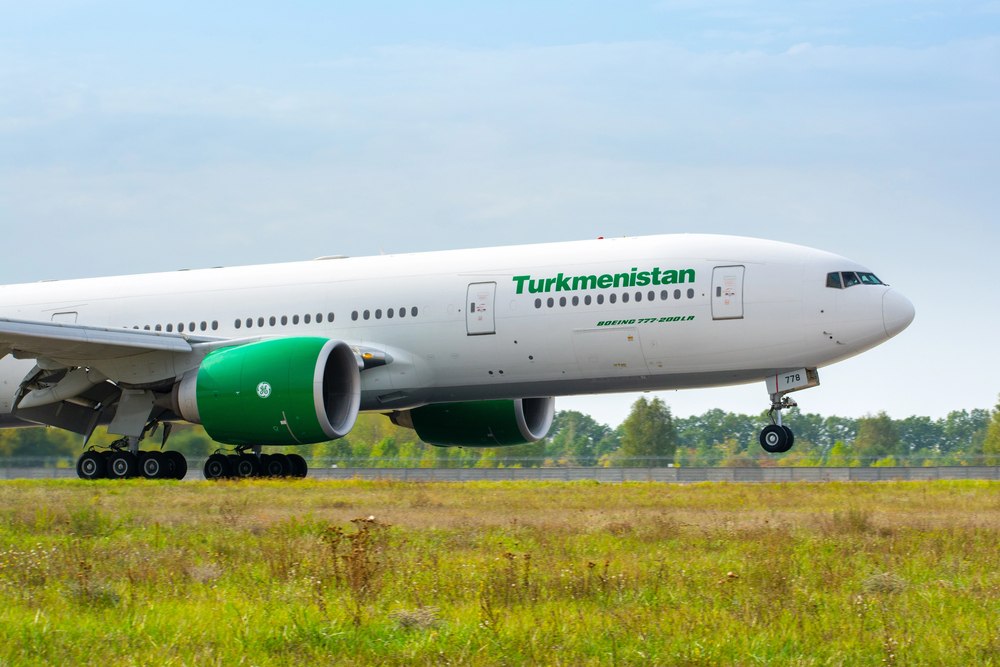
Turkmenistan’s airport schedules remain largely unchanged, with no new destinations added and previously announced flights yet to begin operating. Plans to expand international air links from Turkmenistan have been discussed for years, but little has changed in practice. At the end of last year, Russia’s S7 Airlines announced the launch of the Ashgabat-Novosibirsk route starting March 31. Tickets went on sale at the time, with flights planned once a week. However, as of early April, the flights are absent both from the airline’s schedule and from airport data. Only connecting options remain in booking systems. No official explanation has been provided, despite considerable interest in the route. Flights from Turkmenistan to Russia remain in high demand, significantly exceeding supply. Tickets sell out almost immediately despite high prices, which passengers often associate with monopoly conditions and possible corruption schemes. At present, the choice is limited to two routes: S7 Airlines operates Ashgabat-Moscow flights, while national carrier Turkmenistan Airlines serves only the Ashgabat-Kazan route. The limited number of direct routes forces passengers to seek alternatives. One of the most common is transit through Uzbekistan. The neighboring country can be reached by land, and from there dozens of flights to Russian cities are available. At the same time, there is separate demand for travel to Uzbekistan itself, including for business, education, and tourism. Nevertheless, Turkmenistan has no direct air links with any neighboring country. The restoration of flights with Uzbekistan was discussed in 2025 by presidents Serdar Berdimuhamedov and Shavkat Mirziyoyev, but no specific timelines or routes have been announced since. Some travel takes place via Azerbaijan. In the first two months of this year, more than 4,000 citizens of Turkmenistan entered the country. A significant share of these trips is related not to tourism but to obtaining European visas, as doing so from within Turkmenistan is more difficult. Meanwhile, discussions on transport cooperation between Ashgabat and Baku have focused mainly on cargo transportation. The only notable change has been an increase in the number of flights between Ashgabat and Istanbul, driven by the foreign carrier Turkish Airlines.

Ashgabat to Host Regional Center for Combating Desertification in Central Asia

A regional center dedicated to combating desertification will be established in Turkmenistan's capital Ashgabat. The center aims to coordinate efforts among Central Asian nations to address environmental and water management challenges. According to Pirli Kepbanov, Director of the National Institute of Deserts, Flora and Fauna under Turkmenistan’s Ministry of Environmental Protection, the new institution will consolidate regional scientific and practical capacities to tackle transboundary issues affecting agriculture and water resources. “Based at the center, the region’s states will be able to cooperate on shared concerns related to agricultural production and water infrastructure,” Kepbanov said. Ashgabat’s selection as the host city is no coincidence. Turkmenistan has long been a regional hub for desert science, with established research institutions specializing in land degradation, desert ecosystems, and the adaptation of economic activity to arid conditions. “There are only four such scientific institutes worldwide, and one of them is the National Institute of Deserts, Flora and Fauna of Turkmenistan,” Kepbanov added. He also emphasized Turkmenistan’s historical role in developing desert science across Central Asia and beyond. “The first Chinese desert scientists trained here,” he said, adding that contemporary Chinese experts acknowledge Turkmenistan’s important contributions to their national school of desert research. Currently, the National Institute collaborates with the Xinjiang Institute of Ecology and Geography in China, the A.N. Kostyakov Federal Scientific Center for Hydrotechnics and Land Reclamation in Russia, and is receiving partnership proposals from universities across Central Asia.

Ashgabat Hosts Seminar on Artificial Intelligence

The capital of Turkmenistan is hosting a two-day seminar , organized by the OSCE Centre in Ashgabat, on "Artificial Intelligence and its Impact on Freedom of Speech." During the event, international participants, including specialists from Austria and Bulgaria, will analyse the impact of artificial intelligence (AI) technologies on freedom of speech and the role of the media in today's world through various workshops focusing on: the role of artificial intelligence in shaping public opinion and disseminating information;  the risks and opportunities associated with the application of AI in the media;  how to ensure freedom of speech in the context of AI development; and how to combat misinformation and manipulation in the age of artificial intelligence. Opening the seminar, William Leaf, Representative of the OSCE Centre in Turkmenistan, emphasized the importance of freedom of speech and media as integral elements of a democratic society. Noting Turkmenistan's growing interest in developing artificial intelligence, he welcomed the seminar as an important step in understanding its potential and possible challenges. Within the context of an exchange of views and the development of recommendations on the use of artificial intelligence in the media, the event provides a platform for discussions on how such issues affect the principles of freedom of speech and human rights and as such, relates to the OSCE Centre's ongoing assistance in implementing the National Human Rights Action Plan 2021-2025 (NHRAP) provisions on media freedom and freedom of expression.

Turkmenistan to build Ashgabat City compound

ASHGABAT (TCA) — The Administration of the Turkmen capital Ashgabat last week hosted a presentation of a large-scale social project — the construction of a new residential compound with high-rise buildings in the northern part of the city where more than 100,000 people would live, the State News Agency of Turkmenistan reported. Total area allocated for the grandiose complex of more than 200 buildings is 744 hectares. It is planned to erect 180 buildings, ranging from 12 to 35 floors in height, with 17,836 apartments. The entire compound is designated for living of more than 107,000 people. The new city including an administration centre, service and medical facilities, cultural centres, educational and other social infrastructure facilities will appear in the north of Ashgabat. The new compound’s infrastructure will be based on a smart city model. The project, which was approved by President Gurbanguly Berdymukhamedov and received an unofficial name of Ashgabat City, provides for the construction of the building of local administration and other government facilities, four secondary schools for 3,000 students and the same number of kindergartens which would be able to host 1,200 children, as well as original buildings of Turkmen National Conservatory and a specialized musical school. The facilities of social and living infrastructure will include a multifunctional hospital, two clinics, two shopping and entertainment centres, shops and cafes, a stadium and sports complex, and four multilevel car parking lots. It is also planned to build branch offices of Türkmenbaşy and Halkbank State Commercial Banks. It was said at the presentation that 35-storey buildings will be constructed in Turkmenistan for the first time, so seismic resistance technologies are of particular importance.