• KGS/USD = 0.01143 0%
  • KZT/USD = 0.00201 0%
  • TJS/USD = 0.10510 -0.28%
  • UZS/USD = 0.00008 0%
  • TMT/USD = 0.28575 0%
  • KGS/USD = 0.01143 0%
  • KZT/USD = 0.00201 0%
  • TJS/USD = 0.10510 -0.28%
  • UZS/USD = 0.00008 0%
  • TMT/USD = 0.28575 0%
  • KGS/USD = 0.01143 0%
  • KZT/USD = 0.00201 0%
  • TJS/USD = 0.10510 -0.28%
  • UZS/USD = 0.00008 0%
  • TMT/USD = 0.28575 0%
  • KGS/USD = 0.01143 0%
  • KZT/USD = 0.00201 0%
  • TJS/USD = 0.10510 -0.28%
  • UZS/USD = 0.00008 0%
  • TMT/USD = 0.28575 0%
  • KGS/USD = 0.01143 0%
  • KZT/USD = 0.00201 0%
  • TJS/USD = 0.10510 -0.28%
  • UZS/USD = 0.00008 0%
  • TMT/USD = 0.28575 0%
  • KGS/USD = 0.01143 0%
  • KZT/USD = 0.00201 0%
  • TJS/USD = 0.10510 -0.28%
  • UZS/USD = 0.00008 0%
  • TMT/USD = 0.28575 0%
  • KGS/USD = 0.01143 0%
  • KZT/USD = 0.00201 0%
  • TJS/USD = 0.10510 -0.28%
  • UZS/USD = 0.00008 0%
  • TMT/USD = 0.28575 0%
  • KGS/USD = 0.01143 0%
  • KZT/USD = 0.00201 0%
  • TJS/USD = 0.10510 -0.28%
  • UZS/USD = 0.00008 0%
  • TMT/USD = 0.28575 0%
28 February 2026

Viewing results 1 - 6 of 117

Astana to Host UEFA Congress in 2027

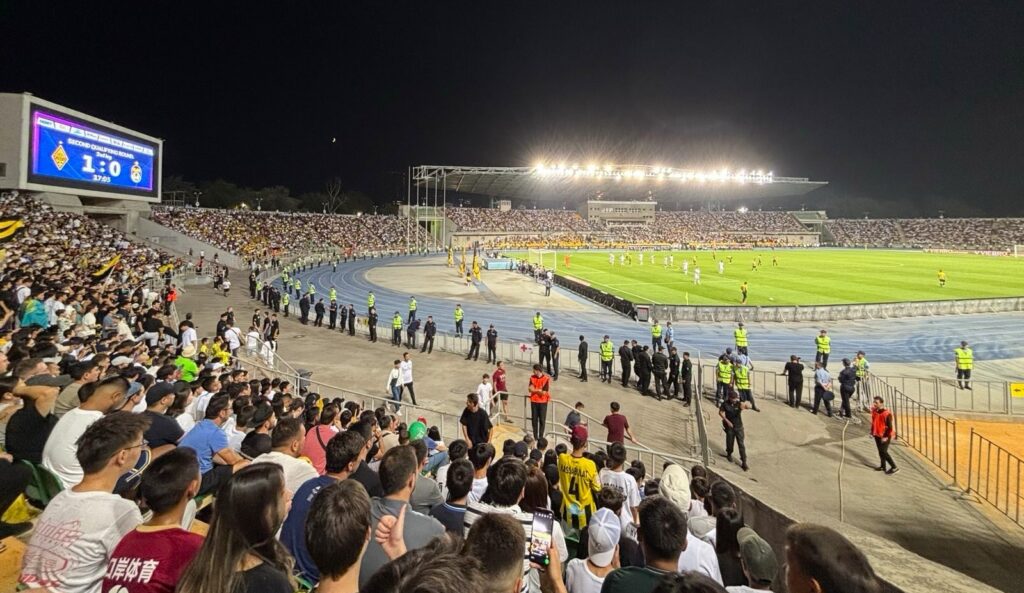
The Union of European Football Associations has announced that the 51st UEFA Congress, at which a new president and members of the organization’s Executive Committee will be elected, will take place on March 4, 2027, in Astana. The decision was announced at the 50th anniversary UEFA Congress in Brussels. Kazakhstan was represented at the event by David Loria, Secretary General of the Kazakhstan Football Federation (KFF). The KFF confirmed the selection of the Kazakh capital as the venue for the next congress. UEFA brings together 55 national football associations and is responsible for organizing major international tournaments for clubs and national teams, as well as distributing revenue from media rights and sponsorship contracts. Kazakhstan has been a UEFA member since 2002, despite its geographical location in Central Asia. The UEFA Congress is the highest governing body of European football. It convenes annually and brings together representatives of all national associations. The congress approves strategic, financial, and organizational decisions and elects the organization’s leadership. The 2027 Congress will be an electoral session, with delegates set to elect the UEFA president and the new composition of the Executive Committee. UEFA is currently headed by Aleksander Čeferin, who has held the position since 2016 and was re-elected for another term in 2023. According to the KFF, the right to host the Congress is granted to member associations as a sign of institutional trust and recognition of their contribution to the development of football. The federation stated that the event will be the largest international football business gathering ever held in Kazakhstan and will strengthen the country’s position within the European football community. UEFA will finance the organization of the Congress. No funding from Kazakhstan’s state budget is envisaged. The Times of Central Asia previously reported that the Almaty-based club FC Kairat reached the main stage of the UEFA Champions League for the first time in its history.

Six Months to Rewrite the State: Kazakhstan Accelerates Its Constitutional Reset

Speaking on September 8, 2025, in his Address to the People of Kazakhstan in Parliament, President Kassym-Jomart Tokayev outlined plans for new political reforms. At the time, nothing in his remarks suggested either the scale of the changes his initiative would entail or the speed with which they would be implemented. Yet on March 15 of this year, Kazakh citizens will vote in a referendum on a new draft Constitution, developed at high speed over roughly six months, including a period of state-organized public consultations and expert review. According to materials published on the Constitutional Court’s page on the state portal, where the final version of the draft Basic Law was published, the starting point for constitutional reform was Tokayev’s proposal to create a unicameral Parliament. The president announced the idea on September 8, 2025. A month later, on October 8, an order was signed establishing a working group on parliamentary reform. Over the following months, the group reviewed more than 2,000 proposals from citizens and experts. At the fifth session of the National Kurultai in January 2026, Tokayev summarized the proposals on parliamentary reform, the scope of which had already expanded beyond restructuring Parliament to revising the Constitution as a whole. On January 21, a Constitutional Commission was established, comprising 130 members, including representatives of the National Kurultai, legal experts, officials from central government agencies, media executives, chairpersons of maslikhats, members of regional public councils, and academics. The first draft of the Basic Law was published on January 31. On February 11, a “referendum” version of the draft was presented to the president, incorporating comments received, including his own. Tokayev had outlined his remarks the previous day during an expanded government meeting. The question to be put to voters in March is: “Do you accept the new Constitution of the Republic of Kazakhstan, the draft of which was published in the mass media on February 12, 2026?” What is particularly notable is that on September 8, the president had cautioned against haste, calling parliamentary reform a “very serious issue” and stating that rushing it would be inappropriate. “This reform must be the subject of detailed discussion in civil society, among experts, and, of course, in the current Parliament… I believe that, given the extraordinary nature of the reform, the discussion will take at least a year, after which a nationwide referendum could be held in 2027, and then the necessary amendments could be made to the Constitution,” Tokayev said at the time. A little over five months later, however, the country is preparing for changes that extend beyond the initial proposal to abolish the upper house. At a government meeting, Tokayev emphasized that “no one is setting the task of negating the significance of the current Constitution, which has played a huge role in all of our country's achievements over the past 30 years. “Nevertheless, it should be noted that it was adopted when our country was just getting on its feet and bears the imprint of the first...

Astana Leads 2024 Smart City Rankings in Kazakhstan

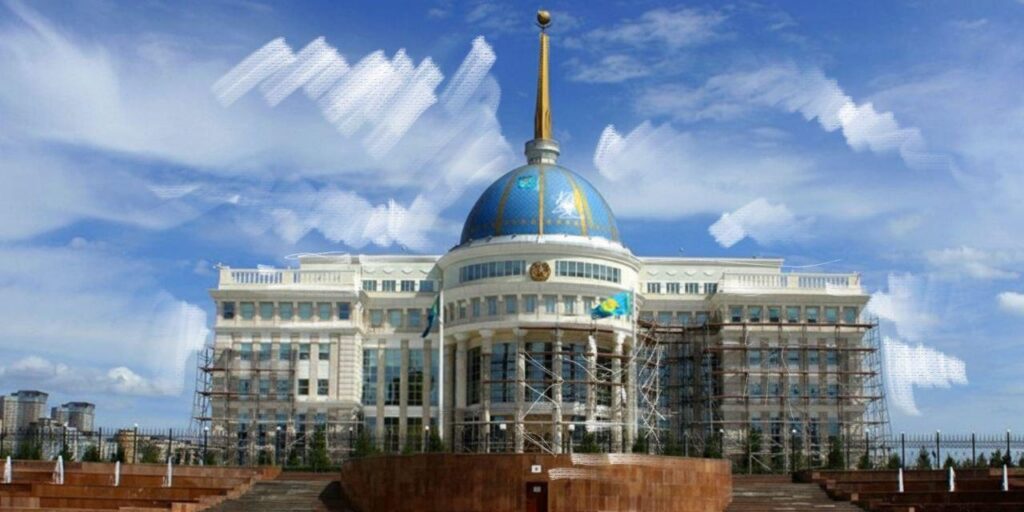
Kazakhstan’s Ministry of Digital Development, Innovation, and Aerospace Industry (MDIIA) has released its latest evaluation of local governments' efforts to implement Smart City technologies. For 2024, the capital city, Astana, secured the top position. A Smart City integrates multiple information and communication technologies (ICT) and Internet of Things (IoT) solutions to manage urban assets, ranging from residential and commercial properties to transportation and public infrastructure. The core objective is to enhance the quality of life for residents through greater efficiency, safety, and connectivity. Kazakhstan began implementing its Smart City strategy in 2019, introducing a standardized benchmark for assessing the adoption of smart technologies by local authorities. The first national Smart City ranking, published in 2020, placed Almaty, Kazakhstan’s largest metropolis, firmly at the top. In subsequent years, Almaty and Astana alternated between first and second place. In 2023, however, Astana emerged as the clear leader. According to the MDIIA, alongside Astana, the cities of Almaty, Karaganda (Central Kazakhstan), Kostanay (northern Kazakhstan), and Ust-Kamenogorsk (eastern Kazakhstan) rounded out the top five for their effective implementation of urban digital technologies. “These cities have widely adopted systems for monitoring school performance, electronic fare collection, and real-time tracking of public transport,” the ministry reported. “Online registration for outpatient clinics is in place, and unified 109 contact centers handle public inquiries and complaints. The number of surveillance cameras has also increased, improving public safety.” As previously reported by The Times of Central Asia, Kazakh authorities are also planning to construct a new city, Alatau, near Almaty. The project is being designed from the ground up to meet all the criteria of a Smart City.

Moscow’s MGIMO University to Open Branch in Astana

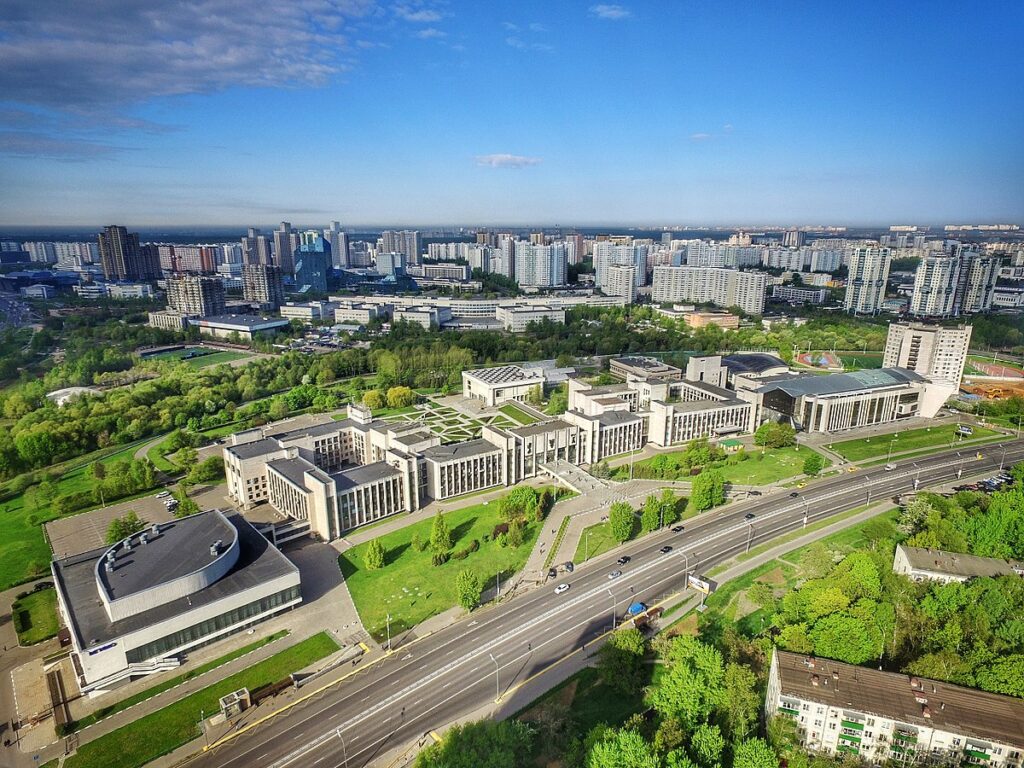
The Moscow State Institute of International Relations (MGIMO), one of Russia’s most prestigious universities and the flagship institution of the Russian Ministry of Foreign Affairs, will open a branch in Astana in September 2025, according to Kazakhstan’s Ministry of Science and Higher Education. The Astana branch, known as MGIMO-Astana, will initially offer two undergraduate programs: World Mineral Resources and Energy Markets and Analysis and Modeling of Socioeconomic and Business Processes. Two master’s degree programs will also be available: Financial Economics and Financial Technologies and Multilateral Institutions and Management of Global Technological Development. Applicants will have the opportunity to apply for academic grants, though tuition-based enrolment will also be available. Instruction will be conducted by MGIMO professors from Moscow, complemented by local faculty trained in the university’s academic standards and methodologies. MGIMO-Astana will initially operate from the campus of the L.N. Gumilyov Eurasian National University, before moving to its own dedicated campus. Planning and design for the new facility are already underway. This will be MGIMO’s second international branch. Its first overseas campus, MGIMO-Tashkent, opened in Uzbekistan and currently offers six undergraduate and graduate programs, all taught by MGIMO faculty and tailored to the local academic landscape. As The Times of Central Asia previously reported, Cardiff University in Wales also plans to open a campus in Astana later this year, underscoring the Kazakh capital’s growing role as a regional hub for higher education.

Stadler Begins Production of Railcars for Kazakhstan’s National Railway in Astana

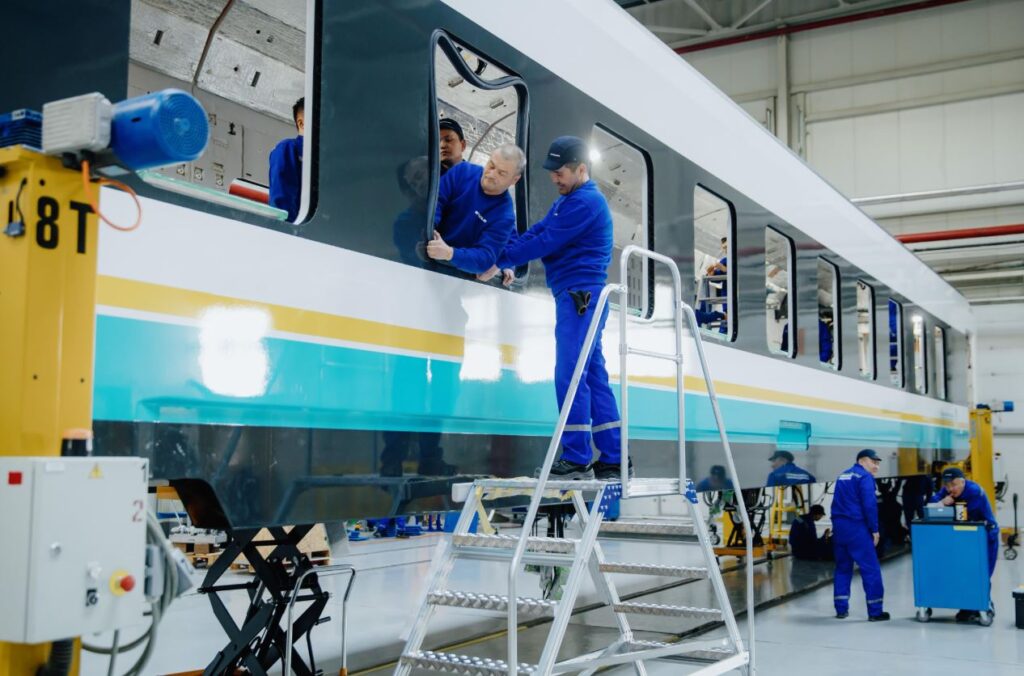
Serial production of passenger railcars for Kazakhstan's national rail carrier, Passenger Transportation JSC, has officially commenced in Astana. The project is being implemented at the Stadler Kazakhstan LLP plant as part of a broader initiative to modernize the country's railway sector. Contract for 557 Cars The initiative stems from a long-term agreement between Passenger Transportation JSC and Swiss rail manufacturer Stadler Rail AG. Under the terms of the contract, 557 passenger cars of various types, including compartment and platzkart models, generator cars, and specially adapted trains for passengers with disabilities, are to be produced by 2030. The first 51 units are scheduled to enter service in 2025. The contract also includes a 20-year maintenance commitment by the manufacturer, aimed at ensuring the reliability and longevity of the rolling stock. Full Production Cycle During a recent visit to the plant, representatives of Passenger Transportation JSC inspected the facilities and reviewed completed bodies of passenger and generator cars. More than 400 specialists are currently employed at the plant, the majority of whom are Kazakh nationals. The manufacturing process encompasses a complete production cycle, from body welding and painting to the assembly of electrical components, bogies, and interior fittings. Each railcar undergoes both static and dynamic testing before leaving the production line. In the past two years, the facility has undergone significant modernization and localization, including workforce training in advanced technologies. Comfort and Safety The new Stadler cars are designed with passenger comfort and safety in mind. Each compartment coach will offer 40 sleeping berths and feature air conditioning, video surveillance, electric heating, and an automated fire suppression system. Passengers will have access to electrical outlets and USB ports in each compartment. The railcars will sport a distinctive exterior in corporate blue, yellow, and white, while the interiors will be tailored to suit Kazakhstan’s climate and long-distance travel requirements. Swiss Quality in the Steppe Stadler Rail AG is a leading European rail manufacturer with over 80 years of experience and operations in 45 countries. Renowned for producing reliable and technologically advanced railcars suited to harsh climates, the company has supplied equipment to regions including Scandinavia and Eastern Europe. President Kassym-Jomart Tokayev personally discussed the establishment of the Kazakh production facility with Stadler Chairman Peter Spuhler in December 2022. Located in Astana’s industrial park, the plant spans over 31,000 square meters and has an annual production capacity exceeding 100 railcars. The launch of serial production marks a pivotal step in overhauling Kazakhstan's railway infrastructure. Beyond replacing outdated rolling stock, the project fosters technological advancement, local job creation, and the strengthening of the domestic rail manufacturing sector.

China’s Jiangsu Province and Soho Holding Group to Build Multifunctional Center in Astana

Kazakhstan’s Minister of Trade and Integration, Arman Shakkaliyev, visited China on April 3, where he met with officials from Jiangsu Province and representatives of Jiangsu Soho Holding Group in Nanjing, the province’s capital. During the meeting, the Chinese side presented design concepts for a planned multifunctional center to be built in Kazakhstan’s capital, Astana, in 2026. According to the trade ministry, the future center will strengthen Kazakh-Chinese trade and business relations. It will serve as a venue for showcasing Chinese and Kazakh goods, hosting business negotiations, registering trade transactions, and providing consulting services. The complex will also include a trade pavilion, a cultural center, and an office for Jiangsu Soho Holding Group. The sides also discussed plans to hold a Jiangsu Province goods exhibition in Astana from June 11 to 13, to coincide with the upcoming Central Asia-China summit. As part of his visit, Shakkaliyev toured the Central Asia-Jiangsu Trade Center and the National Pavilion of Kazakhstan in Nanjing, which opened in September 2024. The trade center is a multifunctional platform promoting exports from Kazakhstan, Uzbekistan, Tajikistan, and Turkmenistan, and is designed to increase Central Asian access to the Chinese market. Shakkaliyev also held talks with Eurasia Construction Capital Co. Ltd, which is planning to launch an investment project in Kazakhstan’s Atyrau region to establish a private special economic zone (SEZ) or industrial park. The initial investment is estimated at $100 million. Seven major Chinese companies, specializing in petrochemical products, renewable energy, and construction materials, have expressed interest in participating in the SEZ. The minister affirmed the government’s full support for the initiative, highlighting its potential to develop high value-added production in Kazakhstan.