• KGS/USD = 0.01144 0%
  • KZT/USD = 0.00206 0%
  • TJS/USD = 0.10699 -0.19%
  • UZS/USD = 0.00008 0%
  • TMT/USD = 0.28571 0%
  • KGS/USD = 0.01144 0%
  • KZT/USD = 0.00206 0%
  • TJS/USD = 0.10699 -0.19%
  • UZS/USD = 0.00008 0%
  • TMT/USD = 0.28571 0%
  • KGS/USD = 0.01144 0%
  • KZT/USD = 0.00206 0%
  • TJS/USD = 0.10699 -0.19%
  • UZS/USD = 0.00008 0%
  • TMT/USD = 0.28571 0%
  • KGS/USD = 0.01144 0%
  • KZT/USD = 0.00206 0%
  • TJS/USD = 0.10699 -0.19%
  • UZS/USD = 0.00008 0%
  • TMT/USD = 0.28571 0%
  • KGS/USD = 0.01144 0%
  • KZT/USD = 0.00206 0%
  • TJS/USD = 0.10699 -0.19%
  • UZS/USD = 0.00008 0%
  • TMT/USD = 0.28571 0%
  • KGS/USD = 0.01144 0%
  • KZT/USD = 0.00206 0%
  • TJS/USD = 0.10699 -0.19%
  • UZS/USD = 0.00008 0%
  • TMT/USD = 0.28571 0%
  • KGS/USD = 0.01144 0%
  • KZT/USD = 0.00206 0%
  • TJS/USD = 0.10699 -0.19%
  • UZS/USD = 0.00008 0%
  • TMT/USD = 0.28571 0%
  • KGS/USD = 0.01144 0%
  • KZT/USD = 0.00206 0%
  • TJS/USD = 0.10699 -0.19%
  • UZS/USD = 0.00008 0%
  • TMT/USD = 0.28571 0%

Viewing results 1 - 6 of 7

Silver, Silk, and Forgotten Power: Central Asia’s Islamic Past Comes to London

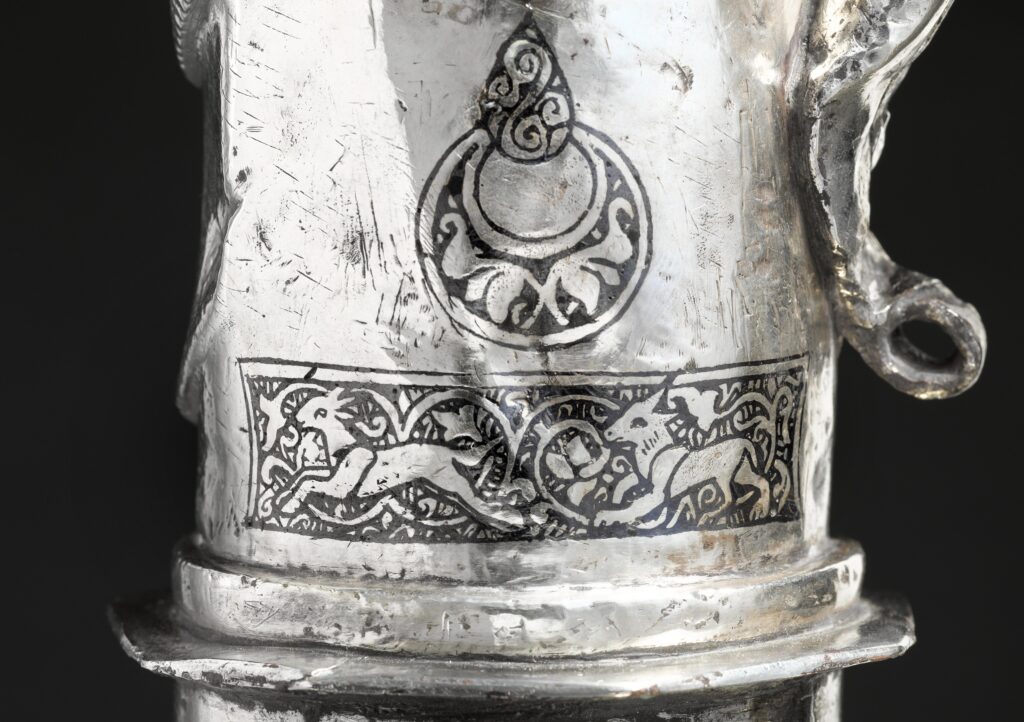
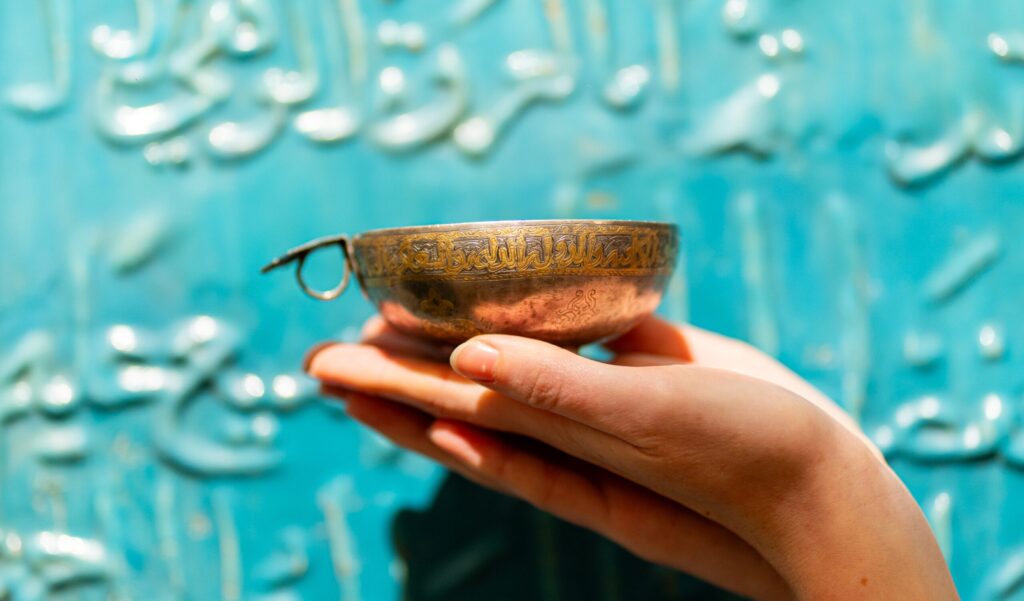
At Sotheby’s in London, Central Asia comes into view as a world of dazzling craft and taste. The Arts of the Islamic World & India auction on April 29th  gathers rare eastern Islamic works that show how the region turned faith, power, and luxury into art. The standout lot is a 12th or 13th-century silver ewer, catalogued as Persian or Central Asian. Most related vessels are brass or bronze. This one is comparable to vessels from the Harari Hoard, a group of 10th and 11th-century silver objects now largely held in the L.A. Mayer Museum for Islamic Art in Jerusalem. The ewer’s presence gives the sale its sharpest point of entry. It is rare, ambitious, and unusually personal. [caption id="attachment_47817" align="aligncenter" width="2447"] A pair of Seljuk gold bracelets, Persia, Khurasan, 12th century; image: Sotheby's[/caption] A 10th-century Nishapur calligraphic dish shifts the focus from metal to script, turning a simple object into a work shaped by the visual grace of the written word. Timurid horse trappings, Qur’an pages, Sogdian silks, golden Mongol cloths, an embroidered robe, and a Shakhrisabz suzani broaden the picture from courtly power to sacred text and textile brilliance, ending in a tradition still closely associated with Uzbekistan. The timing gives the auction added weight. Uzbekistan is building a major new stage for Islamic heritage. The Times of Central Asia reported in April 2026 that its Center of Islamic Civilization has entered the Guinness World Records as the world’s largest museum. TCA asked Frankie Keyworth, a Specialist in Islamic and Indian Art at Sotheby’s, why Central Asia’s artistic legacy is commanding fresh attention now. [caption id="attachment_47818" align="aligncenter" width="8984"] A turquoise-set silver and brass belt buckle, Bukhara, Central Asia, 19th century; image: Sotheby's[/caption] TCA: Why are the artifacts in this auction so important for understanding Central Asia as a center of artistic production, rather than just a corridor between other civilizations? Keyworth: They really reiterate the breadth of artistic production in Central Asia, which is incredibly rich in terms of medium, design and chronology. The works presented here range from the 8th to the 19th century, from textiles to ceramics, metalwork to manuscripts, and they reveal traditions that are distinct to Central Asia, and others that inform and are informed by artistic production in other regions. The impressive silver ewer is a good example of this. Its nielloed decoration on silver is typical of a distinct group of silver vessels produced in Central Asia, but its form would go on to inform examples in other materials, such as bronze or ceramics produced later in Persia. [caption id="attachment_47819" align="aligncenter" width="2560"] A Timurid or early Ottoman tinned copper goblet (mashrabe), Central Asia or Eastern Anatolia, late 15th century; image: Sotheby's[/caption] TCA: Which object best captures Central Asia’s wider historical importance, and what makes it so revealing? Keyworth: It’s hard to pinpoint such a vast artistic tradition to one object, but luxurious textile production is synonymous with the arts of Central Asia. In this sale, we can see one of the earliest...

The Artistic Brilliance of Central Asia Takes Center Stage at Sotheby’s

On October 29, Sotheby’s will host its Arts of the Islamic World and India sale, featuring a dazzling selection of manuscripts, ceramics, metalwork, and jewelry that together trace the creative reach of Central Asia across six centuries. The auction highlights how the region’s artists shaped Islamic visual culture from the early medieval period to the Timurid age. Among the most important works is a rare page from the monumental Baysunghur Qur’an, produced around 1400 in Herat or Samarkand. Another piece connects to the earlier Samanid Dynasty, whose rule from Bukhara and Tashkent fostered a flourishing of calligraphic pottery in the ninth and tenth centuries. The Arab geographer al-Maqdisi once praised the “large bowls from Shash,” an early name for Tashkent, noting their reputation throughout the Islamic world. [caption id="attachment_38298" align="aligncenter" width="1797"] A line from the 'Baysunghur Qur'an', attributed to 'Umar al-Aqta, Herat or Samarkand, circa 1400; image: Sotheby's[/caption] Two colorful Timurid mosaic tiles from the fourteenth or fifteenth century illustrate the architectural splendor of Samarkand and Herat. Their glazed patterns in cobalt, turquoise, and white once formed part of vast decorative panels in mosques and mausoleums. The geometric interlace and stylized foliage that define them became a visual signature of Timurid architecture, a style that spread from Central Asia to Persia and India. [caption id="attachment_38301" align="aligncenter" width="1346"] A Golden Horde turquoise and pearl-set gold belt or necklace, Pontic-Caspian Steppe, 14th century; image: Sotheby's[/caption] The Times of Central Asia spoke with Frankie Keyworth, a specialist in Islamic and Indian Art at Sotheby’s, for a closer look. TCA: How did manuscripts like the Baysunghur Qur’an serve as symbols of power and faith in the Timurid court, and what does its immense scale - a Qur’an so vast it took two people to turn a page - reveal about the empire’s ambition, artistry, and self-image? Keyworth: The manuscript was a hugely ambitious and challenging project, even just by the tools it would take to create, with monumental sheets of paper measuring 177 by 101cm., and a large pen whose nib would have to measure over 1cm. Displayed on a magnificent marble stand, the manuscript would be a staggering visual representation of the patron’s wealth and piety. Their subsequent use during public recitation reinforced the elite’s religious aspirations. The fact that this manuscript is unsurpassed by any other medieval Qur’an and remains so valued centuries after it was produced at the turn of the 15th century reveals the key role manuscripts played in the establishment of the Timurid dynastic image. [caption id="attachment_38299" align="aligncenter" width="1346"] A Timurid brass jug (mashrabe), Herat, Afghanistan, 15th-early 16th century; image: Sotheby's[/caption] TCA: A brass jug from Herat shaped like a Chinese vase, a ceramic bowl from Tashkent inscribed in Arabic script - these objects tell of traders, scholars, and artists linking worlds from Samarkand to Beijing long before globalization had a name. What can you tell us about how this trade transpired, and are there similarities to modern transport corridors? Keyworth: Trade via the so-called Silk Road endured for...

Kazakhstan to Auction 50 Rare Metal Deposits in June 2025

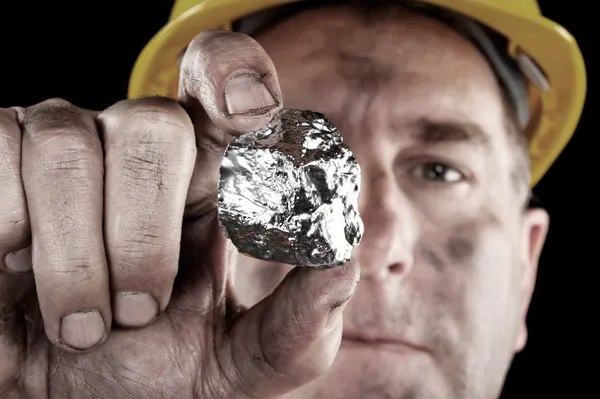
Kazakhstan will grant exploration and development rights for 50 deposits of gold and rare metals through an electronic auction scheduled for June 2025, the Ministry of Industry and Construction has announced. Almas Kushumov, Director of the Ministry’s Department of Subsoil Use, shared the details through MINEX Kazakhstan (Mining and Exploration Forum). “We will auction off deposits with confirmed balance reserves, gold, coal, rare metals, and polymetals,” Kushumov said. “The information will be published soon on the Unified Platform of Subsoil Use, and in June we plan to hold the electronic auction. All participants will be able to submit their documents online.” The auction will be hosted on the Unified Subsoil Use Platform: minerals.e-qazyna.kz. Licenses will be awarded for both exploration and production, with production licenses valid for 25 years. Companies from the United States, European Union, and China have already submitted applications, according to the ministry. The full list of the 50 deposits will be made public in the coming days. Kazakhstan has prior experience with this auction format, between 2023 and 2024, 117 deposits were awarded through electronic auctions, generating over KZT29 billion ($55.9 million) in signing bonuses. Kazakhstan currently holds over 9,000 registered deposits, including 987 classified as solid mineral sites. Many of these were surveyed more than three decades ago, which is why the government is now prioritizing not only production rights but also geological exploration, with strong interest from both domestic and foreign investors. Kushumov noted that the introduction of the Code on Subsoil and Subsoil Use in 2018 significantly improved the investment climate, tripling the volume of private capital in the sector. As previously reported by The Times of Central Asia, the state mining company Tau-Ken Samruk is advancing work at the Kuirektykol rare earth deposit, where exploration began in 2022. Recent studies have identified new promising zones which, if confirmed, could place Kazakhstan among the global leaders in rare earth metal reserves.