At Sotheby’s in London, Central Asia comes into view as a world of dazzling craft and taste. The Arts of the Islamic World & India auction on April 29th gathers rare eastern Islamic works that show how the region turned faith, power, and luxury into art.
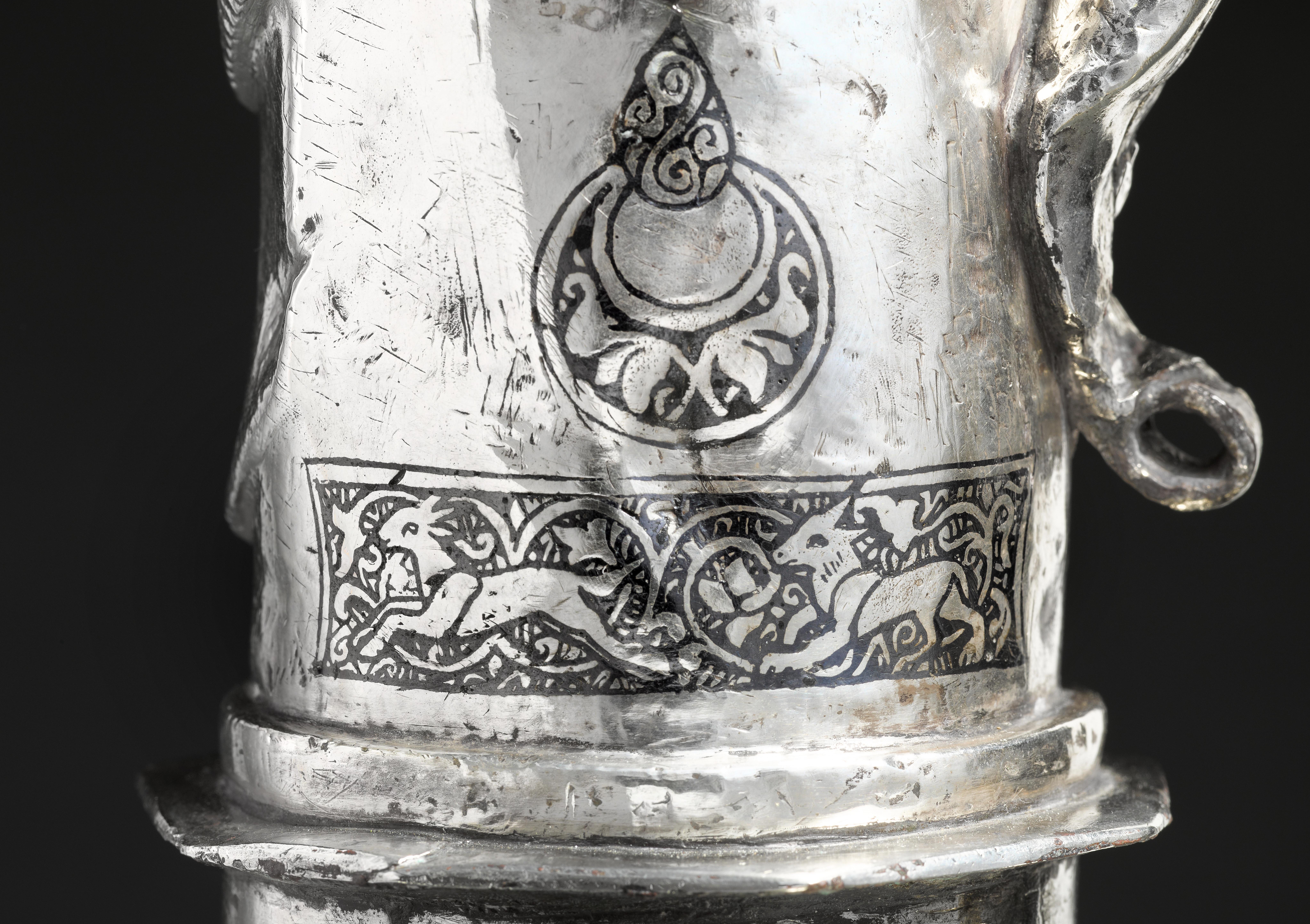
The standout lot is a 12th or 13th-century silver ewer, catalogued as Persian or Central Asian. Most related vessels are brass or bronze. This one is comparable to vessels from the Harari Hoard, a group of 10th and 11th-century silver objects now largely held in the L.A. Mayer Museum for Islamic Art in Jerusalem. The ewer’s presence gives the sale its sharpest point of entry. It is rare, ambitious, and unusually personal.
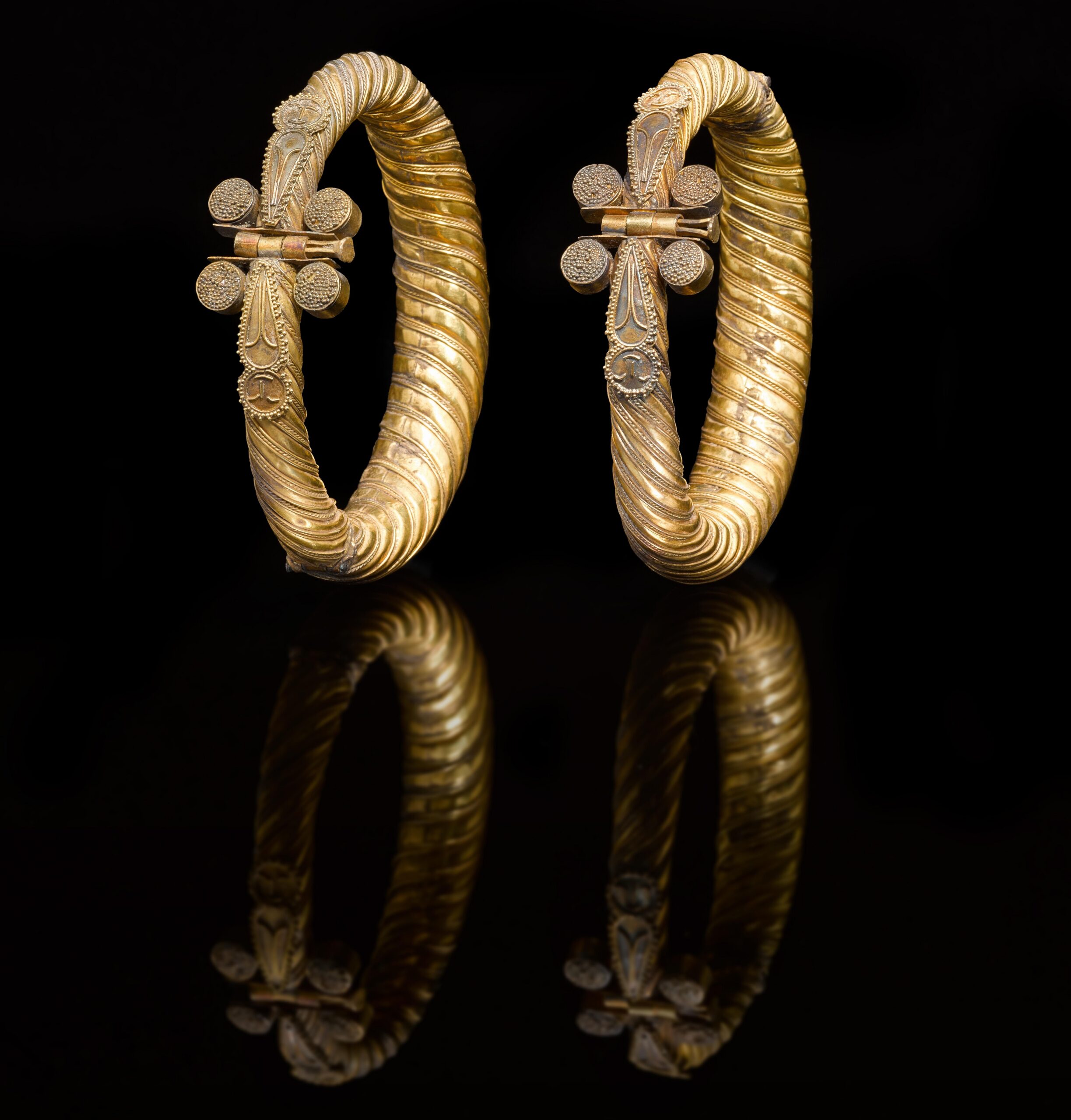
A pair of Seljuk gold bracelets, Persia, Khurasan, 12th century; image: Sotheby’s
A 10th-century Nishapur calligraphic dish shifts the focus from metal to script, turning a simple object into a work shaped by the visual grace of the written word. Timurid horse trappings, Qur’an pages, Sogdian silks, golden Mongol cloths, an embroidered robe, and a Shakhrisabz suzani broaden the picture from courtly power to sacred text and textile brilliance, ending in a tradition still closely associated with Uzbekistan.
The timing gives the auction added weight. Uzbekistan is building a major new stage for Islamic heritage. The Times of Central Asia reported in April 2026 that its Center of Islamic Civilization has entered the Guinness World Records as the world’s largest museum. TCA asked Frankie Keyworth, a Specialist in Islamic and Indian Art at Sotheby’s, why Central Asia’s artistic legacy is commanding fresh attention now.

A turquoise-set silver and brass belt buckle, Bukhara, Central Asia, 19th century; image: Sotheby’s
TCA: Why are the artifacts in this auction so important for understanding Central Asia as a center of artistic production, rather than just a corridor between other civilizations?
Keyworth: They really reiterate the breadth of artistic production in Central Asia, which is incredibly rich in terms of medium, design and chronology. The works presented here range from the 8th to the 19th century, from textiles to ceramics, metalwork to manuscripts, and they reveal traditions that are distinct to Central Asia, and others that inform and are informed by artistic production in other regions. The impressive silver ewer is a good example of this. Its nielloed decoration on silver is typical of a distinct group of silver vessels produced in Central Asia, but its form would go on to inform examples in other materials, such as bronze or ceramics produced later in Persia.
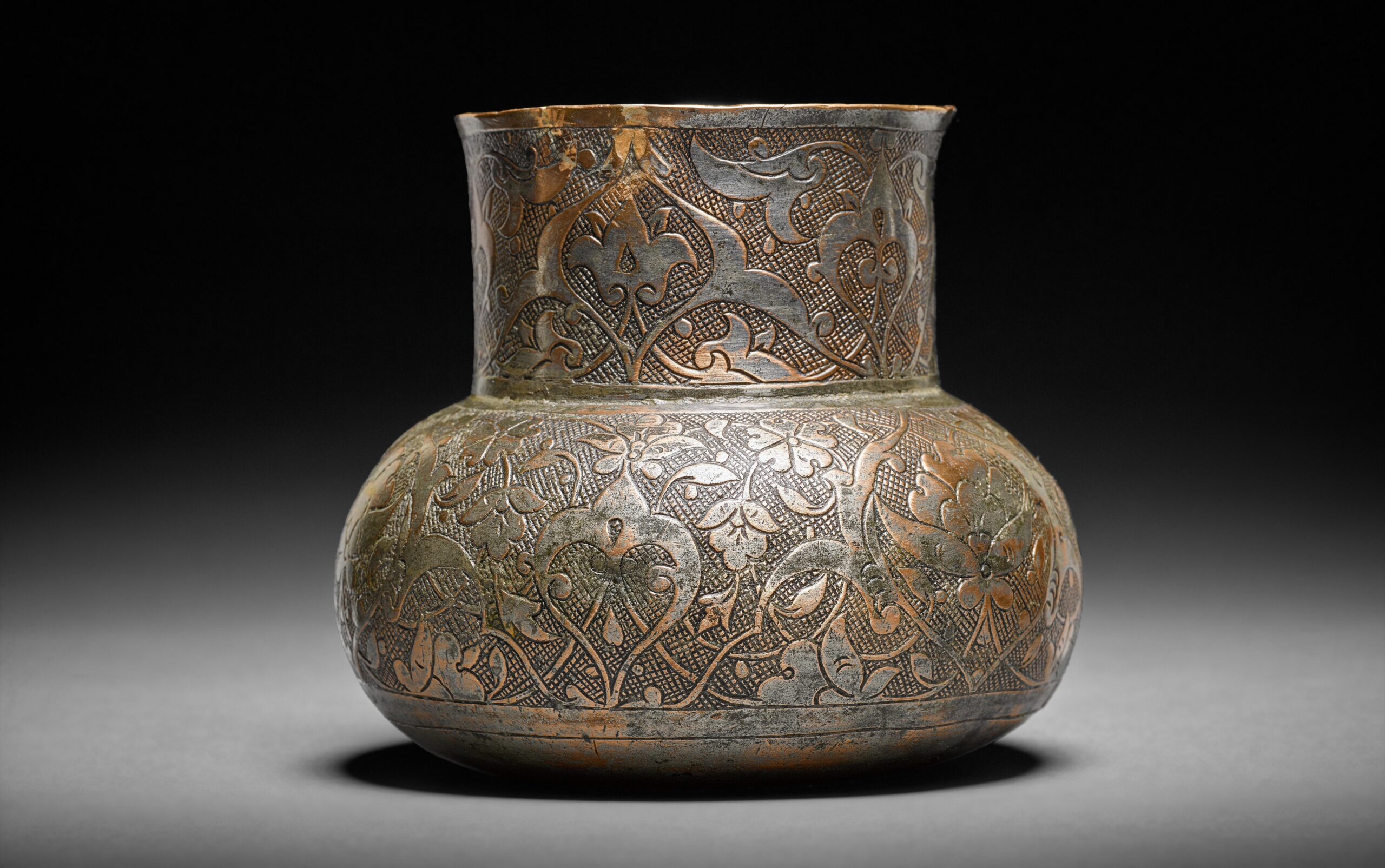
A Timurid or early Ottoman tinned copper goblet (mashrabe), Central Asia or Eastern Anatolia, late 15th century; image: Sotheby’s
TCA: Which object best captures Central Asia’s wider historical importance, and what makes it so revealing?
Keyworth: It’s hard to pinpoint such a vast artistic tradition to one object, but luxurious textile production is synonymous with the arts of Central Asia. In this sale, we can see one of the earliest traditions in weaving, a polychrome silk samite panel with marching bulls. Silks like these bridge Sasanian, Islamic, Byzantine, and Chinese iconography, and are extremely sophisticated in technique and design, requiring a complex and multi-faceted process in dyeing and weaving.
Taken together with the other textiles included in the sale, you begin to understand the extent to which Central Asian weavers mastered the textile arts. Mongol ‘cloths-of-gold’ were used in costume and in opulent tent interiors and embroideries; items such as a 14th-century embroidered robe could be an early precursor to the wonderfully polychrome suzanis that come in the 18th and 19th centuries. It’s unsurprising that similar textiles are well-represented in museum collections globally.
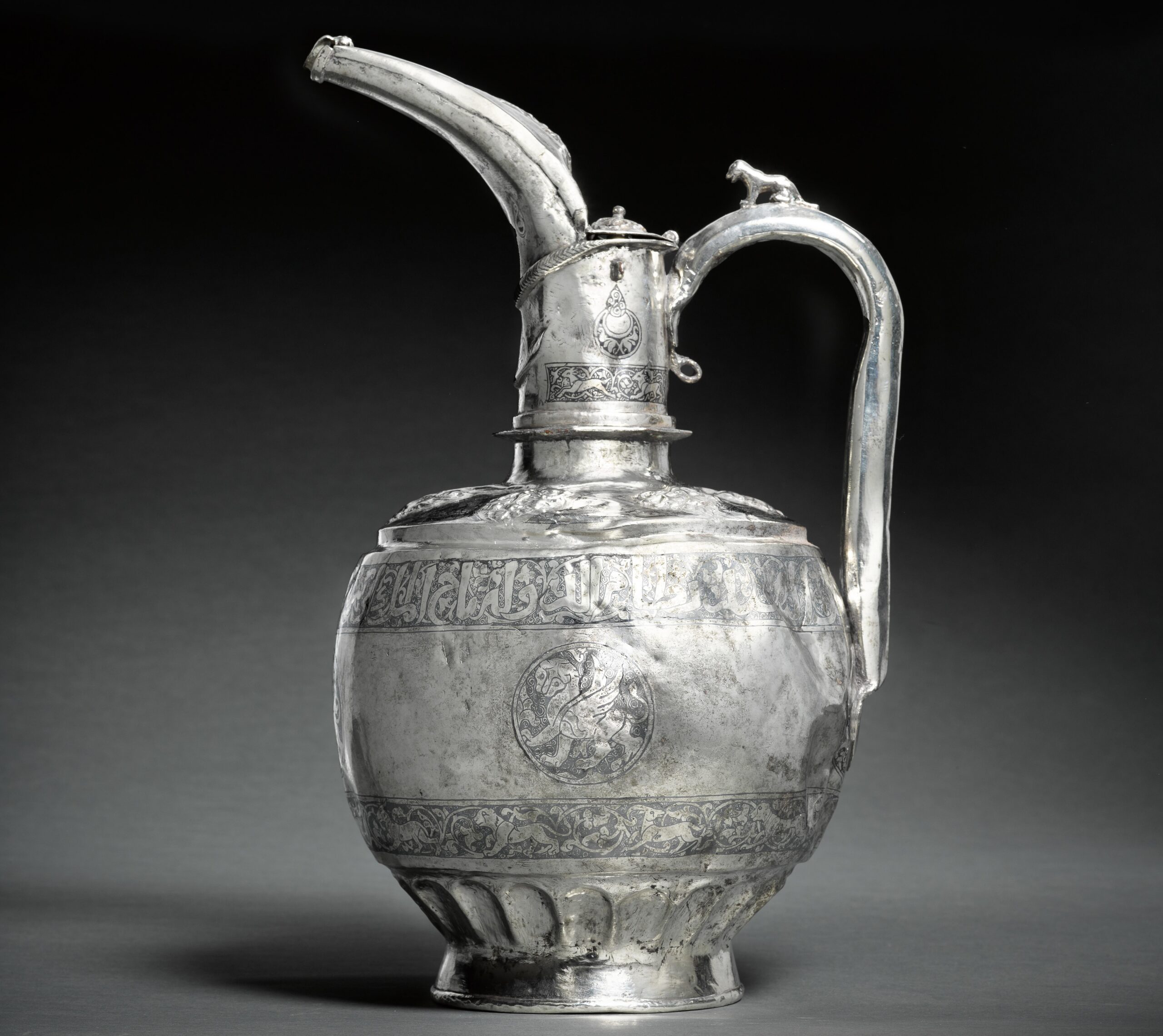
A large nielloed silver ewer, Persia or Central Asia, 12th 13th century; image: Sotheby’s
TCA: The silver ewer appears to preserve the name of a high-ranking patron otherwise lost to history. How rare is that, and what can a piece like this tell us that written sources do not?
Keyworth: The calligraphic inscriptions on luxurious metalworks like this are usually benedictory and examples bearing owners’ names are much rarer. It indicates that the work was a bespoke commission for its patron and therefore builds a picture of the circumstances in which objects like this were produced. What makes this work stand apart is its large size and dramatic profile, not often seen in other nielloed silver works, so we can glean from this that the patron must have been a man of incredible means. It’s possible that he was a nobleman related to the Salghurids.
TCA: Why should readers today care about these objects beyond their auction estimates? What do they tell us about identity and cultural exchange across the Islamic world and Central Asia?
Keyworth: It is important to remember that these works were never intended to be viewed in isolation, and while they are revered as artworks today, they are, at their heart, extremely high-quality functional objects that were made to be lived with. The care in design and technique in their production in both the earliest and latest pieces reflect an environment where there was a clear and evolving aesthetic concern, and where luxurious textiles were layered with important metalworks and ceramics.

A Timurid blue and white pottery dish, Persia, probably Tabriz, 15th century; image: Sotheby’s
TCA: Many of these objects are now dispersed across collections and markets. How much of Central Asia’s artistic heritage is still in the region, and how much now exists elsewhere?
Keyworth: It’s very difficult to measure how much of the original production remains within the region, not least due to the fact that these types of objects were traded, exchanged and gifted for centuries. The artistic production of Central Asia is expansive in its nature, covering many regions and dynasties, and as such works from the region have been treasured and exhibited in museum collections globally. It is exciting that new museum projects like the opening of the Centre for Islamic Civilization in Tashkent, along with other established museums, are bringing even more enthusiasm to this collecting area and creating more opportunities to see similar works proudly displayed together in the regions where they were produced.
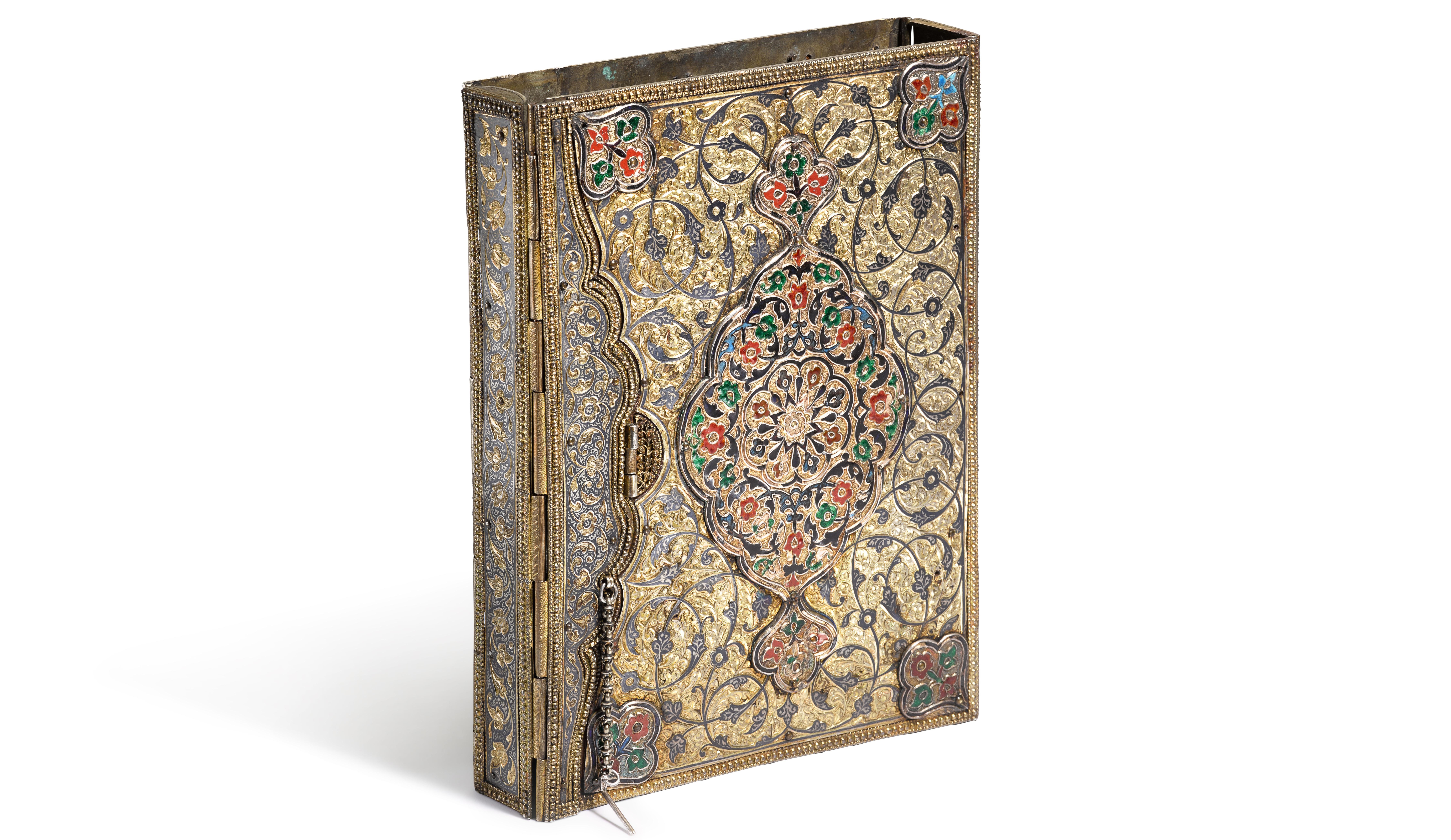
An enameled and nielloed brass and silver-gilt binding, Central Asia, possibly Bukhara, late 19thearly 20th century; image: Sotheby’s
From April 24, visitors to Sotheby’s in London can see these pieces up close. It is a rare chance to encounter centuries of Central Asian artistry gathered in one place, ahead of the April 29 auction.