• KGS/USD = 0.01143 -0%
  • KZT/USD = 0.00198 -0%
  • TJS/USD = 0.10899 0.93%
  • UZS/USD = 0.00008 0%
  • TMT/USD = 0.28490 -0.28%
  • KGS/USD = 0.01143 -0%
  • KZT/USD = 0.00198 -0%
  • TJS/USD = 0.10899 0.93%
  • UZS/USD = 0.00008 0%
  • TMT/USD = 0.28490 -0.28%
  • KGS/USD = 0.01143 -0%
  • KZT/USD = 0.00198 -0%
  • TJS/USD = 0.10899 0.93%
  • UZS/USD = 0.00008 0%
  • TMT/USD = 0.28490 -0.28%
  • KGS/USD = 0.01143 -0%
  • KZT/USD = 0.00198 -0%
  • TJS/USD = 0.10899 0.93%
  • UZS/USD = 0.00008 0%
  • TMT/USD = 0.28490 -0.28%
  • KGS/USD = 0.01143 -0%
  • KZT/USD = 0.00198 -0%
  • TJS/USD = 0.10899 0.93%
  • UZS/USD = 0.00008 0%
  • TMT/USD = 0.28490 -0.28%
  • KGS/USD = 0.01143 -0%
  • KZT/USD = 0.00198 -0%
  • TJS/USD = 0.10899 0.93%
  • UZS/USD = 0.00008 0%
  • TMT/USD = 0.28490 -0.28%
  • KGS/USD = 0.01143 -0%
  • KZT/USD = 0.00198 -0%
  • TJS/USD = 0.10899 0.93%
  • UZS/USD = 0.00008 0%
  • TMT/USD = 0.28490 -0.28%
  • KGS/USD = 0.01143 -0%
  • KZT/USD = 0.00198 -0%
  • TJS/USD = 0.10899 0.93%
  • UZS/USD = 0.00008 0%
  • TMT/USD = 0.28490 -0.28%
06 December 2025

Viewing results 1 - 6 of 24

Putin Admits Russian Missile Shrapnel Hit Azerbaijani Airliner

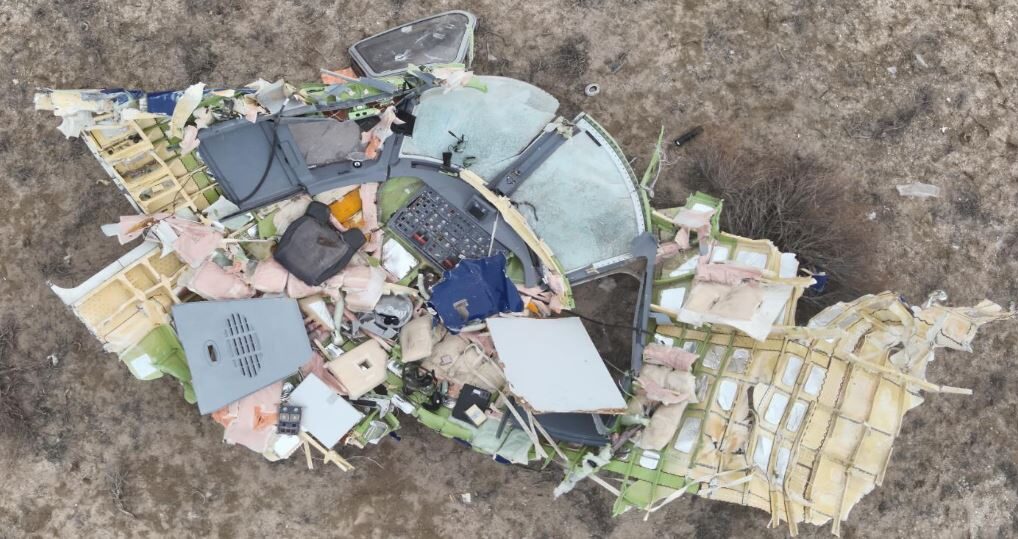
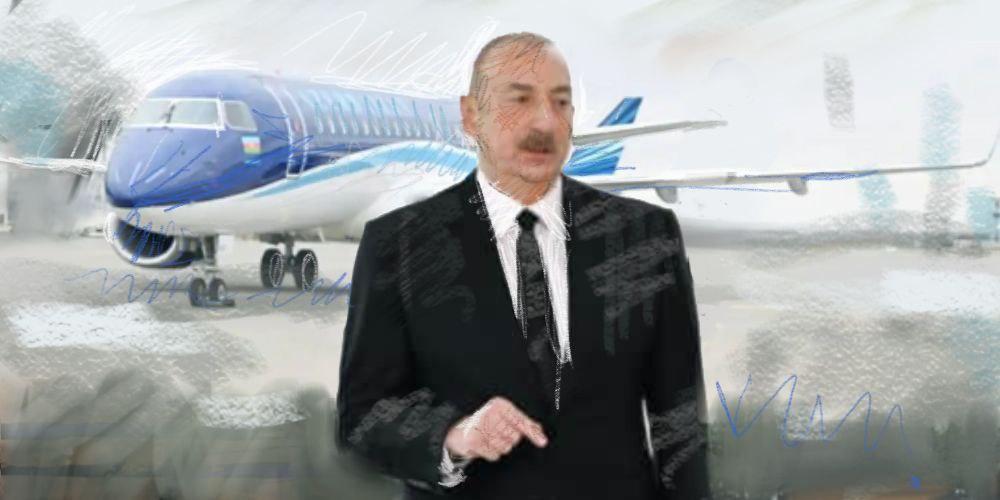
Russian President Vladimir Putin said on Thursday that Russian missile fire had damaged an Azerbaijani airliner that crashed in Kazakhstan on Dec. 25, 2024, offering new details about an incident that fueled tension between Moscow and Baku this year. Putin spoke about the crash, which killed 38 of the 67 people on board, in a meeting with Azerbaijani President Ilham Aliyev on the sidelines of a regional summit in Dushanbe, Tajikistan. The Russian leader’s comments represented an effort to repair relations with Azerbaijan, which had harshly criticized what it described as Russian efforts to avoid responsibility for the disaster. Kazakhstan is leading an investigation of the crash, which occurred near the city of Aktau after the Azerbaijan Airlines plane was struck while trying to land in Grozny, Chechnya, and then diverted across the Caspian Sea. Details about the extent of Russia’s collaboration with the probe led by Kazakhstan have not been publicly announced. But Putin, who previously made a general apology without taking full responsibility, said Russia is providing “every possible assistance” to the investigation as it nears a conclusion. "The first thing is that there was a Ukrainian drone in the sky. We were tracking three such drones, which crossed the Russian Federation border at night," Putin said, according to RIA Novosti, a Russian state-owned news agency. He also said there was a technical failure in the air defense system. "The two missiles that were fired did not directly hit the aircraft (if that had happened, it would have crashed on the spot), but exploded - perhaps self-destructing - a few meters away, somewhere around ten meters,” RIA Novosti quoted Putin as saying. “And so, the hit occurred, but not primarily from the warheads, but most likely from debris from the missiles themselves. That's why the pilot perceived it as a collision with a flock of birds, which he reported to Russian air traffic controllers, and all of this is recorded in the so-called ‘black boxes.’" Some security analysts have said the missiles may have been designed to explode near targets and spray them with shrapnel, a theory that would raise questions about Putin’s account of a technical failure. Putin said compensation and other matters related to the crash will be done, but it will "require some time." AZERTAC, Azerbaijan’s state news agency, carried a similar account of Putin’s comments, which were welcomed by Aliyev. “You are personally overseeing the course of the investigation, and we had no doubt that it would thoroughly and objectively determine all the circumstances,” Aliyev said, according to AZERTAC. “Therefore, I would like once again to express my gratitude that you deemed it important to address this issue during our meeting.” Even so, questions remain about whether Azerbaijan will secure everything it has asked for in connection with the crash. While Russia says insurance payments have been made to crash survivors, victims’ relatives, and Azerbaijan Airlines, there is no word on whether those believed to have fired on the aircraft will face judgment. At...

Russia–Central Asia Summit in Dushanbe Tests Putin’s Grip

Russian President Vladimir Putin arrived in Tajikistan on October 8 for a three-day state visit that includes a Russia–Central Asia summit in Dushanbe, and a larger Commonwealth of Independent States (CIS) meeting. His arrival comes at a time of geopolitical flux in Central Asia, with Russia seeking to reaffirm its waning influence amid migration tensions, economic pressures, and security challenges on its southern flank. The Visit and Summit: What Has Happened So Far Putin was greeted at Dushanbe airport by Tajik President Emomali Rahmon, who has governed the country since 1992. Upon his arrival, the two leaders conducted a private meeting and later presided over expanded talks with their delegations. In his opening remarks, Putin told Rahmon that Russia and Tajikistan are “reliable allies” and pledged that Moscow would fulfil its obligations to Dushanbe, particularly in terms of security. In the first seven months of 2025, bilateral trade rose by more than 17%, a figure Putin cited to underscore that relations are developing “very positively.” Following the meeting, the two leaders signed a joint statement on “deepening the strategic partnership and alliance” between their countries. Alongside Rahmon, on October 9, Putin met with the presidents of Kazakhstan, Kyrgyzstan, Turkmenistan, and Uzbekistan as part of the Russia–Central Asia summit. As previously reported by The Times of Central Asia, the summit agenda includes cooperation in trade, transport, energy, security, migration, and environmental policy. A concluding communiqué is expected to lay out joint priorities for 2025–2027 in these fields. Following the Russia–Central Asia gathering, a broader CIS head-of-state meeting is scheduled for October 10. Alongside Russia and the Central Asian states, representatives from Armenia, Azerbaijan, and Belarus will also attend. Draft agendas suggest the adoption of a military-cooperation concept through 2030, counterterrorism and border security strategies, efforts to fight transnational crime, and discussions on a “CIS Plus” format that would allow third-party countries and international organizations to participate in selected CIS events. Russia’s Defense Minister Andrei Belousov held talks in Dushanbe with his Tajik counterparts on October 8, stating that “cooperation between our two military institutions” is key to regional stability. Tajikistan hosts Russia’s largest foreign military base and shares a long, porous border with Afghanistan, which makes the security relationship central to both sides’ calculus. Historical and Geopolitical Context Russia has long viewed Central Asia as its strategic backyard, but since 2022, its dominance has been challenged. Sanctions on Russia due to the war in Ukraine have constrained its economic leverage, while China has expanded its presence via Belt and Road investments. At the same time, the European Union has elevated its engagement with Central Asian states through trade, infrastructure funding, and diplomatic outreach. Central Asian governments have shown increasing boldness in balancing their relations between Moscow, Beijing, and the West. None of the Central Asian governments has openly backed Russia’s full-scale invasion of Ukraine. Surveys in Kazakhstan show that only 15% of respondents explicitly support Russia, while a larger share leans toward Ukraine or nonalignment. Kazakhstan has refused to recognize the...

Final Report on AZAL Crash Near Aktau Expected by Year-End

Kazakhstan is set to complete its investigation into the crash of an Azerbaijan Airlines (AZAL) aircraft near Aktau by the end of 2025. The announcement was made by Deputy Prime Minister Kanat Bozumbayev during a briefing in Astana. Bozumbayev stated that the final report is nearing completion. “Our Ministry of Transport is working intensively, with international experts from various countries participating. Some of the equipment remains abroad for examination and will be returned soon. The analysis stage is coming to an end, and we are moving on to preparing the final report,” he said. “The final report will be available in a few months; the truth will be clear by the end of the year, and all requirements will be met to the letter.” He also emphasized that it is too early to determine the cause of the damage to the aircraft. “These questions must be answered by explosive ordnance disposal experts, and that work is being carried out by law enforcement agencies,” he added. The Embraer 190 aircraft, which was en route from Baku to Grozny, crashed near Aktau on December 25, 2024, after the crew reported damage to the fuselage and attempted an emergency landing. Of the 67 people on board, 38 died. The crash sparked an international controversy, with Baku accusing Russian air defense forces of striking the aircraft, an allegation Moscow has denied. Kazakhstan, as the country where the crash occurred, is conducting the investigation as a neutral party. Bozumbayev confirmed that Kazakhstani experts have submitted formal requests to several countries whose weapons may match the damaging elements identified in the fuselage. Among the victims were six Kazakh citizens. Despite this, Astana is refraining from issuing official claims against any foreign states. In contrast, Azerbaijan has announced its intention to seek compensation through international legal channels.

Despite Kazakh-led Inquiry, Azerbaijan to Take Plane Crash Case to International Courts

After months of collaborating with an investigation led by Kazakhstan, Azerbaijan now also plans to seek redress in international courts over the Dec. 25, 2024, crash of an Azerbaijan Airlines plane that it says was hit by Russian ground fire before diverting to the western Kazakh city of Aktau. Azerbaijan’s turn to international institutions reflects frustration with what it views as Russian intransigence in the investigation of what happened to Flight 8243, as well as the sensitivities for Kazakhstan as it leads a probe that could implicate Russia, its powerful neighbor and key trading partner. In a sense, Kazakhstan is caught in the middle, unable so far to satisfy Azerbaijan’s push for accountability for the crash and apparently unable to get full cooperation from Russia in the investigation. Unlike Azerbaijan, Kazakhstan has refrained from criticism of Russia, even though six Kazakhstanis were among those who died in the plane crash, and Kazakh emergency crews went into potential danger after rushing to pull survivors from the wreckage. Kazakhstan’s low-key approach is possibly an outcome of its efforts to appear impartial during the inquiry as well as its policy of maintaining smooth diplomatic ties, despite any disagreements or tension with major regional players, including Russia and China. Flush with military victories over Armenia and buoyed by close ties with allies such as Türkiye, Azerbaijan feels less constrained to nurture its traditional relationship with Moscow, its ruler during Soviet and Russian colonial times. On Saturday, President Ilham Aliyev of Azerbaijan referred to years of international investigations and inquiries that found Russia-backed separatist rebels had shot down Malaysia Airlines Flight 17 over eastern Ukraine in 2014, and that Russia bore responsibility – a conclusion rejected by Moscow. Aliyev said Azerbaijan was prepared to wait just as long to clear up the case of the Azerbaijan Airlines crash, in which 38 of 67 people on board died. “We will not forget,” Aliyev said, according to Minval Politika, an Azerbaijani news outlet. “We are currently preparing, and we have already informed the Russian side that we are preparing a dossier for submission to international courts on this matter. We understand that this may take time. In the case of the Malaysia Airlines Boeing, it took more than ten years. We are ready to wait ten years, but justice must prevail.” The remarks by Azerbaijan’s leader at a media forum in the Azerbaijani city of Shusha show that ties between the two nations face protracted tension as long as the dispute persists, though there are other sources of friction between them, including detentions of each other’s citizens. Russian President Vladimir Putin has apologized for the crash without taking responsibility or providing details about what happened at a time when, according to Russia, the area around Grozny was under attack from Ukrainian drones. Azerbaijan also wants those responsible to be punished, compensation to be paid to families of the victims, and Azerbaijan Airlines to be compensated for the loss of the Embraer 190 plane that crashed. The aircraft...

Azerbaijani Crew Films in Kazakhstan for Plane Crash Documentary

A film crew from Azerbaijan has visited Kazakhstan to make a documentary about the deadly crash of an Azerbaijan Airlines plane that Azerbaijan says was hit by Russian ground fire. Lada.kz, a media organization based in the city of Aktau in western Kazakhstan, talked to the three-member team from the CBC Azerbaijan TV channel about the project. The filmmakers went to Aktau because the plane crashed on the approach to the city’s airport on December 25 last year after diverting across the Caspian Sea from its planned landing in Grozny, Chechnya. “Several films have already been made in Azerbaijan on this topic, but in our project we want to reconstruct the chronology of events in detail, literally minute by minute,” senior editor Gulzar Mustafayeva told Lada. “It is very important to show how the people of Kazakhstan reacted, how the residents of Aktau united and came to the rescue,” she said, referring to emergency response teams that rushed to help survivors as well as the donation of blood from people in Kazakhstan. The crash killed 38 of the 67 people on board and soured relations between Russia and Azerbaijan, which accused Russian officials of failing to take responsibility. Russian President Vladimir Putin apologized to Azerbaijani leader Ilham Aliyev, but did not acknowledge that Russian fire damaged the plane. Russia has said the area was under attack by Ukrainian drones at the time. Kazakhstan issued a preliminary report on the crash in February. It said the plane had been hit by metal objects, an assertion that appeared to confirm that the aircraft was shot at from the ground. But the report didn’t say Russia was to blame. Mustafayeva and her colleagues visited the crash site, where a simple memorial has been installed. “Despite the fact that everything was cleaned, tidied up, and the main fragments were taken away long ago, small details still remain on the site - scraps of clothing, remnants of shoes, a wheel from a suitcase in which someone was carrying their things,” she told Lada. “This makes a very strong impression. You stand and understand: human lives were cut short here.” She said CBC Azerbaijan TV plans to show the documentary later this year.  

New Plane Crash Allegations Add Fuel to Russia-Azerbaijan Dispute

Earlier this year, Azerbaijan lashed out at Russia over the Dec. 25, 2024 crash of an Azerbaijan Airlines plane that the government said was hit by accidental Russian ground fire before crashing in Kazakhstan. Now, Moscow is coming under fresh scrutiny over the crash, which killed 38 of the 67 people on board, as a broader dispute between Russia and Azerbaijan sharply escalates. On Wednesday, an Azerbaijani news outlet, Minval Politika, published an anonymous letter and other materials purportedly containing a Russian air defense captain’s assertion that the Russian Defense Ministry gave the order to shoot down the plane as it tried to land in Grozny, Chechnya. The outlet says it can’t confirm the authenticity of the letter, and Russia has previously said an official investigation should run its course. But the dramatic allegation and the timing of the apparent leak to Minval Politika are likely to heighten acrimony at a particularly sensitive moment. Minval Politika said it felt compelled to publish the information for “society,” and that the “data obtained can serve as useful information for the competent authorities of the Republic of Azerbaijan investigating the circumstances of the tragedy.” The wider confrontation stems partly from the arrests of dozens of people of Azerbaijani origin by Russian security officials in the Russian city of Yekaterinburg last week. Two ethnic Azerbaijani brothers died in those raids, which Russian officials said were part of an old murder probe. Azerbaijan then detained staff at the Baku office of Russian state media group Sputnik, alleging fraud and other crimes. Russia, in turn, accused Azerbaijan of “unfriendly” conduct. The rift lays open the delicacy of relations between regional power Russia and most former Soviet republics that, since the dissolution of the Soviet Union in 1991, have developed trade, diplomatic, and other ties with Moscow while trying to strengthen their own sovereignty and national identity, and engage with other international partners. Central Asian countries – Kazakhstan, Kyrgyzstan, Uzbekistan, Tajikistan, and Turkmenistan – have generally maintained this balance and looked for diplomatic solutions to concerns such as discrimination against Central Asian migrants in Russia. At the other end of the spectrum, Ukraine has been in an all-out war with a Russian invading force for more than three years. Azerbaijan, in the South Caucasus region, has long maintained an alliance with Russia, which has gradually been losing influence in the area as it focuses on the Ukraine war and as Türkiye and other players gain more clout. Azerbaijan’s relationship with Russia soured markedly because of the Azerbaijan Airlines plane crash and what Azerbaijani authorities and commentators saw as an evasive Russian response to the disaster. The incident put Kazakhstan in a difficult position because the crash happened on its territory, just outside the Caspian Sea city of Aktau, and Kazakh authorities were therefore the leaders of an investigation that required the full cooperation of Russia to understand what really happened. Russian President Vladimir Putin had apologized to his Azerbaijani counterpart, Ilham Aliyev, but did not acknowledge that...