Russian President Vladimir Putin arrived in Tajikistan on October 8 for a three-day state visit that includes a Russia–Central Asia summit in Dushanbe, and a larger Commonwealth of Independent States (CIS) meeting. His arrival comes at a time of geopolitical flux in Central Asia, with Russia seeking to reaffirm its waning influence amid migration tensions, economic pressures, and security challenges on its southern flank.
The Visit and Summit: What Has Happened So Far
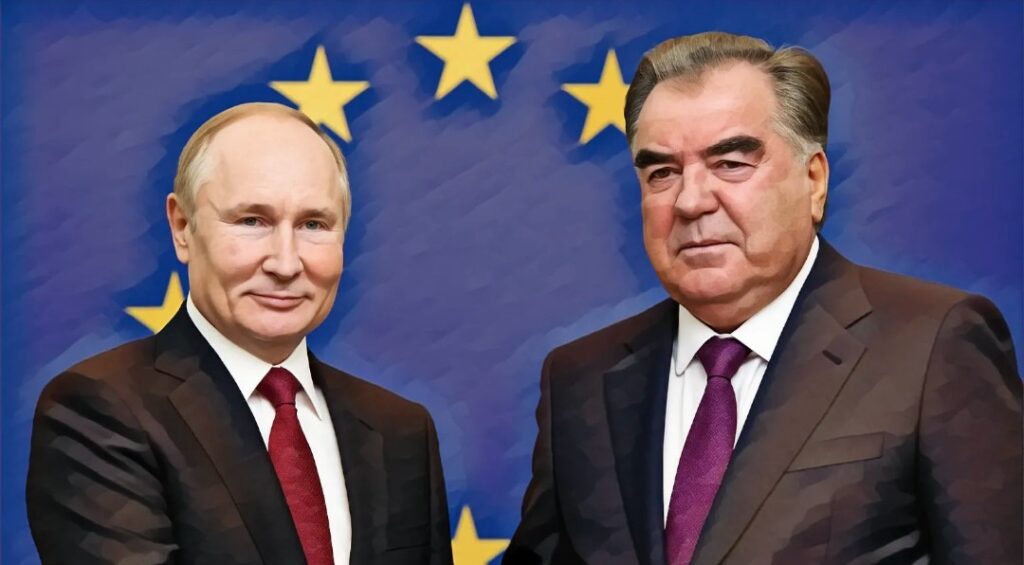
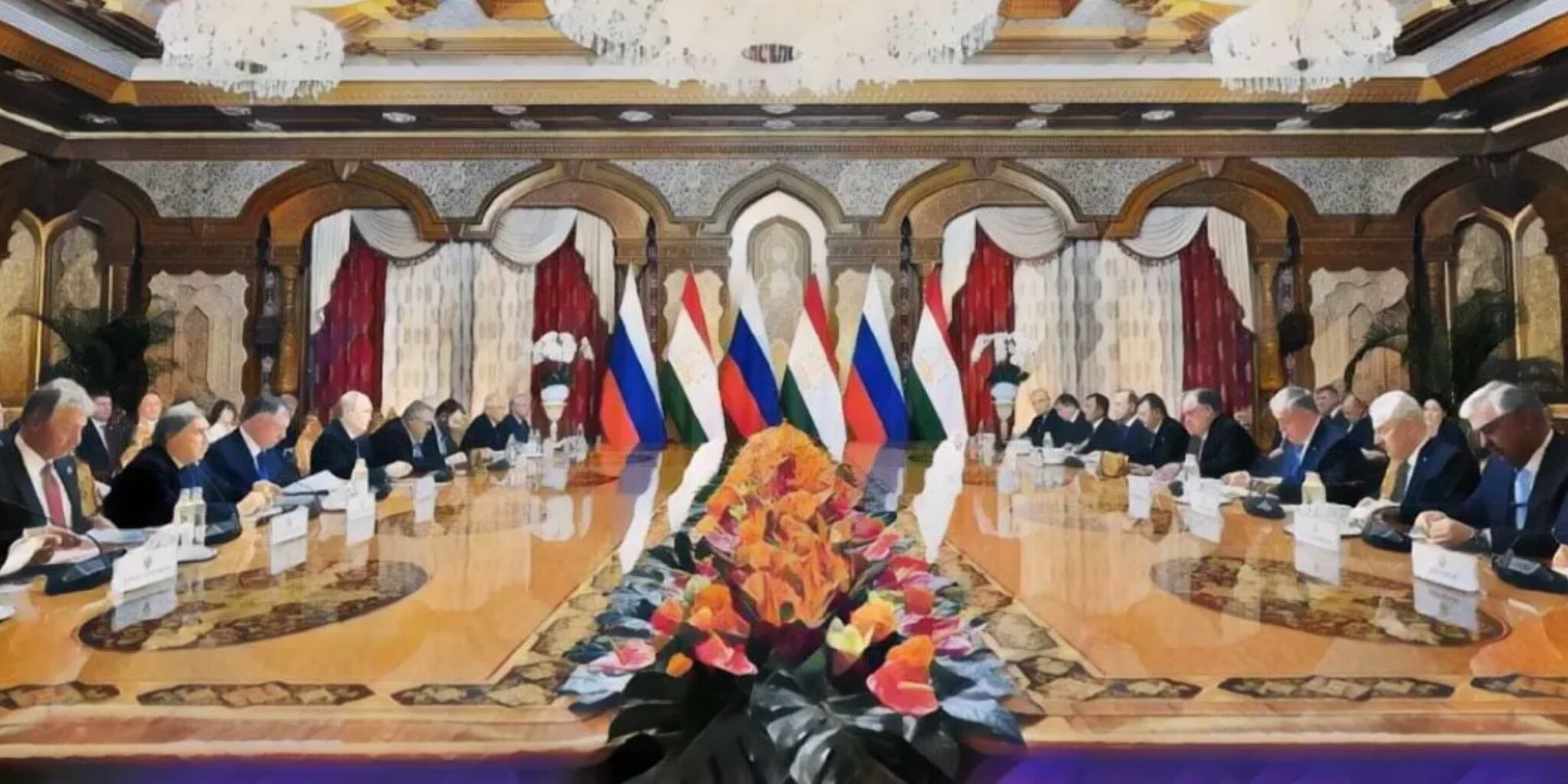
Putin was greeted at Dushanbe airport by Tajik President Emomali Rahmon, who has governed the country since 1992. Upon his arrival, the two leaders conducted a private meeting and later presided over expanded talks with their delegations. In his opening remarks, Putin told Rahmon that Russia and Tajikistan are “reliable allies” and pledged that Moscow would fulfil its obligations to Dushanbe, particularly in terms of security. In the first seven months of 2025, bilateral trade rose by more than 17%, a figure Putin cited to underscore that relations are developing “very positively.” Following the meeting, the two leaders signed a joint statement on “deepening the strategic partnership and alliance” between their countries.
Alongside Rahmon, on October 9, Putin met with the presidents of Kazakhstan, Kyrgyzstan, Turkmenistan, and Uzbekistan as part of the Russia–Central Asia summit. As previously reported by The Times of Central Asia, the summit agenda includes cooperation in trade, transport, energy, security, migration, and environmental policy. A concluding communiqué is expected to lay out joint priorities for 2025–2027 in these fields.
Following the Russia–Central Asia gathering, a broader CIS head-of-state meeting is scheduled for October 10. Alongside Russia and the Central Asian states, representatives from Armenia, Azerbaijan, and Belarus will also attend. Draft agendas suggest the adoption of a military-cooperation concept through 2030, counterterrorism and border security strategies, efforts to fight transnational crime, and discussions on a “CIS Plus” format that would allow third-party countries and international organizations to participate in selected CIS events.
Russia’s Defense Minister Andrei Belousov held talks in Dushanbe with his Tajik counterparts on October 8, stating that “cooperation between our two military institutions” is key to regional stability. Tajikistan hosts Russia’s largest foreign military base and shares a long, porous border with Afghanistan, which makes the security relationship central to both sides’ calculus.
Historical and Geopolitical Context
Russia has long viewed Central Asia as its strategic backyard, but since 2022, its dominance has been challenged. Sanctions on Russia due to the war in Ukraine have constrained its economic leverage, while China has expanded its presence via Belt and Road investments. At the same time, the European Union has elevated its engagement with Central Asian states through trade, infrastructure funding, and diplomatic outreach.
Central Asian governments have shown increasing boldness in balancing their relations between Moscow, Beijing, and the West. None of the Central Asian governments has openly backed Russia’s full-scale invasion of Ukraine. Surveys in Kazakhstan show that only 15% of respondents explicitly support Russia, while a larger share leans toward Ukraine or nonalignment. Kazakhstan has refused to recognize the “quasi-state territories” of Donetsk and Luhansk, citing the principles of sovereignty and territorial integrity.
Russia also has reason to patch up relations with Azerbaijan, which have been damaged since the December 2024 crash of an Azerbaijan Airlines flight over Kazakhstan. Azerbaijan accused Russian ground fire of downing the aircraft and demanded accountability. In a televised address, Azerbaijan’s President Aliyev expressed his “surprise, regret, and righteous indignation” over what he described as “absurd” Russian explanations for the crash. On the eve of the summit, Putin and Aliyev held talks, during which Putin admitted Russia’s culpability and assured his Azerbaijani counterpart that Russia would fully cooperate with the investigation and provide compensation.
In the context of geopolitical shifts and fractious relations, Tajikistan occupies a dual role. As the poorest country in the region, it relies heavily on remittances from migrant workers in Russia. At the same time, Tajikistan’s security concerns – especially regarding Afghanistan – tie it to Moscow.
Another complicating factor is that Tajikistan is a member of the International Criminal Court (ICC), which in 2023 issued an arrest warrant for Putin over alleged war crimes tied to the forced transfer of Ukrainian children. Human Rights Watch called for Tajikistan to deny Putin entry or detain him, but as with other ICC members who have hosted him, Tajikistan ignored the warrant, prioritizing political and economic ties with Russia.
Migration: A Tense Underpinning
One of the most politically sensitive issues on the agenda is the fate of the approximately 1.2 million Tajik migrants working in Russia, mainly in the construction and service sectors. The money they send home is vital: remittances amount to nearly half of Tajikistan’s GDP, providing an economic lifeline. But that reliance has also become a vulnerability. Following the March 2024 terrorist attack at Moscow’s Crocus City Hall, which Russian authorities linked to militants from Tajikistan, Central Asian migrants in Russia have faced a surge of hostility. As previously reported by The Times of Central Asia, Tajik migrant workers in Russia have been the subject of police raids, harassment, and new biometric registration requirements.
The backlash to these events has put Dushanbe in an uncomfortable position. Tajik officials, usually cautious in dealing with Moscow, have protested following a series of abuses against their citizens, even summoning the Russian ambassador in 2024 – an unusually sharp diplomatic gesture. Analysts warn that if large numbers of workers were forced to return home suddenly, Tajikistan could face mounting unemployment and the risk of some disaffected youth being drawn to extremist groups. For Moscow, meanwhile, despite rising xenophobia, migrants remain indispensable to fill labor shortages created by a demographic decline and the war in Ukraine.
Projections and Strategic Stakes
The real measure of the summit will come in its aftermath. Only if promises translate into concrete outcomes – such as new infrastructure projects, expanded security support, and tangible safeguards for Tajik migrant workers – will Moscow be able to claim renewed relevance in a region where other powers are steadily gaining ground.
For Tajikistan, the stakes are particularly urgent; President Rahmon needs to show progress on migration and security. Without clear gains, frustrations over the treatment of migrants in Russia or continued economic fragility could fuel domestic discontent.
Yet Russia’s ability to deliver remains uncertain. Sanctions and the ongoing war in Ukraine have stretched its resources, and Central Asian states are increasingly hedging their bets, preserving ties with Moscow while deepening partnerships with China, the European Union, the U.S., and Gulf countries. Should Moscow fail to follow through, its influence could erode further.