• KGS/USD = 0.01143 0%
  • KZT/USD = 0.00207 0%
  • TJS/USD = 0.10465 0.1%
  • UZS/USD = 0.00008 0%
  • TMT/USD = 0.28571 0.28%
  • KGS/USD = 0.01143 0%
  • KZT/USD = 0.00207 0%
  • TJS/USD = 0.10465 0.1%
  • UZS/USD = 0.00008 0%
  • TMT/USD = 0.28571 0.28%
  • KGS/USD = 0.01143 0%
  • KZT/USD = 0.00207 0%
  • TJS/USD = 0.10465 0.1%
  • UZS/USD = 0.00008 0%
  • TMT/USD = 0.28571 0.28%
  • KGS/USD = 0.01143 0%
  • KZT/USD = 0.00207 0%
  • TJS/USD = 0.10465 0.1%
  • UZS/USD = 0.00008 0%
  • TMT/USD = 0.28571 0.28%
  • KGS/USD = 0.01143 0%
  • KZT/USD = 0.00207 0%
  • TJS/USD = 0.10465 0.1%
  • UZS/USD = 0.00008 0%
  • TMT/USD = 0.28571 0.28%
  • KGS/USD = 0.01143 0%
  • KZT/USD = 0.00207 0%
  • TJS/USD = 0.10465 0.1%
  • UZS/USD = 0.00008 0%
  • TMT/USD = 0.28571 0.28%
  • KGS/USD = 0.01143 0%
  • KZT/USD = 0.00207 0%
  • TJS/USD = 0.10465 0.1%
  • UZS/USD = 0.00008 0%
  • TMT/USD = 0.28571 0.28%
  • KGS/USD = 0.01143 0%
  • KZT/USD = 0.00207 0%
  • TJS/USD = 0.10465 0.1%
  • UZS/USD = 0.00008 0%
  • TMT/USD = 0.28571 0.28%

Viewing results 1 - 6 of 139

Despite Kazakh-led Inquiry, Azerbaijan to Take Plane Crash Case to International Courts

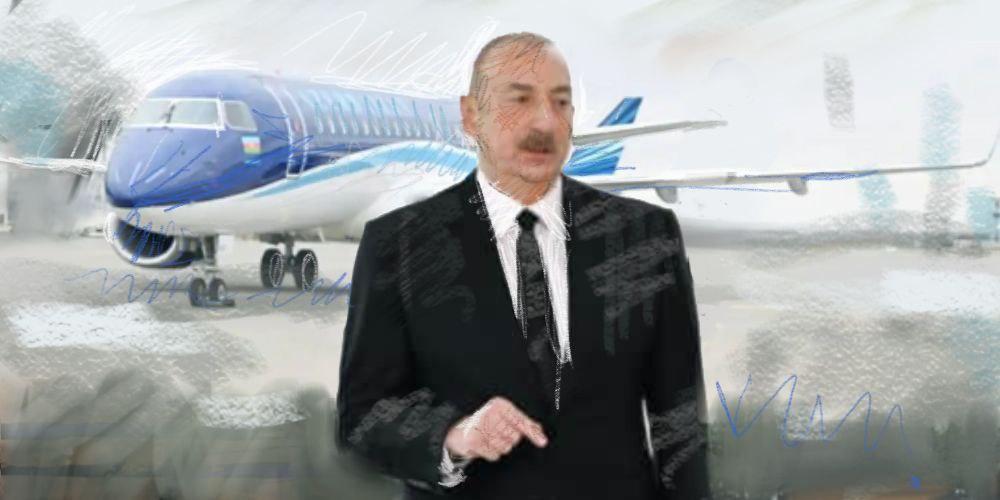
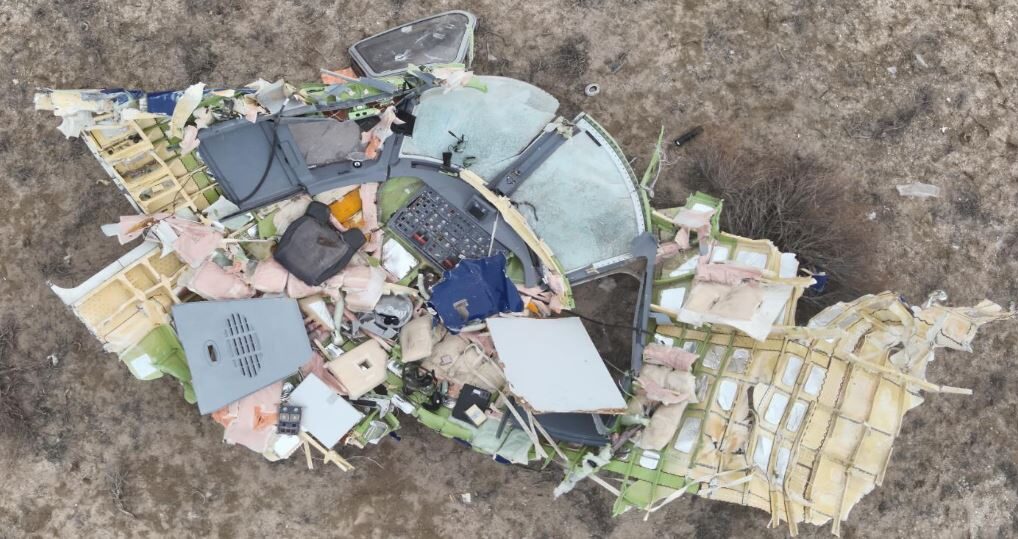
After months of collaborating with an investigation led by Kazakhstan, Azerbaijan now also plans to seek redress in international courts over the Dec. 25, 2024, crash of an Azerbaijan Airlines plane that it says was hit by Russian ground fire before diverting to the western Kazakh city of Aktau. Azerbaijan’s turn to international institutions reflects frustration with what it views as Russian intransigence in the investigation of what happened to Flight 8243, as well as the sensitivities for Kazakhstan as it leads a probe that could implicate Russia, its powerful neighbor and key trading partner. In a sense, Kazakhstan is caught in the middle, unable so far to satisfy Azerbaijan’s push for accountability for the crash and apparently unable to get full cooperation from Russia in the investigation. Unlike Azerbaijan, Kazakhstan has refrained from criticism of Russia, even though six Kazakhstanis were among those who died in the plane crash, and Kazakh emergency crews went into potential danger after rushing to pull survivors from the wreckage. Kazakhstan’s low-key approach is possibly an outcome of its efforts to appear impartial during the inquiry as well as its policy of maintaining smooth diplomatic ties, despite any disagreements or tension with major regional players, including Russia and China. Flush with military victories over Armenia and buoyed by close ties with allies such as Türkiye, Azerbaijan feels less constrained to nurture its traditional relationship with Moscow, its ruler during Soviet and Russian colonial times. On Saturday, President Ilham Aliyev of Azerbaijan referred to years of international investigations and inquiries that found Russia-backed separatist rebels had shot down Malaysia Airlines Flight 17 over eastern Ukraine in 2014, and that Russia bore responsibility – a conclusion rejected by Moscow. Aliyev said Azerbaijan was prepared to wait just as long to clear up the case of the Azerbaijan Airlines crash, in which 38 of 67 people on board died. “We will not forget,” Aliyev said, according to Minval Politika, an Azerbaijani news outlet. “We are currently preparing, and we have already informed the Russian side that we are preparing a dossier for submission to international courts on this matter. We understand that this may take time. In the case of the Malaysia Airlines Boeing, it took more than ten years. We are ready to wait ten years, but justice must prevail.” The remarks by Azerbaijan’s leader at a media forum in the Azerbaijani city of Shusha show that ties between the two nations face protracted tension as long as the dispute persists, though there are other sources of friction between them, including detentions of each other’s citizens. Russian President Vladimir Putin has apologized for the crash without taking responsibility or providing details about what happened at a time when, according to Russia, the area around Grozny was under attack from Ukrainian drones. Azerbaijan also wants those responsible to be punished, compensation to be paid to families of the victims, and Azerbaijan Airlines to be compensated for the loss of the Embraer 190 plane that crashed. The aircraft...

The Turkic States Are Quietly Building a Geoeconomic Power Base

The Organization of Turkic States (OTS) has spent the past years assembling itself not through declarations or summit communiqués, but through shared transport and logistics, harmonized customs procedures, and coordinated capital flows. What began in 2009 as the Turkic Council, a lightly institutional and rhetorically cohesive forum for shared identity, has evolved, following its 2021 transformation into the OTS, into a logistical and regulatory organism. Its under-the-radar evolution has been systematized through agreed documents, deployed capital, and materialized infrastructure. The OTS has entered a phase of procedural coordination and structural intent. Its cooperation is now practical, strategic, and functionally embedded. This evolution has not followed a single arc, nor has it merely responded to outside pressures. Instead, it has progressed through an uneven sequence of internal adjustments, sometimes slow and technical, sometimes accelerated by external jolts such as the recent disruption in Azerbaijani–Russian relations. But such jolts only intensified a trajectory already underway. Member states had been converging long before this most recent bilateral crisis by aligning their policies, testing instruments, and developing the practical grammar of multilateral coordination. The current phase of renewed cooperation is not a reactive surge but a prepared transition that expresses an underlying structural shift in Eurasian geoeconomics at large. Digital Infrastructure and Networked Cooperation If there is a single domain where institutional convergence becomes immediately visible, this would be digital logistics. Once-fractured national processes — disjointed customs systems, mismatched permits, bureaucratic duplication — have begun to fold into a shared administrative architecture (including eTIR, eCMR, and ePermit) structured by international conventions that have been adapted to fit the particular alignments now emerging in the Turkic sphere. These procedures are no longer pilot projects but live systems. They digitize paperwork, synchronize border procedures, and build the kind of operational rhythms that trade corridors need in order to function. Negotiations continue, meanwhile, on a Free Trade in Services Agreement, targeted not at deregulation but at harmonization, viz., the alignment of technical and professional standards across a disparate set of economies. Kazakhstan and Azerbaijan, for example, are already piloting a Simplified Customs Corridor. Its eventual integration with the multimodal Uzbekistan–Türkiye axis is not a matter of if, but of how soon. Official observer states to the OTS are also beginning to move, with Hungary being the clearest case. Its $100 million injection into the Turkic Investment Fund made headlines, but the real story is downstream: Hungarian infrastructure now receives Azerbaijani gas via Türkiye. That is not diplomacy; that is energy dependence, structurally routed. Turkmenistan, long the holdout, has started to engage, first through planning meetings and now through signed agreements. Its ports, once idle in regional plans, are being fitted into the wider Caspian logistics network. The Turkish Republic of Northern Cyprus (TRNC), formally recognized only by Türkiye, is also a functional participant through educational exchanges, shared language, and soft institutions. Reciprocal Trade and Development The shift underway is as much geographic as it is institutional. Central Asia is no longer on the margins of the OTS...

Uzbekistan and Azerbaijan Forge $1B Trade Vision

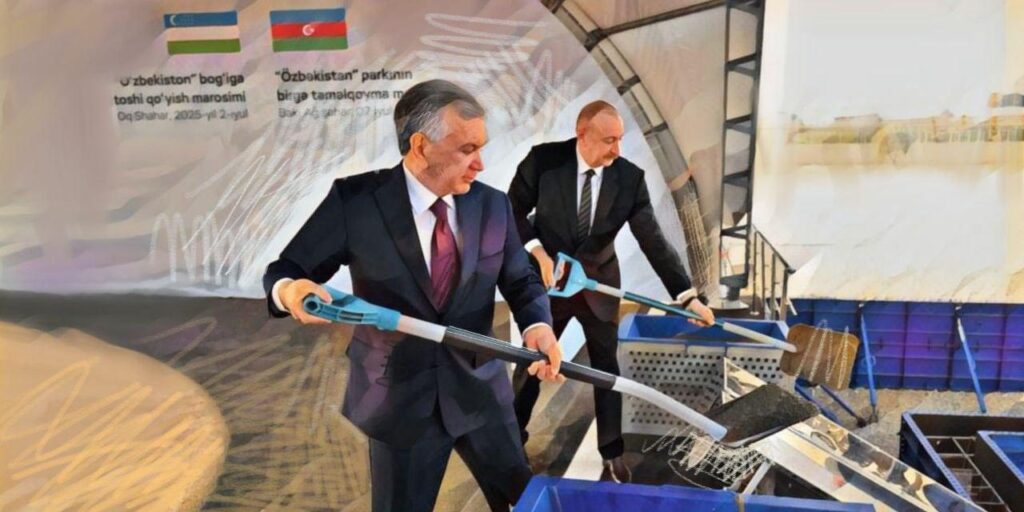
President Shavkat Mirziyoyev of Uzbekistan arrived in Baku on July 2 for a state visit at the invitation of Azerbaijani President Ilham Aliyev. He was received at the airport by Deputy Prime Minister Yagub Eyyubov and other senior officials, with an official reception taking place at the presidential residence in Zagulba.  A Thirty-Year Economic Partnership During bilateral talks, Presidents Mirziyoyev and Aliyev reaffirmed their commitment to enhancing the strategic partnership between Uzbekistan and Azerbaijan as the two nations mark 30 years of diplomatic ties. “Never in history have our relations been at such a high level as they are today,” said Mirziyoyev. Economic cooperation was a key focus of the discussions. Trade between the two countries has increased by 25% over the past year, and there are now approximately 300 joint ventures with a combined project portfolio valued at $4 billion. The leaders agreed to a new goal of boosting bilateral trade and investment to $1 billion annually by 2030. A comprehensive cooperation program was adopted to facilitate this, covering sectors such as industry, infrastructure, agriculture, healthcare, tourism, and banking. Advancing Transport and Logistics Links Significant progress was reported in the transport and energy sectors. The two presidents welcomed the growth of cargo transit along the Trans-Caspian International Transport Route, also known as the “Middle Corridor.” Uzbek cargo volumes on the route rose by 25% in 2024, surpassing one million tons, a development supported by the launch of a new electronic permit system in March. The leaders also committed to accelerating work on a joint green energy export initiative targeting European markets. Institutionalizing Strategic Ties Several bilateral documents were signed to formalize cooperation. These included a roadmap for implementing the 2023 Treaty on Alliance Relations through 2029, as well as agreements in environmental protection, science, higher education, and industry for the 2025-2026 period. Additional deals addressed agriculture, food security, social protection, maritime navigation, and municipal partnerships. New sister-city agreements were signed between Tashkent and Sumgayit, and between Navoi and Gabala. At a joint press briefing, Mirziyoyev lauded Azerbaijan’s efforts to restore its UN-recognized territorial integrity, stating, “You have fulfilled the long-standing dream of your father and every citizen of Azerbaijan.” He also praised infrastructure development in formerly disputed territories of Nagorno-Karabakh and described Azerbaijan as a “reliable ally and strategic partner.” The two leaders emphasized their shared positions on regional and global issues and pledged continued coordination in international forums. Mirziyoyev reaffirmed Uzbekistan’s commitment to the diplomatic resolution of conflicts. Cultural Diplomacy and Symbolism The visit featured symbolic and cultural highlights. In Baku’s Ag Sheher district, the presidents laid the foundation for Uzbekistan Park, a 4.5-hectare space celebrating Uzbek culture and architecture. They also inaugurated Uzbekistan’s new embassy in Baku, which includes halls named after different Uzbek regions, with Mirziyoyev proposing to name one of the halls after Karabakh as a gesture of friendship. The two leaders later toured the Sea Breeze resort complex on the Caspian coast, part of the broader Caspian Riviera tourism project. A similar development, Sea...

New Plane Crash Allegations Add Fuel to Russia-Azerbaijan Dispute

Earlier this year, Azerbaijan lashed out at Russia over the Dec. 25, 2024 crash of an Azerbaijan Airlines plane that the government said was hit by accidental Russian ground fire before crashing in Kazakhstan. Now, Moscow is coming under fresh scrutiny over the crash, which killed 38 of the 67 people on board, as a broader dispute between Russia and Azerbaijan sharply escalates. On Wednesday, an Azerbaijani news outlet, Minval Politika, published an anonymous letter and other materials purportedly containing a Russian air defense captain’s assertion that the Russian Defense Ministry gave the order to shoot down the plane as it tried to land in Grozny, Chechnya. The outlet says it can’t confirm the authenticity of the letter, and Russia has previously said an official investigation should run its course. But the dramatic allegation and the timing of the apparent leak to Minval Politika are likely to heighten acrimony at a particularly sensitive moment. Minval Politika said it felt compelled to publish the information for “society,” and that the “data obtained can serve as useful information for the competent authorities of the Republic of Azerbaijan investigating the circumstances of the tragedy.” The wider confrontation stems partly from the arrests of dozens of people of Azerbaijani origin by Russian security officials in the Russian city of Yekaterinburg last week. Two ethnic Azerbaijani brothers died in those raids, which Russian officials said were part of an old murder probe. Azerbaijan then detained staff at the Baku office of Russian state media group Sputnik, alleging fraud and other crimes. Russia, in turn, accused Azerbaijan of “unfriendly” conduct. The rift lays open the delicacy of relations between regional power Russia and most former Soviet republics that, since the dissolution of the Soviet Union in 1991, have developed trade, diplomatic, and other ties with Moscow while trying to strengthen their own sovereignty and national identity, and engage with other international partners. Central Asian countries – Kazakhstan, Kyrgyzstan, Uzbekistan, Tajikistan, and Turkmenistan – have generally maintained this balance and looked for diplomatic solutions to concerns such as discrimination against Central Asian migrants in Russia. At the other end of the spectrum, Ukraine has been in an all-out war with a Russian invading force for more than three years. Azerbaijan, in the South Caucasus region, has long maintained an alliance with Russia, which has gradually been losing influence in the area as it focuses on the Ukraine war and as Türkiye and other players gain more clout. Azerbaijan’s relationship with Russia soured markedly because of the Azerbaijan Airlines plane crash and what Azerbaijani authorities and commentators saw as an evasive Russian response to the disaster. The incident put Kazakhstan in a difficult position because the crash happened on its territory, just outside the Caspian Sea city of Aktau, and Kazakh authorities were therefore the leaders of an investigation that required the full cooperation of Russia to understand what really happened. Russian President Vladimir Putin had apologized to his Azerbaijani counterpart, Ilham Aliyev, but did not acknowledge that...

Joint Military Exercises to Strengthen Ties Between Azerbaijan, Kazakhstan, Pakistan, Turkey, and Uzbekistan

News sources in Azerbaijan citing the Ministry of Defense of the Republic report that five nations, Azerbaijan, Turkey, Uzbekistan, Kazakhstan, and Pakistan, are set to participate in a significant joint military exercise, signaling a coordinated effort to enhance military cooperation, strengthen regional security, and bolster strategic partnerships among the participating countries. Scheduled to take place in September, the Eternal Brotherhood-IV multinational exercise highlights the growing collaboration in defense and security among these countries, which share common geopolitical and strategic interests. Purpose and Objectives The forthcoming exercises aim to improve interoperability among the armed forces of Azerbaijan, Turkey, Uzbekistan, Kazakhstan, and Pakistan. The participating nations - each with their unique military capabilities - are seeking to tackle evolving security challenges such as terrorism, regional instability, and transnational threats. Joint maneuvers will include combat training, search-and-rescue operations, sharing tactical expertise, and honing operational coordination in various combat scenarios. Geopolitical Significance The joint exercises underscore a shared commitment to regional peace and stability at a time of shifting dynamics in global geopolitics. With Central and South Asia witnessing challenges such as the ongoing threats from militant groups, border conflicts, and the need for safeguarding vital trade and energy routes, these drills offer participating nations the opportunity to showcase unity and resilience. As a NATO member, Turkey brings extensive military experience and technological support to the table, while Pakistan has counterterrorism expertise. Kazakhstan and Uzbekistan, with their strategic positions in Central Asia, bring a regional focus to the exercises, ensuring operational relevancy in the heart of Asia. Azerbaijan, meanwhile, is eager to strengthen ties with regional and global partners after its recent military successes. These exercises also send a clear message of the countries’ commitment to multilateral defense strategies to any external adversaries seeking to exploit regional vulnerabilities. A Broader Vision for Partnership The exercises will serve as a platform to test state-of-the-art defense technologies, develop combined operational strategies, and examine responses to scenarios involving asymmetric warfare and hybrid threats. For participating nations, it is an opportunity to refine their respective military tactics and elevate their personnel's proficiency by working alongside allies. Furthermore, the drills are expected to solidify political and military relationships among the nations, extending cooperation beyond defense into economic and strategic realms. By aligning priorities and enhancing mutual trust, the exercises could pave the way for future joint programs and initiatives aimed at fostering long-term collaboration. Such initiatives are especially relevant in the context of securing critical infrastructure projects like transnational pipelines and trade corridors. The joint military exercises are part of ongoing efforts to deepen relationships across Eurasia and South Asia through defense diplomacy. They reflect a broader vision of building an integrated regional security framework while respecting the sovereignty and unique needs of each nation involved. For the participating countries, the exercises are a strategic step toward achieving a stable and cooperative future in an increasingly uncertain global landscape.

Armenia, Azerbaijan Invited to Sign Peace Deal in Kyrgyzstan

Kyrgyzstan has offered to host the signing of a peace agreement between Armenia and Azerbaijan, though tensions persist between the two longtime adversaries and a date for signing has not been set. Nurlanbek Turgunbek uulu, the parliamentary speaker of Kyrgyzstan, made the offer during a meeting in Armenia with Alen Simonyan, leader of that country’s National Assembly. The news was reported on Monday by Aravot, a publication based in Armenia. “Alen Simonyan touched upon the already completed draft of the Peace Agreement between Armenia and Azerbaijan, mentioning that the Armenian side is ready to sign it,” Aravot reported. “In response to this, the Head of the Kyrgyz Parliament noted that Kyrgyzstan is ready to provide a platform for the signing” of the peace deal. Kyrgyzstan’s parliamentary speaker was accompanied by several other parliamentarians on the May 25-27 trip to Armenia. Armenia and Azerbaijan said in March that they had agreed on the text of a peace deal after decades of conflict and Azerbaijan´s military seizure of the disputed Nagorno-Karabakh region in 2023. However, Azerbaijan says Armenia must change its constitution to remove language that allegedly lays claim to Azerbaijani territory, while Armenia says Azerbaijan is using the issue as an excuse to undermine the peace deal. Kazakhstan has also sought to assist in peace efforts between Armenia and Azerbaijan, hosting a meeting of the foreign ministers of the two rivals in Almaty last year.