• KZT/USD = 0.00213
  • TJS/USD = 0.10800
  • UZS/USD = 0.00008
  • TMT/USD = 0.29850
  • KZT/USD = 0.00213
  • TJS/USD = 0.10800
  • UZS/USD = 0.00008
  • TMT/USD = 0.29850
  • KZT/USD = 0.00213
  • TJS/USD = 0.10800
  • UZS/USD = 0.00008
  • TMT/USD = 0.29850
  • KZT/USD = 0.00213
  • TJS/USD = 0.10800
  • UZS/USD = 0.00008
  • TMT/USD = 0.29850
  • KZT/USD = 0.00213
  • TJS/USD = 0.10800
  • UZS/USD = 0.00008
  • TMT/USD = 0.29850
  • KZT/USD = 0.00213
  • TJS/USD = 0.10800
  • UZS/USD = 0.00008
  • TMT/USD = 0.29850
  • KZT/USD = 0.00213
  • TJS/USD = 0.10800
  • UZS/USD = 0.00008
  • TMT/USD = 0.29850
  • KZT/USD = 0.00213
  • TJS/USD = 0.10800
  • UZS/USD = 0.00008
  • TMT/USD = 0.29850

Viewing results 1 - 6 of 111

Uzbekistan and Azerbaijan Forge $1B Trade Vision

President Shavkat Mirziyoyev of Uzbekistan arrived in Baku on July 2 for a state visit at the invitation of Azerbaijani President Ilham Aliyev. He was received at the airport by Deputy Prime Minister Yagub Eyyubov and other senior officials, with an official reception taking place at the presidential residence in Zagulba.  A Thirty-Year Economic Partnership During bilateral talks, Presidents Mirziyoyev and Aliyev reaffirmed their commitment to enhancing the strategic partnership between Uzbekistan and Azerbaijan as the two nations mark 30 years of diplomatic ties. “Never in history have our relations been at such a high level as they are today,” said Mirziyoyev. Economic cooperation was a key focus of the discussions. Trade between the two countries has increased by 25% over the past year, and there are now approximately 300 joint ventures with a combined project portfolio valued at $4 billion. The leaders agreed to a new goal of boosting bilateral trade and investment to $1 billion annually by 2030. A comprehensive cooperation program was adopted to facilitate this, covering sectors such as industry, infrastructure, agriculture, healthcare, tourism, and banking. Advancing Transport and Logistics Links Significant progress was reported in the transport and energy sectors. The two presidents welcomed the growth of cargo transit along the Trans-Caspian International Transport Route, also known as the “Middle Corridor.” Uzbek cargo volumes on the route rose by 25% in 2024, surpassing one million tons, a development supported by the launch of a new electronic permit system in March. The leaders also committed to accelerating work on a joint green energy export initiative targeting European markets. Institutionalizing Strategic Ties Several bilateral documents were signed to formalize cooperation. These included a roadmap for implementing the 2023 Treaty on Alliance Relations through 2029, as well as agreements in environmental protection, science, higher education, and industry for the 2025-2026 period. Additional deals addressed agriculture, food security, social protection, maritime navigation, and municipal partnerships. New sister-city agreements were signed between Tashkent and Sumgayit, and between Navoi and Gabala. At a joint press briefing, Mirziyoyev lauded Azerbaijan’s efforts to restore its UN-recognized territorial integrity, stating, “You have fulfilled the long-standing dream of your father and every citizen of Azerbaijan.” He also praised infrastructure development in formerly disputed territories of Nagorno-Karabakh and described Azerbaijan as a “reliable ally and strategic partner.” The two leaders emphasized their shared positions on regional and global issues and pledged continued coordination in international forums. Mirziyoyev reaffirmed Uzbekistan’s commitment to the diplomatic resolution of conflicts. Cultural Diplomacy and Symbolism The visit featured symbolic and cultural highlights. In Baku’s Ag Sheher district, the presidents laid the foundation for Uzbekistan Park, a 4.5-hectare space celebrating Uzbek culture and architecture. They also inaugurated Uzbekistan’s new embassy in Baku, which includes halls named after different Uzbek regions, with Mirziyoyev proposing to name one of the halls after Karabakh as a gesture of friendship. The two leaders later toured the Sea Breeze resort complex on the Caspian coast, part of the broader Caspian Riviera tourism project. A similar development, Sea...

New Plane Crash Allegations Add Fuel to Russia-Azerbaijan Dispute

Earlier this year, Azerbaijan lashed out at Russia over the Dec. 25, 2024 crash of an Azerbaijan Airlines plane that the government said was hit by accidental Russian ground fire before crashing in Kazakhstan. Now, Moscow is coming under fresh scrutiny over the crash, which killed 38 of the 67 people on board, as a broader dispute between Russia and Azerbaijan sharply escalates. On Wednesday, an Azerbaijani news outlet, Minval Politika, published an anonymous letter and other materials purportedly containing a Russian air defense captain’s assertion that the Russian Defense Ministry gave the order to shoot down the plane as it tried to land in Grozny, Chechnya. The outlet says it can’t confirm the authenticity of the letter, and Russia has previously said an official investigation should run its course. But the dramatic allegation and the timing of the apparent leak to Minval Politika are likely to heighten acrimony at a particularly sensitive moment. Minval Politika said it felt compelled to publish the information for “society,” and that the “data obtained can serve as useful information for the competent authorities of the Republic of Azerbaijan investigating the circumstances of the tragedy.” The wider confrontation stems partly from the arrests of dozens of people of Azerbaijani origin by Russian security officials in the Russian city of Yekaterinburg last week. Two ethnic Azerbaijani brothers died in those raids, which Russian officials said were part of an old murder probe. Azerbaijan then detained staff at the Baku office of Russian state media group Sputnik, alleging fraud and other crimes. Russia, in turn, accused Azerbaijan of “unfriendly” conduct. The rift lays open the delicacy of relations between regional power Russia and most former Soviet republics that, since the dissolution of the Soviet Union in 1991, have developed trade, diplomatic, and other ties with Moscow while trying to strengthen their own sovereignty and national identity, and engage with other international partners. Central Asian countries – Kazakhstan, Kyrgyzstan, Uzbekistan, Tajikistan, and Turkmenistan – have generally maintained this balance and looked for diplomatic solutions to concerns such as discrimination against Central Asian migrants in Russia. At the other end of the spectrum, Ukraine has been in an all-out war with a Russian invading force for more than three years. Azerbaijan, in the South Caucasus region, has long maintained an alliance with Russia, which has gradually been losing influence in the area as it focuses on the Ukraine war and as Türkiye and other players gain more clout. Azerbaijan’s relationship with Russia soured markedly because of the Azerbaijan Airlines plane crash and what Azerbaijani authorities and commentators saw as an evasive Russian response to the disaster. The incident put Kazakhstan in a difficult position because the crash happened on its territory, just outside the Caspian Sea city of Aktau, and Kazakh authorities were therefore the leaders of an investigation that required the full cooperation of Russia to understand what really happened. Russian President Vladimir Putin had apologized to his Azerbaijani counterpart, Ilham Aliyev, but did not acknowledge that...

Joint Military Exercises to Strengthen Ties Between Azerbaijan, Kazakhstan, Pakistan, Turkey, and Uzbekistan

News sources in Azerbaijan citing the Ministry of Defense of the Republic report that five nations, Azerbaijan, Turkey, Uzbekistan, Kazakhstan, and Pakistan, are set to participate in a significant joint military exercise, signaling a coordinated effort to enhance military cooperation, strengthen regional security, and bolster strategic partnerships among the participating countries. Scheduled to take place in September, the Eternal Brotherhood-IV multinational exercise highlights the growing collaboration in defense and security among these countries, which share common geopolitical and strategic interests. Purpose and Objectives The forthcoming exercises aim to improve interoperability among the armed forces of Azerbaijan, Turkey, Uzbekistan, Kazakhstan, and Pakistan. The participating nations - each with their unique military capabilities - are seeking to tackle evolving security challenges such as terrorism, regional instability, and transnational threats. Joint maneuvers will include combat training, search-and-rescue operations, sharing tactical expertise, and honing operational coordination in various combat scenarios. Geopolitical Significance The joint exercises underscore a shared commitment to regional peace and stability at a time of shifting dynamics in global geopolitics. With Central and South Asia witnessing challenges such as the ongoing threats from militant groups, border conflicts, and the need for safeguarding vital trade and energy routes, these drills offer participating nations the opportunity to showcase unity and resilience. As a NATO member, Turkey brings extensive military experience and technological support to the table, while Pakistan has counterterrorism expertise. Kazakhstan and Uzbekistan, with their strategic positions in Central Asia, bring a regional focus to the exercises, ensuring operational relevancy in the heart of Asia. Azerbaijan, meanwhile, is eager to strengthen ties with regional and global partners after its recent military successes. These exercises also send a clear message of the countries’ commitment to multilateral defense strategies to any external adversaries seeking to exploit regional vulnerabilities. A Broader Vision for Partnership The exercises will serve as a platform to test state-of-the-art defense technologies, develop combined operational strategies, and examine responses to scenarios involving asymmetric warfare and hybrid threats. For participating nations, it is an opportunity to refine their respective military tactics and elevate their personnel's proficiency by working alongside allies. Furthermore, the drills are expected to solidify political and military relationships among the nations, extending cooperation beyond defense into economic and strategic realms. By aligning priorities and enhancing mutual trust, the exercises could pave the way for future joint programs and initiatives aimed at fostering long-term collaboration. Such initiatives are especially relevant in the context of securing critical infrastructure projects like transnational pipelines and trade corridors. The joint military exercises are part of ongoing efforts to deepen relationships across Eurasia and South Asia through defense diplomacy. They reflect a broader vision of building an integrated regional security framework while respecting the sovereignty and unique needs of each nation involved. For the participating countries, the exercises are a strategic step toward achieving a stable and cooperative future in an increasingly uncertain global landscape.

Armenia, Azerbaijan Invited to Sign Peace Deal in Kyrgyzstan

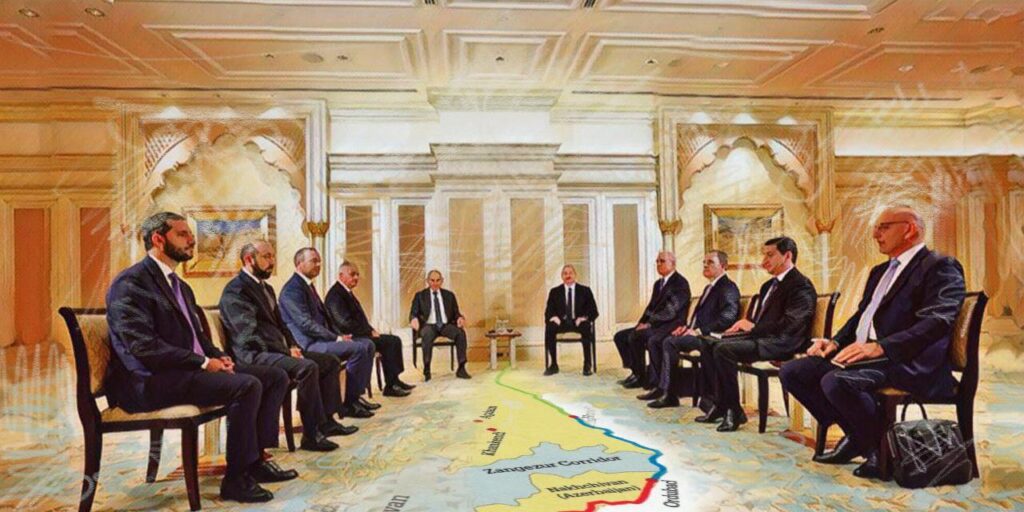
Kyrgyzstan has offered to host the signing of a peace agreement between Armenia and Azerbaijan, though tensions persist between the two longtime adversaries and a date for signing has not been set. Nurlanbek Turgunbek uulu, the parliamentary speaker of Kyrgyzstan, made the offer during a meeting in Armenia with Alen Simonyan, leader of that country’s National Assembly. The news was reported on Monday by Aravot, a publication based in Armenia. “Alen Simonyan touched upon the already completed draft of the Peace Agreement between Armenia and Azerbaijan, mentioning that the Armenian side is ready to sign it,” Aravot reported. “In response to this, the Head of the Kyrgyz Parliament noted that Kyrgyzstan is ready to provide a platform for the signing” of the peace deal. Kyrgyzstan’s parliamentary speaker was accompanied by several other parliamentarians on the May 25-27 trip to Armenia. Armenia and Azerbaijan said in March that they had agreed on the text of a peace deal after decades of conflict and Azerbaijan´s military seizure of the disputed Nagorno-Karabakh region in 2023. However, Azerbaijan says Armenia must change its constitution to remove language that allegedly lays claim to Azerbaijani territory, while Armenia says Azerbaijan is using the issue as an excuse to undermine the peace deal. Kazakhstan has also sought to assist in peace efforts between Armenia and Azerbaijan, hosting a meeting of the foreign ministers of the two rivals in Almaty last year.

What Does Turkey’s “Return” to Europe Mean for Central Asia?

Turkey’s ties with Europe are undergoing a reinvigoration. This phenomenon is foregrounded by recent high-level diplomatic engagements and burgeoning military and economic linkages, which may at first glance appear as a realignment within the Euro-Atlantic system. It holds deeper implications, however, and most consequentially for Central Asia. Turkey is re-entering the European strategic imagination, this time not as a supplicant but as a self-assured middle power. Europe's altered international environment, by changing its external posture, will provide the Central Asian states with additional geopolitical resources in a world marked by shifting alignments and competing centers of power. To grasp the systems-level implications of this shift, one must first dispense with the linear narrative of bilateralism that has long framed Turkey-Europe or Turkey-Central Asia relations in isolation. Instead, Turkey’s position as a hub of multi-vectorial networks — anchored in NATO, increasingly interlocked with EU markets, yet culturally and politically entwined with Turkic Central Asia — makes it a proactive agent whose movement in one sphere triggers systemic perturbations across others. Thus, when Turkey edges closer to Europe, it also subtly reconfigures the vector of Central Asia’s international relations. The second Trump administration is continuing the transition in Europe’s security architecture that was inaugurated during the first. With longstanding assumptions about American commitment to the Atlantic alliance shaken, Europe finds itself unmoored. In this new context, Turkey’s military interventions — its incursions in northern and now central Syria, its containment of Russian advances in Ukraine, and its supply of military drones to Azerbaijan — demonstrate a degree of strategic autonomy that is rare among NATO members. Europe has noticed. The readjustment of its view of Turkey is evident through invitations to summits with key EU players, overtures from German and Polish leaders, and discussions around deepening the customs union. Turkey is no longer peripheral country knocking at the EU’s door; shifts in the international system have made it an increasingly indispensable node in the continent’s security and energy architectures. This European courtship of Turkey has ramifications well beyond Brussels or Berlin, or even Ankara. For the Central Asian states, afflicted by asymmetric dependencies on Russia, Turkey’s geopolitical normalization with Europe presents a "demonstration effect". That is, it puts the spotlight on a regional actor that is using soft power affinities and hard power capabilities to parlay its peripheral status into centrality. Turkey’s return to Europe showcases a successful strategy of multidirectional engagement. Such "strategic hedging" obviates obedience to any single bloc, instead leveraging the overall system's recursive entanglements for national-interest advantage. The Turkish-Azerbaijani partnership is illustrative. Turkey’s provision of military assistance used during the Second Karabakh War in 2020, notably the Bayraktar TB2 drones, enabled Azerbaijan to shift the regional balance. Russia is no longer the hegemonic power in the South Caucasus and must compete in a condition where it is diplomatically and militarily weakened by its war against Ukraine. Baku stands to benefit from its multisectoral economic cooperation with Ankara, which goes far beyond military assistance. Specifically, Azerbaijan's partnership with Turkey...

Kazakhstan Agrees to Increase Oil Transit Through Azerbaijan

Kazakhstan’s KazMunayGas and Azerbaijan’s SOCAR have agreed to increase the transit of Kazakh oil through the Aktau-Baku-Ceyhan route in 2025. The decision was made during a meeting in Baku between KazMunayGas Chairman Askhat Hasenov and SOCAR President Rovshan Najaf, where they reviewed progress on the 2022 oil transportation agreement​. At the end of 2024, the volume of Kazakh oil transported through Azerbaijan reached 1.4 million tons. Under the new plan, this figure is set to increase to 1.7 million tons in 2025. The expansion will enhance the transit potential of both Kazakhstan and Azerbaijan, while boosting Kazakhstan’s access to global energy markets. Focus on Decarbonization and Energy Cooperation During the talks, the two companies also discussed their strategic partnership on decarbonization, which was formalized at the 29th UN Climate Change Conference (COP-29) in Azerbaijan. The agreement focuses on: Introducing low-carbon technologies in the oil and gas sector. Reducing harmful emissions from energy production. Additionally, discussions covered joint exploration projects, oil and gas production, investment opportunities, and the digitalization of industrial processes. “SOCAR is a key partner of KazMunayGas. Together, we will continue to contribute to global energy security and the stability of hydrocarbon supplies. This partnership will create new transit opportunities through the Caspian region,” said Hasenov​. Kazakhstan and Azerbaijan’s Broader Cooperation Beyond oil transit, Kazakhstan and Azerbaijan recently signed an agreement to construct an underwater fiber-optic communication line across the Caspian Sea. The deal was finalized during Kazakh Prime Minister Olzhas Bektenov’s recent visit to Baku​. This project, along with the expanded oil transit, highlights the deepening economic and strategic partnership between the two Caspian nations.