• KGS/USD = 0.01143 0%
  • KZT/USD = 0.00212 0%
  • TJS/USD = 0.10718 -0.09%
  • UZS/USD = 0.00008 0%
  • TMT/USD = 0.28571 0%
  • KGS/USD = 0.01143 0%
  • KZT/USD = 0.00212 0%
  • TJS/USD = 0.10718 -0.09%
  • UZS/USD = 0.00008 0%
  • TMT/USD = 0.28571 0%
  • KGS/USD = 0.01143 0%
  • KZT/USD = 0.00212 0%
  • TJS/USD = 0.10718 -0.09%
  • UZS/USD = 0.00008 0%
  • TMT/USD = 0.28571 0%
  • KGS/USD = 0.01143 0%
  • KZT/USD = 0.00212 0%
  • TJS/USD = 0.10718 -0.09%
  • UZS/USD = 0.00008 0%
  • TMT/USD = 0.28571 0%
  • KGS/USD = 0.01143 0%
  • KZT/USD = 0.00212 0%
  • TJS/USD = 0.10718 -0.09%
  • UZS/USD = 0.00008 0%
  • TMT/USD = 0.28571 0%
  • KGS/USD = 0.01143 0%
  • KZT/USD = 0.00212 0%
  • TJS/USD = 0.10718 -0.09%
  • UZS/USD = 0.00008 0%
  • TMT/USD = 0.28571 0%
  • KGS/USD = 0.01143 0%
  • KZT/USD = 0.00212 0%
  • TJS/USD = 0.10718 -0.09%
  • UZS/USD = 0.00008 0%
  • TMT/USD = 0.28571 0%
  • KGS/USD = 0.01143 0%
  • KZT/USD = 0.00212 0%
  • TJS/USD = 0.10718 -0.09%
  • UZS/USD = 0.00008 0%
  • TMT/USD = 0.28571 0%

Viewing results 1 - 6 of 10

Kyrgyzstan Temporarily Bans Import of Fruit and Berry Seedlings from Non-EAEU Countries

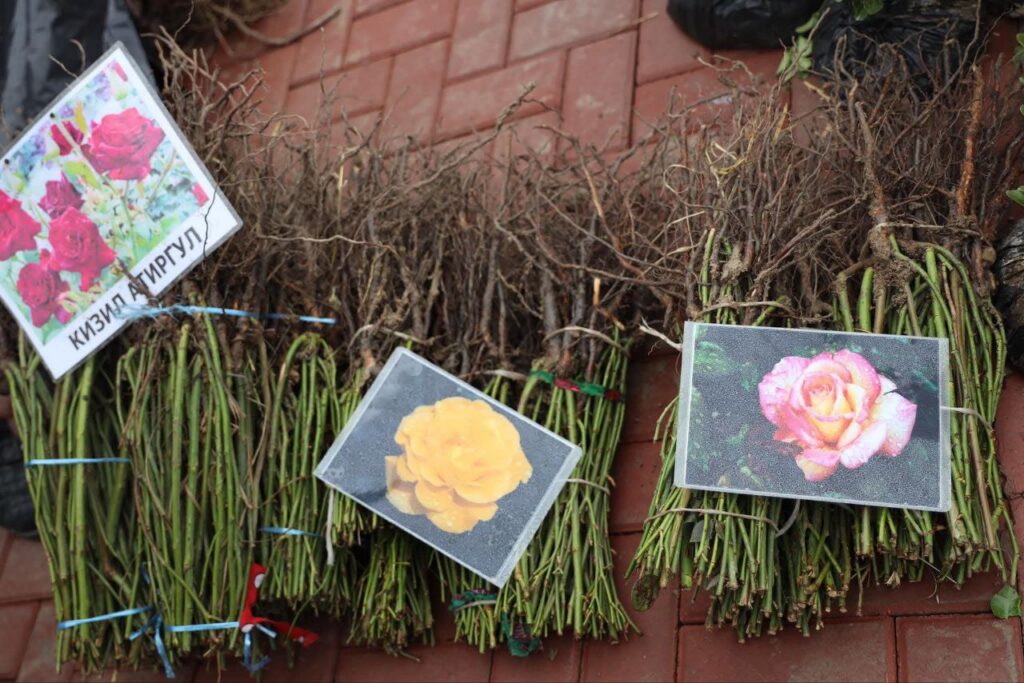
From March 1, Kyrgyzstan will introduce a temporary ban on the import of fruit and berry seedlings from countries outside the Eurasian Economic Union (EAEU). The restriction will remain in effect for six months and will not apply to re-export or transit operations, according to a resolution adopted by the Cabinet of Ministers. The government states that the measure is intended to ensure food security, improve the efficiency of agricultural production, and strengthen quality control over imported planting materials. The Ministry of Agriculture of Kyrgyzstan notes that the range of fruit and berry crops cultivated in the country has expanded significantly in recent years, necessitating clearer market regulation and the development of modern varieties that meet export standards as well as domestic demand. Officials expect the temporary ban to reduce import dependence and stimulate the development of domestic nurseries. According to government estimates, the measure will improve farmers’ access to high-quality locally produced seedlings and support the long-term development of the sector. Ahead of the announcement, Prime Minister Adylbek Kasymaliev stated that funding for the agricultural sector in 2026 will increase to $468.6 million, representing a $114 million rise compared to the previous year. Priority areas include product processing, value-added production, and food security. The authorities emphasize that temporary restrictions on the import and export of agricultural products are viewed as policy instruments to advance these strategic objectives.


Kazakhstan Enforces Fuel Export Ban

Kazakhstan’s Ministry of Energy has confirmed that the country’s six-month ban on fuel exports remains in full effect, with no gasoline shipments currently sent to Uzbekistan or other neighboring countries. Officials acknowledged a single exception earlier this year, when surplus volumes of AI-92 gasoline were exported to Uzbekistan in the spring. The ministry characterized the shipment as a routine measure aligned with international practice, designed to optimize domestic storage and increase tax revenues. Since June, all fuel exports have been suspended to build strategic reserves ahead of scheduled maintenance at Kazakhstan’s oil refineries. The ban, introduced on May 19, covers gasoline, diesel, and other petroleum products. Reports of Fuel Shortages and Smuggling Speculation over renewed fuel shortages in Kazakhstan surfaced in local media on September 22, with reports citing illegal cross-border smuggling as a contributing factor. Some sources also claimed that Uzbekistan had increased purchases of Kazakh gasoline amid a decline in fuel imports from Russia. In response, the Ministry of Energy reiterated that no current fuel exports are taking place and emphasized that the export moratorium is being strictly enforced. Uzbekistan’s Fuel Market in Transition Uzbekistan’s state energy company Uzbekneftegaz recently announced plans to phase out production of AI-80 gasoline starting in September. Beginning in 2026, the country intends to supply only higher-octane grades, including AI-92 and AI-95, to align with international fuel standards. The regional fuel market has already undergone significant restructuring. In April 2024, the Telegram channel Oil & Gas of Kazakhstan reported that Uzbekistan was scaling back crude oil imports from Kazakhstan in favor of cheaper Russian supplies. During the first quarter of 2024, Uzbek companies imported 15,200 tons of crude oil from Kazakhstan by rail, down from 25,600 tons during the same period in 2023. Most of this volume was refined at the Ferghana plant. Meanwhile, Russia’s Gazprom Neft significantly expanded deliveries to Uzbekistan. In the first quarter of 2024, the company shipped 75,000 tons of crude via pipelines through Kazakhstan, nearly seven times more than the 10,700 tons delivered a year earlier.

Kazakhstan Bans Use of Public Funds to Pay Foreign Athletes

President Kassym-Jomart Tokayev has signed a new law prohibiting the use of state budget funds and funds from the quasi-governmental sector, to finance the participation of foreign athletes in Kazakh sports clubs. Under the legislation, foreign “legionnaires” may now only be contracted using money from private sponsors. The move aims to refocus state support on domestic talent in professional sports. According to the presidential administration, athletes holding Kazakhstani passports who compete at elite levels, including in Olympic, Paralympic, Deaflympic, Asian, and national sports, will remain eligible for public funding. Funding Priorities and Implementation “The priority sports will be defined based on achievements on the international stage,” Akorda stated. These will include sports featured in the programs of major multi-sport events, along with traditional national disciplines. Budget allocations will also continue for state-run physical culture and sports organizations, grassroots sports initiatives, and the development of sports infrastructure. The final list of high-performance priority sports, along with detailed budget allocation procedures, will be finalized by the Ministry of Tourism and Sports. In addition to the funding changes, the new law introduces unified standards for athlete training and outlines measures to promote traditional values and patriotic education. A new concept, “national standards of sports training”, has been formally introduced into legislation. Financial Impact and Transition Period Deputy Minister of Tourism and Sports Serik Zharasbayev previously estimated that Kazakhstan allocates around 400 billion tenge (approximately $797 million) annually to high-performance sports through national and regional budgets. Currently, football and hockey clubs can receive up to 1.2 billion KZT ($2.4 million) per year, while basketball and volleyball clubs are limited to 450 million KZT ($897,000). The new rules, however, will not affect existing contracts, as Kazakh law is not retroactive. Nevertheless, authorities have advised clubs across all sports not to sign new agreements with foreign athletes in 2025. Potential Legal Challenges Observers note that the restrictions may conflict with Kazakhstan’s obligations under the Eurasian Economic Union (EAEU) Treaty, which guarantees the free movement of labor among member states. The move could impact the future participation of Russian and Belarusian athletes, in particular, in Kazakhstan’s domestic leagues. As previously reported by The Times of Central Asia, legal interpretations of the EAEU Treaty’s provisions may play a decisive role in how these new restrictions are implemented in practice.

Kazakhstan Imposes Temporary Ban on Chicken Egg Imports

Starting April 9, Kazakhstan will impose a six-month ban on the import of fresh chicken eggs, aimed at supporting local poultry farms during a seasonally weak demand period. The measure, signed into effect by Minister of Agriculture Aidarbek Saparov, is outlined in Order No. 101 and targets eggs classified under code TN VED 040721. The ban applies to imports from both non-EAEU countries and fellow Eurasian Economic Union member states and covers all transportation modes. However, transit shipments through Kazakhstan and the movement of eggs between EAEU countries via Kazakh territory are exempt. Why the Ban Was Imposed The Ministry of Agriculture said the decision is intended to support local producers during spring and summer, when demand for eggs traditionally falls. With a seasonal influx of fresh produce and a larger share of household-produced goods on the market, egg prices often dip below cost, putting poultry farms under financial strain. Additionally, warmer temperatures shorten product shelf life and make it technologically difficult for producers to scale down operations. This often leads to warehouse overstocking. To counter these issues, the Interdepartmental Commission on Foreign Trade Policy approved the temporary import restrictions. “In order to protect the domestic market and the sustainability of enterprises, the Interdepartmental Commission on Foreign Trade Policy approved the establishment of temporary restrictive measures,” the ministry said. Advance Planning and Strategic Goals Discussions around restricting egg imports began in February 2025 as part of a broader government initiative to support domestic producers and combat gray imports. Officials expect the ban to help stabilize domestic prices, which surged nearly 12% year-on-year as of October 2024 due to seasonal fluctuations. Prices typically fall in summer but rise again in autumn to offset earlier losses. In a bid to strengthen long-term food security, construction of a new egg and mixed fodder production plant will begin in Turkestan region in 2024. Once operational, the facility is expected to produce around 200 million eggs annually. Authorities Confident in Domestic Supply Despite the potential for price hikes, Minister of Trade and Integration Arman Shakkaliev assured the public there will be no shortage of eggs or poultry products. According to the ministry, domestic producers are capable of fully meeting the country’s summer demand. The government sees the temporary import ban as a strategic tool to stabilize the agro-industrial sector, shield local producers from unfair competition, and promote self-sufficiency in food production.

Kazakhstan to Ban Chicken Egg Imports from April

Kazakhstan’s Ministry of Agriculture has drafted an order to ban the import of fresh chicken eggs for six months, beginning in April. The proposal, backed by the government’s interdepartmental commission, is expected to remain in effect through the end of September. The ban will apply to all imports of fresh eggs, regardless of transport mode, from both countries outside of and member states of the Eurasian Economic Union (EAEU). However, it will not affect the transit of eggs through Kazakhstan, including shipments moving from one EAEU country to another, such as from Russia to Kyrgyzstan. The initiative was not proposed by the authorities but by the Association of Egg Producers. “The Association appealed to the Ministry of Trade and the Ministry of Agriculture to consider a ban on egg imports from April to September,” said Kairat Maishev, head of the association. “A similar restriction was in place in 2024, from May to October. The goal is to curb illegal imports, prevent the entry of low-quality eggs, and support the development of the domestic industry.” Maishev stressed that the ban does not target legitimate importers but aims to ensure that imported eggs are properly documented and taxed. He also noted concerns about substandard products entering the market during the summer months. “In summer, the market often receives imports that do not meet shelf life and quality standards,” he stated. “It’s also difficult for authorities to regulate pricing for these products.” Kazakhstan currently has 34 poultry farms producing approximately five billion eggs annually, enough to meet domestic demand, according to the association. “We are confident that local producers can fully supply the population with quality products,” Maishev added. Official data shows that in 2024, Kazakhstan imported 87.4 million eggs and exported 43.2 million. Domestic production covered 99% of the national demand, with most imports originating from other EAEU countries. Government officials argue that the temporary ban will help strengthen the domestic egg industry and promote transparent pricing in the local market. In a related development, Kazakhstan suspended poultry imports in January from the U.S. states of Delaware and South Carolina, as well as Germany’s Baden-Württemberg region, due to outbreaks of avian influenza. 

Kyrgyzstan Bans Plastic Bags at Lake Issyk-Kul

As of March 1, Kyrgyzstan has banned the use and sale of plastic bags and other plastic products in the resort and recreational areas of the Issyk-Kul region, including the beaches of Lake Issyk-Kul, the country’s main tourist destination. The Ministry of Natural Resources, Ecology, and Technical Supervision announced that fines will be imposed for violations, as part of efforts to protect the lake’s unique ecosystem and maintain cleanliness in the region. Penalties for Violations First offense: Warning Repeated violation within one year:  Individuals - 3,000 KGS ($34) Legal entities - 10,000 KGS ($114) The ban and fines apply to both local residents and tourists. [caption id="attachment_29619" align="aligncenter" width="2560"] Beach at Cholpon Ata; image: TCA, Stephen M. Bland[/caption] "It is not enough to hold only manufacturers or sellers accountable. All citizens must stop using plastic at Issyk-Kul. When visiting the lake, people should bring paper bags or reusable shopping bags," said Almaz Oskonbayev, an official with the ministry. This regional restriction is a precursor to a nationwide ban on plastic bags, set to take effect on January 1, 2027.