• KGS/USD = 0.01143 -0%
  • KZT/USD = 0.00191 0%
  • TJS/USD = 0.10833 0.28%
  • UZS/USD = 0.00008 0%
  • TMT/USD = 0.28575 0%
  • KGS/USD = 0.01143 -0%
  • KZT/USD = 0.00191 0%
  • TJS/USD = 0.10833 0.28%
  • UZS/USD = 0.00008 0%
  • TMT/USD = 0.28575 0%
  • KGS/USD = 0.01143 -0%
  • KZT/USD = 0.00191 0%
  • TJS/USD = 0.10833 0.28%
  • UZS/USD = 0.00008 0%
  • TMT/USD = 0.28575 0%
  • KGS/USD = 0.01143 -0%
  • KZT/USD = 0.00191 0%
  • TJS/USD = 0.10833 0.28%
  • UZS/USD = 0.00008 0%
  • TMT/USD = 0.28575 0%
  • KGS/USD = 0.01143 -0%
  • KZT/USD = 0.00191 0%
  • TJS/USD = 0.10833 0.28%
  • UZS/USD = 0.00008 0%
  • TMT/USD = 0.28575 0%
  • KGS/USD = 0.01143 -0%
  • KZT/USD = 0.00191 0%
  • TJS/USD = 0.10833 0.28%
  • UZS/USD = 0.00008 0%
  • TMT/USD = 0.28575 0%
  • KGS/USD = 0.01143 -0%
  • KZT/USD = 0.00191 0%
  • TJS/USD = 0.10833 0.28%
  • UZS/USD = 0.00008 0%
  • TMT/USD = 0.28575 0%
  • KGS/USD = 0.01143 -0%
  • KZT/USD = 0.00191 0%
  • TJS/USD = 0.10833 0.28%
  • UZS/USD = 0.00008 0%
  • TMT/USD = 0.28575 0%
09 November 2025

Viewing results 1 - 6 of 19

Germany Increases Imports of Kazakh Oil Amid Shift Away from Russian Supplies

Germany has significantly increased its imports of Kazakh oil, receiving 225,000 tons via the Druzhba pipeline in October, 25% more than in September, according to Deutsche Welle. Regular deliveries of Kazakh crude to Germany began in 2023, following Berlin’s decision to halt Russian oil imports in response to the war in Ukraine and EU sanctions. In 2024, Germany imported 1.5 million tons of oil from Kazakhstan. By the end of 2025, Berlin aims to raise that figure to 1.7 million tons, with potential growth to 2.5 million tons annually. In October, KazMunayGas (KMG) Chairman Askhat Hasenov and Johannes Bremer, CEO of Rosneft Deutschland GmbH, signed an agreement extending the oil supply arrangement through the end of 2026. The updated deal increases monthly volumes from 100,000 to 130,000 tons. The additional crude will come from the Karachaganak field, with Germany also set to begin receiving oil from the Kashagan field in 2024 and the Tengiz field in 2025. According to KMG, approximately 1.5 million tons of Kazakh oil were delivered to Germany’s Schwedt refinery between January and September 2025. Rosneft Deutschland GmbH, which manages a stake in the Schwedt refinery and ranks as Germany’s third-largest oil refiner, is currently under German government control. The move was part of Berlin’s strategy to reduce reliance on Russian energy following the invasion of Ukraine. The Druzhba pipeline, which originates in Samara, Russia, splits after Bryansk and Mozyr. Its northern branch runs through Belarus to Poland and Germany, while the southern branch passes through Ukraine to Hungary, Slovakia, and the Czech Republic.

Afghanistan Restores Power Imports from Uzbekistan and Tajikistan After Earthquake

A powerful earthquake that struck northern Afghanistan on November 2 caused significant destruction and disrupted electricity imports from neighboring Uzbekistan and Tajikistan, according to Da Afghanistan Breshna Sherkat (DABS), the country’s national power company. The earthquake damaged two major transmission lines, Nayibabad to Samangan and Kholm to Pul-e-Khumri, severing power supplies from Uzbekistan to several provinces, including Kabul, Baghlan, Parwan, Panjshir, Kapisa, Logar, Paktia, Ghazni, and Maidan Wardak. Electricity imported from Tajikistan to Kunduz was also interrupted, leaving large swathes of northern Afghanistan without power. Technical teams were immediately deployed to assess the damage and begin restoration work. The U.S. Geological Survey reported that the 6.3-magnitude quake struck at a depth of 28 kilometers near Mazar-i-Sharif. Tremors were felt across multiple provinces, including Samangan, Balkh, and the capital, Kabul. The cities of Aybak, Mazar-i-Sharif, Maymana, Takhar, Kunduz, and Sar-e-Pul experienced the strongest shocks. According to CNN, at least 27 people were killed and more than 950 injured, citing Dr. Sharafat Zaman Amar, spokesperson for Afghanistan’s Ministry of Public Health. The quake also damaged one of the country’s historic mosques in the north. DABS confirmed that electricity imports have now been fully restored, including the damaged 220-kilovolt transmission line from Tajikistan. On November 3, the company’s spokesperson told TOLONews that imports from both Uzbekistan and Tajikistan had been interrupted due to the earthquake. DABS representative Mohammad Sadiq Haqparast said, “Our technical teams are working diligently to restore both transmission lines as quickly as possible.” Following the disruption, Kabul residents urged the government to accelerate repairs, emphasizing that stable and reliable access to electricity remains a critical concern, particularly in the capital. Afghanistan is heavily reliant on imported electricity, receiving over 720 megawatts from Uzbekistan, Tajikistan, Turkmenistan, and Iran. These imports cost the country between $250 million and $280 million annually. Separately, on the sidelines of the International Conference and Exhibition on Energy, Construction Affairs, Industry and Development of Chemicals of Turkmenistan-2025, DABS General Director Dr. Abdul Bari Omar met with Turkmen Deputy Cabinet Minister Batur Amanov. Their discussions focused on key regional energy projects, including the 500 kV transmission line, the TAPI gas pipeline, and the electrification of Bala Murghab district. The meeting underscored the importance of regional cooperation in bolstering Afghanistan’s energy infrastructure.

Automotive Shift in Central Asia: China Edges Out Russia

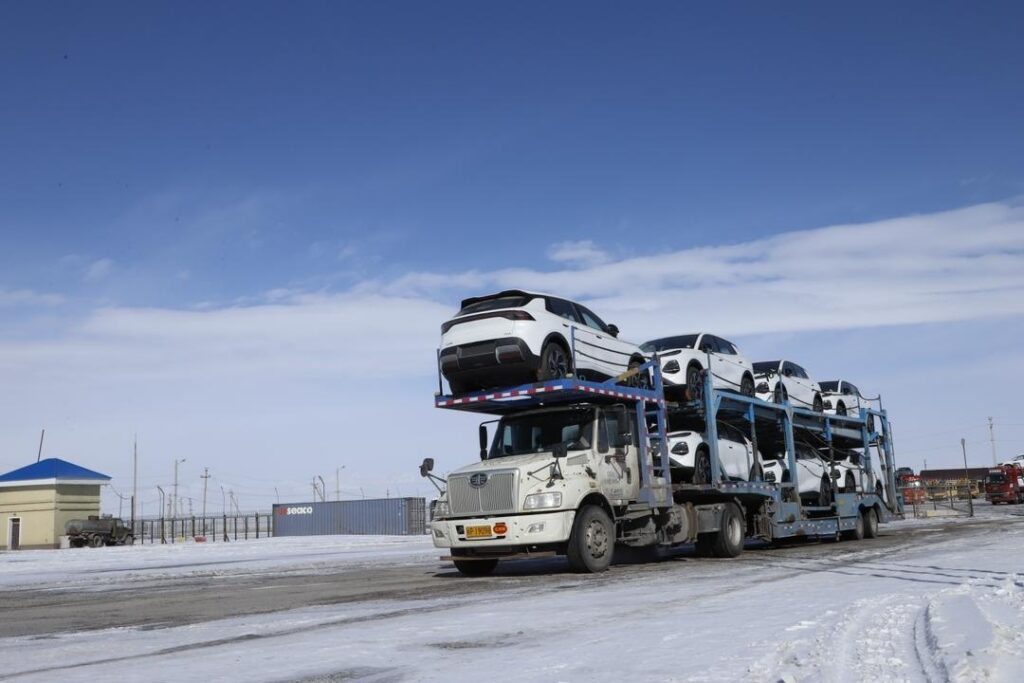
In the 2020s, Central Asia has emerged as an increasingly attractive market for the automotive industry. A combination of investment inflows, technological development, and improved logistics, much of it initiated by China, has fueled this transformation. Since the onset of the COVID-19 pandemic, China has rapidly expanded its influence in the region’s automotive sector and is becoming the dominant external supplier in import-reliant markets, even in countries with domestic manufacturing capabilities. Manufacturing Hubs and Import Markets The Central Asian automotive landscape reflects the region’s economic diversity. Uzbekistan and Kazakhstan serve as the main manufacturing hubs, while Kyrgyzstan, Tajikistan, and Turkmenistan rely heavily on imports. By the end of 2024, while the global automotive sector faced a slowdown, Uzbekistan recorded modest growth in car production, up 0.8% year-on-year. In contrast, Kazakhstan saw a 1.6% decrease. During the first seven months of 2025, Uzbekistan produced 212,200 passenger vehicles, a 3.5% increase compared to the same period in 2024. Truck production rose sharply by 28%, from 1,800 to 2,300 units. With a population of approximately 37 million, Uzbekistan remains the region’s industrial center. The state-owned UzAuto Motors, formerly GM Uzbekistan, dominates more than 90% of the domestic passenger car market. Models such as the Chevrolet Cobalt, Nexia, and Tracker are built on General Motors platforms and produced at the main plant in Asaka, which has a capacity of 280,000 vehicles per year. Some of this output is exported to Russia, Azerbaijan, and Georgia. In a bid to stay competitive with Chinese brands, Uzbekistan launched a joint venture with BYD in 2023 and announced the construction of a $1.5 billion electric vehicle (EV) plant in the Ferghana region with Chinese support. Kazakhstan’s key market players include Allur and Hyundai Trans Kazakhstan. Allur’s Kostanay plant produces up to 125,000 Kia, Chevrolet, Skoda, JAC, Jetour, and Hongqi vehicles annually, and accounts for 61% of the national output. Hyundai Trans Kazakhstan in Almaty has a capacity of 50,000 units, covering 31% of production. Two new car plants are expected to open in 2025. The first, a $200 million investment by Kia, will be located in the Kostanay region and marks the company’s first Central Asian plant. With a planned capacity of 70,000 vehicles per year, the move underscores Kia’s long-term commitment to Kazakhstan. “We are excited about the promising opportunities opening up in the Kazakh market. Kazakhstan's economy is developing dynamically and on a large scale. We see great potential for our business in this market,” said Kia President and CEO Ho Sung Song. The second plant, in Almaty, will assemble Chinese brands with a target of 90,000 vehicles annually. Rather than compete with Chinese imports, Kazakhstan has opted to localize production in partnership with Chinese manufacturers. Import-Dependent Markets and China’s Tailored Approach While Kyrgyzstan and Tajikistan host minor assembly operations, primarily with Chinese partners, their automotive fleets, along with Turkmenistan’s, are largely replenished through imports. Since 2020, shifts in global logistics have transformed China from an alternative supplier into the dominant source of vehicles in these...

Legal Imports of Chinese Smartphones Surge in Kazakhstan

Mandatory verification of mobile phones imported into Kazakhstan has led to a significant reduction in the shadow market, according to Deputy Minister of Finance Yerzhan Birzhanov. He stated that official imports of many popular Chinese smartphone models have increased 1.5 times and for some models, up to four times. As previously reported by The Times of Central Asia, Kazakh authorities introduced a policy in March 2025 requiring telecom operators to check the IMEI codes of smartphones and disable illegally imported devices. This measure applied to all phones brought into the country after March 24. Parliamentary deputy Ekaterina Smyshlyaeva supported the move, citing that 64% of mobile devices in Kazakhstan were previously brought in through illegal or "gray" channels. In 2024 alone, this led to an estimated loss of nearly 100 billion tenge (approximately $196 million) in unpaid value-added tax (VAT). The Ministry of Digital Development, Innovation, and Aerospace Industry, later reorganized as the Ministry of Artificial Intelligence and Digital Development, reported even higher levels of illicit trade. According to its data, around 5 million smartphones were sold in Kazakhstan in 2024, with up to 75% believed to have been imported illegally. However, there has been no immediate impact in the premium segment. “This was expected, as consumers were awaiting the release of new models from brands like Apple and Samsung. We anticipate growth in legal volumes from these brands as soon as sales data from October becomes available,” Birzhanov added. Under the new system, all smartphones imported into Kazakhstan after March 2025 are categorized based on their IMEI codes into three lists: white, gray, and black. The white list includes legally purchased and customs-cleared devices. The gray list comprises phones with suspicious or duplicate IMEI codes; owners of these devices have 30 days to verify their legitimacy. The black list includes stolen or counterfeit devices, which are barred from network access. In a further step to combat illegal imports, Kazakhstan also introduced personal import limits. As of this year, individuals are permitted to bring in no more than two smartphones and two tablets per year without customs clearance.

Kazakh Lawmakers Propose Extending Import Benefits for Electric Vehicles

Olzhas Nuraldinov, a member of the Mazhilis, Kazakhstan’s lower house of parliament, has proposed that Prime Minister Olzhas Bektenov extend the country’s preferential import regime for electric vehicles (EVs). Under the Customs Union Commission’s Decision No. 130 of November 27, 2009, electric vehicles can currently be imported into Kazakhstan duty-free. However, the regulation imposes a quantitative cap, no more than 15,000 EVs in total, and is set to expire on December 31, 2025. As of September 25, 2025, more than 13,000 electric vehicles had been imported under the scheme, accounting for 87.2% of the quota, according to Kazakhstan’s State Revenue Committee. Lawmakers argue that it is unlikely the 15,000 vehicle threshold will be reached by year’s end and are therefore urging the government to extend the deadline. “Once the preferential regime expires, electric vehicle prices will rise by 30-40%, which will reduce demand and slow the development of eco-friendly transport,” Nuraldinov said in a formal parliamentary appeal to the prime minister. “We propose extending the preferential import regime for at least three more years and, if necessary, raising the issue with the Eurasian Economic Commission.” According to Nuraldinov, EV imports increased twelvefold in two years, from 1,245 units in 2022 to 15,700 in 2024. Some of these imports occurred outside the preferential framework, as roughly 1,900 vehicles can still be imported duty-free under the current quota. Despite this growth, electric vehicles still represent just 0.5% of all registered vehicles in Kazakhstan, compared to 35% in China and more than 22% in the European Union. Kazakhstan has over 6.4 million registered vehicles, more than 70% of which are over ten years old and emit five to seven times more pollutants than newer models, Nuraldinov noted. “Ending these benefits would undermine efforts to improve air quality and worsen environmental conditions,” he warned. “In Almaty, where the population exceeded 2.3 million this year, 80% of air pollution comes from vehicle emissions. Meanwhile, the electric transport sector has begun forming its own ecosystem, creating jobs, service centers, assembly sites, and a growing network of charging stations. Their number has increased from 200 to 1,200 nationwide.” As The Times of Central Asia previously reported, some lawmakers voiced concern in February about the potential strain that a growing EV fleet could place on Kazakhstan’s energy infrastructure.

Uzbekistan Targets Premium Global Brands with U.S. Cotton Imports

Uzbekistan, one of the world’s largest cotton producers, may begin importing cotton from the United States, a move that has prompted public debate. Inomjon Abdurakhmonov, Head of the Foreign Trade Department at the Ministry of Investment, Industry and Trade, explained that the decision is aimed at helping Uzbekistan secure a foothold in premium global markets and boost the reputation of its textile exports. A rapidly growing textile sector Over the past seven years, Uzbekistan’s textile industry has expanded dramatically. Since 2017, cotton yarn output has more than doubled from 412,000 to 970,000 tons, knitted fabric production has risen from 68,000 to 312,000 tons, and ready-made garment output has jumped from 960 million to 3.1 billion pieces. Exports have grown from about $1.1 billion in 2016 to $2.8 billion in 2024. This growth stems from a deliberate policy shift away from exporting raw cotton in favor of domestic processing. Today, 100% of the national harvest is used locally, feeding factories that now export finished goods to more than 50 countries. Why import cotton? Abdurakhmonov emphasized that imports would supplement, not replace, domestic supply. “Uzbek cotton is fully consumed domestically, but our factories still operate at about 75% capacity,” he said. “Premium-grade imports allow us to expand production and meet the strict quality standards of top global brands.” Similar strategies are used by other textile leaders such as Turkey, India, Vietnam, and China, all of which import high-grade cotton to meet market requirements. The U.S. advantage The plan focuses on importing Strict Middling, a high-grade U.S. fiber recognized for its consistency, strength, and sustainability credentials under the U.S. Cotton Trust Protocol. “For major brands like Levi’s, Ralph Lauren, Puma, and Gap, ‘Made with U.S. Cotton’ is not optional, it’s a prerequisite,” Abdurakhmonov explained. Such quality cannot easily be replicated in Uzbekistan’s climate, and producing comparable fiber locally would take at least five years. Financing the imports Purchases will be supported by the U.S. Department of Agriculture’s GSM-102 program, which offers credit guarantees and deferred repayment terms of 12-18 months. This allows Uzbek manufacturers to sell finished goods before paying for the raw cotton, covering up to 98% of the deal value. Long-term benefits While U.S. cotton costs 15-20% more than domestic fiber, it will be used selectively for contracts where premium quality is mandatory, with higher margins offsetting the expense. Beyond immediate production gains, Uzbekistan aims to enhance its global textile reputation and strengthen its position in supply chains. Preferential access under the EU’s GSP+ system has already nearly doubled exports to Europe, from $74 million to $140 million and similar results are expected from U.S. partnerships. “Importing U.S. cotton is not about shortages, it’s about credibility,” Abdurakhmonov said. “This strategy will secure our place in premium markets and create long-term opportunities for our economy.”