
• KZT/USD = 0.00223
  • TJS/USD = 0.10860
  • UZS/USD = 0.00008
  • TMT/USD = 0.29850
  • KZT/USD = 0.00223
  • TJS/USD = 0.10860
  • UZS/USD = 0.00008
  • TMT/USD = 0.29850
  • KZT/USD = 0.00223
  • TJS/USD = 0.10860
  • UZS/USD = 0.00008
  • TMT/USD = 0.29850
  • KZT/USD = 0.00223
  • TJS/USD = 0.10860
  • UZS/USD = 0.00008
  • TMT/USD = 0.29850
  • KZT/USD = 0.00223
  • TJS/USD = 0.10860
  • UZS/USD = 0.00008
  • TMT/USD = 0.29850
  • KZT/USD = 0.00223
  • TJS/USD = 0.10860
  • UZS/USD = 0.00008
  • TMT/USD = 0.29850
  • KZT/USD = 0.00223
  • TJS/USD = 0.10860
  • UZS/USD = 0.00008
  • TMT/USD = 0.29850
  • KZT/USD = 0.00223
  • TJS/USD = 0.10860
  • UZS/USD = 0.00008
  • TMT/USD = 0.29850
12 November 2026

Viewing results 1 - 6 of 2

Prince William Praises Kazakhstan’s Saiga Recovery

Britain’s Prince William has highlighted Kazakhstan’s success in restoring its saiga antelope population, crediting government support for the animal’s recovery during an appearance on The Graham Norton Show. Asked about the distinctive antelope and the Altyn Dala conservation initiative, William said the species had recovered from critically endangered status to large numbers. Kazakhstan’s government had recognized the animal’s importance to the country and to conservation, he said: “They threw their full weight behind it.” Video: The Graham Norton Show / So Television / BBC The exchange came during an Earthshot Prize edition of the BBC chat show broadcast on October 23, with a photograph of a saiga displayed in the studio. William appeared alongside actors Cate Blanchett and Hannah Waddingham and conservationist Robert Irwin. Altyn Dala won the 2024 Earthshot Prize in the Protect and Restore Nature category, receiving £1 million to support its work. The initiative helps restore Kazakhstan’s vast steppe ecosystems, with the saiga’s recovery among its most prominent achievements. In an October 2025 update, Earthshot said Altyn Dala had helped the saiga population grow from around 40,000 to more than four million over two decades. The recovery followed a steep decline caused by poaching and disease. The initiative brings together Kazakhstan’s government and the Association for the Conservation of Biodiversity of Kazakhstan, with international conservation partners. Its work includes tracking saiga movements to help protect breeding and feeding grounds. Altyn Dala has also helped return endangered Przewalski’s horses to Kazakhstan, extending its restoration work beyond the antelope that drew attention on Norton’s sofa. Separately, King Charles III sent President Kassym-Jomart Tokayev a congratulatory telegram for Kazakhstan’s Republic Day, according to an October 25 statement from Akorda. The king praised the friendship between the two countries and reaffirmed his commitment to expanding bilateral cooperation.
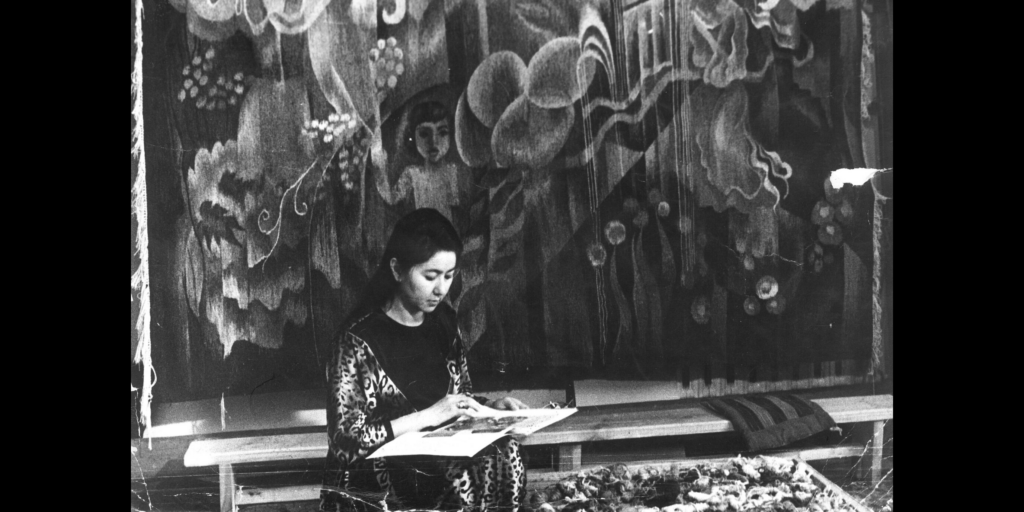

Threading a New Canon: Interview with Batima Zaurbekova

How does an artist born in a remote village in Kazakhstan become one of the country’s most recognized artists? “I realised that if I put in the work, I can achieve everything,” says Batima Zaurbekova, a pioneer of Kazakh tapestry, as she walks through Threads of Heritage at the Abylkhan Kasteyev National Museum of Arts in Almaty. The exhibition runs from September 25 to November 8, 2026. An energetic lady with a strong personality and a playful attitude, Zaurbekova is the subject of a retrospective marking her 80th birthday and consecrating a lifetime of artistic production, at a time when Kazakhstan, event after event, is gaining ever greater international cultural recognition. Video: TCA. Narration: Naima Morelli. It is indeed a momentous time to be in the art world in Kazakhstan. At the forefront of the discourses on de-coloniality in the arts, and among those contributing to a new canon of contemporary art, Kazakh artists like Zaurbekova embody what is truest to their culture and local specificity, letting it flow in the global discourse. [caption id="attachment_58628" align="alignnone" width="936"] Detail of Batima Zaurbekova’s The Bride’s Farewell (2003). Credit: Naima Morelli.[/caption] The passion with which Zaurbekova describes even the smallest technical details reveals her deep love for weaving. That devotion is also a political stance in the face of the Western canon of art history. The reclamation of an art canon which would belong to Central Asia started in the second half of the 20th century, when artists worldwide challenged the relegation of textiles to the category of craft. Starting from the very local arts of felt and weaving, and against the canon of Soviet painting, a generation of artists recovered something that was truly theirs and called it by its name: not simply craft, but art in its own right, with Zaurbekova at the heart of that movement. [caption id="attachment_58629" align="alignnone" width="2560"] Entrance display for Threads of Heritage at the Abylkhan Kasteyev National Museum of Arts in Almaty. Credit: Kirill Fedorov.[/caption] A matriarchal line While today biennales and fair around the world look for those artists whose cultural background is legible in their art, it wasn’t always like that. When Zaurbekova began weaving in the late 1960s, her teachers strongly discouraged her from devoting herself to weaving. Her teachers, many of whom had trained in Leningrad and Moscow, saw her as a painter, at a time when textiles were still considered a “lower” type of art, and far too slow and demanding. “I’d spend fifteen hours every day for days on end working on just one tapestry, and my teachers would tell me: ‘It’s so slow! In the same amount of time you could have painted three paintings already!” she tells me, laughing. They used to scold her with a Kazakh saying for it: “You’re digging a huge well with a small needle.” Zaurbekova was born in 1946 in Furmanovka, in the Moiynkum district of the Jambyl region, and grew up in Merke, where her family moved when she was in fifth...