• KGS/USD = 0.01143 -0%
  • KZT/USD = 0.00191 0%
  • TJS/USD = 0.10833 0.28%
  • UZS/USD = 0.00008 0%
  • TMT/USD = 0.28575 0%
  • KGS/USD = 0.01143 -0%
  • KZT/USD = 0.00191 0%
  • TJS/USD = 0.10833 0.28%
  • UZS/USD = 0.00008 0%
  • TMT/USD = 0.28575 0%
  • KGS/USD = 0.01143 -0%
  • KZT/USD = 0.00191 0%
  • TJS/USD = 0.10833 0.28%
  • UZS/USD = 0.00008 0%
  • TMT/USD = 0.28575 0%
  • KGS/USD = 0.01143 -0%
  • KZT/USD = 0.00191 0%
  • TJS/USD = 0.10833 0.28%
  • UZS/USD = 0.00008 0%
  • TMT/USD = 0.28575 0%
  • KGS/USD = 0.01143 -0%
  • KZT/USD = 0.00191 0%
  • TJS/USD = 0.10833 0.28%
  • UZS/USD = 0.00008 0%
  • TMT/USD = 0.28575 0%
  • KGS/USD = 0.01143 -0%
  • KZT/USD = 0.00191 0%
  • TJS/USD = 0.10833 0.28%
  • UZS/USD = 0.00008 0%
  • TMT/USD = 0.28575 0%
  • KGS/USD = 0.01143 -0%
  • KZT/USD = 0.00191 0%
  • TJS/USD = 0.10833 0.28%
  • UZS/USD = 0.00008 0%
  • TMT/USD = 0.28575 0%
  • KGS/USD = 0.01143 -0%
  • KZT/USD = 0.00191 0%
  • TJS/USD = 0.10833 0.28%
  • UZS/USD = 0.00008 0%
  • TMT/USD = 0.28575 0%
09 November 2025

Viewing results 1 - 6 of 13

Uzbekistan and China Deepen Ties Across Strategic, Economic, and Soft-Power Fronts

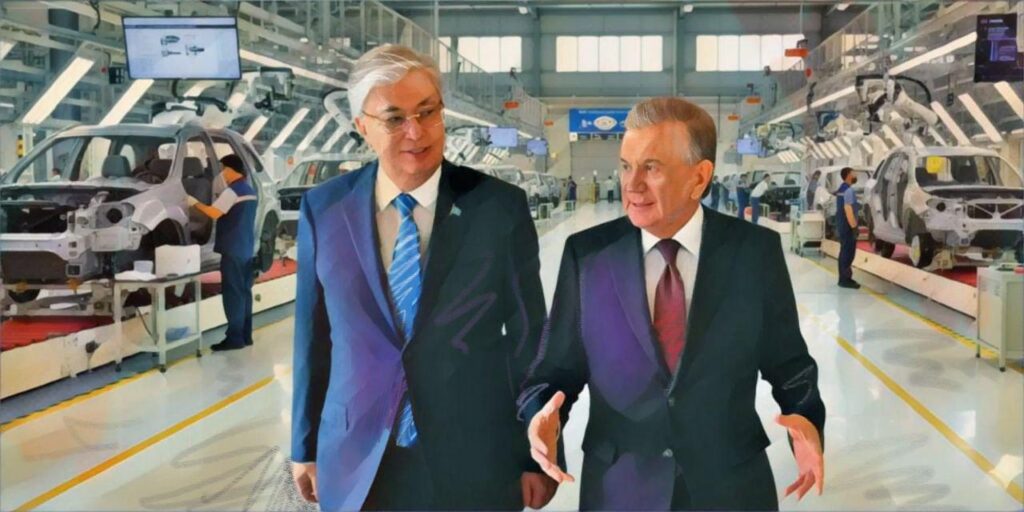
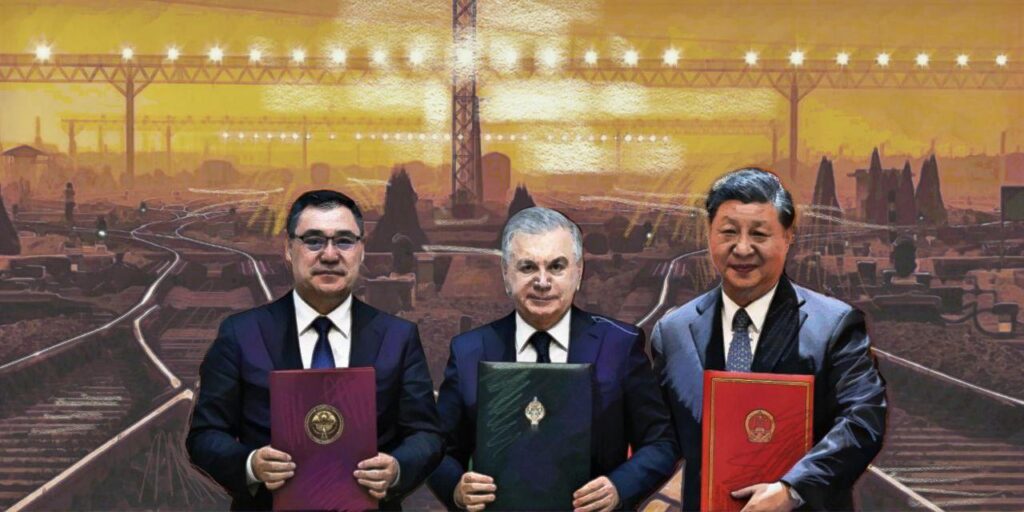
Uzbekistan and China have significantly expanded their bilateral relationship in the last month. The meeting between Presidents Shavkat Mirziyoyev and Xi Jinping on June 17, 2025, in Astana, during the second China–Central Asia Summit, formally endorsed what both states termed a “multi-dimensional strategic partnership.”  The occasion marked the conclusion of bilateral negotiations on Uzbekistan's accession to the World Trade Organization. This membership is both procedural and symbolic, as it signals Uzbekistan's intensifying participation in global economic architecture. In particular, it serves to legitimize the country's market-opening reforms in the eyes of international partners. Strategic Dialogue and the Evolution of Political Ties The June 2025 summit meeting built upon groundwork laid during Mirziyoyev's January 2024 state visit to China, when a suite of agreements were reached that catalyzed the creation of a Strategic Dialogue between the two countries' foreign ministries. A year later, in January 2025, this was formally upgraded to an “all-weather comprehensive strategic partnership”. This phrase signifies that the dialogue was acquiring operational substance in the form of diversified sectoral initiatives spanning infrastructure, innovation, security, and energy. For Uzbekistan, this initiative marks a sustained effort to define itself not only as a recipient of foreign capital but as a co-architect of regionally significant configurations. Trade and investment data point to a structurally intensifying relationship. Bilateral trade stood at $14 billion in 2024, up from $13 billion the previous year, with both sides aiming for $20 billion in the near term. As of February 2025, 3,467 Chinese firms were active in Uzbekistan, an increase of over 1,000 from the prior year. However, the $9.8 billion trade deficit in China's favor remains politically sensitive, highlighting asymmetries even as cooperation deepens. Sectoral Investment and Institutional Coordination A joint investment portfolio exceeding $60 billion undergirds this integration. Key projects include special economic zones, technoparks, and localized production of BYD electric vehicles. The sectoral spread extends to renewable energy, mining, logistics, metallurgy, pharmaceuticals, and smart agriculture. Financial institutions such as the Silk Road Fund and China Eximbank are underwriting emblematic initiatives, including the Olympic Village in Tashkent. On June 28, 2025, Uzbekistan's Deputy Minister of Investments, Industry and Trade met with Chinese leather industry representatives to coordinate manufacturing projects in Andijan and Ohangaron. These dynamics were further institutionalized at the Uzbekistan–China Interregional Forum held June 1–2, 2025, in Samarkand, where Uzbekistan's Deputy Prime Minister Jamshid Khodjaev emphasized that Chinese investment has increased fivefold since 2017. Although this was technically a regional event, it reinforced — as a public-facing moment of alignment between central planning and international economic engagement — a national-level policy architecture receptive to external capital, particularly from China. Infrastructure and Energy At the infrastructural core of bilateral cooperation stands the China–Kyrgyzstan–Uzbekistan (CKU) railway. Both presidents re-emphasized the project's strategic relevance, identifying it as essential to transcontinental logistical continuity from East Asia to Europe. The project has not only economic but also geopolitical significance, situating Uzbekistan as a connective node rather than a peripheral conduit. If completed on time, it may also reduce...

Humans Group Files Arbitration Against Uzbekistan Over Alleged Investment Violations

Humans Mobile Ltd, a subsidiary of the Singapore-based Humans Group, has initiated arbitration proceedings against Uzbekistan at the World Bank’s International Centre for Settlement of Investment Disputes (ICSID). The case, registered under ARB/25/24, alleges that Uzbekistan violated a 2003 bilateral investment treaty between the two countries. According to an official statement published by Bilaterals, Humans Mobile seeks compensation for damages it claims were caused by the actions of several Uzbek state authorities. The company argues that these actions disrupted its operations and compromised the rule of law in the country. “We have always believed in Uzbekistan and its citizens,” said Vladimir Dobrynin, CEO and founder of Humans Group. “But transformation efforts must be supported by fair and predictable rules. Arbitration is a standard process to protect investors against unfair treatment.” Dobrynin added that the arbitration aims not only to secure compensation but also to promote legal stability and strengthen the investment climate in Uzbekistan. Humans Group operates in the United States, Uzbekistan, Poland, Singapore, and Germany. Its Uzbek venture, Humans.uz, functions as a “super app” combining financial services, mobile communications, grocery delivery, and online retail. Market Dispute with Uzbektelecom In a separate but related development, Humans filed a complaint on May 8, 2025, with Uzbekistan’s Antimonopoly Committee, requesting an investigation into the state-owned telecom operator Uzbektelecom. The company accuses Uzbektelecom of abusing its dominant market position by maintaining high internet prices. As a Mobile Virtual Network Operator (MVNO), Humans relies on Uzbektelecom’s infrastructure under a contract signed in May 2020. According to the complaint, while global internet prices have declined since 2021, Uzbektelecom has not adjusted its rates accordingly. Humans argues that despite lowering its own prices to stay competitive, unchanging infrastructure costs now account for 58% of its total service costs, making its business model unsustainable. “There is no economic reason to maintain such high prices. Uzbektelecom is receiving unjustified profit at the expense of infrastructure users like us,” the company stated in its complaint, as quoted by Spot. Humans also revealed that it has incurred significant debt due to what it describes as “monopoly-level pricing.” In a March 27, 2024, warning letter, Uzbektelecom demanded repayment of 532 billion Uzbek soums, comprising 361 billion in outstanding payments and over 170 billion in penalties. The company warned that internet speeds would be throttled starting March 1, 2025, with full disconnection by June 1 if the debt remains unpaid. Legal action may also follow. Uzbekistan’s Track Record in Arbitration This is not the first time Uzbekistan has faced international arbitration. The Times of Central Asia previously reported that Uzbekistan won a case brought by Turkish textile firm Bursel Tekstil, which had sought $700 million in damages over alleged breaches of cotton pricing and tax policy commitments. The tribunal ultimately ruled in favor of Uzbekistan and ordered Bursel to pay legal costs. In another high-profile case reported by The Times of Central Asia, the ICSID ruled in May 2024 that Kyrgyzstan must return four resorts to Uzbekistan. The tribunal found that Kyrgyzstan...

Kazakhstan, Italy, and the Battle for Europe’s Energy Future

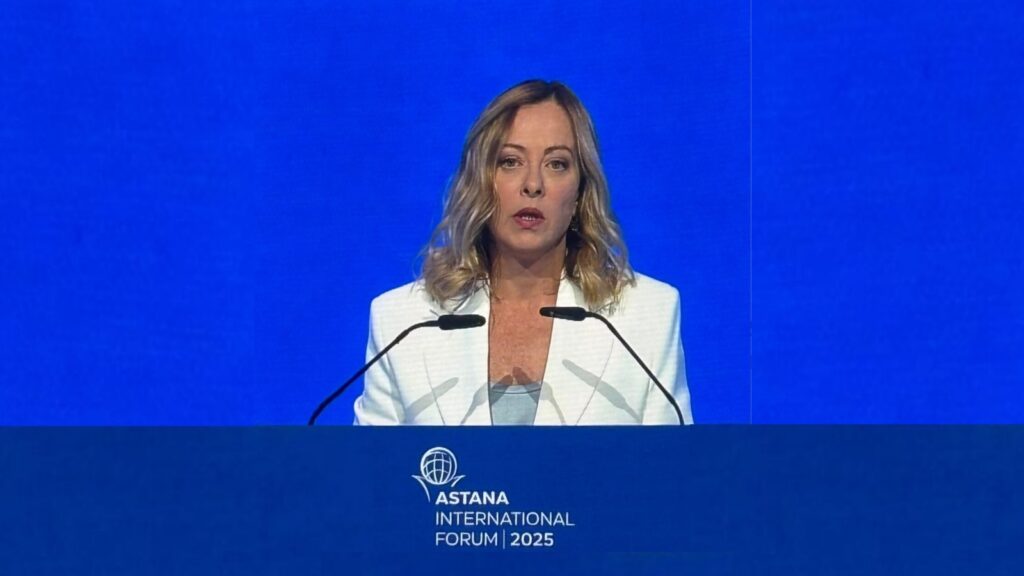
ASTANA - Central Asia is no longer on the periphery of global events, but a place where major countries come together with their ideas, money, and projects. In a turbulent and highly uncertain geopolitical environment, global powers are seeking to establish their presence in this strategic, energy-rich region. Italy is no exception. Italian Prime Minister Giorgia Meloni was initially scheduled to visit Kazakhstan in late April, but in light of Pope Francis' passing her trip to Astana was canceled. Coincidently or not, she came to the Kazakh capital on May 30 to attend the Astana International Forum (AIF) – a two-day event that saw the attendance of political, business, and thought leaders who gathered under an expanded agenda that included climate change, energy security, and sustainability. Meloni’s visit to Kazakhstan is part of her Central Asian tour; she previously visited Uzbekistan, where she met with the country’s President Shavkat Mirziyoyev. In Astana, she not only spoke at the AIF, emphasizing that the “Astana International Forum has become increasingly important in dialogue worldwide,” but also took part in the first-ever Central Asia–Italy summit. “Italy was the first Nation in the EU to decide to invest in relations with Central Asia and its individual member Nations, launching a permanent format in order to share ideas,” Meloni said at the AIF, emphasizing that the EU–Central Asia Summit, held in April in Samarkand, “elevated the relations between the region and the European Union to a strategic partnership.” In this relationship, Kazakhstan seems to play a crucial role. Italy is the largest Central Asian economy’s number one trading partner in Europe. According to Kazakhstan’s Ministry of Trade and Integration, trade turnover between Kazakhstan and Italy in 2024 amounted to $19.9 billion, which is 24% higher compared to the previous year ($16.1 billion). Oil is undoubtedly Kazakhstan’s main export to Italy, although critics argue that the third-most populous EU member is merely a transit country, as large amounts of Kazakh oil ultimately reach other European countries. “If we really want to shape the future, we must have the courage to look beyond our geographical boundaries and pave new paths. I am thinking of the energy sector, where our cooperation can help make a difference, and I am also referring to critical raw materials, where our collaboration aims to generate shared benefits and mutual opportunities,” Meloni stressed. Kazakhstan is one of the richest countries in the world in terms of natural resources. This makes it a nation of significant interest to Italy – with whom Astana signed a Strategic Partnership Agreement back in 2009 – as well as to other European states. But from the Kazakh perspective, it is important that this cooperation be mutually beneficial. Astana is seeking to avoid being seen merely as a source of raw materials and expects its partners to offer tangible benefits in return. That is why Kazakhstan’s President Tokayev has pushed forcefully for the renegotiation of oil agreements with foreign energy companies operating in the country. For Astana, it is...

Kazakhstan and Italy Forge a New Strategic Nexus

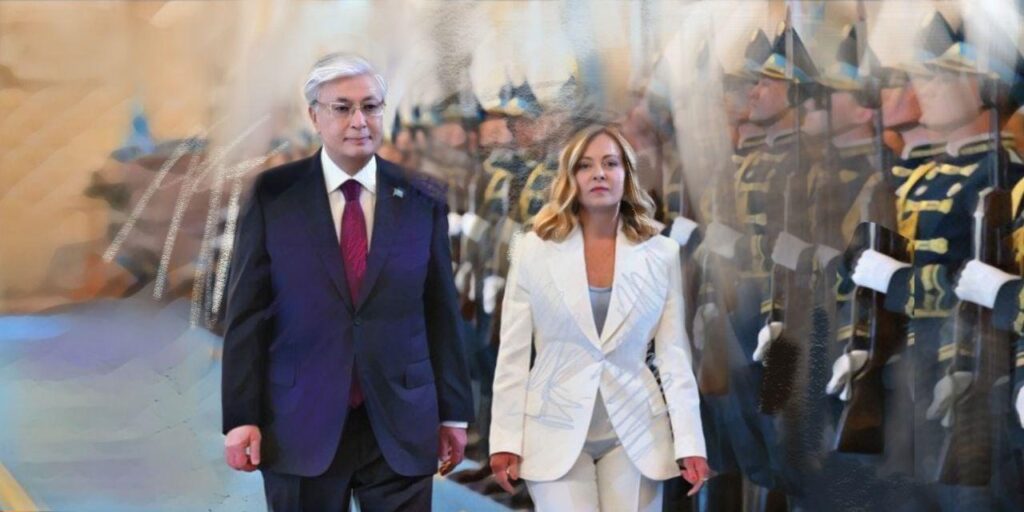
Italian Prime Minister Giorgia Meloni's visit to Kazakhstan marks a pivotal moment in the deepening relationship between the two nations. This diplomatic mission comes on the heels of historical ties reinforced by Pope Benedict XVI’s 2022 visit to the Central Asian nation, where he met with President Kassym-Jomart Tokayev. Benedict’s trip was a testament to Kazakhstan’s role in promoting interfaith dialogue and global peace, a legacy that continues to shape its international relationships. Now, with a new American Pope at the helm of the Vatican, Meloni has renewed Italy’s commitment to strengthening its partnership with Kazakhstan. Her meeting with Tokayev and participation in the C5+Italy Summit underline her focus on fostering collaboration in energy diversification, regional stability, and economic growth. The terms for Meloni’s arrival in Astana were set by Kazakhstan’s previous engagements with Italy, including President Kassym-Jomart Tokayev’s visit to Rome in early 2024 and his meeting with Meloni in Abu Dhabi in January 2025. Those substantive bilateral talks set the bilateral agenda in the joint context of Italian active Eurasian diplomacy and Kazakhstan’s own strategic vision. Meloni’s direct discussions with Tokayev focused on deepening bilateral diplomatic and economic ties; expanding cooperation in energy, trade, and defense; and discussing regional security and joint training programs. As she put it prior to departing Italy, “This visit confirms the strategic value of our collaboration and the excellent level of relations between our nations.” Kazakhstan’s geography, resource wealth, and evolving political posture since independence over a third of a century have also enabled it to craft a nuanced foreign policy balancing traditional ties with Russia and China against emerging alignments with Europe and beyond. Italy’s diplomacy, underpinned by proactive outreach and sustained by major trade and investment flows, has become Kazakhstan’s principal EU partner and third-largest global trading counterpart. Meloni’s engagement with Kazakhstan underscores her broader strategic vision of positioning Italy as a pivotal player in the evolving geopolitical landscape. Central to this ambition is her ability to connect Italy’s foreign policy with global power structures, including her relationship with former U.S. President Donald Trump, a bond that has bolstered both her personal stature and Italy’s diplomatic leverage. This alignment, rooted in shared ideologies of nationalism and sovereignty, allows Italy to project itself as a transatlantic bridge linking Europe, the United States, and strategically critical regions like Central Asia. Beyond energy and trade, Italy’s approach aims to institutionalize its presence in the region, as demonstrated by the simultaneous hosting of the Central Asia–Italy Summit, which builds on the “5+1” dialogue launched in 2019 and its 2024 iteration at the foreign-ministerial level. Convening this summit at the head-of-government/head-of-state level in Astana subtly underscores Kazakhstan’s linchpin role in regional coordination and Italy’s capacity to frame its engagement as a multilateral and strategic enterprise. Meloni’s ambitions extend to securing Italy’s role in stabilizing ties with Central Asia and former Soviet states. For instance, strengthening relationships with energy-rich nations like Kazakhstan underpins her focus on energy diversification, critical for reducing Europe’s reliance on Russian gas while...

Kazakhstan Has a Deal for Tajik Electricity, Now the Wait Begins

In the latest sign of Central Asian regional cooperation, Kazakhstan has signed a long-term deal to import electricity from Tajikistan. However, that electricity might not reach Kazakhstan anytime soon, as there are some important details that need to be worked out by Tajikistan before supplies can begin. Kazakhstan’s energy problems Kazakhstan has been experiencing severe energy deficits for several years now, particularly during winter months. Kazakh Senator Suyindik Aldashev said in late February this year that Kazakhstan would be short some 5.7 billion kilowatt hours (kWh) of electricity in 2025, which would be a 46% increase in the country’s electricity deficit compared to 2024. Kazakhstan was forced to import electricity from Russia during the winter of 2024 to help alleviate energy shortages. These shortages contributed to Kazakhstan's decision to hold a referendum to approve the construction of the country’s first nuclear power plant (NPP). To date, however, there has been no announcement of which company will build the NPP, so additional electricity from that source could be a decade or more away. This has led Kazakhstan to explore importing energy resources from its Central Asian neighbors. The head of Turkmenistan’s Halk Maslahaty (People’s Council) Gurbanguly Berdimuhamedov just visited Kazakhstan and met with Kazakh President Kassym-Jomart Tokayev with Turkmen gas exports to its northern neighbor high on the agenda. Kazakhstan has been in discussions with Tajikistan about electricity shipments for months, and the agreement was finalized toward the end of April. Rogun The source of the electricity Tajikistan intends to export to Kazakhstan is the Rogun Hydropower Plant (HPP) on the Vakhsh River, some 110 kilometers east of the Tajik capital Dushanbe. The Rogun HPP has a history of controversy. It was conceived in the 1960s when Tajikistan was a Soviet Republic. Construction on the project started in 1976, but not much had been done by the time the USSR collapsed in late 1991, and work ground to halt shortly thereafter. Russian company RUSAL signed an agreement in 2004 to invest more than $1 billion and finish building Rogun, but disputes over the project led the Tajik government to cancel the contract in 2007. One of the main differences between the two parties was RUSAL’s insistence the dam wall at Rogun be no higher than 285 meters, whereas the Tajik authorities wanted the original height of 335 meters. At 285 meters, the HPP’s output would have been 2400 megawatts (MW), while at 335 meters, the output would be 3600 MW. Russia’s Inter RAO EES was in talks with Tajikistan about the Rogun project in 2008, but in the end, nothing came from those negotiations. With no hope of foreign backing, Tajik President Emomali Rahmon started portraying Rogun as a project of national salvation, the key to energy independence. Rahmon’s government called on citizens to help finance construction of the HPP and when public support in the poorest country in Central Asia proved insufficient, citizens were pressured into buying shares in the project. The government in neighboring Uzbekistan objected to Rogun’s construction,...

Congressman Trent Kelly and Ambassador Furkat Sidikov Drive U.S.-Uzbekistan Trade and Investment Progress

On March 26, 2025, Ambassador Furkat Sidikov hosted a Congressional Breakfast featuring Congressman Trent Kelly (R, Mississippi), Co-Chair and founding member of the U.S.-Uzbekistan Caucus. The event focused on the theme of trade, investment, and U.S.-Uzbekistan relations. Business leaders and policy experts also joined to discuss the evolving economic landscape and the future of U.S.-Uzbekistan relations. Ambassador Sidikov highlighted the presence of over 300 American companies in Uzbekistan and expressed optimism about bilateral trade soon surpassing $1 billion annually. The Ambassador emphasized the strengthening of multifaceted partnership with the U.S. over economic and security partnerships, alongside ongoing reforms in democracy and human rights. Congressman Kelly praised the strong partnership between the United States and Uzbekistan, highlighting the country’s reforms and its openness to U.S. business and trade. He expressed deep admiration for the Uzbek people and their government, emphasizing the growing ties fostered through the State Partnership Program with Mississippi. Congressman Kelly voiced strong support for removing the Jackson-Vanik Amendment (a Cold War-era provision that restricts trade with certain countries), stating that the time was right for such action. He noted ongoing collaboration with congressional and senatorial colleagues to advance this effort. Referring to Uzbekistan Day on the Hill as a growing tradition, he encouraged stronger connections between the two nations, underscoring Uzbekistan's vibrant culture, abundant resources, and welcoming spirit. [caption id="attachment_30169" align="aligncenter" width="1280"] Ambassador Furkat Sidikov, Congressman Trent Kelly (R, Mississippi), and Congresswoman Carol Miller (R, West Virginia) display the Uzbekistan Normalized Trade Act, H.R. 2329[/caption] The Uzbekistan Caucus was established in 2018 to strengthen bilateral relations between the United States and Uzbekistan by encouraging dialogue on issues such as trade, security, governance, and cultural exchange. While bilateral caucuses are often seen as ceremonial with limited tangible outcomes, the Uzbekistan Caucus has proven to be an exception by driving meaningful progress in U.S.-Uzbekistan relations. This success reflects the contributions of both officials. Ambassador Sidikov has served as Uzbekistan's ambassador to the United States since 2023, playing a key role in strengthening bilateral ties. During his tenure, he facilitated the signing of the Customs Mutual Assistance Agreement (CMAA), streamlining trade and enhancing border security, and supported Uzbekistan’s reforms to align with World Trade Organization (WTO) standards, fostering a more open and competitive economic environment. These efforts have not only expanded market access, such as enabling U.S. meat and poultry exports to Uzbekistan, but also fostered deeper economic and strategic ties between the two nations. Congressman Kelly's 36 years of military service, including his role as a brigadier general, two Bronze Star Medals, and deployments to Iraq, have been instrumental in advancing collaboration with Uzbekistan through the State Partnership Program. His efforts have supported joint training, disaster preparedness, and modernization initiatives, providing valuable U.S. expertise and strengthening defense ties between the two nations. Uzbekistan ranks 58th in the Global Firepower Index, which ranks countries by military strength.