• KGS/USD = 0.01144 0%
  • KZT/USD = 0.00212 0%
  • TJS/USD = 0.10456 0.19%
  • UZS/USD = 0.00008 0%
  • TMT/USD = 0.28490 0%
  • KGS/USD = 0.01144 0%
  • KZT/USD = 0.00212 0%
  • TJS/USD = 0.10456 0.19%
  • UZS/USD = 0.00008 0%
  • TMT/USD = 0.28490 0%
  • KGS/USD = 0.01144 0%
  • KZT/USD = 0.00212 0%
  • TJS/USD = 0.10456 0.19%
  • UZS/USD = 0.00008 0%
  • TMT/USD = 0.28490 0%
  • KGS/USD = 0.01144 0%
  • KZT/USD = 0.00212 0%
  • TJS/USD = 0.10456 0.19%
  • UZS/USD = 0.00008 0%
  • TMT/USD = 0.28490 0%
  • KGS/USD = 0.01144 0%
  • KZT/USD = 0.00212 0%
  • TJS/USD = 0.10456 0.19%
  • UZS/USD = 0.00008 0%
  • TMT/USD = 0.28490 0%
  • KGS/USD = 0.01144 0%
  • KZT/USD = 0.00212 0%
  • TJS/USD = 0.10456 0.19%
  • UZS/USD = 0.00008 0%
  • TMT/USD = 0.28490 0%
  • KGS/USD = 0.01144 0%
  • KZT/USD = 0.00212 0%
  • TJS/USD = 0.10456 0.19%
  • UZS/USD = 0.00008 0%
  • TMT/USD = 0.28490 0%
  • KGS/USD = 0.01144 0%
  • KZT/USD = 0.00212 0%
  • TJS/USD = 0.10456 0.19%
  • UZS/USD = 0.00008 0%
  • TMT/USD = 0.28490 0%

Viewing results 1 - 6 of 150

Agreement by Kazakhstan and Turkey on Air Transit

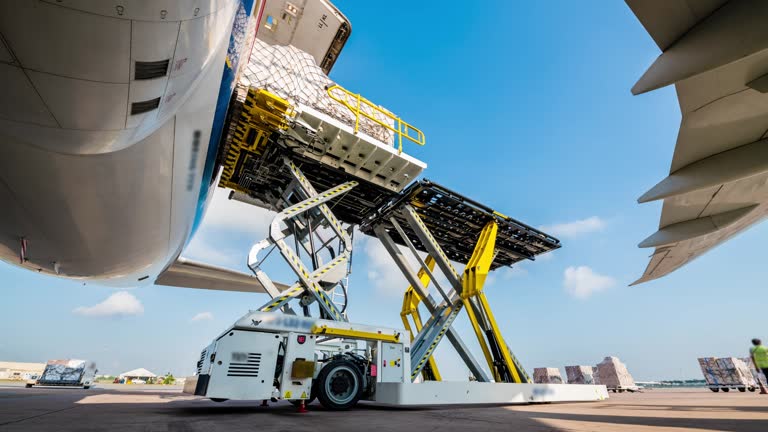
The Government of Kazakhstan has signed an agreement with Turkey on the transit of military equipment and personnel through the airspace of both countries. The resolution, adopted on September 11, establishes a procedure for using air corridors regulated and authorized by the Ministry of Defense, responsible for the transit of military equipment and personnel; the Ministry of Foreign Affairs, responsible for issuing annual and one-time diplomatic permits (DCNs); and the Turkish Ministry of National Defense. Each party has committed to submitting a formal request through diplomatic channels by December 1 of a given year to obtain an annual diplomatic authorization number (DCN) which will be valid for transit operations  from January 1 to December 31 of the following year. Enabling the transit of official delegations, military equipment and personnel, humanitarian aid, and diplomatic cargo, the decree comes into force from the day of its signing. The draft agreement between the governments of Kazakhstan and Turkey on the transit of military property and personnel through the airspace of both countries was published on the portal “Open NPA” on August 13 and was under discussion until August 27.  The move which illustrates the strengthening relationship between the two countries, follows Kazakhstan's president's attendance  at Recep Tayyip Erdogan's inauguration as president in Ankara in June 2023,  Erdogans visit to Astana in November of the same year, and his return in July 2024, for the SCO Summit.
Mirziyoyev and Scholz Agree to Grow Uzbekistan-Germany Cooperation

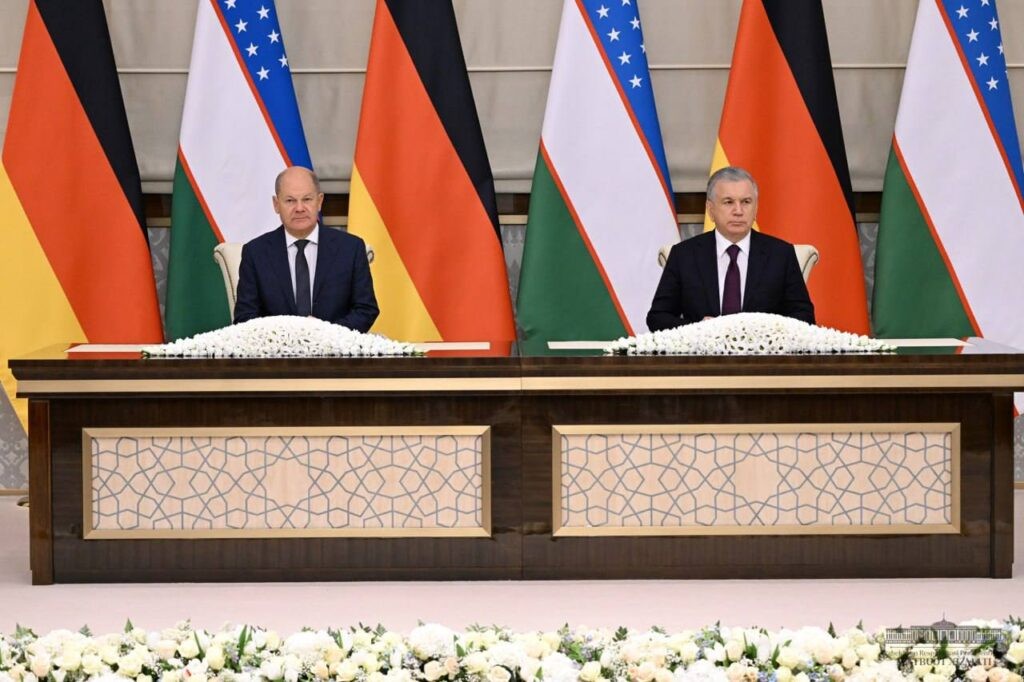
On September 15, German Chancellor Olaf Scholz met with Uzbek president Shavkat Mirziyoyev in Samarkand. Last year the volume of trade between Uzbekistan and Germany exceeded 1 billion euros for the first time. Since the beginning of 2024, German companies have invested over 800 million euros into the Uzbek economy, while in June, the eighth meeting of the Uzbek-German Business Council was successfully held in Tashkent. At the end of the negotiations, Mirziyoyev and Scholz signed eight bilateral documents, including agreements in the fields of migration, use of water resources, essential minerals, transport and climate change. Additionally, Mirziyoyev and Scholz participated in the opening ceremony of the new Academy of Public Administration, which the Uzbek government has recently built in cooperation with the Hans Seidel Foundation and the Bavarian School of Public Administration. Scholz will also participate in a C5+1 meeting in Kazakhstan on September 17 with the leaders of Kazakhstan, Kyrgyzstan, Uzbekistan, Turkmenistan, and Tajikistan.

Tokayev: Russia is “Militarily Invincible”

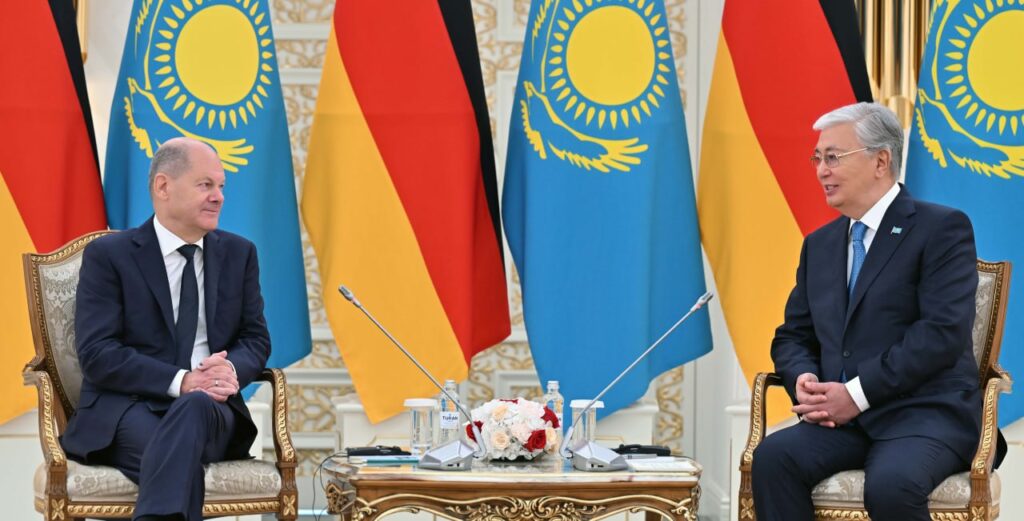
During a meeting in Astana with German Chancellor Olaf Scholz, Kazakhstan's President Kassym-Jomart Tokayev spoke about resolving the Russian-Ukrainian war. According to Tokayev, further escalation of the war will only lead to irreparable consequences for all mankind and, above all, for all countries directly involved in the war. Tokayev said: “The fact is that Russia is militarily invincible. Unfortunately, a good chance to achieve at least a truce was lost with the refusal to conclude the Istanbul Agreement. But the opportunity for peace still exists. We need to carefully consider all peace initiatives put forward by various states, come to a decision to stop hostilities, and then move on to discussing territorial issues. In our opinion, the peace plan of China and Brazil deserves support.” Tokayev reminded the public that Kazakhstan has the world's longest delimited land border with Russia. He further stated that “cooperation between our countries is developing within the framework of strategic partnership and alliance. In Kazakhstan, we have genuine sympathy for the Ukrainian people and their distinctive culture. There have never been any disagreements between our states. The embassy of our country continues to function in Kyiv.” While his comments about seeking peace before discussing territorial issues may seem like Tokayev is backing Russia, in 2022, he said that Kazakhstan would not recognize the independence of the so-called Donetsk and Luhansk people's republics (“DNR” and “LNR”). Speaking about the 'republics', he noted that the two basic principles of the UN Charter -- the right to self-determination for nations, and the territorial integrity of states -- have come into mutual contradiction. On this topic, Tokayev noted: "It is estimated that if the right of self-determination for a nation is realized on the globe, then instead of the current 193 states, more than 500-600 states will emerge on Earth. It will be chaos. For this reason, we do not recognize Taiwan, Kosovo, South Ossetia, or Abkhazia. We will apply this principle to all quasi-state territories, which, in our opinion, includes Luhansk and Donetsk.”

New U.S. Ambassador to Turkmenistan Outlines Priorities For Cooperation

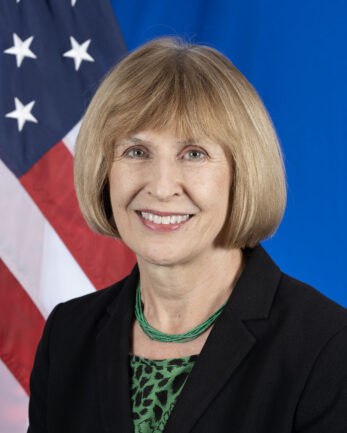
At her first press briefing in Ashgabat, the new U.S. Ambassador to Turkmenistan, Elizabeth Rood, outlined key areas of cooperation between the two countries. She paid particular attention to economic development and investment attraction. Rood emphasized that the U.S. Embassy intends to actively engage with Turkmenistan's government, private sector, and educational institutions to create new jobs and employment opportunities and diversify the national economy. Rood also emphasized four critical areas of work: combating climate change, economic sector development, security issues, and promoting fundamental freedoms. Regarding climate challenges, Rood emphasized Turkmenistan's role in mitigating climate change and welcomed President Serdar Berdymukhamedov's pledge to limit methane emissions. Ambassador Rood also emphasized the importance of supporting civil society in Turkmenistan, including upholding fundamental freedoms and combating forced and child labor. In addition, she expressed her intention to strengthen ties between the peoples of the two countries, noting her inspiration from the determination of Turkmen youth to learn exact sciences and the English language.

U.S. Ambassador: America Supports Tajikistan’s Role in the Trans-Caspian Trade Route

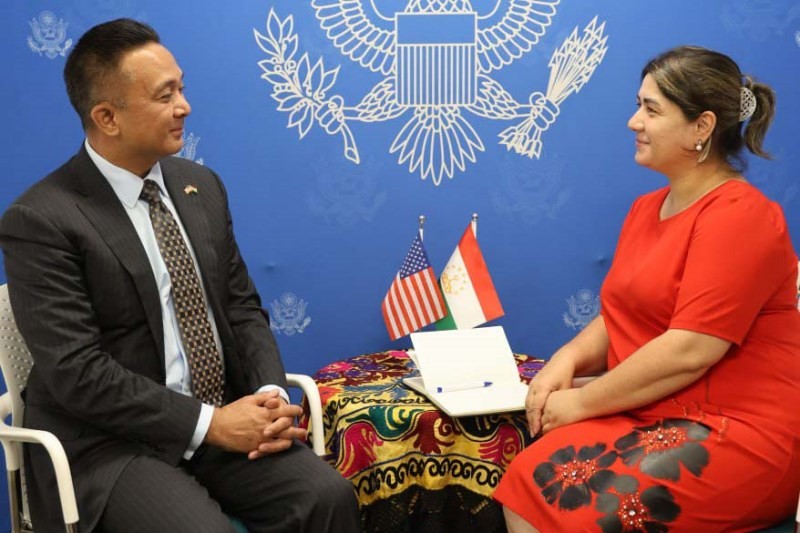
The United States supports Tajikistan’s participation in the Trans-Caspian Trade Route project, connecting China with Europe through the Caspian Sea, Asia, and the Caucasus. U.S. Ambassador to Tajikistan Manuel Micaller spoke about this in an interview with Khovar.tj. “We continue to advocate for Tajikistan’s participation in the Trans-Caspian Trade Route, which will connect Central Asia with the Caucasus and European markets. Through the C5+1 diplomatic platform, which brings together the United States and our five Central Asian partners, we hope to facilitate closer cooperation with these partners and access to global markets,” Micaller noted. The Trans-Caspian Transport Route starts from Southeast Asia and China and runs through Kazakhstan, the Caspian Sea, Azerbaijan, Georgia, and further to European countries. It aims to facilitate trade and economic cooperation by connecting major economic regions through railways, highways, and maritime routes. Transit time along the Trans-Caspian Route has been reduced from 38-53 days to 18-23 days. In 2024, this period is planned to be reduced to 14-18 days, and the journey through the territory of Kazakhstan from 6 to 5 days.

Uzbekistan and Kazakhstan Plan to Launch Satellites into Space

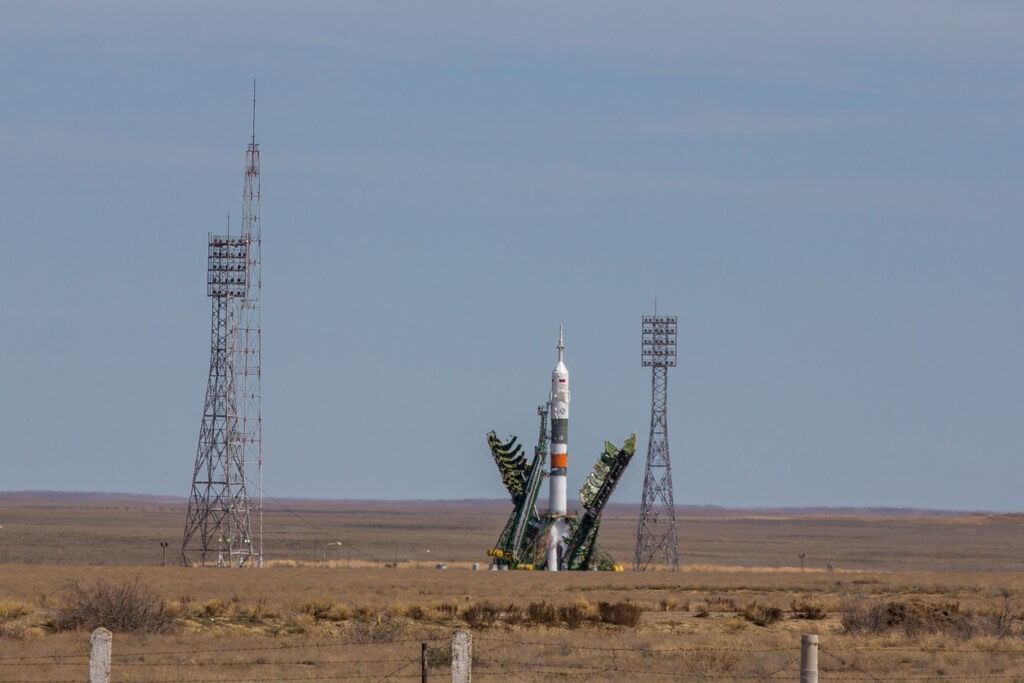
Representatives of Uzbekistan's Ministry of Digital Technologies attended the recent Asia-Pacific Conference on Digital Transformation, which was held in Astana on September 2-3. The event was organized by the United Nations Economic and Social Commission for Asia and the Pacific (UNESCAP). The conference touched upon possible cooperation between Uzbekistan and Kazakhstan on launching a group of satellites into space. In August Uzbekistan became a signatory to the Outer Space Treaty, which regulates international cooperation in space exploration. The Times of Central Asia has also reported that Kazakhstan plans to use Amazon's "Project Kuiper" satellite internet, a competitor to Elon Musk’s famous Starlink.