• KGS/USD = 0.01144 0%
  • KZT/USD = 0.00200 0%
  • TJS/USD = 0.10470 -0.19%
  • UZS/USD = 0.00008 0%
  • TMT/USD = 0.28490 0%
  • KGS/USD = 0.01144 0%
  • KZT/USD = 0.00200 0%
  • TJS/USD = 0.10470 -0.19%
  • UZS/USD = 0.00008 0%
  • TMT/USD = 0.28490 0%
  • KGS/USD = 0.01144 0%
  • KZT/USD = 0.00200 0%
  • TJS/USD = 0.10470 -0.19%
  • UZS/USD = 0.00008 0%
  • TMT/USD = 0.28490 0%
  • KGS/USD = 0.01144 0%
  • KZT/USD = 0.00200 0%
  • TJS/USD = 0.10470 -0.19%
  • UZS/USD = 0.00008 0%
  • TMT/USD = 0.28490 0%
  • KGS/USD = 0.01144 0%
  • KZT/USD = 0.00200 0%
  • TJS/USD = 0.10470 -0.19%
  • UZS/USD = 0.00008 0%
  • TMT/USD = 0.28490 0%
  • KGS/USD = 0.01144 0%
  • KZT/USD = 0.00200 0%
  • TJS/USD = 0.10470 -0.19%
  • UZS/USD = 0.00008 0%
  • TMT/USD = 0.28490 0%
  • KGS/USD = 0.01144 0%
  • KZT/USD = 0.00200 0%
  • TJS/USD = 0.10470 -0.19%
  • UZS/USD = 0.00008 0%
  • TMT/USD = 0.28490 0%
  • KGS/USD = 0.01144 0%
  • KZT/USD = 0.00200 0%
  • TJS/USD = 0.10470 -0.19%
  • UZS/USD = 0.00008 0%
  • TMT/USD = 0.28490 0%

Viewing results 1 - 6 of 95

Uzbekistan to Import Afghan Coal in $4.5 Million Trade Deal

Uzbekistan has agreed to import coal from Afghanistan as part of efforts to balance bilateral trade, Tasnim News Agency reported. During a meeting in Kabul, an Uzbek delegation expressed its readiness to purchase Afghan coal, resulting in the signing of trade agreements worth $4.5 million between private companies from both countries. The discussions also covered trade privileges, plans to construct a cement plant in Afghanistan’s Samangan region, and the organization of joint exhibitions. In May 2024, Uzbekistan’s Transport Minister, Ilhom Mahkamov, led a delegation to Afghanistan, where he met with Foreign Minister Amir Khan Muttaqi. During the talks, both sides agreed that a technical team would visit Kabul to finalize the purchase of over one million tons of coal. Meanwhile, in July 2023, the Kyrgyz government raised the price of coal exported to Uzbekistan by 37%. According to the National Statistics Committee of Kyrgyzstan, from January to May 2024, Kyrgyzstan exported 302,000 tons of coal to Uzbekistan for $12.7 million—1,000 tons less than the same period in 2023, when 303,000 tons were sold for $9.2 million. Kyrgyz coal suppliers have not commented on the price increase. This week, business representatives from Uzbekistan and Afghanistan signed a $4.5 million trade agreement. Afghanistan’s Ministry of Industry and Trade announced the deal, stating that it was signed by private sector representatives from both countries.

Kazakhstan’s Parliament Approves Regulations for the Central Asia International Industrial Cooperation Center with Uzbekistan

On February 5, the Mazhilis, the lower house of Kazakhstan’s parliament, approved an agreement between the governments of Kazakhstan and Uzbekistan on regulations for the Central Asia International Center for Industrial Cooperation. According to Kazakhstan’s Ministry of Trade and Integration, the industrial center will be built along the border of the two countries, near the Gulistan checkpoint in Uzbekistan and the Atameken checkpoint in Kazakhstan. The complex will include: Industrial production facilities Warehouses Transport infrastructure The center aims to: Accelerate cargo transportation Reduce logistics costs Streamline supply chains Lower product costs for consumers Enhance industrial cooperation between Kazakhstan and Uzbekistan as part of the North-South corridor Kazakhstan’s Minister of Trade and Integration, Arman Shakkaliyev, informed parliament that the industrial center will cover 100 hectares, with 50 hectares on each country’s side. Part of the center will receive regional industrial zone status. Construction is expected to be completed by the fourth quarter of 2026, with an official opening planned for the first half of 2027. Uzbekistan is one of Kazakhstan’s largest economic and trading partners, and both countries aim to increase bilateral trade to $10 billion annually in the medium term.

Uzbekistan and Afghanistan Sign $4.5M Trade Deal as Economic Ties Grow

Business representatives from Uzbekistan and Afghanistan have signed a $4.5 million trade agreement, Tasnim News reported on February 3. Afghanistan’s Ministry of Industry and Trade announced the deal, stating that it was signed by private sector representatives from both countries. Afghanistan is Uzbekistan’s fifth-largest export market. Over the past five years, trade between the two countries has grown by nearly 1.5 times, reaching $866 million in 2023. Currently, 550 Afghan-invested enterprises operate in Uzbekistan, 443 of which are fully Afghan-owned. Joint projects are ongoing in food production, construction materials, agriculture, tourism, and textiles. Beyond trade agreements, both countries are discussing broader economic cooperation. In August 2024, an Uzbek delegation led by Prime Minister Abdulla Aripov visited Afghanistan. During the meetings, both sides emphasized their goal of increasing trade turnover to $1 billion in 2024, with a long-term target of $3 billion. Officials stressed the need to tap into new economic opportunities on a mutually beneficial basis. As previously reported by The Times of Central Asia, in October 2024, Afghanistan’s Ministry of Mines and Oil signed a 10-year contract with an Uzbek company for gas exploration and production in the Tuti Maidan gas field in Jawzjan province. The project is expected to bring in about $1 billion in investment to the region’s gas sector.

Iran’s Non-Oil Exports to Uzbekistan Rise by 18%

Iran’s non-oil exports to Uzbekistan increased by 18% in value and 14% in weight during the first nine months of the current Iranian year (March 20 - December 20, 2024), compared to the same period last year (March 21 - December 21, 2023), Trend reported, citing data from the Iranian Customs Administration. According to the report, Iran exported 414,000 tons of non-oil goods worth $292 million to Uzbekistan during this period. In the corresponding months of the previous Iranian year, exports totaled 364,000 tons, valued at approximately $248 million. Key Iranian Exports to Uzbekistan Iran’s main exports to Uzbekistan included: Milk and dairy products Petrochemicals Various types of pipes Glass containers Agricultural equipment Overall, Iran’s total trade turnover with Uzbekistan during the nine-month period reached 444,000 tons, valued at $358 million. Expanding Trade Ties with Kazakhstan In addition to strengthening economic relations with Uzbekistan, Iran is also deepening trade ties with Kazakhstan. As The Times of Central Asia reported, on January 30, Iranian Vice President Mohammad-Reza Aref met with Kazakh Prime Minister Olzhas Bektenov in Almaty to discuss trade and transport cooperation. Kazakhstan’s trade with Iran reached $296 million in 2024, an 8.1% increase from the previous year. Notably, Kazakhstan’s exports to Iran grew by 29.1%, reaching $100.6 million. Kazakhstan plans to expand exports of wheat and barley, while both sides discussed increasing cargo traffic and upgrading port terminals to facilitate trade.

Exploring What’s Behind Iran’s Push in Tajikistan

As Turkey increases its influence among Turkic Central Asian nations, Tajikistan – the only Persian-speaking country in the region – is looking to Iran as a potential strategic partner. Dushanbe is aiming to significantly strengthen bilateral ties with Tehran, hoping that such a move will have a positive impact on its economy; but what are the Islamic Republic’s interests in Tajikistan? On January 15, Iranian President Masoud Pezeshkian paid an official visit to Dushanbe, where he met with his Tajik counterpart Emomali Rahmon. The fact that he led a delegation of the Iranian business community suggests that Tehran plans to increase its economic presence in the landlocked Central Asian state. In 2024, the two nations increased their trade volume by nearly 50% compared to 2023. The problem, however, is that their total trade turnover reached “only” $378 million, which is rather modest compared to the $1,12 billion trade volume achieved by Tajikistan and Russia in the first seven months of 2024. From 1995 to 2013, the Islamic Republic actively invested in the economy of Tajikistan, which led to the construction of the Sangtuda-2 Hydroelectric Power Plant and the tunnel at the Anzob Pass. However, between 2013-2021, economic relations between Tehran and Dushanbe deteriorated significantly. Now, Tajikistan hopes to see more Iranian investments in its economy. "Trade and the economy are among the priority areas of our bilateral relations. We voiced our interest in developing investment cooperation with the Islamic Republic of Iran,” Rahmon said at a press conference after talks with Pezeshkian. As a result of their summit, Tajikistan and Iran significantly deepened their bilateral ties by signing 23 memoranda of understanding in sectors such as trade, energy, infrastructure, cultural exchange, and security. Since Daler Juma, Tajikistan's Minister of Energy and Water Resources attended the meeting between Tajik and Iranian delegations, it is almost certain that energy was one of the main topics that was discussed. For Dushanbe, it is crucial to secure funding for the completion of the Rogun Hydroelectric Power Plant, the Istiklol tunnel (also known as the Anzob Tunnel), where the Iranian company Farob is engaged in the construction, as well as a number of small and medium-sized projects. For Tehran, the economic aspect of cooperation with Tajikistan is undoubtedly very important, although it seems to have other ambitions in the Central Asian state as well. “Iran’s primary interest in Tajikistan is related to cultural and religious bonds, as it sees the country as part of its Persian-Iranian-Islamic civilization,” Fereshteh Sadeghi, a Tehran-based journalist who has worked with Iran's Press TV and Al Jazeera English, told The Times of Central Asia. In her view, by maintaining a good political relationship with Dushanbe, the Islamic Republic can significantly strengthen these cultural connections. “Tajiks speak Farsi, love Farsi literature, and are said to be able to recite poems by Persian or Farsi-speaking poets from memory more easily than Iranians themselves can,” she explained, pointing out that religious aspect also plays an important role in Tajik-Iranian relations. Although Tajikistan is...

Kazakhstan Aims to Boost Agricultural Exports to Russia

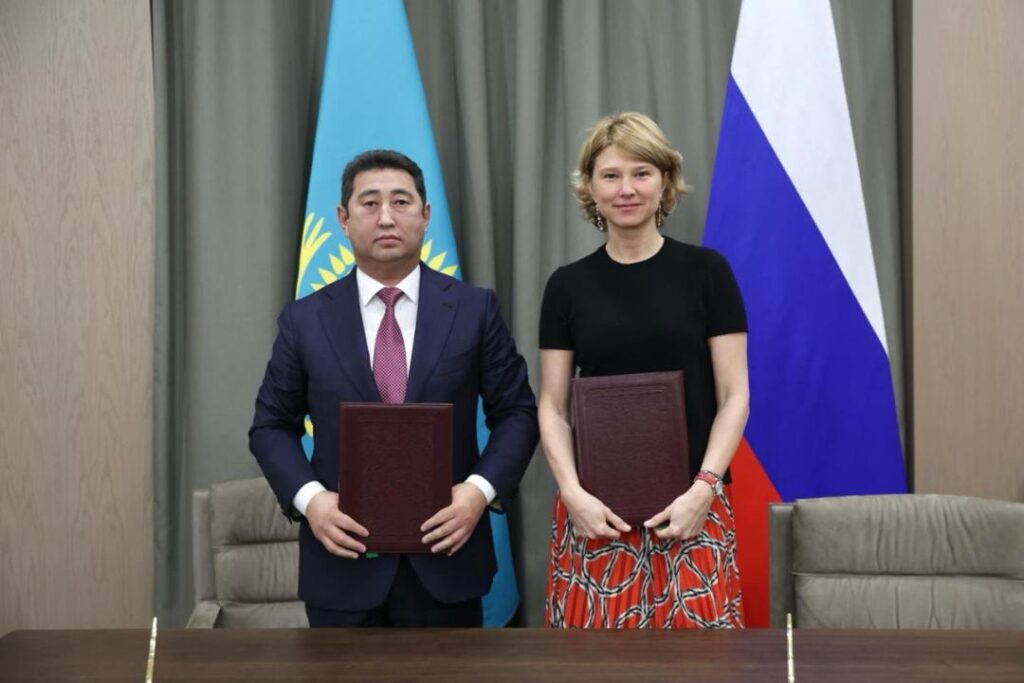
Kazakhstan is seeking to expand its agricultural exports to Russia as part of efforts to strengthen bilateral trade ties. On January 21, Minister of Agriculture Aidarbek Saparov met with his Russian counterpart Oksana Lut in Moscow to discuss lifting restrictions on the import and transit of agricultural products. Trade turnover in agricultural goods between the two countries reached $3.4 billion from January to November 2024, marking a 4.3% increase compared to the same period in the previous year. According to Saparov, Russia remains Kazakhstan's largest trading partner in the agricultural sector. Over the first 11 months of 2024, Kazakhstan’s agricultural exports to Russia totaled $502.9 million. “Kazakhstan is interested in increasing the presence of its agricultural products on the Russian market,” Saparov said. In recent months, both countries have made progress in easing trade restrictions. Kazakhstan has lifted all restrictions on Russian agricultural products, while Russia this month removed temporary bans on tomato imports from 36 Kazakh enterprises. Discussions are ongoing to further relax restrictions on the import and transit of Kazakh livestock and plant products. The Moscow meeting concluded with the signing of an action plan to enhance Russian-Kazakh agro-industrial cooperation. Key elements of the plan include: Preparing a joint project to establish an agrobiotechnopark. Creating a favorable framework for mutual food supplies. Finalizing the integration of veterinary and phytosanitary control information systems. These measures are expected to strengthen agricultural trade between the two countries and support the development of new joint projects in the agro-industrial sector.