• KGS/USD = 0.01144 0%
  • KZT/USD = 0.00215 0%
  • TJS/USD = 0.10641 0%
  • UZS/USD = 0.00008 0%
  • TMT/USD = 0.28530 0%
  • KGS/USD = 0.01144 0%
  • KZT/USD = 0.00215 0%
  • TJS/USD = 0.10641 0%
  • UZS/USD = 0.00008 0%
  • TMT/USD = 0.28530 0%
  • KGS/USD = 0.01144 0%
  • KZT/USD = 0.00215 0%
  • TJS/USD = 0.10641 0%
  • UZS/USD = 0.00008 0%
  • TMT/USD = 0.28530 0%
  • KGS/USD = 0.01144 0%
  • KZT/USD = 0.00215 0%
  • TJS/USD = 0.10641 0%
  • UZS/USD = 0.00008 0%
  • TMT/USD = 0.28530 0%
  • KGS/USD = 0.01144 0%
  • KZT/USD = 0.00215 0%
  • TJS/USD = 0.10641 0%
  • UZS/USD = 0.00008 0%
  • TMT/USD = 0.28530 0%
  • KGS/USD = 0.01144 0%
  • KZT/USD = 0.00215 0%
  • TJS/USD = 0.10641 0%
  • UZS/USD = 0.00008 0%
  • TMT/USD = 0.28530 0%
  • KGS/USD = 0.01144 0%
  • KZT/USD = 0.00215 0%
  • TJS/USD = 0.10641 0%
  • UZS/USD = 0.00008 0%
  • TMT/USD = 0.28530 0%
  • KGS/USD = 0.01144 0%
  • KZT/USD = 0.00215 0%
  • TJS/USD = 0.10641 0%
  • UZS/USD = 0.00008 0%
  • TMT/USD = 0.28530 0%

Viewing results 1 - 6 of 23

Regional Ecological Summit in Astana Produces Ecology Declaration and Broader Regional Agenda

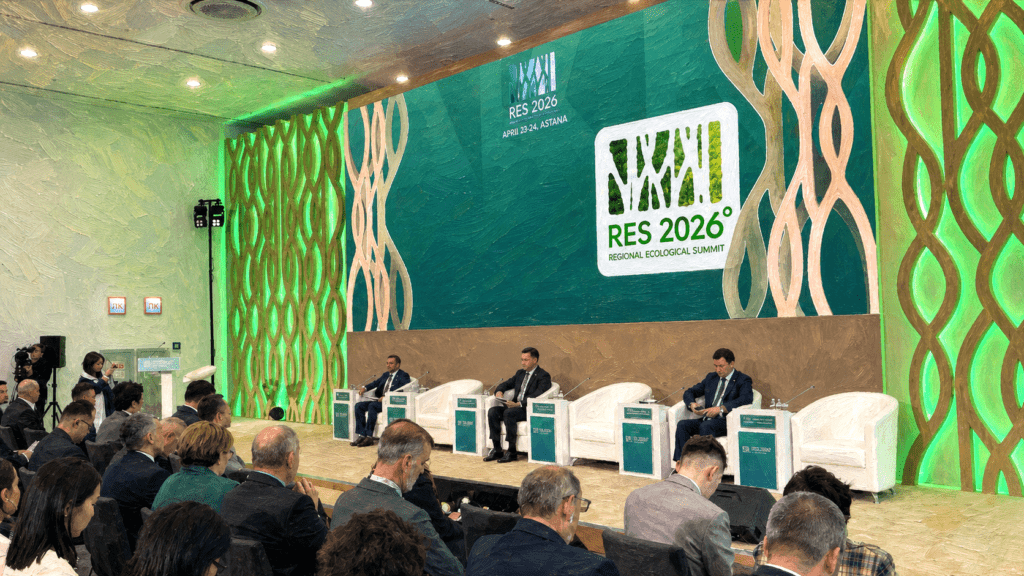
Central Asian leaders have adopted the Astana declaration on ecology and sustainable development, giving the Regional Ecological Summit in Astana a formal political outcome while a wider package of biodiversity, climate, and pollution initiatives takes shape around it. Kazakhstan’s environment ministry says the five heads of state adopted the document, titled “Ecological Solidarity of Central Asia,” during the April 22 to 24 Summit. The declaration sets out a common regional position on several of Central Asia’s biggest environmental pressures. According to the ministry summary, the text calls for closer coordination in climate negotiations, glacier preservation, the mountain agenda, biodiversity, chemical and waste management, plastic pollution, air quality, land degradation, and desertification. It also presents the declaration as a contribution to ecological sustainability, inclusive economic growth, and a sustainable future for the region. Water runs through the document, but the language is careful. The declaration welcomes work on an interstate program to conserve the Caspian Sea and expresses concern about declining water levels and the shallowing of lakes in Central Asia. It also notes Kazakhstan’s proposal for a possible International Water Organization within the United Nations system, but stops short of endorsing its creation. The summit’s outcome does not rest on a single document. On April 24, the United Nations Environment Programme said the Astana meeting had launched new regional partnerships on circular economy and glaciers, while countries established common approaches on biodiversity, climate action, and air pollution. UNEP also said a regional climate and ecology investment portfolio was set up to widen access to international finance for environmental projects. A separate biodiversity track had already produced its own result earlier in the week. On April 22, UNDP in Kazakhstan said Central Asian countries had signed a regional declaration on biodiversity conservation during a high-level plenary session in Astana. According to UNDP, the document envisages an umbrella programme and action plan, as well as a regional resource mobilization plan to be presented at COP17 in Armenia. Outside confirmation of the main declaration has also become clearer. EFE reported on April 22 that the five Central Asian republics had approved the Astana Declaration of Ecological Solidarity, linking it to Tokayev’s focus on water security, the Aral Sea, and the Caspian. Put together, the Astana summit now looks like a broader regional attempt to turn shared ecological pressure into a workable political agenda. The summit’s next test will be whether these declarations and partnerships are followed by funding, coordination, and cross-border implementation.

Armenian President Delivers Speech at Astana Summit, Emphasizing Climate Action and Biodiversity

Astana, Kazakhstan – Armenian President Vahagn Khachaturyan addressed the Regional Ecological Summit (RES 2026) today, speaking about the urgent challenges of climate change, biodiversity loss, and the need for strengthened international cooperation. The summit, themed “Shared Vision for a Resilient Future,” opened its sessions on Earth Day under the patronage of Kazakh President Kassym-Jomart Tokayev. In his remarks, President Khachaturyan expressed deep gratitude to his Kazakh counterpart, the government, and the people of Kazakhstan for their warm hospitality and the excellent organization of this important event. “It is an honor to address the Regional Ecological Summit in Astana,” he stated. He praised Kazakhstan’s leadership in advancing global and regional cooperation on climate change and environmental protection, describing the event as an important platform for dialogue bringing together governments, the scientific community, civil society, and international partners. [caption id="attachment_47661" align="alignnone" width="300"] President Vahagn Khachaturyan gives address at the Regional Ecological Summit in Astana; Image: TCA[/caption] Highlighting Armenia’s unique vulnerabilities, the President noted that, as a landlocked, developing, and mountainous nation, Armenia is already experiencing severe effects of climate change despite contributing just 0.02% of global greenhouse gas emissions. “Over the past decades, the average temperature in the country has increased by more than one degree Celsius and is projected to continue rising by mid-century,” he said. These changes have triggered more frequent extreme weather events, including floods and droughts, leading to significant ecological losses, declining precipitation, glacier retreat, and growing water scarcity — particularly affecting rural communities and mountain ecosystems. President Khachaturyan welcomed Kazakhstan’s initiative to convene international consultations on strengthening cooperation for effective water resource management and said Armenia will actively participate. On the climate front, he reaffirmed Armenia’s ambitious nationally determined contributions (NDCs): a 44% reduction in greenhouse gas emissions by 2035 compared to 1990 levels through domestic measures, rising to 52% with international support. “Armenia undertakes these commitments with full awareness of its national capacity and the importance of international cooperation,” he emphasized, citing the principles of equity and common but differentiated responsibilities. Turning to biodiversity, the President stressed that rising temperatures are a major driver of biodiversity loss, with profound consequences for ecosystems, human health, food security, and economies worldwide. He announced that Armenia will host the 17th Conference of the Parties (COP17) to the Convention on Biological Diversity in Yerevan in October later this year. “These efforts reflect our small country’s strong commitment to promote global nature conservation,” Khachaturyan declared, inviting all participants to join the landmark gathering “to review our progress and identify ways to accelerate efforts to restore and protect the environment for present and future generations.” The Armenian President concluded by underscoring the critical role of international cooperation, including the mobilization of financial resources, sharing of expertise, and the transfer of technology. “Armenia stands ready to cooperate with regional and international partners, to share our experience and to learn from others,” he said. “Together, we can protect our planet Earth, ensure long-term resilience and well-being for our societies.” President Khachaturyan’s address highlights Armenia’s...

Astana Ecological Summit Turns Regional Climate Pressure Into a Call for Joint Action

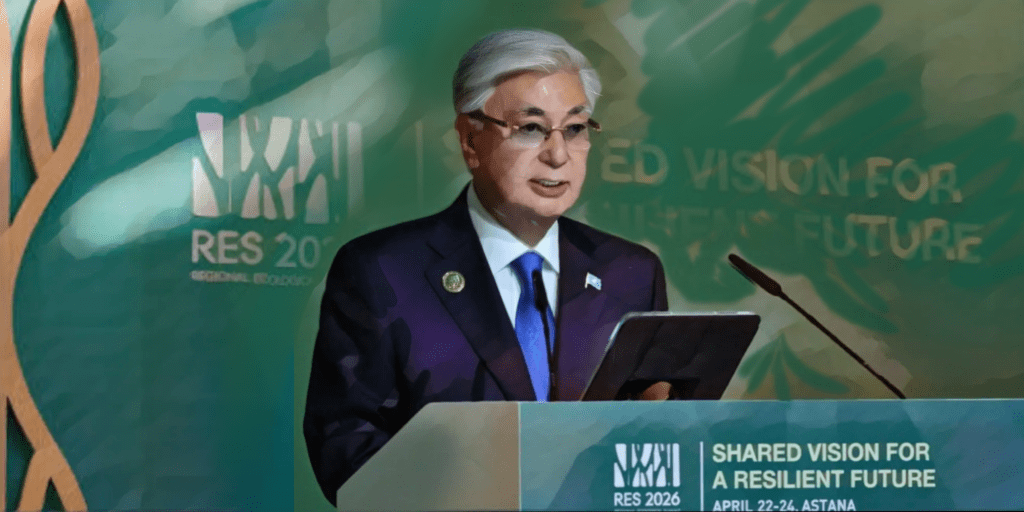
On April 22, 2026, leaders from Central Asia and neighboring states opened the Regional Ecological Summit 2026 in Astana on Earth Day with an urgent and practical message: the region’s environmental crisis is no longer a future risk, but a present constraint on water, food, energy, and economic security. The summit, held under the theme “A Shared Vision for a Sustainable Future,” was organized by Kazakhstan with the United Nations and international partners. Its stated purpose is to develop policy tools for protecting, restoring, and jointly using ecosystems, water and land resources, and conserving biodiversity in Central Asia. The program includes 58 events, consultations on a possible International Water Organization within the UN system, and expected documents, including a Central Asian declaration on environmental solidarity and a 2026–2030 regional action program. [caption id="attachment_47607" align="aligncenter" width="775"] President Tokayev gives his keynote address at the Regional Ecological Summit in Astana; Image: TCA[/caption] Opening the plenary, Kazakhstan’s President Kassym-Jomart Tokayev argued that environmental policy must not become another dividing line in global politics. He called for a fair and balanced green transition, especially for developing economies, and warned that Central Asia’s shared rivers, landscapes, and climate risks demand shared responsibility. Tokayev singled out water scarcity, desertification, glacier melt, air pollution and biodiversity loss as the region’s core challenges. He also highlighted Kazakhstan’s plans to expand renewable energy, protect the Caspian Sea, restore the Northern Aral, and start consultations on a proposed International Water Organization. [video width="720" height="1280" mp4="https://timesca.com/wp-content/uploads/2026/04/no-comments-Reels.mp4"][/video] The water question dominated the speeches. President Sadyr Japarov said that Kyrgyzstan bears a disproportionate burden despite its small contribution to global emissions. He pointed to a sharp increase in mudflows and floods, shrinking glaciers, and the fact that most water formed in Kyrgyzstan flows to neighboring states. His proposal was blunt: downstream users should help co-finance the water infrastructure and ecosystem services that upstream countries maintain. Uzbekistan's President Shavkat Mirziyoyev turned the summit into a platform for concrete regional initiatives. In his official speech, he said that Central Asia is warming twice as fast as the global average, has already lost nearly a third of its glaciers, and faces land degradation across 80 million hectares. He proposed a Clean Air consortium, a regional desertification and drought center, a green trade corridor, a unified climate-investment portfolio, an environmental atlas and a Central Asian Red Book. Tajikistan’s President Emomali Rahmon brought the glacier crisis into sharp relief. Tajikistan supplies much of Central Asia’s water, but its glaciers are retreating, threatening water balance and increasing disaster risks. Rahmon linked the environmental agenda to hydropower, green finance, biodiversity protection, and water diplomacy, and invited partners to continue the discussion at a high-level water conference in Dushanbe. Turkmenistan's President Serdar Berdimuhamedov backed a stronger institutional approach, proposing a UN-supported regional council on water use to align national policies and manage transboundary resources more transparently. He also announced a high-level Caspian Sea ecology meeting in Turkmenistan for October 2026. Heads of state from beyond Central Asia widened the frame. Armenia’s...

Kazakhstan Plans to Expand Nature Reserves by Two Million Hectares by 2035

Kazakhstan plans to significantly expand its system of specially protected natural areas (SPNAs) over the next decade. Under a new state strategy, the country aims to increase the area of nature reserves and national parks by 2 million hectares by 2035 and expand its forest fund by 0.8 million hectares. The targets are outlined in the Concept for the Conservation and Sustainable Use of Biological Diversity for 2026-2035, which defines key environmental policy priorities and long-term measures to protect natural resources. The first priority of the concept is the development of a unified ecological network and the expansion of the system of specially protected natural areas. According to the Ministry of Ecology and Natural Resources, creating and expanding such areas is one of the most effective tools for preserving biodiversity and is widely used internationally. By 2035, the area of specially protected natural areas in Kazakhstan is expected to increase from the current 31 million hectares to 33.2 million hectares. The second priority focuses on improving forest protection and developing sustainable forest management. The government plans to increase the country’s forest area to 14.7 million hectares, up from the current 13.9 million hectares, while ensuring more rational use of timber resources. The third area of the concept concerns improving systems for monitoring and protecting wildlife. The fourth set of measures focuses on protecting fish species and natural fish resources. Authorities plan to strengthen ecosystem monitoring and expand scientific research into risk factors affecting aquatic biological resources. The fifth and sixth areas address the conservation of plant life and the problem of pasture degradation, one of the country’s most significant environmental challenges. The concept was developed through interagency cooperation with the participation of international partners. In particular, the United Nations Development Programme in Kazakhstan provided support through a project funded by the Global Environment Facility. The Ministry of Ecology says the strategy should strengthen Kazakhstan’s role as one of Central Asia’s regional leaders in nature conservation and create a foundation for new international environmental partnerships. Earlier, it was reported that Kazakhstan is also considering the possibility of limited and strictly regulated exports of saiga horns from the rare steppe antelope whose population has increased hundreds of times over the past two decades.

Kazakhstan to Host International Genetic Resources Bank

Kazakhstan will host an international genetic resources bank following unanimous approval from the 57 member states of the Organization of Islamic Cooperation (OIC). The initiative, spearheaded by the Islamic Organization for Food Security (IOFS), aims to preserve the biological diversity of agricultural crops and foster scientific collaboration among OIC countries. “One of the key initiatives we plan to implement in Kazakhstan is the creation of a Genetic Resources Bank, or an international genetic bank. Its goal is to preserve the biological diversity of agricultural crops,” said Berik Aryn, Director General of the IOFS, speaking at a roundtable in Astana marking OIC Food Security Day. According to Aryn, the government of Kazakhstan has already expressed its readiness to host the facility, and a project roadmap has been completed. The Qatar Fund for Development (QFFD) has pledged approximately $2 million to finance the first phase. “We expect to begin practical implementation of the project next year and complete the creation of the bank by 2029,” Aryn said. He cited the Svalbard Global Seed Vault in Norway as a comparable model but noted that the Kazakh bank would offer broader functionality. The project will eventually include a research center focused on crop breeding and the development of varieties resistant to climate change, drought, and other environmental stresses. “We want this gene bank to eventually become a full-fledged research center where scientists from OIC countries can work on creating new crop varieties that are resistant to climate change, drought, and other adverse factors, as well as on increasing yields,” Aryn added. The specific location is still under consideration, though the Almaty region is currently the most likely candidate due to its favorable climatic conditions. “Genetic material varies: some samples can be stored for decades, while others require regular updating and cultivation on site. In terms of climatic conditions, the Almaty region is the optimal region,” Aryn noted. In parallel with the gene bank initiative, IOFS is also advancing projects across Central Asia that promote the use of biochar to rehabilitate degraded soils. Biochar, a carbon-rich substance produced via pyrolysis of biomass, enhances soil fertility, improves water retention, and acts as a sorbent by absorbing harmful substances. “Biochar is a technology that is already widely used around the world, including in Arab and Asian countries. It is particularly relevant for Central Asia, as the region's soils are often salinated. Biochar is capable of absorbing salt and significantly improving soil structure, creating favorable conditions for agriculture for decades,” said IOFS Project Manager Bakytzhan Arystanbek. As previously reported by the Times of Central Asia, Kazakhstan launched its first agroclimatic testing site for carbon technologies, Kaz Agro Carbon, in early November.

Kazakhstan Leads Regional Efforts to Save the Caspian Sea

Today, Central Asia and the Caspian littoral states face growing challenges that extend well beyond national borders. Climate change, water scarcity, land degradation, and the shrinking of the Caspian Sea are no longer only environmental concerns but matters of regional security and sustainable development. The Caspian Sea, the world’s largest inland body of water, has become a symbol of crisis. Its rapid decline threatens ecosystems, navigation, fisheries, and food security from the Caucasus to Central Asia. Dushanbe: ecology as a new agenda for regional security A week ago, Dushanbe hosted two major international events: the “Central Asia–Russia” Summit and the meeting of the CIS Heads of State Council. At both forums, President Kassym-Jomart Tokayev called for moving from declarations to concrete action, proposing to Establish a Council of Ministers for Ecology among the Central Asian countries and Russia Develop an Interstate Program for the preservation of the Caspian Sea’s water resources Expand the use of space technologies to monitor transboundary water bodies These initiatives are part of a broader effort to build a new environmental framework for Eurasia, positioning Central Asia as a laboratory for sustainable solutions rather than a zone of ecological risk. The environmental disaster of the Caspian Sea The Caspian Sea is shrinking rapidly. According to data from Kazakhstan’s Ministry of Ecology, since 2006 its surface area has decreased by more than 31,000 square kilometers, and water levels have fallen by about 1.5 to 2 meters. Projections indicate severe consequences for spawning grounds, the Caspian seal population, port infrastructure, and the regional economy. The crisis mirrors the Aral Sea disaster, where environmental degradation caused widespread illness and social disruption. Experts warn that toxic dust from the exposed seabed could lead to respiratory diseases among millions of people. According to estimates by Save the Caspian Sea, the shoreline could retreat by as much as 89 kilometers, pushing fishing communities to the edge of survival. Falling sea levels already threaten unique wildlife, navigation, water supply, and agriculture, creating risks of migration and conflict. Because the Caspian is landlocked and not connected to the world’s oceans, its water losses cannot be naturally replenished. A coordinated response is needed, including sustainable water management, pollution control, and climate adaptation. The Caspian Sea as a crossroads of interests and contradictions The Caspian region today is more than an ecosystem; it is a geopolitical nexus where the interests of coastal states and global powers converge. Key transport routes such as the North–South Corridor and the Middle Corridor meet here, linking the economic, energy, and political interests of Russia, Iran, Turkey, China, and the European Union. The United States has also shown growing interest, particularly through its support for infrastructure projects in the South Caucasus and initiatives related to the Zangezur Corridor. Yet logistics, energy, and trade risk losing their purpose if the region’s natural foundation disappears. An ecological collapse could undermine multibillion-dollar investments, threaten food security, and turn the Caspian from a zone of cooperation into a battleground over resources. That is why saving...