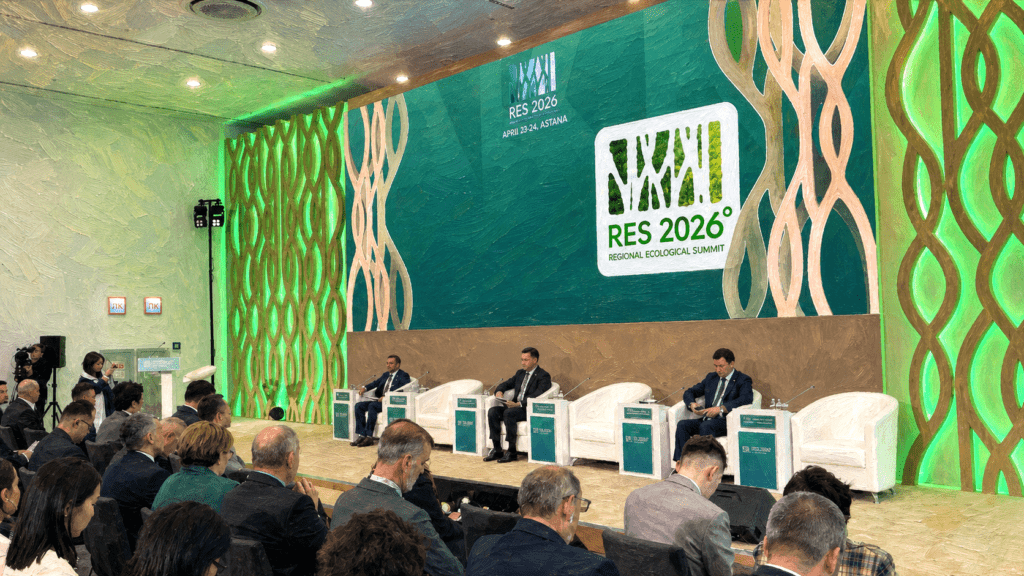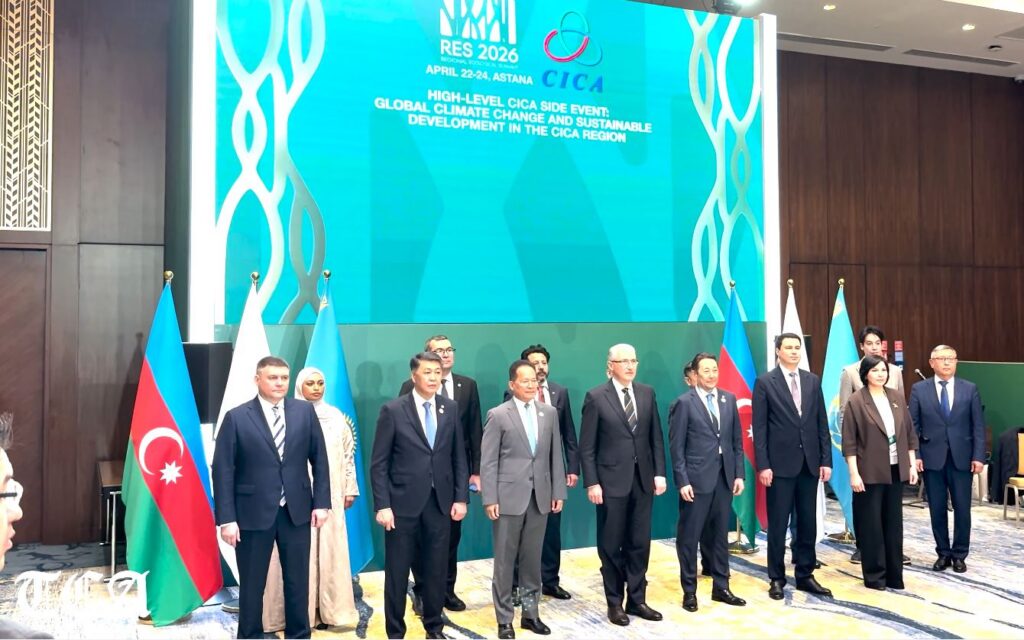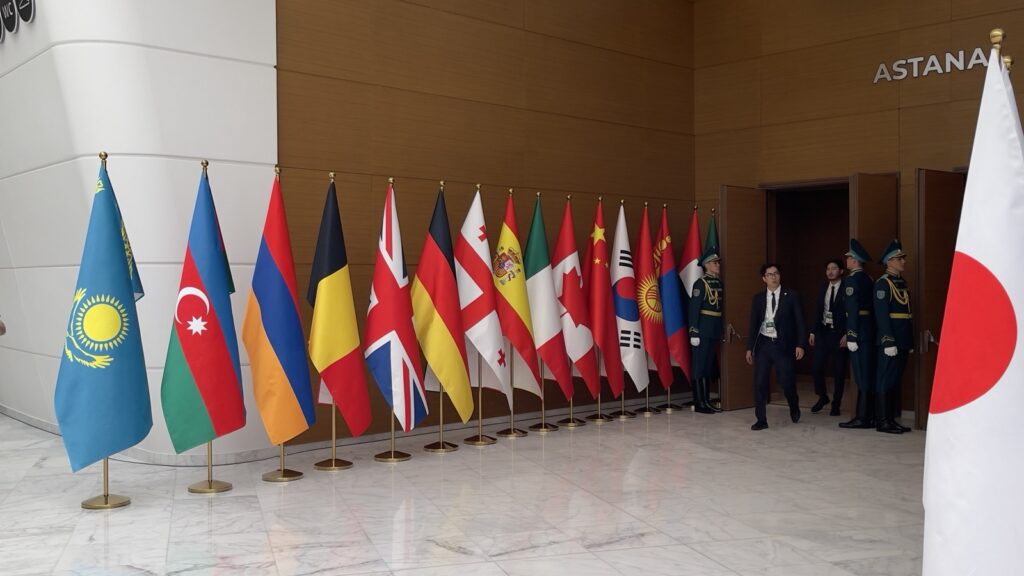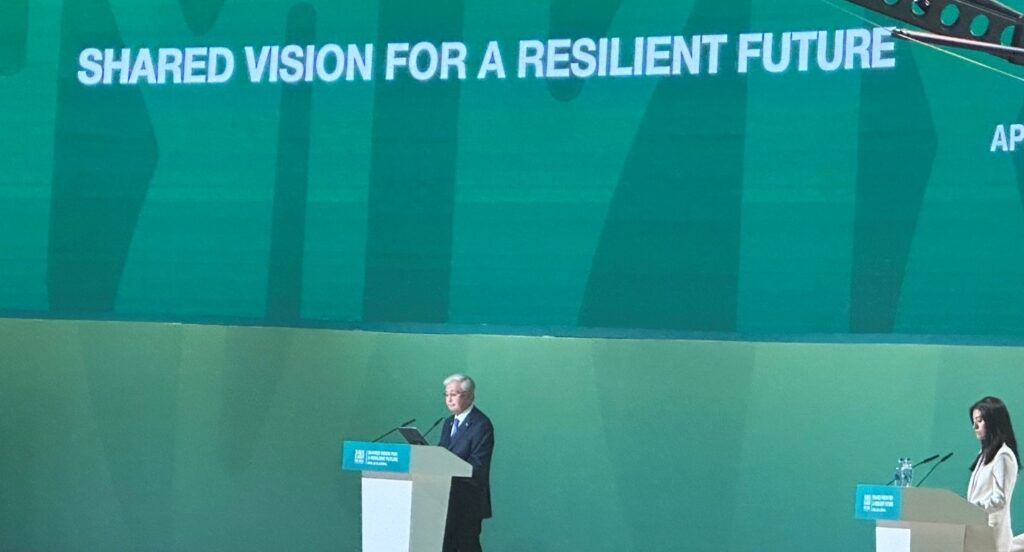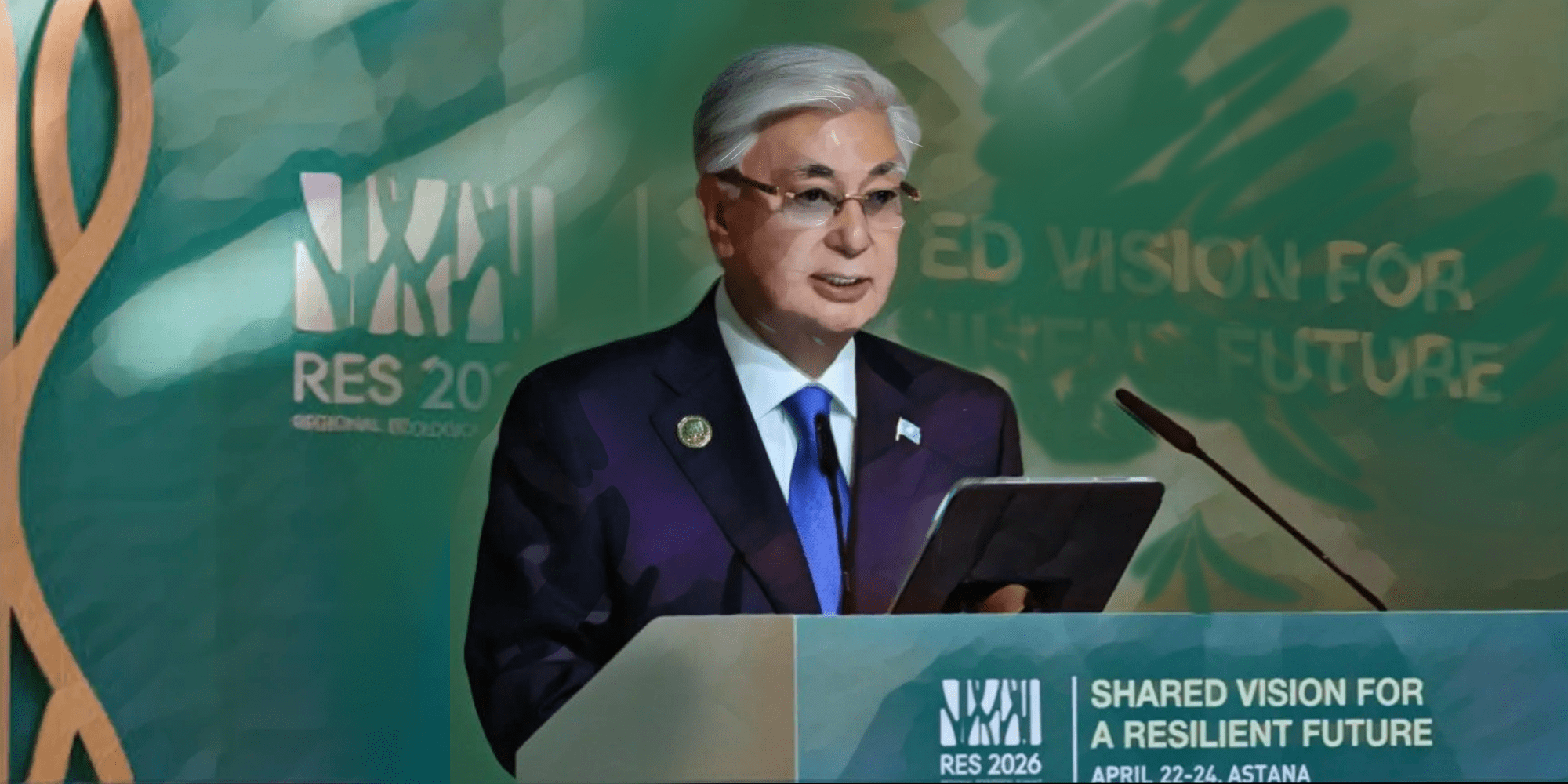
On April 22, 2026, leaders from Central Asia and neighboring states opened the Regional Ecological Summit 2026 in Astana on Earth Day with an urgent and practical message: the region’s environmental crisis is no longer a future risk, but a present constraint on water, food, energy, and economic security.
The summit, held under the theme “A Shared Vision for a Sustainable Future,” was organized by Kazakhstan with the United Nations and international partners. Its stated purpose is to develop policy tools for protecting, restoring, and jointly using ecosystems, water and land resources, and conserving biodiversity in Central Asia. The program includes 58 events, consultations on a possible International Water Organization within the UN system, and expected documents, including a Central Asian declaration on environmental solidarity and a 2026–2030 regional action program.
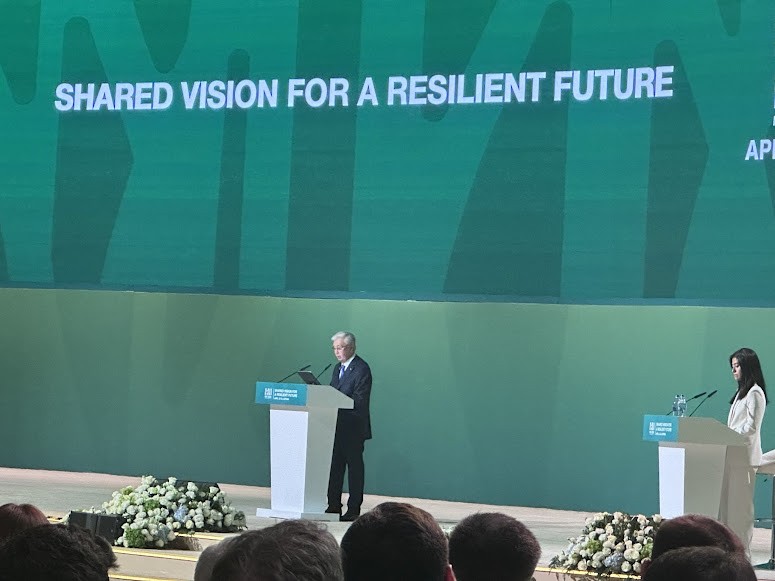
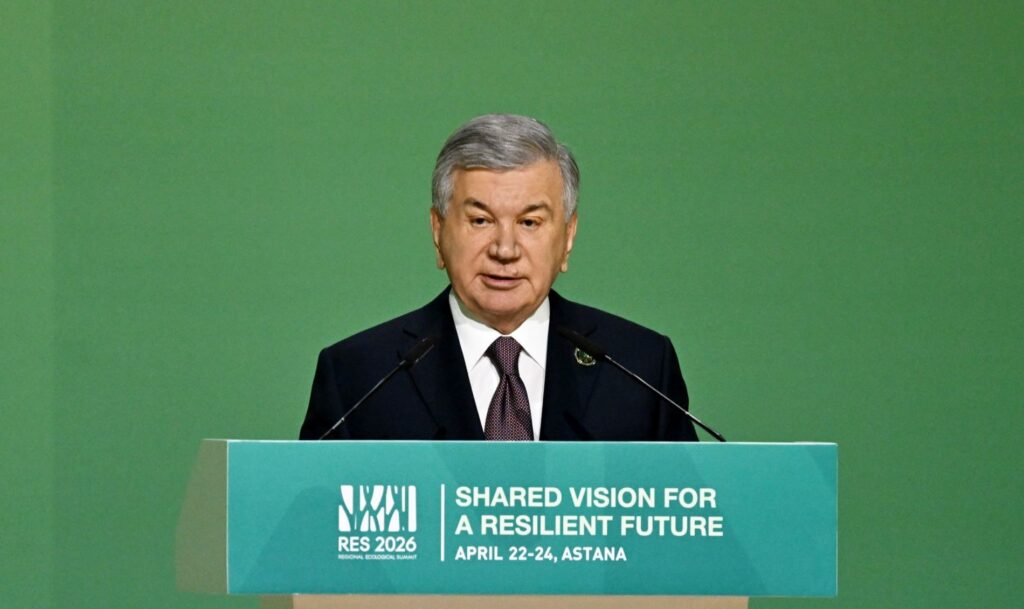
President Tokayev gives his keynote address at the Regional Ecological Summit in Astana; Image: TCA
Opening the plenary, Kazakhstan’s President Kassym-Jomart Tokayev argued that environmental policy must not become another dividing line in global politics. He called for a fair and balanced green transition, especially for developing economies, and warned that Central Asia’s shared rivers, landscapes, and climate risks demand shared responsibility. Tokayev singled out water scarcity, desertification, glacier melt, air pollution and biodiversity loss as the region’s core challenges. He also highlighted Kazakhstan’s plans to expand renewable energy, protect the Caspian Sea, restore the Northern Aral, and start consultations on a proposed International Water Organization.
The water question dominated the speeches. President Sadyr Japarov said that Kyrgyzstan bears a disproportionate burden despite its small contribution to global emissions. He pointed to a sharp increase in mudflows and floods, shrinking glaciers, and the fact that most water formed in Kyrgyzstan flows to neighboring states. His proposal was blunt: downstream users should help co-finance the water infrastructure and ecosystem services that upstream countries maintain.
Uzbekistan’s President Shavkat Mirziyoyev turned the summit into a platform for concrete regional initiatives. In his official speech, he said that Central Asia is warming twice as fast as the global average, has already lost nearly a third of its glaciers, and faces land degradation across 80 million hectares. He proposed a Clean Air consortium, a regional desertification and drought center, a green trade corridor, a unified climate-investment portfolio, an environmental atlas and a Central Asian Red Book.
Tajikistan’s President Emomali Rahmon brought the glacier crisis into sharp relief. Tajikistan supplies much of Central Asia’s water, but its glaciers are retreating, threatening water balance and increasing disaster risks. Rahmon linked the environmental agenda to hydropower, green finance, biodiversity protection, and water diplomacy, and invited partners to continue the discussion at a high-level water conference in Dushanbe.
Turkmenistan’s President Serdar Berdimuhamedov backed a stronger institutional approach, proposing a UN-supported regional council on water use to align national policies and manage transboundary resources more transparently. He also announced a high-level Caspian Sea ecology meeting in Turkmenistan for October 2026.
Heads of state from beyond Central Asia widened the frame. Armenia’s President Vahagn Khachaturyan stressed climate impacts on agriculture, ecosystems and water security, while calling for finance, science and technology to support emissions reductions and biodiversity protection. Mongolia’s President Ukhnaagiin Khürelsükh focused on fragile mountain ecosystems, desertification, and future water shortages. Georgia’s President Mikheil Kavelashvili said environmental protection now directly affects national economies and citizens’ daily lives, making green governance and inclusive growth strategic priorities. Azerbaijan’s Prime Minister Ali Asadov added that water security is now a priority on the international agenda, backing Kazakhstan’s proposed UN-supported international water organization and pointing to cooperation among Caspian states on the sea’s declining water level.
The summit’s significance lies less in any single speech than in the convergence of themes: water must be governed jointly; climate finance must reach vulnerable states; and environmental cooperation needs institutions, not just declarations. In Astana, ecological diplomacy became regional statecraft.