Tokayev Praises Trump’s ‘Common-Sense’ Governance, Backs U.S.-Led Peace Initiatives
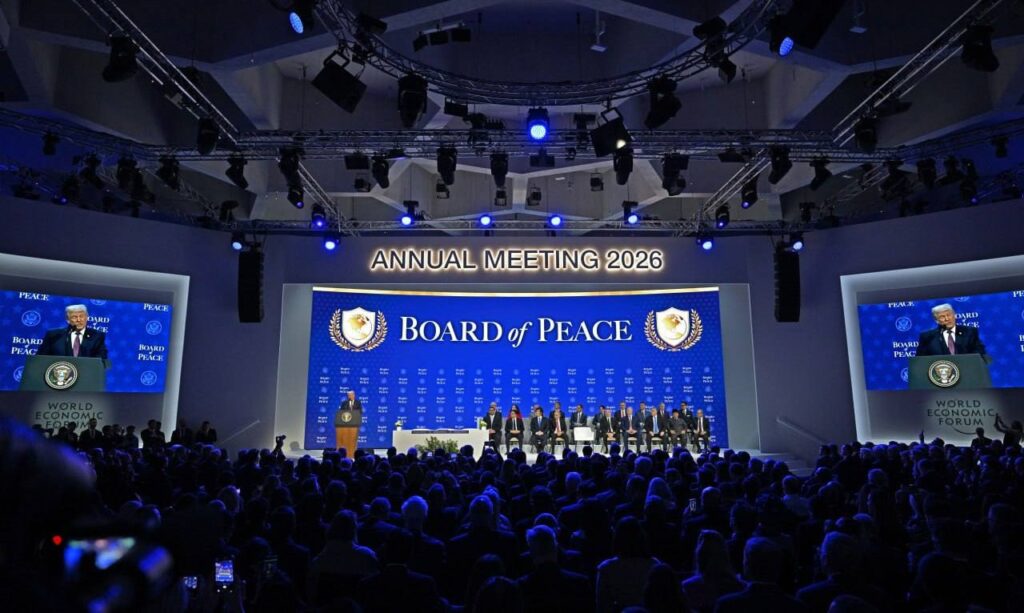
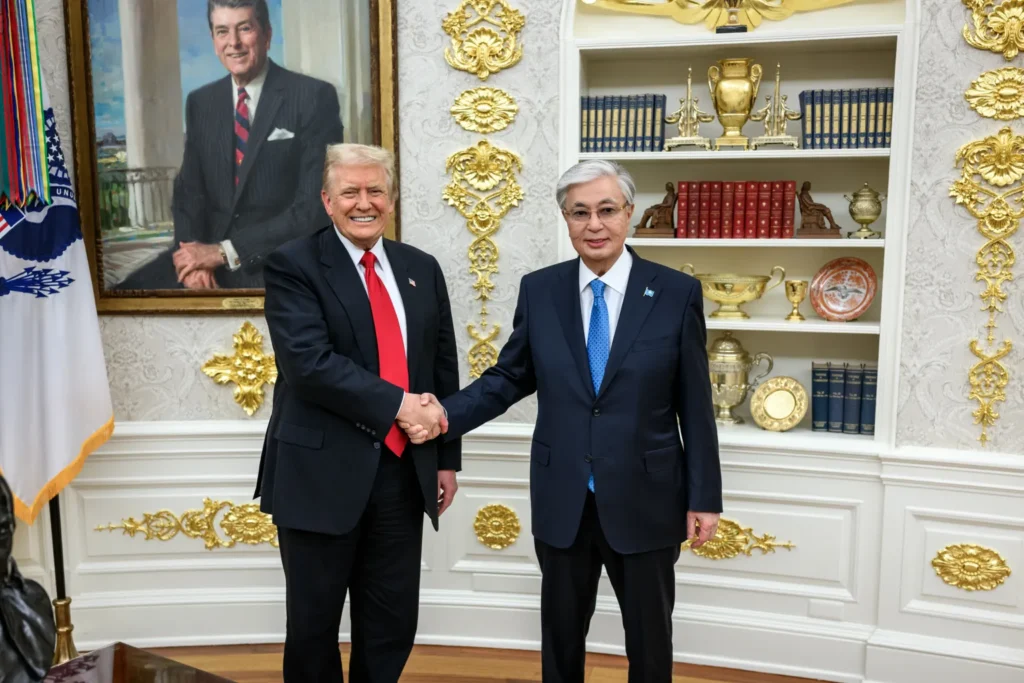
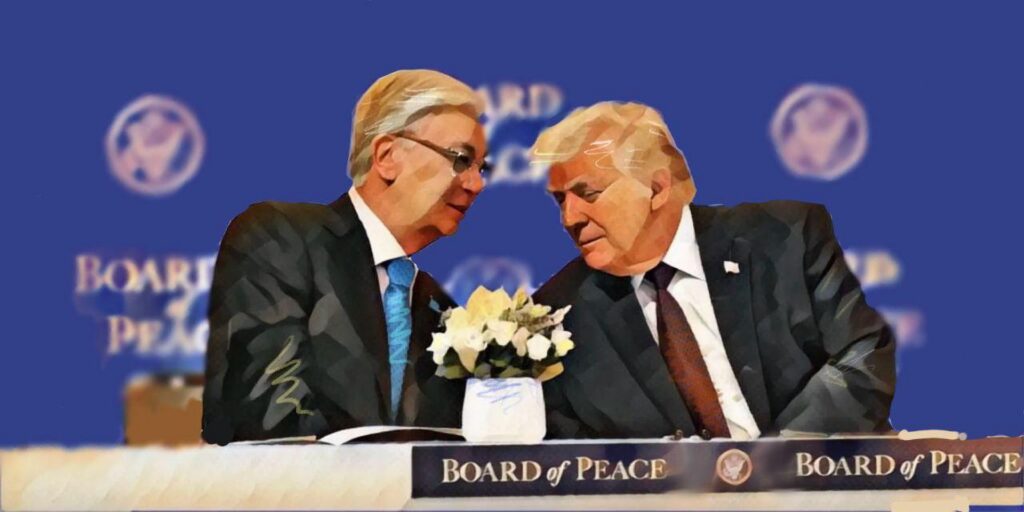
Kazakhstan’s President Kassym-Jomart Tokayev has offered rare and explicit praise for the domestic and foreign policies of U.S. President Donald Trump, describing him as a strong leader whose governance model prioritizes national interests, law and order, and pragmatic diplomacy. In an exclusive interview with The News International during his visit to Islamabad, President Tokayev described President Trump’s leadership as “forward-looking,” pointing to what he characterized as strong economic performance and ongoing transformative reforms in the social sphere in the United States. “President Trump is a strong and forward-looking leader who puts the national interests of his country first,” Tokayev said, pointing to what he described as strong economic performance and transformative reforms in the social sphere. He added that Trump’s emphasis on law and order resonated with Kazakhstan’s own governance philosophy, which prioritizes compliance with the law and respect for state institutions. Tokayev said that in an increasingly complex global environment, governments must ensure internal stability by enforcing the rule of law. “All citizens must comply with the law and respect law-enforcement agencies while avoiding any obstruction,” he noted, drawing a direct parallel between Washington’s and Astana’s domestic policy approaches. Support for the Abraham Accords The Kazakh president also defended his country’s decision to join the Abraham Accords, an initiative launched during Trump’s presidency to normalize relations between Israel and several Muslim-majority countries. Describing the accords as “a truly forward-looking initiative,” Tokayev said Kazakhstan’s participation reflects its long-standing commitment to peace, stability, and international dialogue. He stressed that diplomacy remains the most effective instrument for resolving conflicts and fostering long-term regional and global stability. While reaffirming Kazakhstan’s strong relations with Israel, Tokayev underscored that Astana continues to support the Palestinian people and advocates a two-state solution. From a national interest perspective, he said, joining the Abraham Accords creates opportunities to attract foreign investment, advanced technologies, and concrete economic benefits. He also expressed hope that Kazakhstan’s accession would help broaden Arab–Jewish rapprochement into a wider Muslim–Judaic dialogue. Board of Peace and the UN Framework Addressing criticism surrounding the newly established Board of Peace, which he co-founded with Pakistan’s prime minister, amongst others, Tokayev rejected claims that the initiative seeks to undermine the United Nations. He said President Trump had personally emphasized that the Board of Peace is designed to complement, not replace, the United Nations, which he acknowledged is currently facing institutional strain. Tokayev highlighted that the initiative implements United Nations Security Council Resolution 2803, reinforcing the principle that peace efforts must combine international legitimacy with effective leadership. According to Tokayev, the Board of Peace aims to deliver swift and practical outcomes through flexible mechanisms for conflict resolution, positioning it as a pragmatic addition to existing global peace architectures. Gaza and the Limits of Diplomacy On the prospects for peace in Gaza, Tokayev offered cautious realism. He said proposals put forward by U.S. Special Envoy Steve Witkoff and senior adviser Jared Kushner appeared ambitious, structured, and grounded in development-oriented thinking. However, he warned that no plan can succeed without genuine political...