• KGS/USD = 0.01144 0%
  • KZT/USD = 0.00217 0%
  • TJS/USD = 0.10456 0%
  • UZS/USD = 0.00008 0%
  • TMT/USD = 0.28571 0%
  • KGS/USD = 0.01144 0%
  • KZT/USD = 0.00217 0%
  • TJS/USD = 0.10456 0%
  • UZS/USD = 0.00008 0%
  • TMT/USD = 0.28571 0%
  • KGS/USD = 0.01144 0%
  • KZT/USD = 0.00217 0%
  • TJS/USD = 0.10456 0%
  • UZS/USD = 0.00008 0%
  • TMT/USD = 0.28571 0%
  • KGS/USD = 0.01144 0%
  • KZT/USD = 0.00217 0%
  • TJS/USD = 0.10456 0%
  • UZS/USD = 0.00008 0%
  • TMT/USD = 0.28571 0%
  • KGS/USD = 0.01144 0%
  • KZT/USD = 0.00217 0%
  • TJS/USD = 0.10456 0%
  • UZS/USD = 0.00008 0%
  • TMT/USD = 0.28571 0%
  • KGS/USD = 0.01144 0%
  • KZT/USD = 0.00217 0%
  • TJS/USD = 0.10456 0%
  • UZS/USD = 0.00008 0%
  • TMT/USD = 0.28571 0%
  • KGS/USD = 0.01144 0%
  • KZT/USD = 0.00217 0%
  • TJS/USD = 0.10456 0%
  • UZS/USD = 0.00008 0%
  • TMT/USD = 0.28571 0%
  • KGS/USD = 0.01144 0%
  • KZT/USD = 0.00217 0%
  • TJS/USD = 0.10456 0%
  • UZS/USD = 0.00008 0%
  • TMT/USD = 0.28571 0%

Viewing results 1 - 6 of 48

The Board of Peace and the Emerging C6 Regional Ecosystem

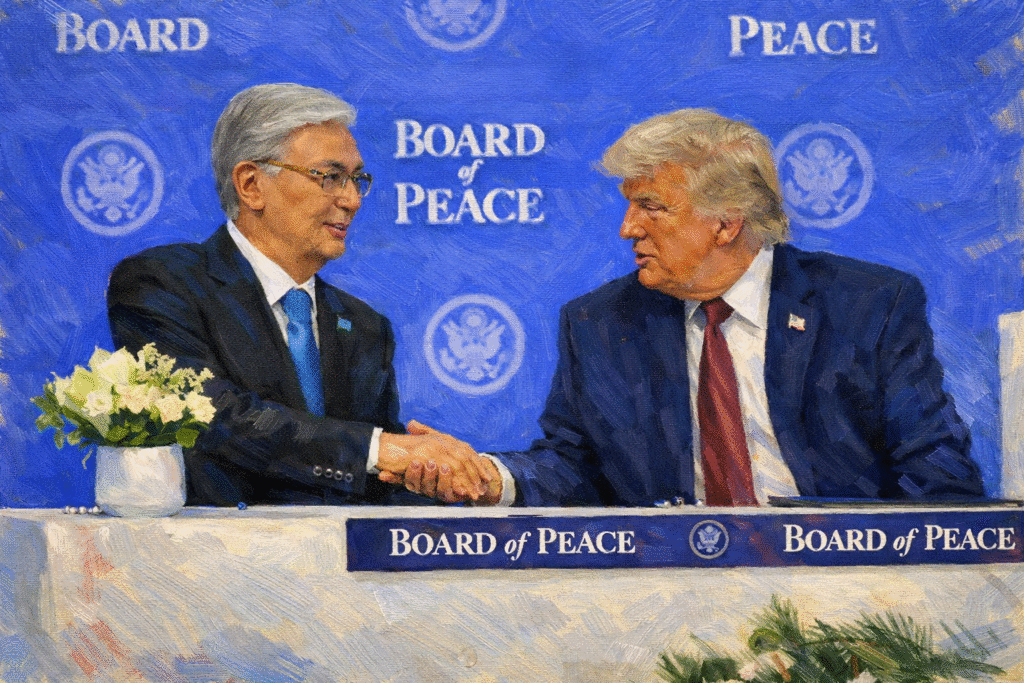
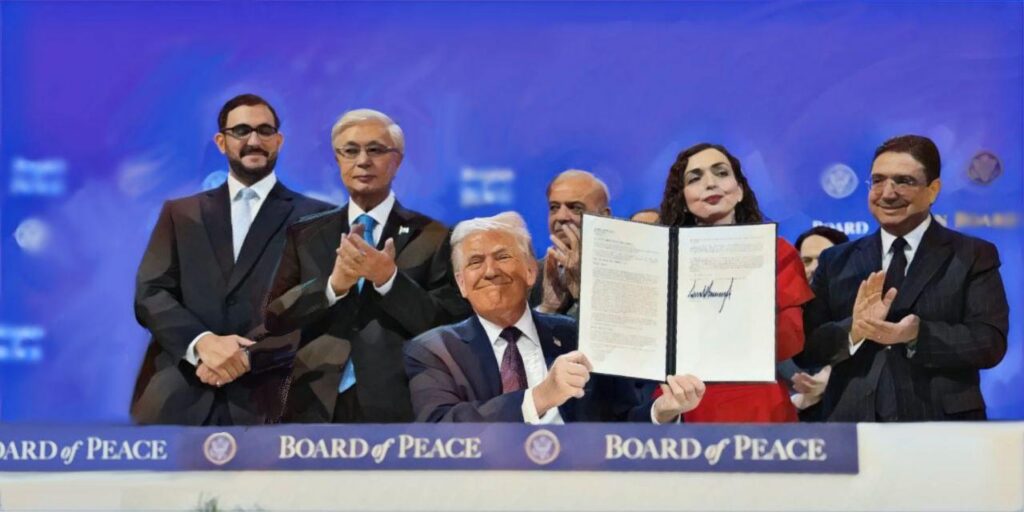
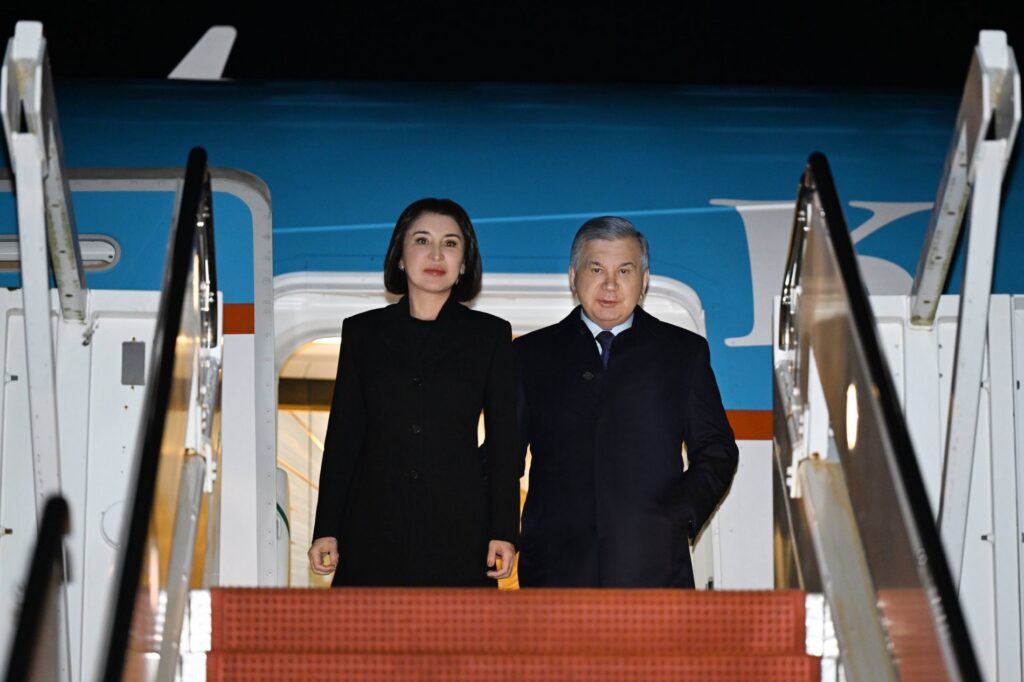
Washington is hosting the first summit of the Board of Peace, an initiative convened by U.S. President Donald Trump. Aircraft carrying leaders from several post-Soviet states have arrived at Joint Base Andrews. While Russia and Belarus have been invited - representation levels vary - the presidents of Kazakhstan, Uzbekistan, and Azerbaijan have traveled to the United States in person. Although each leader has a separate bilateral agenda, Kassym-Jomart Tokayev, Shavkat Mirziyoyev, and Ilham Aliyev share a broader objective: presenting a consolidated regional grouping, informally referred to as the C6, in which Kazakhstan is seen as playing a leading role. Tokayev, a career diplomat who previously served as a senior United Nations official, has developed a consistent approach to foreign visits, which typically includes a meeting with Kazakh citizens residing abroad, particularly students and young professionals, and the publication of an opinion piece in a leading outlet in the host country. During his current visit to the United States, he met members of the Kazakh diaspora and published an article in The National Interest outlining his vision for international stability. [caption id="attachment_44160" align="aligncenter" width="2560"] President Kassym-Jomart Tokayev meets with Kazakh citizens living and studying in the United States; image: Akorda.kz[/caption] According to Kazakh political analyst Andrei Chebotarev, the central theme of Tokayev’s article is the importance of stability amid intensifying geopolitical rivalry and growing international conflicts. Chebotarev emphasized Tokayev’s call for a pragmatic international order grounded in the rule of law, accountability, predictable commitments, and respect for national and cultural identities, arguing that ideologically driven frameworks have proven ineffective. Tokayev described the Board of Peace as “not just another forum for endless discussions,” but as a practical initiative aimed at delivering tangible outcomes, particularly in relation to the Gaza Strip and the broader Middle East. He characterized the White House’s approach as one that views peace “not as a slogan, but as a project” built around infrastructure, investment, employment, and long-term stability. “This initiative deserves respect and international attention,” Tokayev said. During his visit to the United States last November for the C5+1 summit, Tokayev held meetings with senior U.S. officials, including Commerce Secretary Howard Lutnick, as well as executives from major international corporations. A delegation led by Deputy Prime Minister and Minister of National Economy Serik Zhumangarin is also in Washington during the current visit. In addition to promoting investment and technology partnerships, the delegation engaged with members of Congress involved in efforts to repeal the Jackson-Vanik amendment, which continues to complicate trade relations between the United States and certain Central Asian countries. Mirziyoyev has pursued a similar agenda during his current visit, holding meetings with U.S. Commerce Secretary Howard Lutnick and U.S. Trade Representative Jamieson Greer. He also met representatives of American businesses and signed an agreement establishing a new investment platform. [caption id="attachment_44171" align="aligncenter" width="1280"] A set of bilateral agreements on priority areas of Uzbekistan-U.S. cooperation was signed; image: President.uz[/caption] Aliyev, for his part, met in Washington with the leadership of the American Israel Public Affairs Committee, including...

President Tokayev’s Washington Visit: Peace is Not a Bridge Too Far

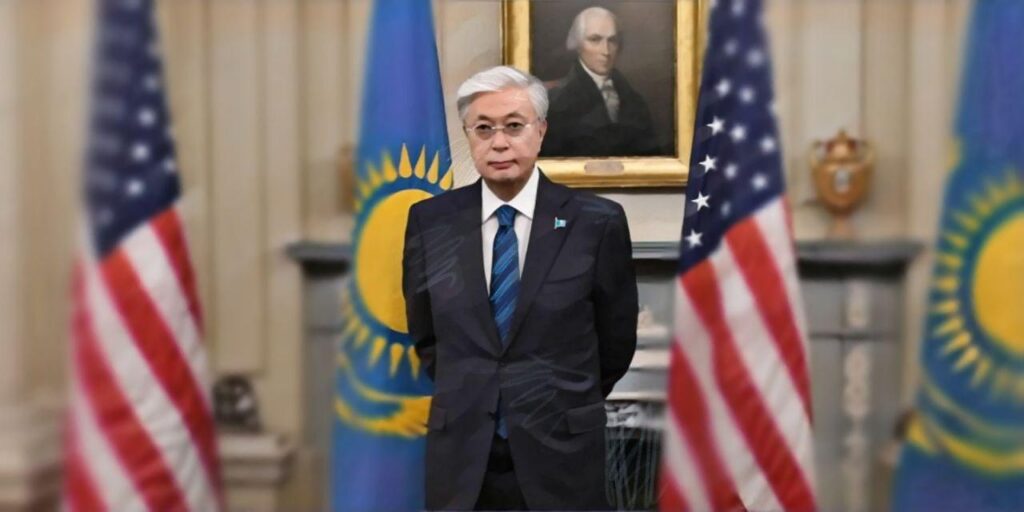
 On February 19, President Tokayev will meet President Trump for the third time in six months to advance Trump’s Board of Peace initiative – an undertaking that aligns with Kazakhstan’s long-articulated view that peace remains achievable, even in a war-torn world under seemingly impossible odds. This approach emphasizes sustained diplomacy, interfaith coexistence, economic integration, and respect for human dignity. Moreover, Washington has not only pivoted towards Central Asia but has found Kazakhstan a rational and predictable partner in an increasingly chaotic and multipolar world — one in need of credible mediators capable of engaging across political, economic, and religious divides. In accepting Trump’s invitation to join the Board, Tokayev has assumed a role consistent with Kazakhstan’s long-articulated identity and practice as a bridge-builder. Kazakhstan’s lived experience of pluralism and balanced pragmatic diplomacy gives that role substance. Kazakhstan brings to the Board a distinctive societal composition that has, despite differences, remained cohesive and broadly tolerant. Although it is a Muslim-majority country in Central Asia, it is also home to a substantial Christian, agnostic, and atheist population and has more than 100 ethnic groups. This demographic and religious diversity is not peripheral to its national identity and story as a relatively newly formed nation; it is foundational and will resonate as it carries out its responsibilities as a member of the Board. For decades, Kazakhstan has institutionalized interreligious dialogue as a matter of state policy rather than relying on symbolic rhetoric. In the process, it has learned to separate political ideology from the core principles of religious freedom and freedom of conscience. The Board of Peace initiative fits squarely within Tokayev’s priorities. As he said recently, this new platform is a “timely and relevant initiative designed to deliver meaningful and long-lasting results” in tackling global conflicts, aiming to complement—not replace—institutions like the United Nations. For Kazakhstan, participation reflects the external expression of that domestic model of pluralism and balanced engagement. It builds on Kazakhstan’s long experience of managing domestic diversity while sustaining balanced relations across competing global power centers through disciplined statecraft and structured dialogue. Kazakhstan brings this worldview into its seasoned practice of diplomacy. On the Board of Peace, Tokayev will bring experience and practical recommendations to the table. Other heads of state joining Tokayev include another Central Asian leader, President Mirziyoyev of Uzbekistan. A Continuation of Kazakhstan’s Role as an International Mediator This visit to Washington continues Kazakhstan's long-standing diplomatic tradition of prioritizing dialogue without dogma, development without division, and peace through prosperity. Tokayev has consistently framed the country’s foreign policy in measured terms: “Kazakhstan will continue to serve as a bridge-builder and peacemaker. It will also continue to choose balance over domination, cooperation over confrontation, and peace over war.” Rather than mere aspirational rhetoric, this statement, made at the 80th United Nations General Assembly in 2025, reflects a pragmatic doctrine that has guided Astana’s multi-dimensional diplomacy — maintaining constructive relations across competing power centers while advancing mediation, confidence-building, and multilateral engagement as tools of stability. This approach is structural...

Opinion: Mirziyoyev in Washington – New Deals Expected Amidst Peace Diplomacy

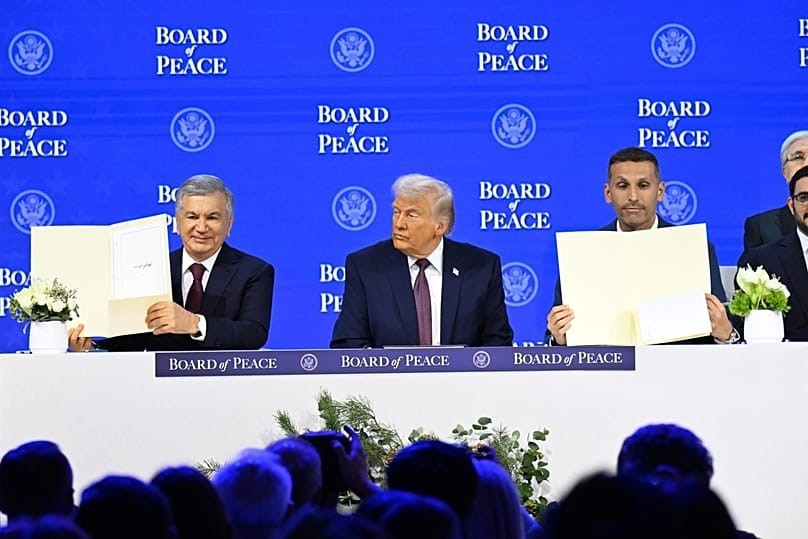
The President of Uzbekistan, Shavkat Mirziyoyev, has arrived on a working visit to Washington to participate in the inaugural meeting of President Trump’s Board of Peace on February 19, 2026, alongside the Presidents of Kazakhstan, Azerbaijan, and other heads of state. Against a backdrop of deep geopolitical tensions and raging conflicts across the world, Mirziyoyev’s second visit to the White House in less than four months suggests that U.S.-Uzbekistan relations are at their strongest in decades. Mirziyoyev will be joined by Uzbekistan’s Foreign Minister, Minister of Investments, Industry and Trade, and other high-ranking officials. Uzbek Ambassador to the U.S. Sidikov and his team have been working around-the-clock for over two weeks, gearing up for the Trump–Mirziyoyev meeting. President Mirziyoyev’s objective will be to elevate U.S.-Uzbek relations from a constructive relationship to a fully functional, deal-oriented partnership with a focus on capital flows and bilateral trade.  In addition to his desire for regional stability in West Asia, his signing up for the Board of Peace should be understood as indicating his desire to advance trade and investment and flows into Uzbekistan. The Uzbeks are keen to nail down new money and capital guarantees to fund infrastructure along the U.S.-brokered “Trump Route for International Peace and Prosperity,” aka, the Zangezur Corridor between Armenia and Azerbaijan (TRIPP) – a roughly 27-mile-long piece of land that links Europe to Central Asia and beyond through the Caucasus. TRIPP matters to Trump because it advances two goals at once: stabilizing the South Caucasus while more fully integrating U.S. trade with Uzbekistan and the Trans-Caspian International Transport Route (TITR)—a multimodal, 4,000 km transport network connecting China and East Asia with Europe via Kazakhstan, the Caspian Sea, Azerbaijan, Georgia, and Turkey. Apart from the issues on the Board of Peace agenda, Mirziyoyev will push for ironclad U.S. commitments and cold, hard cash for transport corridors and their downstream beneficiaries. Two big reasons driving Mirziyoyev ‘s thinking: first, Uzbekistan is one of only two double-landlocked countries in the world, the other being Liechtenstein—and second, Trump’s desire to nail down a peace agreement between Armenia and Azerbaijan, thereby resolving a long-standing territorial dispute that has taken thousands of lives. Mirziyoyev knows that Trump sees TRIPP as a path to lasting peace and regional prosperity across the broader region, which fits into the Board of Peace narrative. Trump has referenced TRIPP repeatedly over the past year, and Mirziyoyev is well aware of this.  At UNGA last September 23, 2025, Trump said: "President Mirziyoyev is a terrific leader, and with this TRIPP corridor, Uzbekistan is going to see massive trade flowing through – it's going to connect them directly to new markets without all the old hassles." And as Trump said on November 7, 2025, at the C5+1 Summit in Washington: "I've got great respect for President Mirziyoyev – he's doing amazing things in Uzbekistan. The Trump Route, i.e., the TRIPP, is perfect for them; it's going to cut transit times and costs, making Uzbekistan a powerhouse in regional trade." Mirziyoyev is paying...

Opinion – The “Board of Peace” and Afghan Diplomacy: A View from Kabul

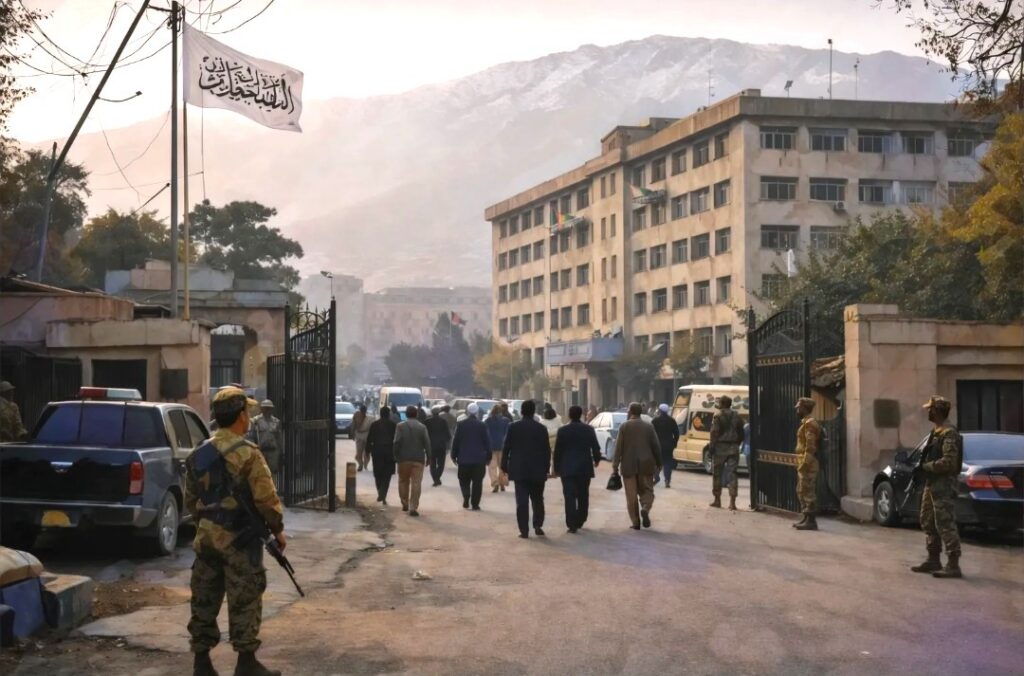
A new trend is becoming increasingly apparent in global politics: key decisions are being discussed not only within traditional international institutions but also through more flexible political and diplomatic formats. One such initiative is the announcement of the creation of the “Board of Peace” by U.S. President Donald Trump, a structure that, according to its authors, is intended to provide an alternative mechanism for conflict resolution. Reactions have been mixed. Some states view the new platform as an opportunity to enhance the effectiveness of peace efforts; others warn that it could weaken existing institutions, particularly the United Nations, and contribute to a gradual shift toward closed political groupings in which participants' strategic interests outweigh universal rules. At its core, this debate reflects the possibility of a deeper transformation of the international order. Whereas global security architecture was once built primarily around multilateral mechanisms, flexible coalitions and ad hoc alliances are becoming more prominent. In such a system, the role of states capable not only of adapting to change but also of offering independent diplomatic initiatives is growing. It is in this context that Afghanistan is increasingly asking what role it can occupy in a new international configuration. One of the key questions raised in Kabul’s expert community is straightforward: Will the current Afghan authorities be considered in emerging international mechanisms, including the Board of Peace? There is no clear answer. Despite ongoing global discussions on security and economic cooperation, concrete decisions regarding Afghanistan remain limited. Frozen financial assets, sanctions, and uncertainty over the country’s international status continue to impede economic recovery and complicate integration into regional processes. Against this backdrop, Afghan experts argue that the country should avoid remaining on the periphery of the evolving order and instead seek integration through sustained diplomatic engagement and regional cooperation. Central Asia could play a particularly significant role in this process. The states of the region are potentially capable of mediating to reduce tensions between Afghanistan and Pakistan and of facilitating the resolution of a conflict that directly affects broader regional security. Such a role appears logical for several reasons. Many Central Asian countries traditionally pursue pragmatic foreign policies, maintaining working relations with multiple centers of power while avoiding rigid geopolitical alignments. This approach has gradually shaped their reputation as relatively neutral and predictable partners. The element of self-interest is equally important. Stability to the south is directly linked to border security, the development of transport corridors, energy projects, and trade. In this context, mediation is not merely a diplomatic gesture but an element of a long-term regional strategy. Moreover, neutrality may prove to be Central Asia’s principal political asset. The region is not generally perceived as a direct party to the conflict and is therefore potentially well placed to offer a platform for dialogue. At the same time, assuming such a role would require readiness to accept greater responsibility. Effective mediation presupposes regional coordination, institutional maturity, and the political will to engage more actively in security matters. The emergence of initiatives such...

Central Asia and Azerbaijan on Board as the Gaza Peace Effort Gets Underway

As the Trump Administration is trying to drag the world toward the reconstruction of Gaza, an undertaking fraught with security, political, and economic challenges, a gap is emerging between the “old” Europe, skeptical of Trump, and nation-states seeking to expand cooperation with Washington. Central Asian and Caucasian "middle powers" are among the emerging allies in the Trump Administration's latest diplomatic gambit for peace. Kazakhstan took a leadership position as the first Muslim-majority state outside the Middle East to join the Abraham Accords in November 2025. President Kassym-Jomart Tokayev, an experienced diplomat, former Foreign Minister, and high-level U.N. official, represented his country at the Board of Peace inauguration during the January 2026 session of the World Economic Forum in Davos, Switzerland. So did Ilham Aliev, President of Azerbaijan, and his First Lady and First Vice President, Mehriban, both of whom met with Trump in Davos. The attendance and participation of leaders of other majority-Muslim states outside the Middle East are also noteworthy. President Shavkat Mirziyoyev of Uzbekistan, Prabowo Subianto of Indonesia, Vjosa Osmani-Sadriu of Kosovo, and Prime Minister Mian Muhammad Shehbaz Sharif of Pakistan signed the Charter on behalf of their respective nations. Those who chose not to participate are equally noteworthy. France, the United Kingdom, Belgium, Portugal, Canada, and Australia, which publicly announced or reaffirmed recognition of a State of Palestine around the U.N. General Assembly in September 2025, each determined not to attend the signing ceremony at Davos, despite the fact that the establishment of the Board was officially welcomed by the UN Security Council in November 2025. This underscores the challenges that will arise as Trump’s Comprehensive Plan to End the Gaza Conflict enters its second phase, which foresees Hamas’ disarmament. Similarly, differences in policy toward Israel among the Muslim-majority countries that signed the Charter speak to the complexity of the Board’s task. Kazakhstan, Uzbekistan, and Azerbaijan have longstanding diplomatic and trade relations with Israel. This contrasts with the complex and often hostile stances of Qatar, long ruled by the Al Thani family, and Turkey under Recep Tayyip Erdoğan, both of which support the Muslim Brotherhood and shelter Hamas terrorists. Then there are countries like Indonesia and Pakistan, which have never had diplomatic relations with Israel. Indonesia, under Subianto, continues to condition recognition of Israel on the creation of a Palestinian state. Pakistan has been officially hostile since its founding, and is particularly fearful of Jerusalem’s increasingly close relations with India, though it does have a history of covert information sharing and unofficial cooperation. Once again, navigating the political agendas and moving the reconstruction project forward will require a multi-dimensional chess game. Nevertheless, the Trump White House is working on the Board of Peace's first meeting, set for February 19th. Currently, there is no official word about whether the leaders of Kazakhstan and Uzbekistan will attend, while other leaders plan to, such as President Aliyev, who just signed a Strategic Partnership Charter during a visit by U.S. Vice President J.D. Vance to Azerbaijan, and PM Nikol Pashinyan of...

Tokayev Praises Trump’s ‘Common-Sense’ Governance, Backs U.S.-Led Peace Initiatives

Kazakhstan’s President Kassym-Jomart Tokayev has offered rare and explicit praise for the domestic and foreign policies of U.S. President Donald Trump, describing him as a strong leader whose governance model prioritizes national interests, law and order, and pragmatic diplomacy. In an exclusive interview with The News International during his visit to Islamabad, President Tokayev described President Trump’s leadership as “forward-looking,” pointing to what he characterized as strong economic performance and ongoing transformative reforms in the social sphere in the United States. “President Trump is a strong and forward-looking leader who puts the national interests of his country first,” Tokayev said, pointing to what he described as strong economic performance and transformative reforms in the social sphere. He added that Trump’s emphasis on law and order resonated with Kazakhstan’s own governance philosophy, which prioritizes compliance with the law and respect for state institutions. Tokayev said that in an increasingly complex global environment, governments must ensure internal stability by enforcing the rule of law. “All citizens must comply with the law and respect law-enforcement agencies while avoiding any obstruction,” he noted, drawing a direct parallel between Washington’s and Astana’s domestic policy approaches. Support for the Abraham Accords The Kazakh president also defended his country’s decision to join the Abraham Accords, an initiative launched during Trump’s presidency to normalize relations between Israel and several Muslim-majority countries. Describing the accords as “a truly forward-looking initiative,” Tokayev said Kazakhstan’s participation reflects its long-standing commitment to peace, stability, and international dialogue. He stressed that diplomacy remains the most effective instrument for resolving conflicts and fostering long-term regional and global stability. While reaffirming Kazakhstan’s strong relations with Israel, Tokayev underscored that Astana continues to support the Palestinian people and advocates a two-state solution. From a national interest perspective, he said, joining the Abraham Accords creates opportunities to attract foreign investment, advanced technologies, and concrete economic benefits. He also expressed hope that Kazakhstan’s accession would help broaden Arab–Jewish rapprochement into a wider Muslim–Judaic dialogue. Board of Peace and the UN Framework Addressing criticism surrounding the newly established Board of Peace, which he co-founded with Pakistan’s prime minister, amongst others, Tokayev rejected claims that the initiative seeks to undermine the United Nations. He said President Trump had personally emphasized that the Board of Peace is designed to complement, not replace, the United Nations, which he acknowledged is currently facing institutional strain. Tokayev highlighted that the initiative implements United Nations Security Council Resolution 2803, reinforcing the principle that peace efforts must combine international legitimacy with effective leadership. According to Tokayev, the Board of Peace aims to deliver swift and practical outcomes through flexible mechanisms for conflict resolution, positioning it as a pragmatic addition to existing global peace architectures. Gaza and the Limits of Diplomacy On the prospects for peace in Gaza, Tokayev offered cautious realism. He said proposals put forward by U.S. Special Envoy Steve Witkoff and senior adviser Jared Kushner appeared ambitious, structured, and grounded in development-oriented thinking. However, he warned that no plan can succeed without genuine political...