• KGS/USD = 0.01144 0%
  • KZT/USD = 0.00202 0%
  • TJS/USD = 0.10618 -0.28%
  • UZS/USD = 0.00008 0%
  • TMT/USD = 0.28490 -0.28%
  • KGS/USD = 0.01144 0%
  • KZT/USD = 0.00202 0%
  • TJS/USD = 0.10618 -0.28%
  • UZS/USD = 0.00008 0%
  • TMT/USD = 0.28490 -0.28%
  • KGS/USD = 0.01144 0%
  • KZT/USD = 0.00202 0%
  • TJS/USD = 0.10618 -0.28%
  • UZS/USD = 0.00008 0%
  • TMT/USD = 0.28490 -0.28%
  • KGS/USD = 0.01144 0%
  • KZT/USD = 0.00202 0%
  • TJS/USD = 0.10618 -0.28%
  • UZS/USD = 0.00008 0%
  • TMT/USD = 0.28490 -0.28%
  • KGS/USD = 0.01144 0%
  • KZT/USD = 0.00202 0%
  • TJS/USD = 0.10618 -0.28%
  • UZS/USD = 0.00008 0%
  • TMT/USD = 0.28490 -0.28%
  • KGS/USD = 0.01144 0%
  • KZT/USD = 0.00202 0%
  • TJS/USD = 0.10618 -0.28%
  • UZS/USD = 0.00008 0%
  • TMT/USD = 0.28490 -0.28%
  • KGS/USD = 0.01144 0%
  • KZT/USD = 0.00202 0%
  • TJS/USD = 0.10618 -0.28%
  • UZS/USD = 0.00008 0%
  • TMT/USD = 0.28490 -0.28%
  • KGS/USD = 0.01144 0%
  • KZT/USD = 0.00202 0%
  • TJS/USD = 0.10618 -0.28%
  • UZS/USD = 0.00008 0%
  • TMT/USD = 0.28490 -0.28%
12 February 2026

Viewing results 1 - 6 of 6

Tajikistan and the U.S. Sign Agreements Worth Over $3.2 Billion

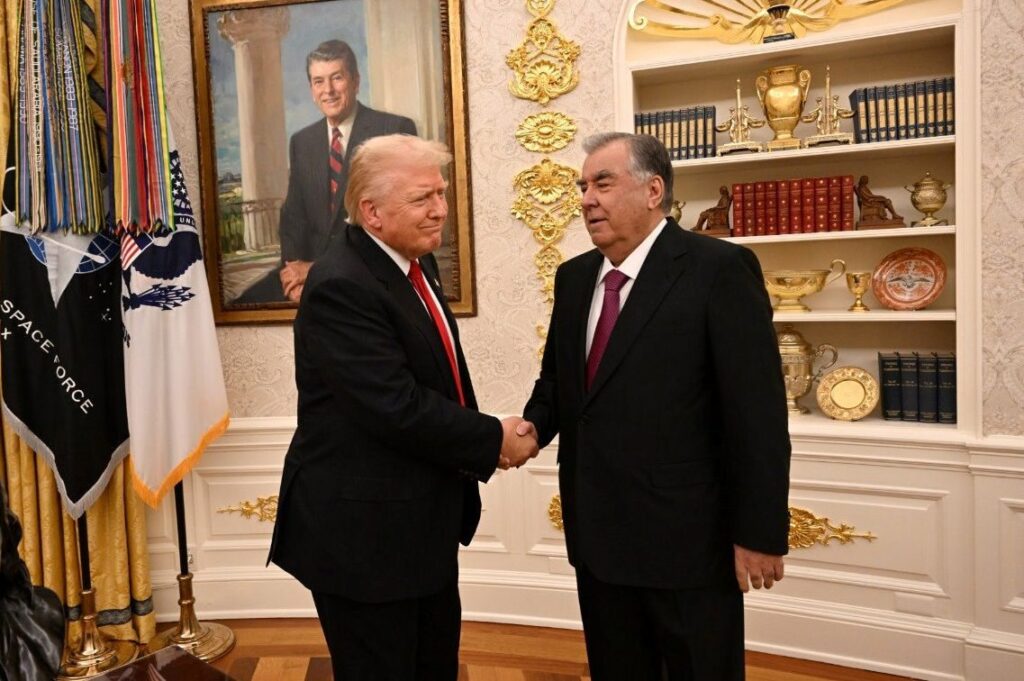
On the sidelines of the second Central Asia-U.S. Summit (C5+1) held in Washington, Tajikistan signed a series of agreements with American companies totaling more than $3.2 billion. The deals span the aviation, digital technology, artificial intelligence, energy, and manufacturing sectors. Landmark Agreement with Boeing The largest deal involves Tajik airline Somon Air, which plans to purchase 14 Boeing aircraft and aviation systems valued at $3.2 billion. The U.S. State Department described the agreement as a milestone that will “strengthen confidence in American aerospace technology” and noted it as the most significant aviation contract ever signed between the two countries. The second largest agreement was concluded with U.S. based Transparent Earth. The $32.5 million deal includes remote sensing technologies and technical assistance to improve efficiency in Tajikistan’s mining and agricultural sectors. In the digital sphere, Tajikistan reached an agreement with Starlink to expand satellite internet access. The initiative aims to enhance connectivity in the country’s remote mountainous. regions, facilitating digital inclusion and expanding online services. Artificial Intelligence, Infrastructure, and Industry A separate set of agreements focuses on artificial intelligence. U.S. tech firm Perplexity AI and Tajik startup zypl.ai signed a landmark agreement to develop the world’s first AI-based agent browser tailored for government use. According to the developers, this innovation is designed to boost the efficiency of public administration and solidify Tajikistan’s emerging role in digital governance. Additionally, SuperMicro, Cerebris, and zypl.ai will collaborate on the development of AI-powered data centers. To support this infrastructure, Tajikistan plans to build 1 GW of hydroelectric capacity, laying the groundwork for the country to evolve into a regional IT hub. In the manufacturing sector, Coca-Cola will invest $9 million in expanding its Dushanbe plant, boosting production and strengthening its market position in Tajikistan. According to the U.S. State Department, these agreements are expected to generate thousands of jobs and stimulate “billions of dollars in U.S. exports.” A New Chapter in Tajik-U.S. Relations On November 6, President Emomali Rahmon met with U.S. President Donald Trump in Washington. The two leaders discussed cooperation in critical minerals, digital technology, and aviation modernization, with a particular focus on boosting trade and investment. More than 70 U.S. affiliated companies are currently operating in Tajikistan. The summit also featured a C5+1 business conference, during which Tajikistan showcased its investment projects and export potential to an international audience. Following the forum, President Trump described the gathering as the start of “a wonderful new relationship between the United States and the countries of Central Asia,” and reiterated the strategic importance of the region, stating the U.S. is ready to “actively engage in Eurasia”.

Mirziyoyev Secures Spotlight During U.S. Visit

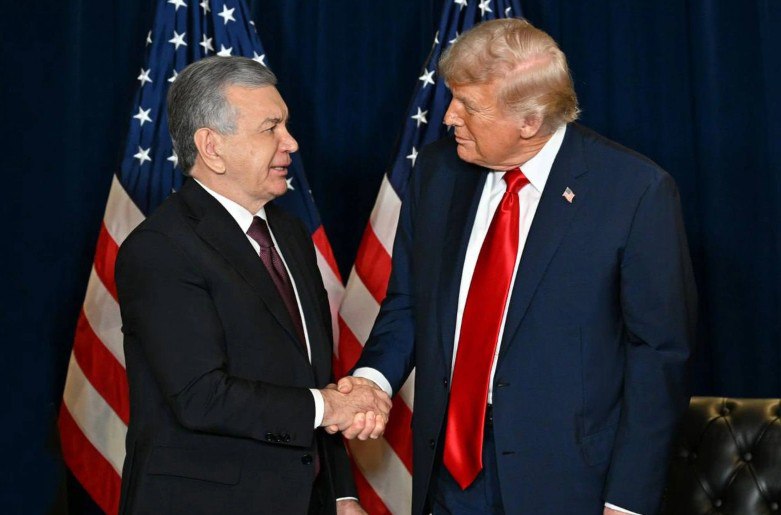
In a significant diplomatic breakthrough, Uzbekistan emerged as a standout player during this year’s United Nations General Assembly events in New York. President Shavkat Mirziyoyev not only secured a high-profile meeting with U.S. President Donald Trump, but also signed a landmark $8 billion deal with Boeing to purchase Dreamliner jets, a move that drew praise from Trump and captured the attention of the international business community. Trump publicly endorsed the agreement on social media, calling Mirziyoyev “a man of his word” and noting the deal would create “over 35,000 jobs” in the United States. Mirziyoyev’s visit included a high-level investment roundtable with executives from leading U.S. corporations and financial institutions. According to Forbes, trade between the two countries has quadrupled under Mirziyoyev’s leadership, with more than 300 American companies now active in Uzbekistan. Strategic sectors such as rare-earth metals and critical minerals took center stage during the discussions. Among the key meetings was one with the vice president of the Colorado School of Mines, who expressed support for establishing a research center in Uzbekistan. Other topics included joint initiatives in banking, information technology, transportation, and energy infrastructure. The scale of the Boeing deal served as a symbolic anchor to broader efforts: positioning Uzbekistan as a key connector between Central Asia and the Western economy. This aligns with a larger strategic pivot that analysts have long advocated. As U.S. engagement in Central Asia expands, countries like Uzbekistan are increasingly looking to diversify away from dependence on Russia and China. Forbes noted that the Trump administration is building on foundations laid by its predecessor by promoting regional initiatives such as the Zangezur Corridor, referred to as the “Trump Corridor”, aimed at linking Central Asia to global markets without passing through Russian territory. Mirziyoyev’s face-to-face meeting with Trump, followed by the public endorsement, also plays into shifting domestic narratives. It signals growing diplomatic credibility and a willingness to operate as an equal on the global stage. The convergence of political recognition and commercial investment may mark a turning point in Uzbekistan’s foreign policy, not just as a recipient of aid, but as a proactive economic actor. With the Boeing order and growing support from U.S. business leaders, Uzbekistan is staking its future on deepening ties with the West. Coupled with ongoing domestic reforms, the country is making a strategic bet that modernization and diversified partnerships will yield long-term dividends.

Billion-Dollar Agreements and a Boeing Deal: Inside Mirziyoyev’s Visit to New York

On September 20, President of Uzbekistan Shavkat Mirziyoyev arrived in New York to participate in events marking the 80th session of the UN General Assembly. At John F. Kennedy Airport, he was welcomed by Paolo Zampolli, Special Envoy of the U.S. President for Global Partnerships, Carolyn Lamm, Chair of the American-Uzbekistan Chamber of Commerce, and other officials. Finance and Critical Minerals Cooperation On September 22, Mirziyoyev held a series of high-level meetings with executives from leading corporations and international institutions. Uzbekistan is seeking to position itself as a reliable supplier in the global critical minerals chain. With reserves of copper, gold, uranium, and rare earths, officials have prioritized foreign partnerships to accelerate exploration and processing capacity, while also ensuring environmental and governance standards are met. In talks with IMF Managing Director Kristalina Georgieva, the two sides discussed expanding cooperation on monetary policy, statistical reform, and educational programs. Georgieva commended Uzbekistan’s economic reforms and reaffirmed the Fund’s support. A $1 billion package of initiatives was finalized with Traxys, the Colorado School of Mines, FLSmidth, McKinsey, and Go Green Partners. These projects focus on critical minerals mining and processing, alongside the creation of a Competence Center in Uzbekistan. Discussions with BlackRock board member Adebayo Ogunlesi centered on establishing a joint infrastructure fund. With Citigroup Chairman John Dugan, the president addressed IPOs of state-owned enterprises, Eurobond issuance, and trade finance mechanisms. Franklin Templeton CEO Jenny Johnson confirmed agreements related to the transformation of state-owned companies and the development of the Tashkent Stock Exchange. President Brian Friedman of the New York-based global investment banking and capital markets firm, Jefferies, meanwhile, expressed interest in helping attract strategic investors to Uzbekistan’s National Investment Fund. Franklin Templeton’s management of Uzbekistan’s $1.7 billion National Investment Fund signals growing trust in U.S. asset managers. Meanwhile, Jefferies’ potential involvement in attracting strategic investors highlights the rising role of global capital markets in Uzbekistan’s privatization and modernization agenda. NASDAQ CEO Adena Friedman discussed the modernization of the Tashkent Stock Exchange and the introduction of a government bond trading platform. Oppenheimer Holdings CEO Robert Lowenthal pledged support for Uzbekistan’s private sector and participation in Eurobond issuance. [caption id="attachment_36462" align="aligncenter" width="1280"] Image: president.uz[/caption] Strategic Agreements Signed A signing ceremony was held in the presence of President Mirziyoyev and U.S. Presidential Special Envoy Sergio Gor. Agreements were exchanged with Boeing, FLSmidth, Cleveland Clinic, Citigroup, Cargill, Pangea Filtration Technology, SLB, Biologic International, and others. During a meeting with WTO Director-General Ngozi Okonjo-Iweala, Mirziyoyev reaffirmed Uzbekistan’s commitment to aligning its legislation with international standards, with the goal of completing WTO accession by 2026. Uzbekistan’s WTO accession is being closely watched in Central Asia, as its success could set a precedent for other countries still outside the organization. For investors, WTO membership would mean greater legal predictability and integration into global trade frameworks. The president also met with Air Products CEO Eduardo Menezes. The company has already invested over $1 billion in Uzbekistan, with projects at the GTL plant, Ferghana Refinery, and “Navoiazot.” Both parties agreed to...

Will Direct Flights from Kazakhstan to the U.S. Become a Reality?

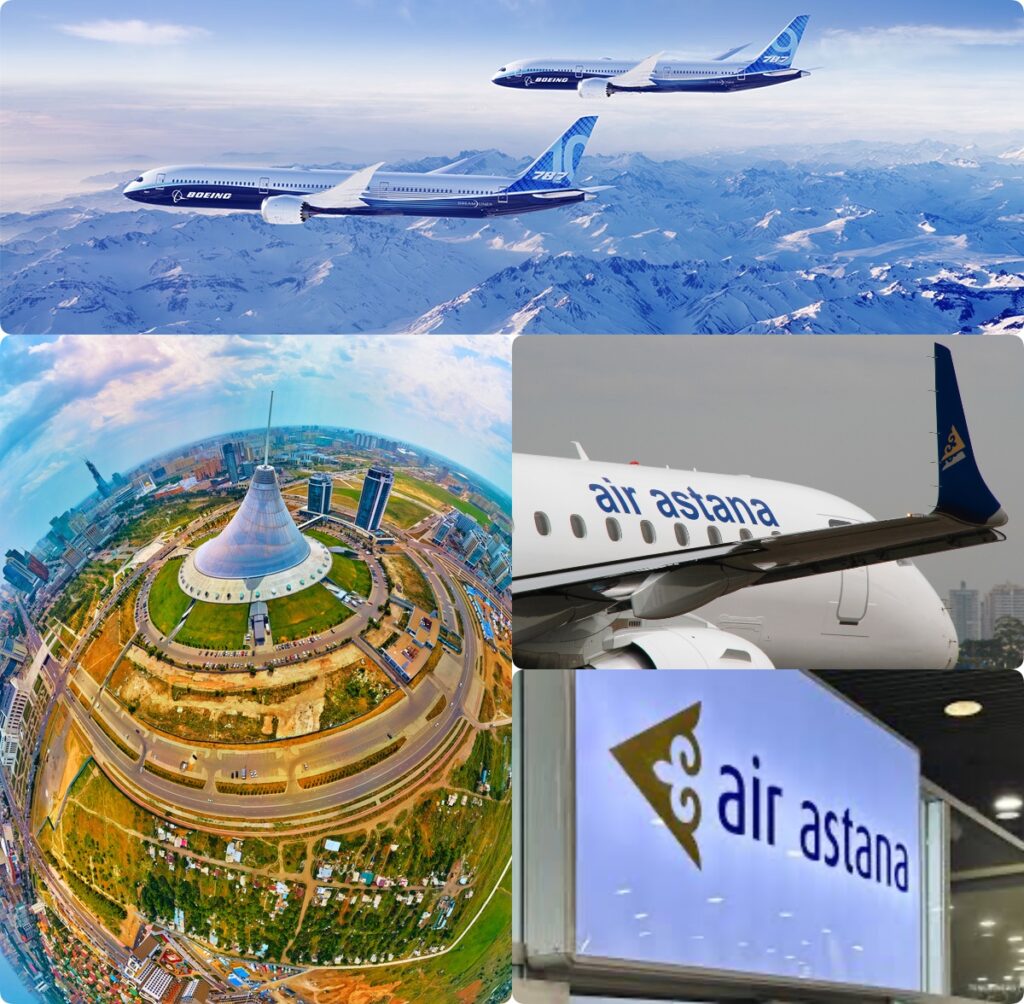
Kazakhstan and Uzbekistan spent the first thirty years of independence embroiled in rivalries rooted in the Soviet-era. However, the two countries have since moved towards cooperation, and both Tashkent and Astana have tasted success. One area in which Uzbekistan has far surpassed Kazakhstan in direct air routes to key countries. From Tashkent, one can even fly to New York, which is still a dream for Kazakhstanis who want to reach the U.S. via direct flights. As previously reported by TCA, however, at the end of July, the authorities in Kazakhstan stated that the first B787 “Dreamliner” will be delivered in late 2025, bringing Astana’s long-held goal of direct flights to the United States by the end of 2025 a step closer. But will this dream become a reality? In January 2022, the Parliament of Kazakhstan adopted the draft law "On ratification of the agreement between the Government of the Republic of Kazakhstan and the Government of the United States of America on Air Transport". The agreement itself was signed back on December 30, 2019,  when it referenced the flight route Nur-Sultan - New York. Then Minister of Industry and Infrastructure Development (MIID), Kairbek Uskenbayev said that a joint commission of representatives of American airlines had reviewed the airports of the capital and Almaty, and concluded that they met international standards. Earlier, the MIID had specified that under the "Open Skies" regime, the fifth freedom of the air would allow Kazakhstan's airlines to bring passengers to the United States, then pick up passengers there and transport them to a third country, that is, to fly in transit through the United States. Concerning cargo, the agreement provided a seventh degree of freedom, which also allows a Kazakh airline to transport cargo from the U.S. to Canada or the United Kingdom without additional authorization. U.S. companies in Kazakhstan would have similar rights. At a meeting held in 2022, which was attended by the Director General of the Aviation Administration, Catalin Radu, and the Minister of Industry and Infrastructural Development of Kazakhstan, Kairbek Uskenbayev, it was stated that work has been underway since the beginning of 2022 to increase technical capacity in preparation for the upcoming FAA International Aviation Safety Assessment (IASA) into launching direct flights between Kazakhstan and the United States. According to Talgat Lastayev, the Civil Aviation Committee Chairman, Kazakhstan had raised its flight safety assurance level to 84%, 15% above the global average. Plans for the capital's airport changed, however. On the sidelines of a government event in May 2023, when asked by journalists when flights to New York was expected to commence, Peter Foster, head of Air Astana, Kazakhstan's largest airline, responded stating, "Flights are planned to begin by 2025. There is a small correction to be made; the flights will be from Almaty. The Almaty - New York route will at the initial stage be three times a week, with a further increase to 5 flights a week, and if there is good performance, daily flights. There will be no...