• KGS/USD = 0.01144 0%
  • KZT/USD = 0.00203 0%
  • TJS/USD = 0.10647 -0.09%
  • UZS/USD = 0.00008 0%
  • TMT/USD = 0.28571 0.28%
  • KGS/USD = 0.01144 0%
  • KZT/USD = 0.00203 0%
  • TJS/USD = 0.10647 -0.09%
  • UZS/USD = 0.00008 0%
  • TMT/USD = 0.28571 0.28%
  • KGS/USD = 0.01144 0%
  • KZT/USD = 0.00203 0%
  • TJS/USD = 0.10647 -0.09%
  • UZS/USD = 0.00008 0%
  • TMT/USD = 0.28571 0.28%
  • KGS/USD = 0.01144 0%
  • KZT/USD = 0.00203 0%
  • TJS/USD = 0.10647 -0.09%
  • UZS/USD = 0.00008 0%
  • TMT/USD = 0.28571 0.28%
  • KGS/USD = 0.01144 0%
  • KZT/USD = 0.00203 0%
  • TJS/USD = 0.10647 -0.09%
  • UZS/USD = 0.00008 0%
  • TMT/USD = 0.28571 0.28%
  • KGS/USD = 0.01144 0%
  • KZT/USD = 0.00203 0%
  • TJS/USD = 0.10647 -0.09%
  • UZS/USD = 0.00008 0%
  • TMT/USD = 0.28571 0.28%
  • KGS/USD = 0.01144 0%
  • KZT/USD = 0.00203 0%
  • TJS/USD = 0.10647 -0.09%
  • UZS/USD = 0.00008 0%
  • TMT/USD = 0.28571 0.28%
  • KGS/USD = 0.01144 0%
  • KZT/USD = 0.00203 0%
  • TJS/USD = 0.10647 -0.09%
  • UZS/USD = 0.00008 0%
  • TMT/USD = 0.28571 0.28%
11 February 2026

Viewing results 1 - 6 of 19

Kyrgyzstan Seeks €2.7 Billion from UK for Business Development

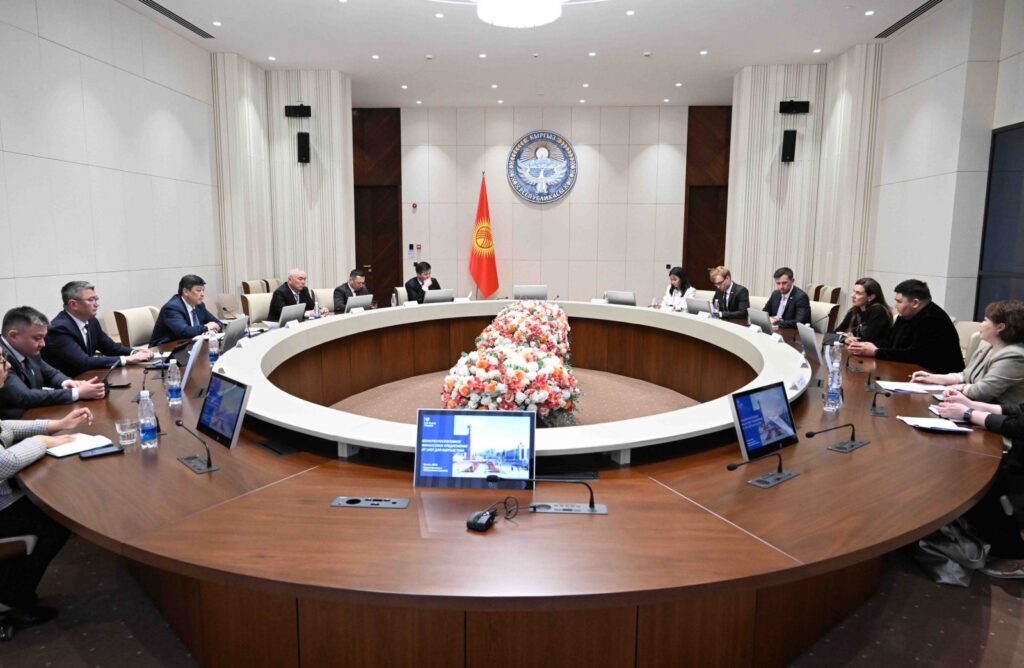
Deputy Chairman of the Cabinet of Ministers of Kyrgyzstan Bakyt Torobaev has held a high-level meeting with Shebn Alp, Regional Director of the UK Export Credit Agency (UKEF), seeking €2.7 billion in financial support to boost the country's business sector. The meeting was held in accordance with instructions from Kyrgyz President Sadyr Japarov, who has outlined economic modernization as a government priority. Torobaev emphasized the country’s strategic goals, which include revitalizing the agro-industrial sector, developing critical infrastructure, diversifying export markets, and enhancing Kyrgyzstan’s investment appeal. “The Cabinet of Ministers of Kyrgyzstan is committed to creating added value within the country, promoting environmentally friendly and organic agriculture, modernizing irrigation systems, and transitioning from a raw materials-based to a processing economy,” he stated. British representatives reportedly expressed interest in cooperation in the mining, construction, and infrastructure sectors, all of which are currently experiencing robust growth in Kyrgyzstan. The construction industry, in particular, is seen as a driving force behind the nation’s economic progress, as previously reported by The Times of Central Asia. Authorities are also investing in the mining sector, including recent efforts to rehabilitate rare earth element mines in Chui Oblast. These materials are essential for the production of electric vehicle batteries, positioning Kyrgyzstan as a potential player in the global green energy supply chain.

Ruling Party Urges Government to Revise VAT Reform Plans

Kazakhstan's ruling Amanat party has called on the government to revise its proposed tax reforms, particularly those affecting the value-added tax (VAT). The party is pushing to double the planned threshold for mandatory VAT registration, warning that the current proposal could harm small and medium-sized businesses. Under current law, businesses must register for VAT if their annual turnover exceeds 78.6 million KZT (approximately $152,000). The government's draft reform proposes to lower this threshold to 15 million KZT (around $29,000). It also includes raising the basic VAT rate from 12% to 16%, introducing a zero rate for agricultural producers, a 10% rate for selected industries, and gradually applying VAT to the healthcare sector. The reform also proposes eliminating 128 tax exemptions worth more than 1.3 trillion KZT. A progressive personal income tax is also under discussion. With a base rate of 10%, the government suggests introducing a 15% rate for annual incomes exceeding 8,500 MRP (monthly calculation index), equivalent to over 33.5 million KZT. For 2025, the MRP in Kazakhstan is set at 3,900 KZT (about $7.50). The draft Tax Code is scheduled for a first reading in the Mazhilis, Kazakhstan’s lower house of parliament, on Wednesday, April 9. On the eve of the session, government officials presented the proposals at an expanded meeting with Amanat’s parliamentary faction, which holds 62 of the 98 Mazhilis seats. Amanat deputies voiced strong opposition to the proposed reduction in the VAT registration threshold, warning it could drive businesses into the informal economy. Instead, they urged the government to raise the threshold to at least 30 million KZT (approximately $58,000). The party also proposed exempting 19 socially important food items from VAT to ease the financial burden on citizens. These items include flour, bread, pasta, eggs, buckwheat, rice, sugar, vegetable oils, various meats (such as beef and chicken), dairy products (milk, kefir, cottage cheese), staple vegetables (potatoes, carrots, onions, cabbage), and salt. “Particular concern was expressed over proposals to apply VAT to healthcare and to tax financial services,” the party said in a statement. “Such measures would drive up prices and impose additional costs on the population, which is unacceptable under current conditions”. As The Times of Central Asia previously reported, the government initially considered raising the VAT rate to 20%, but President Kassym-Jomart Tokayev rejected that proposal in favor of a more moderate increase​.

U.S. Tech Giant Honeywell Expands Operations in Uzbekistan

Honeywell, a global leader in integrated technology solutions, has expanded its footprint in Uzbekistan by establishing a new legal entity, Honeywell Industrial Automation LLC. The initiative aims to support the digital transformation and automation of key industrial sectors in Uzbekistan and reflects a broader commitment to strengthening U.S.-Uzbek commercial ties. The official launch was celebrated on March 25 at a reception hosted by U.S. Ambassador to Uzbekistan Jonathan Henick at his residence in Tashkent. The event was attended by Uzbekistan’s Minister of Energy, Jurabek Mirzamakhmudov. Ambassador Henick reiterated the U.S. Embassy’s strong support for Honeywell’s initiatives, stating he looked forward to "the continued growth and success of American businesses in Uzbekistan." Honeywell emphasized its dedication to advancing Uzbekistan’s digital and energy strategies. The company has long-standing partnerships with both government and private sectors, especially in oil and gas, petrochemicals, mining, and metallurgy. As part of its expansion, Honeywell announced plans to establish a Global Engineering Center (GEC) in Tashkent. The new center will serve as a regional hub for advanced engineering solutions, while also fostering local talent and innovation. Earlier, Honeywell representatives held talks with the leadership of Uzbekneftegaz JSC to discuss the integration of cutting-edge technologies into Uzbekistan’s oil and gas sector.

A Taste of Kazakhstan: Interview with Almaty’s Apple City Cider

Englishman Alexander Thomas is the passionate founder of Apple City Cider, an Almaty-based craft cidery dedicated to producing high-quality, locally sourced ciders that celebrate tradition with a modern twist. With a deep-rooted love for orchards and fermentation, Thomas blends innovation with time-honored techniques to create crisp, flavorful ciders. TCA: What first brought you to Almaty, and what kept you here? AT: I used to work for the world’s largest publishing group, where I reported on different market sectors. When I covered aviation, I used to fly around the world to speak to different airline CEOs to discuss their route strategies and fleets. I first came to Kazakhstan to interview Air Astana’s CEO, Peter Foster. I was supposed to fly to Paris to speak with KLM and Air France, but that meeting was canceled, so I flew back to London. Sitting next to me, little did I know, was my future wife. In the same company, I very much enjoyed the coverage of the drinks industry. I had originally wanted to make wine in the south of France, but after marrying a Kazakh girl, we decided to start our business in Kazakhstan. Instead of pressing grapes in the South of France, we began pressing apples in Almaty. TCA: Can you tell us the inspiration for Apple City Cider? AT: We started the business because no one was making cider in the birthplace of the apple, around that time, cider was not even available to purchase in Kazakhstan. Around the same time we went on sale, another alcohol manufacturer began to produce cider as well, but we are the only cider specialists; the main business of the others is spirits and other alcoholic drinks. [caption id="attachment_28689" align="aligncenter" width="1706"] Image: TCA, Henry Kuvin[/caption] TCA: How did Almaty respond to your business idea, and what were the main challenges when establishing your company? AT: Consumers are very happy with the product and happy that we started our business here. Like other local companies, Almaty Cider has received a lot of positive support from the city; they love how it’s called “Almaty Cider.” The concept of eating locally and supporting local businesses is a global phenomenon, and Almaty is no exception. The fact that Almaty is the birthplace of the apple, proven by science, made it the ideal location to start such a business. The Malus Sieversii apple, native to the Almaty region, is perfect for cider. The levels of tannins, fruit sugar, and acidity, while not ideal for eating, make a great-tasting cider. TCA: Almaty, the place of abundant apples, does not have a huge cider culture – how has this changed since you established the business, and where do you see it going? AT: Cider was not available even as an imported product until about three to four years ago. Since then, we have seen imported brands come to the market, and people have developed a taste for it. In Russia, for example, there are now over 100 independent cideries. The first person...

Kazakhstan Introduces New Visa Categories to Attract Foreign Professionals

On February 18, 2025, Kazakhstan’s Ministry of Foreign Affairs hosted a briefing for representatives of the diplomatic community to highlight the country’s newly introduced visa categories: the Neo Nomad Visa, Digital Nomad Visa, and Residence Visa.  Kazakhstan updated its visa regulations in November 2024 to attract business immigrants, skilled professionals, and tourists. Among the key offerings is the Digital Nomad Visa, which provides long-term residence options for freelancers, self-employed entrepreneurs, IT specialists, and startup founders. Meanwhile, the Neo Nomad Visa is designed for foreign citizens who work remotely while traveling. Applicants for this visa must demonstrate a verified monthly income of at least $3,000 and provide health insurance and a clean criminal record. The Residence Visa is aimed at attracting foreign professionals with expertise in medicine, science, innovation, education, and the creative industries. It allows recipients to stay in Kazakhstan for up to 90 days. Kazakhstan’s Deputy Foreign Minister Roman Vassilenko emphasized that these new visa categories significantly expand opportunities for foreign nationals wishing to live and work in the country. "Our country provides the necessary conditions to attract international professionals by offering visa-free entry to citizens from more than 80 countries and a simplified electronic visa for 109 countries. By expanding air connectivity, Kazakhstan now operates over 700 international flights per week to more than 30 countries. Additionally, we are actively developing digital infrastructure, creating smart cities, and ensuring access to high-speed internet," he said. Vassilenko added that implementing a flexible visa policy benefits not only Kazakhstan but also its partners through tax revenues and remittances from remote professionals, as well as the skills and experience they acquire in the country. Kazakhstan’s Deputy Minister of Tourism and Sports, Yerzhan Yerkinbayev, highlighted the timeliness and relevance of these visa initiatives, adding: "Kazakhstan continues to strengthen its position as an open and accessible destination for international visitors. This commitment to openness has been a key factor in the growth of tourism. In 2024, 15.3 million people visited Kazakhstan, marking a 66% increase from the previous year."

Kyrgyz Businesses React With Cautious Optimism To Tax Amnesty

The Kyrgyz government has announced a tax amnesty aimed at easing the financial burden on businesses and reducing the workload of the State Tax Service (STS). However, local entrepreneurs have received the initiative with cautious optimism. As part of the amnesty, President Sadyr Japarov has decreed the exemption of taxes on agricultural land, the cancellation of private vehicle taxes for citizens, and the write-off of all tax debts accrued before January 1, 2022. The initiative has been met with mostly positive reactions from Kyrgyzstan’s business community. Entrepreneurs noted that many small and medium-sized enterprises in the country are burdened with significant debts to the state. They believe this measure has the potential to improve the business climate - provided the government maintains a stable and predictable tax policy. “Such decisions were likely made to support entrepreneurs during a challenging economic period, stimulate economic activity, and improve the overall state of business in the country. It could also be part of a broader strategy to foster trust between the government and the business community,” the JIA Business Association, one of Kyrgyzstan’s largest business groups, told the Times of Central Asia. By writing off debts, the JIA representatives said, the government will significantly ease the financial strain on businesses across various sectors. This would allow many entrepreneurs to focus on recovery and growth, particularly after the economic setbacks caused by the COVID-19 pandemic. Despite these positives, the association expressed concerns over the fairness of the tax amnesty. “We hope that the amnesty will also include those businesses that were declared debtors by court decisions, but remain unable to pay their debts to this day. Additionally, there are social businesses - such as those in education and healthcare - that are registered as non-profit organizations but still face tax burdens. Including these entities in the amnesty would ensure greater fairness and also ease the workload of the tax service,” a JIA spokesperson explained. However, under the presidential decree, businesses or individuals with tax debts resulting from court rulings are not eligible for the amnesty. The Kyrgyz presidential administration estimates that the amnesty will result in the write-off of approximately 11 billion KGS (around $126 million) in tax debts for over 20,000 businesses. But while this decision is welcomed by many, it has drawn criticism from some quarters. Market representatives argue that the amnesty may be unpopular among diligent taxpayers who have consistently fulfilled their tax obligations and do not owe the state. Nonetheless, they acknowledged that the government’s decision demonstrates a willingness to be flexible. This includes addressing other concerns, such as issues surrounding the introduction of electronic commodity invoices, which have been controversial among entrepreneurs. “In the past three years, there has been significant progress in reforming tax administration. We anticipate further reforms, such as limiting the application of electronic goods invoices (ETNs) to specific types of goods or simplifying their use for small and medium-sized businesses. Efforts to improve digital tools for businesses, streamline tax administration, and increase public and business...