• KZT/USD = 0.00215
  • TJS/USD = 0.10800
  • UZS/USD = 0.00008
  • TMT/USD = 0.29850
  • KZT/USD = 0.00215
  • TJS/USD = 0.10800
  • UZS/USD = 0.00008
  • TMT/USD = 0.29850
  • KZT/USD = 0.00215
  • TJS/USD = 0.10800
  • UZS/USD = 0.00008
  • TMT/USD = 0.29850
  • KZT/USD = 0.00215
  • TJS/USD = 0.10800
  • UZS/USD = 0.00008
  • TMT/USD = 0.29850
  • KZT/USD = 0.00215
  • TJS/USD = 0.10800
  • UZS/USD = 0.00008
  • TMT/USD = 0.29850
  • KZT/USD = 0.00215
  • TJS/USD = 0.10800
  • UZS/USD = 0.00008
  • TMT/USD = 0.29850
  • KZT/USD = 0.00215
  • TJS/USD = 0.10800
  • UZS/USD = 0.00008
  • TMT/USD = 0.29850
  • KZT/USD = 0.00215
  • TJS/USD = 0.10800
  • UZS/USD = 0.00008
  • TMT/USD = 0.29850
16 August 2026

Viewing results 1 - 6 of 38

Congressional Panel Urges Trump to Host C5+1 Summit This Year

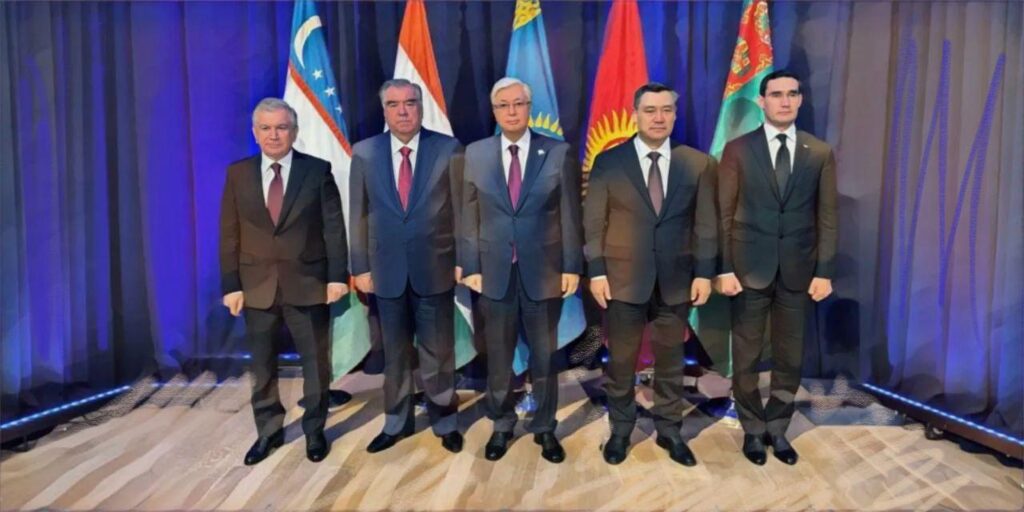
A U.S. congressional foreign affairs panel is asking U.S. President Donald Trump to host a meeting in Washington, D.C. with leaders from Central Asia by the end of 2025.   The proposal was made in an October 20 letter to Trump by Bill Huizenga, a Michigan Republican who chairs the House’s South and Central Asia Subcommittee, and Sydney Kamlager-Dove of California, the senior Democrat on the subcommittee.  The two representatives said that such a summit would mark the 10th anniversary of the C5+1 diplomatic forum and highlight the importance of Central Asia following Trump’s meetings with Uzbek President Shavkat Mirziyoyev and Kazakh President Kassym-Jomart Tokayev on the sidelines of the U.N. General Assembly last month. Multi-billion-dollar business deals were announced in connection with those meetings.  Established in 2015, the C5+1 formula refers to the United States and the five Central Asian countries of Kazakhstan, Kyrgyzstan, Tajikistan, Turkmenistan, and Uzbekistan. “A Leaders’ Summit with meaningful outcomes will strengthen regional cooperation and maximize the diplomatic potential of the 10th anniversary, setting the tone for strengthened U.S. engagement in the region for the rest of your presidency,” the representatives said in the letter to Trump. They said a meeting would advance U.S. priorities in Central Asia, “including security cooperation, economic ties, soft power, and good governance,” they said.  The letter noted U.S. interests such as the development of critical minerals, including tungsten, antimony, lithium, and rare earth elements; the full repeal of the Jackson-Vanik amendment, a Cold War-era law that imposes some restrictions on trade with several countries in Central Asia; and counterterrorism efforts against the regional branch of the Islamic State group.  “We also hope to see new agreements with the Central Asian countries to bolster people-to-people ties and expand U.S. soft power, such as additional American Peace Corps volunteers and the expansion of educational and cultural exchange programs, while addressing the accreditation issue surrounding U.S.-sponsored journalists and other U.S.-funded news broadcasters.  The Trump administration, however, has taken steps to cut most U.S. foreign aid programs, dismantling the U.S. Agency for International Development. USAID had been active in Central Asia. The administration has also cut aid for U.S.-funded domestic and international broadcasters. Analyst Temur Umarov wrote in the Carnegie Politika publication that Central Asia has found it relatively easy to work with the Trump administration.  “Business interests can be used to attract Washington’s attention, and there is no longer any need for demonstrative distancing from Russia or commitment to democratic reforms,” Umarov said.  He said that Uzbekistan and Kazakhstan have hoped to hold C5+1 anniversary events in their capitals, with top leaders in attendance. If that happens, Trump would be the first sitting U.S. president to visit any of the five Central Asian countries. 

Trump Reengages Central Asia Amid Tariffs and Rising Competition

In a bid that signals renewed U.S. interest in Central Asia, U.S. President Donald Trump on September 7, 2025, held what he described as a “great conversation” with Kazakhstan’s President Kassym-Jomart Tokayev. Earlier in the week, Trump also spoke over the phone with Uzbek President Shavkat Mirziyoyev, with both sides highlighting plans to expand their strategic partnership. Commentators have noted that Trump’s rhetoric and transactional approach to foreign policy in his second term create both challenges and opportunities for sustained U.S. engagement in the region. “Great Conversation” With Tokayev As he departed the White House for the U.S. Open men’s final, President Trump told reporters, “We had a great conversation,” though he offered no further details on the substance of the discussion. On Kazakhstan’s side, President Tokayev had reached out in July, expressing his openness to constructive trade talks following Trump’s imposition of 25% U.S. tariffs on Kazakh goods. In that July letter, Tokayev committed to “developing fair, predictable, and mutually beneficial trade relations.” He also emphasized his readiness for “constructive dialogue aimed at finding a rational solution.” The exchange reflects the broader importance of the U.S.–Kazakhstan relationship, which extends far beyond tariffs. Since 2017, the two nations have maintained an “enhanced strategic partnership,” covering trade, security, and energy cooperation. Kazakhstan is the world’s largest uranium producer and a leading supplier to U.S. nuclear power plants, while American firms such as Chevron and ExxonMobil are deeply invested in the country’s vast oil fields. Strategically located between Russia, China, and Europe, Kazakhstan offers Washington a critical partner in promoting regional stability and developing alternative trade corridors traditionally reliant on Russian land. By engaging closely with Astana, the U.S. strengthens its foothold in Central Asia while securing vital resources and supporting Kazakhstan’s multi-vector diplomacy. Strategic Outreach to Uzbekistan Earlier the same week, Trump and Uzbekistan’s Mirziyoyev agreed to broaden their strategic partnership across economic, security, and cultural domains, the Uzbekistan press office reported. According to the office, Trump praised Uzbekistan’s “irreversible reforms” aimed at modernizing its economy and improving living standards, while Mirziyoyev lauded what he termed the “impressive results of the domestic and foreign policy” of the U.S. administration. This extension of engagement to Tashkent comes against a backdrop of longstanding U.S. involvement in Uzbekistan, including trade under bilateral agreements since the mid-1990s and cooperation on border control and counter-terrorism programs. In late 2024, shortly before Trump’s second term began, Washington reaffirmed its support for Uzbekistan’s bid to join the World Trade Organization, with U.S. Trade Representative Katherine Tai announcing the completion of bilateral market-access negotiations. That same year, U.S. officials also underscored opportunities in critical minerals cooperation with Tashkent through the C5+1 diplomatic framework. Beyond trade and security, Uzbekistan is strategically important as Central Asia’s most populous nation and a key transit hub between China, Russia, and South Asia. Closer U.S.–Uzbek ties complement Washington’s regional engagement with Kazakhstan, creating overlapping partnerships that strengthen American influence, promote economic diversification, and reinforce stability across Central Asia. Why Now? Geopolitics, Tariffs, and Regional...

Astana Expands International Air Routes with China and Uzbekistan

Kazakhstan is expanding its international air connectivity, with new routes and increased flight frequencies to China and Uzbekistan following the Central Asia-China Civil Aviation Cooperation Working Group Conference (C5+1). According to the Ministry of Transport, Kazakhstan and China signed a Memorandum of Understanding to enhance bilateral air traffic and broaden the route network. The agreement includes adding a new Chinese destination, Kulja, to the Kazakh airline network and discussing future flights to Kashgar. Kulja (also known as Yining) lies in the Ili Kazakh Autonomous Prefecture of China’s Xinjiang Uyghur Autonomous Region, about 100 kilometers from the Kazakh border. Kashgar (Kashi), also in Xinjiang, is located approximately 455 kilometers from the border. While launch dates for flights to these cities have not yet been announced, the total number of flights between Kazakhstan and China is set to increase to 124 per week starting in 2025. SCAT Airlines has already opened three new routes this year: Shymkent-Shanghai (since May, two flights per week) Shymkent-Xi’an (since July, two flights per week) Shymkent-Ürümqi (since July, two flights per week) In addition, China Eastern Airlines began operating flights from Almaty to Guangzhou in July, with three flights per week. On August 13, a COMAC C909 aircraft flew from Urumqi to Karaganda and back, marking the first landing of the Chinese-made aircraft in Kazakhstan. During the same conference, Kazakhstan and Uzbekistan’s aviation authorities also reached agreements to boost bilateral air traffic. Designated airlines may now operate up to 42 weekly flights on the Almaty-Tashkent and Astana-Tashkent routes, and up to 14 flights on other routes between the two countries. The list of permissible destinations has also been expanded. In July, Uzbekistan’s My Freighter (operating as Centrum Air) launched twice-weekly flights between Aktau and Nukus. FlyArystan began flying between began flying between Atyrau and Tashkent three times a week on July 15. “These steps are aimed at improving transport accessibility, strengthening business and cultural ties, and unlocking the tourism potential of both countries,” the Ministry of Transport stated. As previously reported by The Times of Central Asia, Kazakhstan, Uzbekistan, and other regional partners established the Eurasian Civil Aviation Conference in 2024 as a joint regulatory body to address rising passenger and cargo demand amid the decline of Russian aviation dominance.”

Opinion: Xi Jinping Heads to Astana – What’s at Stake in the Central Asia-China Summit?

On June 16-17, President Xi Jinping of the People’s Republic of China will visit Kazakhstan. The second Central Asia-China summit is scheduled for June 17 in Astana. Leading up to the event, a series of forums, meetings, and conferences have been unfolding across Central Asia and China, drawing experts, journalists, diplomats, and energy-sector representatives. These activities suggest that the upcoming summit is poised to overshadow its predecessor. While U.S. analysts continue debating the viability of their own C5+1 framework for engaging with Central Asia, and the European Union advanced its outreach with the inaugural EU-Central Asia summit, China has relied on a well-worn path. The thousand-year legacy of the Middle Kingdom is filled with moments when it had to engage with the complex mosaic of Central Asia, once a turbulent region of khanates, emirates, and nomadic tribes. Despite the chaos, China succeeded in carving out a secure overland corridor, the Great Silk Road, which threaded through what are now the independent Central Asian republics, linking them like beads in a continental necklace. Then, as now, China is seeking stability in the region, not just for political influence but to safeguard its global supply chains. Beijing’s modern initiatives, including the Belt and Road Initiative and its broader “community of shared future” concept, aim to establish global “islands of comfort” conducive to Chinese interests.  At the heart of this strategy lies a deeply embedded worldview: that China represents civilization itself. The Chinese learned long ago to deal with their neighbors not with violence, but through economic incentives, a method which is proving just as effective today. This layer of understanding is notably absent in many Western and post-Soviet analyses of China’s actions in Central Asia, the Middle East, Africa, and beyond. The reasons for this are twofold. First, Chinese officials are careful never to state views about cultural hierarchies explicitly; doing so would risk alienating partners. This reticence is a feature of traditional Eastern diplomacy. Second, Beijing has cultivated its own expert ecosystem within the post-Soviet sphere. In response to a wave of Sinophobia that swept through Central Asia a decade ago, China now primarily engages with favorable media outlets and Sinologists, many of whom are nurtured through carefully managed media tours. One such tour, organized by People’s Daily, is currently underway ahead of the Astana summit. As a result, the discourse surrounding the summit is shaped less by hard policy proposals than by diplomatic pageantry, with everything presented in the best possible light. At the recent 5th Forum of Think Tanks, “Central Asia-China: New Horizons for Regional Partnership,” Kazakhstan's State Councilor Yerlan Karin likened China and Central Asia to “the two lungs of Asia,” emphasizing the symbolic depth of their growing relationship. The 6th Central Asia-China Foreign Ministers’ Meeting, chaired by Chinese Foreign Minister Wang Yi and held in Almaty in April, likewise offered little in terms of concrete summit outcomes. According to a general statement from Kazakhstan’s Foreign Ministry, topics included political dialogue, trade, connectivity, sustainable development, and security cooperation,...

Uzbekistan Plans to Strengthen Strategic Partnership with the U.S.

Uzbekistan is actively working to deepen its strategic partnership with the United States. The draft state program for 2025, currently under public discussion, outlines several measures to strengthen these ties. The Ministry of Foreign Affairs, led by Acting Minister Bakhtiyor Saidov, is tasked with expanding bilateral cooperation by the end of 2025. Key initiatives include a high-level visit to the U.S. and the inaugural round of the Enhanced Strategic Partnership Dialogue in Tashkent. The program also aims to bolster collaboration within the “C5+1” format, which features a ministerial meeting, working group discussions, and a summit in Samarkand to mark the format’s 10th anniversary. The program also emphasizes increasing inter-parliamentary cooperation, attracting investors from the Americas, and promoting trade and investment through business forums, exhibitions, and events. Additionally, it prioritizes enhanced security collaboration and sustaining Uzbekistan's strong rankings in U.S. human rights reports. Daniel Runde, Senior Vice President of the Center for Strategic and International Studies, recently urged U.S. policymakers to prioritize relations with Uzbekistan. He described the country as a pivotal partner in maintaining regional stability and countering the influence of Russia and China. Despite geopolitical challenges, including Russia’s invasion of Ukraine and escalating competition with China, Runde highlighted the strategic importance of strengthening ties with Uzbekistan. Uzbekistan's relationship with the U.S. is longstanding. In 2018, President Shavkat Mirziyoyev met with then-President Donald Trump at the White House. Trump lauded Uzbekistan’s rising global stature during the visit, calling it "an honor" to host Mirziyoyev.

How Kazakhstan and Uzbekistan Anchor a Strategic Middle-Power Hub in Central Asia

Kazakhstan and Uzbekistan are driving Central Asia’s global significance. Together, they are turning Central Asia into a strategic middle-power hub. The two countries increasingly act as central nodes in a region key to global supply chains and, inevitably, geopolitical competition. However, they are not merely reactive to changes around them, but are highly dynamic. What does it mean to say that the region is emerging as a strategic middle-power "hub"? The notion of a hub extends beyond the national profiles of the two principals, Kazakhstan and Uzbekistan, to include the aggregation of collective influence. Central Asia is recognized as a cohesive entity in global forums. Kazakhstan’s energy wealth combines with Uzbekistan’s demographic strength, creating an influential synergy beneficial to the entire region. The interplay between their respective strengths allows them to amplify Central Asia’s voice in international institutions and negotiations collectively. By integrating their regional strategies within global frameworks — such as the Organization of Turkic States (OTS), the Shanghai Cooperation Organization (SCO), and the Conference on Interaction and Confidence Building Measures in Asia (CICA) — Kazakhstan and Uzbekistan enhance the region’s geopolitical relevance. Kazakhstan, for example, has successfully advocated for the Trans-Caspian International Transport Route (TITR, also called the "Middle Corridor"). This transcontinental trade route is emerging as a lynchpin in Eurasian logistics, connecting China to Europe via the Caspian Sea. Uzbekistan, for its part, has emphasized the integration of transport and energy infrastructure. These initiatives align with the broader vision of a unified Central Asia. The leadership of Kazakhstan and Uzbekistan has reinforced the region's collective identity as the "C5" group, also including Kyrgyzstan, Tajikistan, and Turkmenistan. This regional bloc has become a diplomatic focal point for major powers like the United States, China, Germany, and Japan. All of them engage with Central Asia through structured consultations within the C5 framework. These meetings have given the region traction in international diplomacy. The elevation of the C5 group reflects the region's new prominence. The United States engages with the C5 on issues ranging from regional security to sustainable development, emphasizing its commitment to a secure and prosperous Central Asia. China’s cooperation under the C5+1 mechanism complements its transcontinental infrastructure initiatives. Germany focuses on sustainable energy and governance, while Japan prioritizes infrastructure and technology transfers. Kazakhstan and Uzbekistan together have over two-thirds of the region's gross domestic product and two-thirds of its population. Kazakhstan's vast natural resources undergird its economic influence, while its geographic expanse (as the ninth-largest country in the world) makes it central to major connectivity initiatives. Through President Kassym-Jomart Tokayev's nuanced foreign policy, Kazakhstan has adeptly balanced relationships with major powers, ensuring that it remains a key partner for Russia, China, and the European Union. Uzbekistan has surged to prominence through its ambitious domestic reforms and proactive engagement for regional cooperation under the leadership of President Shavkat Mirziyoyev, who has implemented market liberalization measures attracting foreign investment and reinvigorating its economy. As the most populous country in Central Asia, Uzbekistan is an indispensable actor in regional affairs....