
• KZT/USD = 0.00222
  • TJS/USD = 0.10830
  • UZS/USD = 0.00009
  • TMT/USD = 0.29850
  • KZT/USD = 0.00222
  • TJS/USD = 0.10830
  • UZS/USD = 0.00009
  • TMT/USD = 0.29850
  • KZT/USD = 0.00222
  • TJS/USD = 0.10830
  • UZS/USD = 0.00009
  • TMT/USD = 0.29850
  • KZT/USD = 0.00222
  • TJS/USD = 0.10830
  • UZS/USD = 0.00009
  • TMT/USD = 0.29850
  • KZT/USD = 0.00222
  • TJS/USD = 0.10830
  • UZS/USD = 0.00009
  • TMT/USD = 0.29850
  • KZT/USD = 0.00222
  • TJS/USD = 0.10830
  • UZS/USD = 0.00009
  • TMT/USD = 0.29850
  • KZT/USD = 0.00222
  • TJS/USD = 0.10830
  • UZS/USD = 0.00009
  • TMT/USD = 0.29850
  • KZT/USD = 0.00222
  • TJS/USD = 0.10830
  • UZS/USD = 0.00009
  • TMT/USD = 0.29850
08 October 2026

Viewing results 1 - 6 of 3

South Korea Steps Up Central Asia Critical Minerals Push

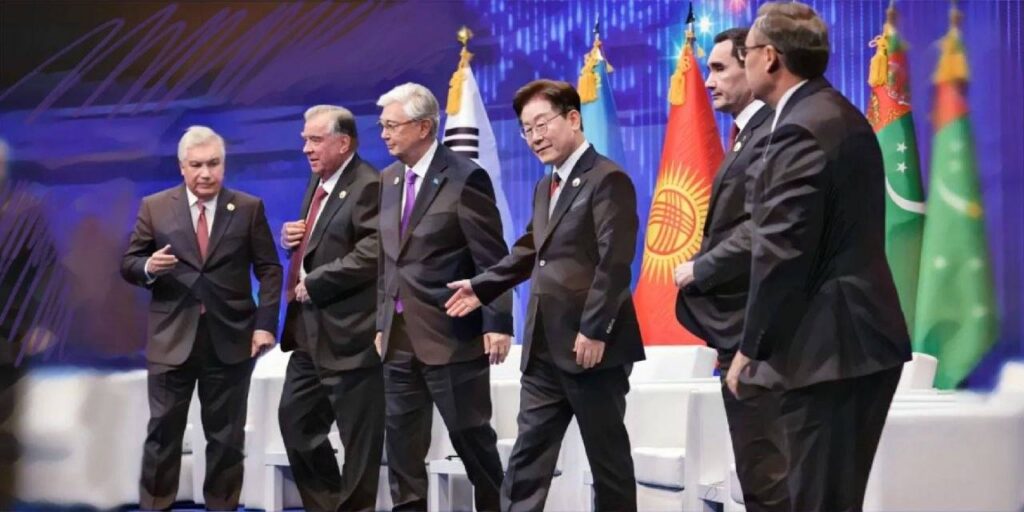
The first South Korea–Central Asia summit, held in Seoul on September 16, capped three days of bilateral meetings that produced more than 70 agreements and memorandums. The leaders agreed to meet every two years, a separate C5+1 forum for industry ministers was established, and critical minerals took a central place on the new agenda. The main question now is how many of those documents will translate into mines, processing plants, and long-term contracts. South Korea needs reliable supplies of metals for its automotive, electronics, battery, and energy industries. Central Asia wants to use that demand to develop domestic processing and reduce its reliance on raw material exports. Seoul proposed combining the region’s resources with its own exploration, mineral processing, and manufacturing technologies. President Lee Jae Myung spoke of cooperation across the production chain, from identifying deposits to manufacturing finished products. Rare metals centers being established at key locations in Central Asia are intended to support joint research and specialist training. Until now, South Korea has worked with the region’s countries largely through bilateral ties. The new C5+1 format adds a regional mechanism to those relationships. Kazakhstan will host the next summit in 2028. Kazakh financier and analyst Rasul Rysmambetov believes the value of the new format will depend on the region’s ability to secure tangible industrial results. He sees South Korea as an attractive partner because of its experience with rapid industrialization and its strengths in building industrial facilities. “The priority for Central Asia is to stop selling raw materials. We need to establish processing in the region. The heads of state’s visit to Seoul was highly productive. In fact, all summits in similar formats have been productive. The main question now is how to move away from exporting raw materials and toward joint industrialization,” Rysmambetov told The Times of Central Asia. Uzbekistan put forward a broader regional proposal. President Shavkat Mirziyoyev called for an investment alliance for critical minerals, with processing clusters bringing together exploration, mining, and the production of high-value goods. Uzbekistan and South Korea are already developing a joint rare metals center and have agreed to strengthen cooperation throughout the production chain. Kazakhstan offered Korean businesses a broader package covering rare metals, nuclear and clean energy, and artificial intelligence. Urban development was also part of the talks, including the Alatau Smart City project near Almaty. The countries upgraded their ties to a comprehensive strategic partnership and signed a memorandum on the peaceful use of nuclear energy. The energy agreements also cover conventional resources. In April, South Korea said it had secured 18 million barrels of Kazakh crude oil. In Kyrgyzstan, Korean organizations are working with their Kyrgyz counterparts to identify possible antimony and tungsten projects and strengthen exploration capacity. Tajikistan is also offering cooperation on antimony, as well as precious metals, building on the first Korea–Tajikistan Minerals Forum, which took place in August. The minerals agenda is complemented by Korean willingness to invest in transport and infrastructure. South Korea and Uzbekistan agreed to expand Korean participation in...
What Could Come Next in Kazakhstan-South Korea Relations

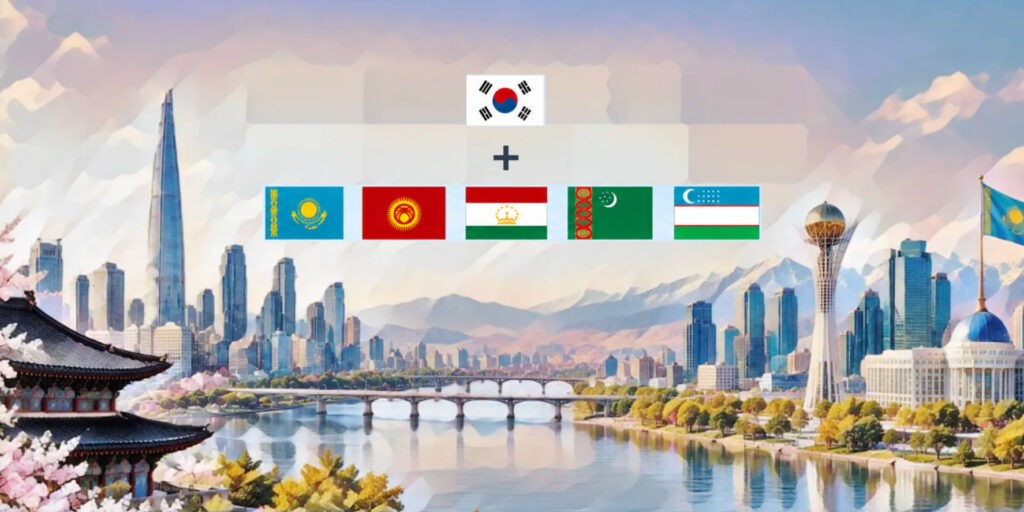
The first Central Asia-Republic of Korea Summit in Seoul on September 16 will elevate South Korea’s multilateral cooperation with the five countries of the region to heads-of-state level. The Korea-Central Asia Cooperation Forum has existed since 2007 but until now has remained primarily a ministerial mechanism. Seoul is now seeking to establish a sustainable multilateral framework at the leaders’ level. The summit’s agenda is broad, with a focus on innovation, prosperity, and connectivity. One of its main outcomes is expected to be the Seoul Declaration, setting out a medium- and long-term vision for cooperation in supply chains, emerging industries, and people-to-people exchanges. The economic agenda is already taking more concrete shape. South Korea wants to connect Central Asia’s mineral resources with its technologies for geological exploration and processing, while expanding cooperation in artificial intelligence, digital technologies, and science. Seoul also sees infrastructure, water resources, climate, and industry as potential areas for new projects. On September 16, about 500 representatives of government and business will gather alongside the five leaders. The business summit should offer the first indication of how much of the broad political agenda can be translated into investment, contracts, and joint production. Don’t Copy the Korean Miracle South Korea’s experience inevitably comes up in discussions about Central Asia’s development. But the economy that enabled Korea’s industrial breakthrough in the second half of the 20th century was built in a very different international and historical environment. Professor German Kim, director of the Institute for Asian Studies at Al-Farabi Kazakh National University and one of the founders of Korean studies in Central Asia, told The Times of Central Asia that South Korea’s development experience should not be treated as a model that can simply be copied. “South Korea’s accelerated modernization took place under completely different historical and international conditions. Kazakhstan should therefore study not so much the Korean model of the past as today’s mechanisms for supporting talented young people, startups, venture capital, and technological entrepreneurship,” Kim said. From this perspective, the value of the Korean experience lies more in individual mechanisms that work – from financing technology businesses to linking universities, research, and industry. Critical Minerals and Joint Production Critical minerals have become one of the central elements of South Korea’s agenda in Central Asia. South Korean industry needs reliable supplies of raw materials, while the region holds significant reserves of metals used in electronics, batteries, energy, and other high-tech industries. Seoul is already discussing projects individually with countries in the region. In August, South Korea’s Ministry of Trade, Industry and Resources held talks with Tajikistan on industrial cooperation and possible critical-mineral projects. The Korean side also proposed making meetings between the industry ministers of South Korea and the five Central Asian countries a regular mechanism. That proposal has since moved forward. On September 14, the six countries held their first C5+1 Industry Ministers’ Meeting in Seoul, agreeing to strengthen cooperation across critical-mineral supply chains. The plan explicitly extends beyond extraction to local refining and smelting, materials processing, and...

Kazakhstan Courts South Korean Investment During Tokayev’s Seoul Visit

Kazakhstan is using President Kassym-Jomart Tokayev’s state visit to Seoul to press for deeper South Korean involvement in its critical-minerals sector, seeking to extend a relationship already built around cars, energy, and infrastructure into mining and processing. On September 15, Tokayev is holding talks with South Korean President Lee Jae Myung, with a packed agenda that includes trade, energy, critical minerals, and artificial intelligence. The two sides are expected to exchange 13 bilateral memorandums of understanding following the meeting. Ahead of the visit, Kazakhstan’s Foreign Minister Mukhtar Tileuberdi told South Korea’s Yonhap News Agency that artificial intelligence and critical minerals were among the promising areas for expanded cooperation. South Korea is a major producer of cars, batteries, electronics, and semiconductors, but is heavily dependent on imported critical minerals and other raw materials. Kazakhstan, meanwhile, has a large mineral resource base and is seeking foreign technology and capital for exploration, mining, and processing. On September 14, Nurlan Zhakupov, CEO of Kazakhstan’s sovereign wealth fund Samruk-Kazyna, met South Korean Minister of Trade, Industry and Resources Kim Jung-kwan in Seoul. They discussed oil and gas projects, energy, and the mining and metallurgical sector. Zhakupov held separate talks with Kwon Yi Kyun, president of the Korea Institute of Geoscience and Mineral Resources (KIGAM), focused on geological exploration and the extraction of critical minerals. KIGAM has been cooperating with Tau-Ken Samruk since 2024, when it signed a memorandum with the Kazakh mining company and the Ministry of Industry and Construction. The two sides are exploring opportunities in mineral resources and processing technologies. Kazakhstan and South Korea are also establishing a joint research center in Almaty to study rare-earth elements and other strategically important metals.. The center is intended to support research into processing technologies and train specialists. Korean business is already well established in energy. Hyundai Engineering is part of the consortium selected to build a gas processing plant at the Karachaganak field with an annual capacity of 5 billion cubic meters. QazaqGaz is leading the project, with Hyundai Engineering and Italy’s SICIM serving as EPC contractors. The presence of South Korea’s automotive industry in Kazakhstan dates back even further. Hyundai vehicles are produced in Almaty, while Kia opened a $310 million plant in Kostanay in 2025 with capacity to produce up to 70,000 vehicles a year. South Korea and the Broader Region Seoul is stepping up its engagement with Central Asia as a whole. On September 14, South Korea held its first industry ministerial meeting with the five countries of the region, with critical minerals and supply chains among the main topics. The first South Korea-Central Asia Summit is scheduled for September 16. Major economies are already competing for mineral projects in the region. China has long been involved in mining and processing, the European Union is developing raw-material partnerships with Kazakhstan and Uzbekistan, and the United States is stepping up its work on critical minerals. South Korea is also gaining a financial tool for such projects. In May, Korea Eximbank and the state-backed...
