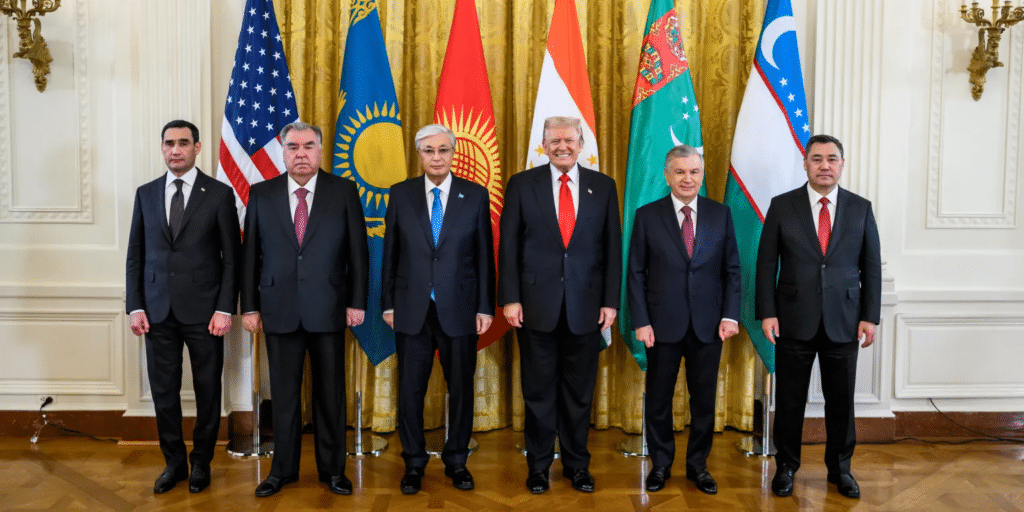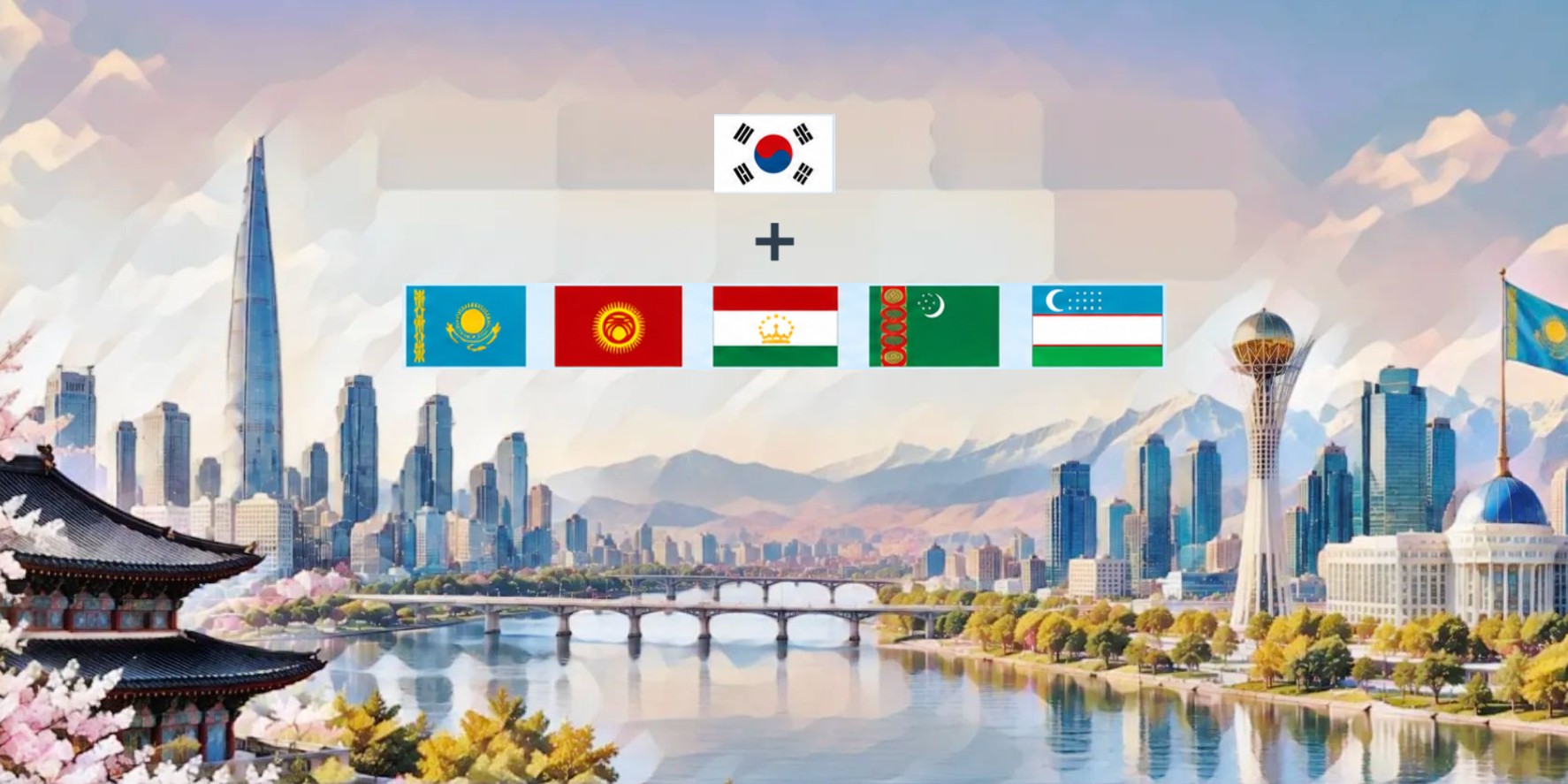
The first Central Asia-Republic of Korea Summit in Seoul on September 16 will elevate South Korea’s multilateral cooperation with the five countries of the region to heads-of-state level. The Korea-Central Asia Cooperation Forum has existed since 2007 but until now has remained primarily a ministerial mechanism. Seoul is now seeking to establish a sustainable multilateral framework at the leaders’ level.
The summit’s agenda is broad, with a focus on innovation, prosperity, and connectivity. One of its main outcomes is expected to be the Seoul Declaration, setting out a medium- and long-term vision for cooperation in supply chains, emerging industries, and people-to-people exchanges.
The economic agenda is already taking more concrete shape. South Korea wants to connect Central Asia’s mineral resources with its technologies for geological exploration and processing, while expanding cooperation in artificial intelligence, digital technologies, and science. Seoul also sees infrastructure, water resources, climate, and industry as potential areas for new projects.
On September 16, about 500 representatives of government and business will gather alongside the five leaders. The business summit should offer the first indication of how much of the broad political agenda can be translated into investment, contracts, and joint production.
Don’t Copy the Korean Miracle
South Korea’s experience inevitably comes up in discussions about Central Asia’s development. But the economy that enabled Korea’s industrial breakthrough in the second half of the 20th century was built in a very different international and historical environment.
Professor German Kim, director of the Institute for Asian Studies at Al-Farabi Kazakh National University and one of the founders of Korean studies in Central Asia, told The Times of Central Asia that South Korea’s development experience should not be treated as a model that can simply be copied.
“South Korea’s accelerated modernization took place under completely different historical and international conditions. Kazakhstan should therefore study not so much the Korean model of the past as today’s mechanisms for supporting talented young people, startups, venture capital, and technological entrepreneurship,” Kim said.
From this perspective, the value of the Korean experience lies more in individual mechanisms that work – from financing technology businesses to linking universities, research, and industry.
Critical Minerals and Joint Production
Critical minerals have become one of the central elements of South Korea’s agenda in Central Asia. South Korean industry needs reliable supplies of raw materials, while the region holds significant reserves of metals used in electronics, batteries, energy, and other high-tech industries.
Seoul is already discussing projects individually with countries in the region. In August, South Korea’s Ministry of Trade, Industry and Resources held talks with Tajikistan on industrial cooperation and possible critical-mineral projects. The Korean side also proposed making meetings between the industry ministers of South Korea and the five Central Asian countries a regular mechanism.
That proposal has since moved forward. On September 14, the six countries held their first C5+1 Industry Ministers’ Meeting in Seoul, agreeing to strengthen cooperation across critical-mineral supply chains. The plan explicitly extends beyond extraction to local refining and smelting, materials processing, and finished-product manufacturing.
A similar model is emerging outside the raw material sector.
On August 27, a Kazakhstan-South Korea Business Forum was held in Almaty during a visit by a delegation from the Korea Importers Association (KOIMA).
Temirlan Kozhakhmetov, commercial director of Samsar Investment, told TCA that following the talks, the company agreed to export 1,000 metric tons of Kazakh beef worth $13 million to South Korea and supply 3,000 metric tons of refined sunflower oil each month. The parties also agreed on joint meat production in Kazakhstan with investment of about $1.3 million. Commercial documents worth a total of $54.8 million were signed at the forum.
According to Kozhakhmetov, the contracts are expected to be formally signed in Seoul during events surrounding the summit.
The sums themselves remain modest by international investment standards. More interesting is the model: exports of Kazakh products are being supplemented by production inside the country. If this approach can be extended to more capital-intensive industries, including critical-mineral processing, cooperation with South Korea would gain a stronger industrial foundation.
The Logistics Test
Joint production will require reliable logistics. In June 2024, the first container train traveled along the South Korea-China-Kazakhstan-Uzbekistan route. Cargo was shipped by sea from South Korea to the Chinese port of Lianyungang and then transported by rail through Kazakhstan to Uzbekistan.
It is not clear that the pilot has yet developed into a regular service at scale. A practical outcome of the new political dialogue could therefore be renewed work on establishing regular freight operations.
Korean cargo already has several potential routes across Eurasia. China provides an overland connection to Central Asia, while Kazakhstan is linked across the Caspian Sea to the Middle Corridor and onward to the South Caucasus, Turkey, and European markets.
The economics of such a route will depend on freight volumes, tariffs, border-crossing times, and transshipment between different modes of transport. A political decision alone will not be enough: regular service will emerge only if there is a stable flow of cargo.
Korean Technology for Nuclear Energy
Kazakhstan has begun developing a long-term nuclear power program under which at least three nuclear power plants are expected to be operating by 2050. SMR technology is being studied as a possible option for the third plant.
South Korea has its own nuclear industry and is now preparing its first national SMR project. In June, Korea Hydro & Nuclear Power selected Gijang County in Busan for the country’s first SMR project, with a total capacity of about 700 MW. Construction is scheduled to begin in 2031 and be completed in 2035.
Cooperation has already moved beyond the hypothetical. On September 15, Kazakhstan and South Korea signed a memorandum of understanding on the peaceful use of nuclear energy during President Kassym-Jomart Tokayev’s state visit to Seoul.
For Kazakhstan, cooperation with South Korea does not necessarily mean South Korea will supply one of the country’s planned nuclear plants. Cooperation could instead include specialist training, research, safety and management systems, individual components, and, in the longer term, SMRs.
This becomes increasingly relevant as Kazakhstan expands its nuclear program: the more projects the country develops, the more room there is to work with different technology partners.
A New Legal Route for Labor Migration
On August 14, the South Korean government included Kazakhstan in its Employment Permit System (EPS), the state-run program for organized recruitment of foreign workers under E-9 visas. Kazakhstan became the 18th country admitted to the system. The first Kazakh workers are expected to travel to South Korea under the program in 2028, after the necessary interstate procedures are completed.
EPS operates without private intermediaries: recruitment and deployment of workers are organized through government institutions in the two countries.
The creation of a legal channel also brings back a longstanding issue involving Kazakh citizens already in South Korea in violation of immigration rules.
Joining EPS does not change their status. Any opportunity to regularize their situation will depend on South Korean law and separate decisions by Seoul. Kazakhstan could, however, use the new migration dialogue to discuss voluntary return and, where South Korean rules permit, subsequent legal employment or other mechanisms for people without serious violations.
Such discussions could connect the new labor migration channel with a problem that accumulated long before Kazakhstan joined EPS.
Exchange of Experience Should Work Both Ways
Partnership with South Korea is often described in terms of Korean technology, investment, and expertise. German Kim suggests looking at it more broadly.
“This should not be about copying the Korean model, but about mutually exchanging the most successful practices. In certain areas of digitalization and financial services, Kazakhstan has already accumulated experience of its own that may also be of interest to the Republic of Korea,” he said.
The Seoul Declaration is expected to provide the political framework. More revealing will be what remains after the summit: whether mineral-processing plants emerge, whether pilot freight routes become regular services, whether Korean technologies enter new energy projects, and whether EPS begins working for Kazakh citizens on schedule.
South Korea and Central Asia have had their own cooperation format for almost two decades. On September 16, it will rise to the level of heads of state for the first time. The next stage will be measured not by the number of meetings and memorandums, but by projects that reach production, regular freight operations, and job creation.