• KGS/USD = 0.01144 0%
  • KZT/USD = 0.00212 0%
  • TJS/USD = 0.10720 0%
  • UZS/USD = 0.00008 0%
  • TMT/USD = 0.28490 0%
  • KGS/USD = 0.01144 0%
  • KZT/USD = 0.00212 0%
  • TJS/USD = 0.10720 0%
  • UZS/USD = 0.00008 0%
  • TMT/USD = 0.28490 0%
  • KGS/USD = 0.01144 0%
  • KZT/USD = 0.00212 0%
  • TJS/USD = 0.10720 0%
  • UZS/USD = 0.00008 0%
  • TMT/USD = 0.28490 0%
  • KGS/USD = 0.01144 0%
  • KZT/USD = 0.00212 0%
  • TJS/USD = 0.10720 0%
  • UZS/USD = 0.00008 0%
  • TMT/USD = 0.28490 0%
  • KGS/USD = 0.01144 0%
  • KZT/USD = 0.00212 0%
  • TJS/USD = 0.10720 0%
  • UZS/USD = 0.00008 0%
  • TMT/USD = 0.28490 0%
  • KGS/USD = 0.01144 0%
  • KZT/USD = 0.00212 0%
  • TJS/USD = 0.10720 0%
  • UZS/USD = 0.00008 0%
  • TMT/USD = 0.28490 0%
  • KGS/USD = 0.01144 0%
  • KZT/USD = 0.00212 0%
  • TJS/USD = 0.10720 0%
  • UZS/USD = 0.00008 0%
  • TMT/USD = 0.28490 0%
  • KGS/USD = 0.01144 0%
  • KZT/USD = 0.00212 0%
  • TJS/USD = 0.10720 0%
  • UZS/USD = 0.00008 0%
  • TMT/USD = 0.28490 0%

Viewing results 1 - 6 of 12

Opinion: UK’s C6 Engagement and the Opportunity for British Geostrategic Renewal

Along with Nicholas Spykman, Sir Halford Mackinder is one of the most pre-eminent thinkers in the field of geopolitics. Whilst today geopolitics is a term used interchangeably with “world affairs,” “international relations,” and “foreign policy,” Spykman and Mackinder used the phrase to describe the narrow academic study of how geography influences international relations and the conduct of states. In the 1904 paper, The Geographical Pivot of History, Mackinder theorized that the key to controlling the balance of power in the world rested in a “heartland” of Eurasia, comprising Eastern Europe and Central Asia. Mackinder described the heartland region as the “pivot region” for regional and global hegemony. The word “pivot” has recently been popularized in international relations, with examples including President Obama’s pivot to the Pacific and Britain’s Indo-Pacific pivot in the 2021 Integrated Review. In 1997, former U.S. National Security Adviser Zbigniew Brzezinski built on Mackinder’s ideas in his work, The Grand Chessboard. Brzezinski defined a geopolitical pivot as being “determined by their geography, which in some cases gives them a special role either in defining access to important areas or in denying resources to a significant player. In some cases, a geopolitical pivot may act as a defensive shield for a vital state or even a region.” To Mackinder and Brzezinski, Central Asia was a crucial geostrategic pivot. Central Asia - comprising the five states of Uzbekistan, Kazakhstan, Tajikistan, Kyrgyzstan, and Turkmenistan, collectively termed the C5 - is located between China, Russia, Iran, and Afghanistan. Thus, the near abroad of the region is defined by conflict between Russia and Ukraine, Iran and Israel/U.S., and between Taliban-run Afghanistan and Pakistan. Pragmatic engagement is a necessity for the C5 but has not stopped them from pursuing greater diversification in security and economic arrangements, and they remain committed to U.S.-led diplomatic initiatives. Faced with a regionally assertive superpower in China, risks created by Russia’s war in Ukraine, theocratic Iran, and the Taliban in Afghanistan, Central Asia has continued to show its desire to build and deepen its economic and security partnerships from beyond traditional powers – such as China and Russia – to states in the Gulf, the Caucasus, Western Europe, and elsewhere. The United Kingdom has emerged as a new and important partner. Russia’s invasion of Ukraine has raised concerns in the Central Asian states about its regional revisionism, territorial ambitions, and Putin’s reconstruction of the Soviet Union. In 2014, Putin credited Nursultan Nazarbayev with having “created a state in a territory that had never had a state before,” adding that “the Kazakhs never had any statehood.” The remarks sparked anger in Kazakhstan and fed concern about Moscow’s view of post-Soviet sovereignty. Finally, Putin said that it would be best for Kazakhstan to “remain in the greater Russian world.” In The Grand Chessboard, Brzezinski predicted that “Russia without Ukraine can still strive for imperial status, but it would then become a predominantly Asian imperial state, more likely to be drawn into debilitating conflicts with aroused Central Asians.” Central Asia has been a...

Britain Expands Central Asia Ties as Kazakhstan Ratifies Strategic Partnership Deal

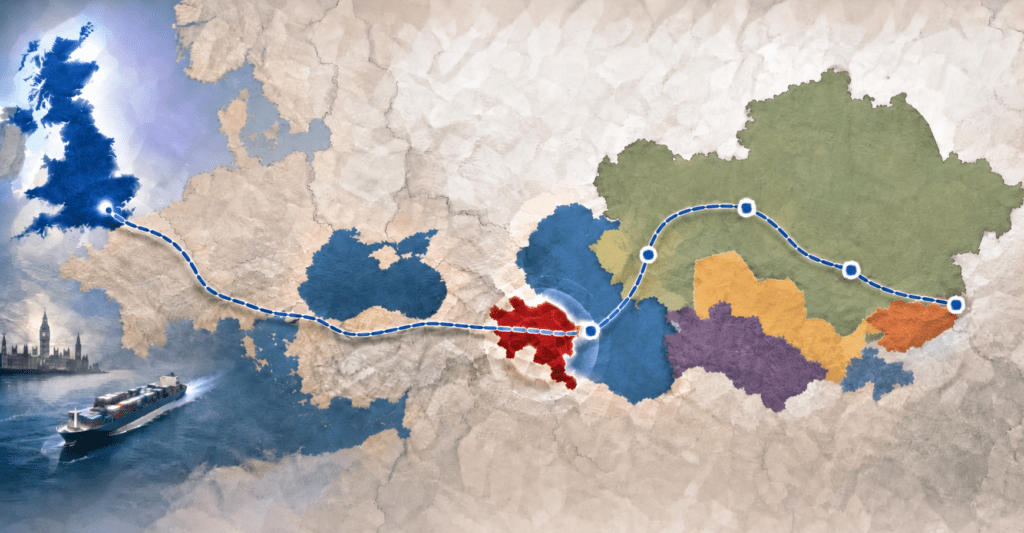
Last week, Kazakh President Kassym-Jomart Tokayev signed a law ratifying a strategic partnership and cooperation agreement with the United Kingdom. With that move, Central Asia’s largest economy added Britain to its growing list of strategic partners, reinforcing Astana’s long-standing multi-vector foreign policy. For London, meanwhile, the agreement marked another milestone in what some analysts have framed as a renewed contest for influence in Central Asia, an area where Britain has sought to strengthen its position over the past five years. Kazakhstan already counts Russia, China, the United States, several European Union states including Italy, Germany, France, and the Netherlands, as well as Turkey, Azerbaijan and its Central Asian neighbors among its strategic partners. Britain has now joined that group as it seeks to revive its historical influence in the region. That broader contest is often described through the language of a “New Great Game,” a phrase that draws on an older imperial rivalry. The term “Great Game” emerged in the 19th century to describe the geopolitical rivalry between the British and Russian Empires across Central and South Asia. The phrase was popularized by British officer, spy, and diplomat Arthur Conolly, who compared the complex web of political intrigues to a vast strategic board game stretching across half a continent. Since 2022, observers say London has intensified its engagement in this geopolitical competition, aimed partly at limiting Russian and Chinese dominance in Central Asia. At stake are key sectors such as critical minerals, including rare earths, as well as logistics corridors, particularly the Trans-Caspian International Transport Route, also known as the Middle Corridor. In December 2023, the UK Parliament’s Foreign Affairs Committee published a report titled Countries at the Crossroads: UK Engagement in Central Asia. The report criticized what it described as ineffective engagement by British ministers with the governments of Kazakhstan, Kyrgyzstan, Tajikistan, Turkmenistan, and Uzbekistan. One of the report’s central recommendations was that London should more actively counter Russian influence in the region. In recent years, British embassies across Central Asia have established offices linked to the UK’s international development structures, expanding engagement with local civil society groups. Through the British Council, London has also expanded its soft power initiatives, financing programs such as Creative Central Asia and Creative Spark. More than 60 universities have joined these programs, with participation exceeding 65,000 people. Britain also continues to operate the Chevening scholarship program, under which young political and public sector figures from Central Asia study in the UK before often returning to influential positions in their home countries. For Kazakhstan’s ambitious younger generation, Britain’s appeal may also be reinforced by symbolic success stories. On May 8, the same day Tokayev signed the strategic partnership into law, Kazakhstan-born Sanjar Abishev was elected to Westminster City Council, representing London’s prestigious St James’s district. Abishev’s election drew attention in Kazakhstan as a symbolic example of the country’s growing diaspora presence in Britain. Little is publicly known about Abishev, though one detail stands out: he entered politics only in 2022 after previously running a...

Central Asia and Britain Launch CA5+UK Ministerial Track

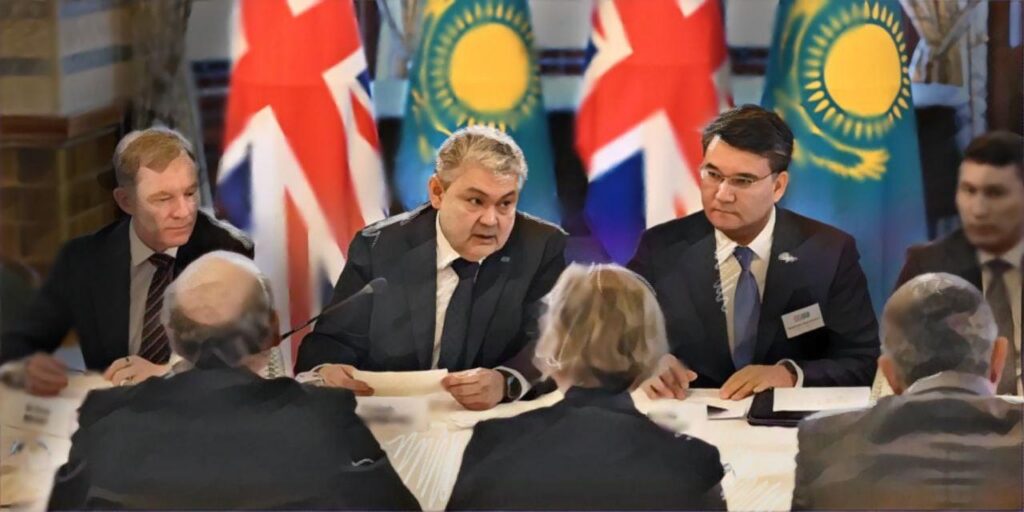
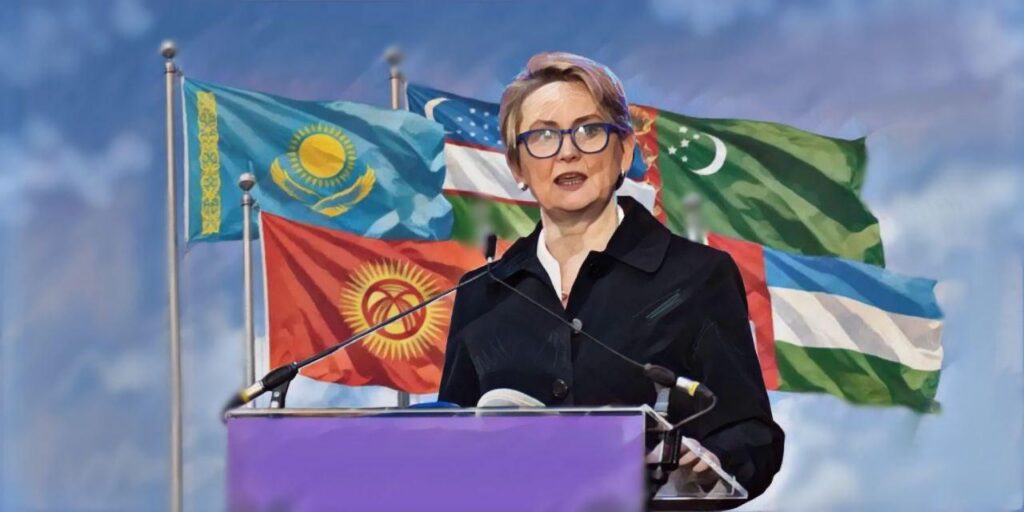
On February 26, 2026, the foreign ministers of Kazakhstan, Kyrgyzstan, Tajikistan, Turkmenistan, and Uzbekistan met in London with United Kingdom Foreign Secretary Yvette Cooper at Lancaster House for the inaugural “Central Asia–UK” (CA5+UK) ministerial. Official statements described it as the first time since independence that all five Central Asian foreign ministers have met jointly with a UK foreign secretary in a single forum. They also presented the meeting as the start of a structured ministerial channel, intended to convene regularly, that can carry regional priorities while leaving bilateral agendas in place. The United Kingdom is framing the new CA5+UK channel as a replacement for scattered bilateral visits: a single ministerial venue can set shared priorities and route them into investment and services work. For the five Central Asian states, it adds another external track, widening options without forcing institutional choices. Public statements point to a practical agenda focused on trade and investment, transport connectivity, energy transition, and critical minerals, with security present chiefly as background context. The enabling layer of finance, standards, education, and professional services is also included. How the London Program Unrolled On February 25, meetings took place at the British Parliament as part of the London schedule. The five ministers met with House of Commons Speaker Sir Lindsay Hoyle and held a session with the All-Party Parliamentary Group for Central Asia, chaired by Pam Cox.  The meetings in Parliament complemented the ministerial session at Lancaster House by widening contact beyond foreign ministries. The discussion emphasized committee-to-committee contacts, visits, and exchange of legislative practice as a complement to intergovernmental diplomacy. Parliamentary relationships and staff channels can carry attention between ministerial sessions, assisting with follow-up after cooperative contacts have been publicly established. They represent a second continuity layer: implementation often turns on routine access and working familiarity rather than on formal statements alone. Between the parliamentary program and the ministerial delegations, they also met with the United Kingdom business community at a reception in London. This was a practical companion to the new format, aiming at the conversion of diplomatic intent into projects that can be financed and executed. Kazakhstan’s Foreign Minister Yermek Kosherbayev cogently highlighted the Astana International Financial Centre (AIFC), which operates under English common law with an independent court and arbitration system and British judges in the AIFC Court. Beyond the plenary session, a ministerial working lunch provided a venue to follow up on such initiatives. Early deliverables were not multilateral but bilateral. Kazakhstan and the United Kingdom signed a strategic roadmap on critical minerals through 2027 and paired it with education moves, including a licensed Coventry University campus in Almaty and plans involving British secondary and higher education institutions. Uzbekistan reported a Memorandum of Understanding on healthcare services that it presented as a platform for building pharmaceutical manufacturing capacity, alongside separate discussions with investment and finance counterparts in London. Turkmenistan cited a 2026–2027 cooperation program between foreign ministries, and Tajikistan continued to emphasize investment and cooperation in science and education. CA5+UK Launches with Bilateral Packages...

UK Expands Strategic Engagement in Central Asia Amid Growing Global Competition

The world’s largest economies have recently increased their focus on Central Asia. The United Kingdom, alongside the U.S., the European Union, and China, is seeking to strengthen partnerships in a region that was previously not among its top foreign policy priorities. Britain Replicates an Established Format Throughout the years of independence, Kazakhstan and its regional neighbors were often perceived as operating within Russia’s sphere of influence. The war in Ukraine and broader geopolitical shifts have altered international attitudes toward Central Asia. Major powers are now intensifying dialogue with the region, with particular emphasis on economic cooperation. At the end of February, foreign ministers met in London under the Central Asia-UK (CA5+1) format. Although this was the first meeting of its kind in the British capital, the format mirrors similar mechanisms already used by the U.S., the European Union, Russia, China, and Japan. Participants noted that the CA5+1 format has proven to be an effective mechanism for structured and substantive engagement with external partners. The regional agenda is addressed comprehensively, reflecting Central Asian priorities while creating additional opportunities to advance economic initiatives and implement joint projects. Particular attention has been paid to trade diversification, industrial cooperation, sustainable infrastructure development, and unlocking Central Asia’s potential in critical minerals and renewable energy. The meeting also covered economic growth prospects, key challenges facing Central Asian economies, and the expansion of trade and investment. Logistics was a central topic, including the development of the Trans-Caspian International Transport Route, widely known as the Middle Corridor. British Foreign Secretary Yvette Cooper emphasized the strategic importance of Central Asia as a dynamically developing region characterized by sustained economic growth, expanding regional cooperation, and a growing role in international affairs. According to the British participants, the region’s countries are pursuing a pragmatic approach, strengthening connectivity and expanding their participation in shaping a modern architecture of economic and political cooperation. Education and Finance Interest in British education continues to grow across all five Central Asian countries. Four branches of British universities are operating in Kazakhstan, and nearly 6,000 students have earned British degrees through the Bolashak international scholarship program. Uzbekistan and Kyrgyzstan have announced plans to establish international financial centers modeled on the Astana International Financial Centre in Kazakhstan. British Ambassador to Uzbekistan Timothy Smart said that work is underway to create an international financial center in Tashkent based on international arbitration standards. Like the Astana model, the new center will operate under English common law. British Ambassador to Kyrgyzstan Nicholas Bowler highlighted London’s role in assisting with legislation for the International Dispute Resolution Center, which will operate under English law and be located in the Issyk-Kul region. Greater participation by Central Asian companies on the London Stock Exchange is also anticipated. Logistics and Resources British diplomats have placed particular emphasis on cooperation in critical minerals, a priority within the United Kingdom’s global strategy. Projects are underway across the region, accompanied by new agreements and industrial partnerships. Agreements have reportedly been reached between the Kazakh producer Zhezkazganredmet and the British...