Along with Nicholas Spykman, Sir Halford Mackinder is one of the most pre-eminent thinkers in the field of geopolitics. Whilst today geopolitics is a term used interchangeably with “world affairs,” “international relations,” and “foreign policy,” Spykman and Mackinder used the phrase to describe the narrow academic study of how geography influences international relations and the conduct of states.
In the 1904 paper, The Geographical Pivot of History, Mackinder theorized that the key to controlling the balance of power in the world rested in a “heartland” of Eurasia, comprising Eastern Europe and Central Asia. Mackinder described the heartland region as the “pivot region” for regional and global hegemony. The word “pivot” has recently been popularized in international relations, with examples including President Obama’s pivot to the Pacific and Britain’s Indo-Pacific pivot in the 2021 Integrated Review.
In 1997, former U.S. National Security Adviser Zbigniew Brzezinski built on Mackinder’s ideas in his work, The Grand Chessboard. Brzezinski defined a geopolitical pivot as being “determined by their geography, which in some cases gives them a special role either in defining access to important areas or in denying resources to a significant player. In some cases, a geopolitical pivot may act as a defensive shield for a vital state or even a region.”
To Mackinder and Brzezinski, Central Asia was a crucial geostrategic pivot.
Central Asia – comprising the five states of Uzbekistan, Kazakhstan, Tajikistan, Kyrgyzstan, and Turkmenistan, collectively termed the C5 – is located between China, Russia, Iran, and Afghanistan. Thus, the near abroad of the region is defined by conflict between Russia and Ukraine, Iran and Israel/U.S., and between Taliban-run Afghanistan and Pakistan.
Pragmatic engagement is a necessity for the C5 but has not stopped them from pursuing greater diversification in security and economic arrangements, and they remain committed to U.S.-led diplomatic initiatives. Faced with a regionally assertive superpower in China, risks created by Russia’s war in Ukraine, theocratic Iran, and the Taliban in Afghanistan, Central Asia has continued to show its desire to build and deepen its economic and security partnerships from beyond traditional powers – such as China and Russia – to states in the Gulf, the Caucasus, Western Europe, and elsewhere. The United Kingdom has emerged as a new and important partner.
Russia’s invasion of Ukraine has raised concerns in the Central Asian states about its regional revisionism, territorial ambitions, and Putin’s reconstruction of the Soviet Union. In 2014, Putin credited Nursultan Nazarbayev with having “created a state in a territory that had never had a state before,” adding that “the Kazakhs never had any statehood.” The remarks sparked anger in Kazakhstan and fed concern about Moscow’s view of post-Soviet sovereignty.
Finally, Putin said that it would be best for Kazakhstan to “remain in the greater Russian world.” In The Grand Chessboard, Brzezinski predicted that “Russia without Ukraine can still strive for imperial status, but it would then become a predominantly Asian imperial state, more likely to be drawn into debilitating conflicts with aroused Central Asians.” Central Asia has been a target of Russian disinformation campaigns – prevalent across the globe from the Sahel to Western Europe – revealing the region’s importance to Russian geostrategy.
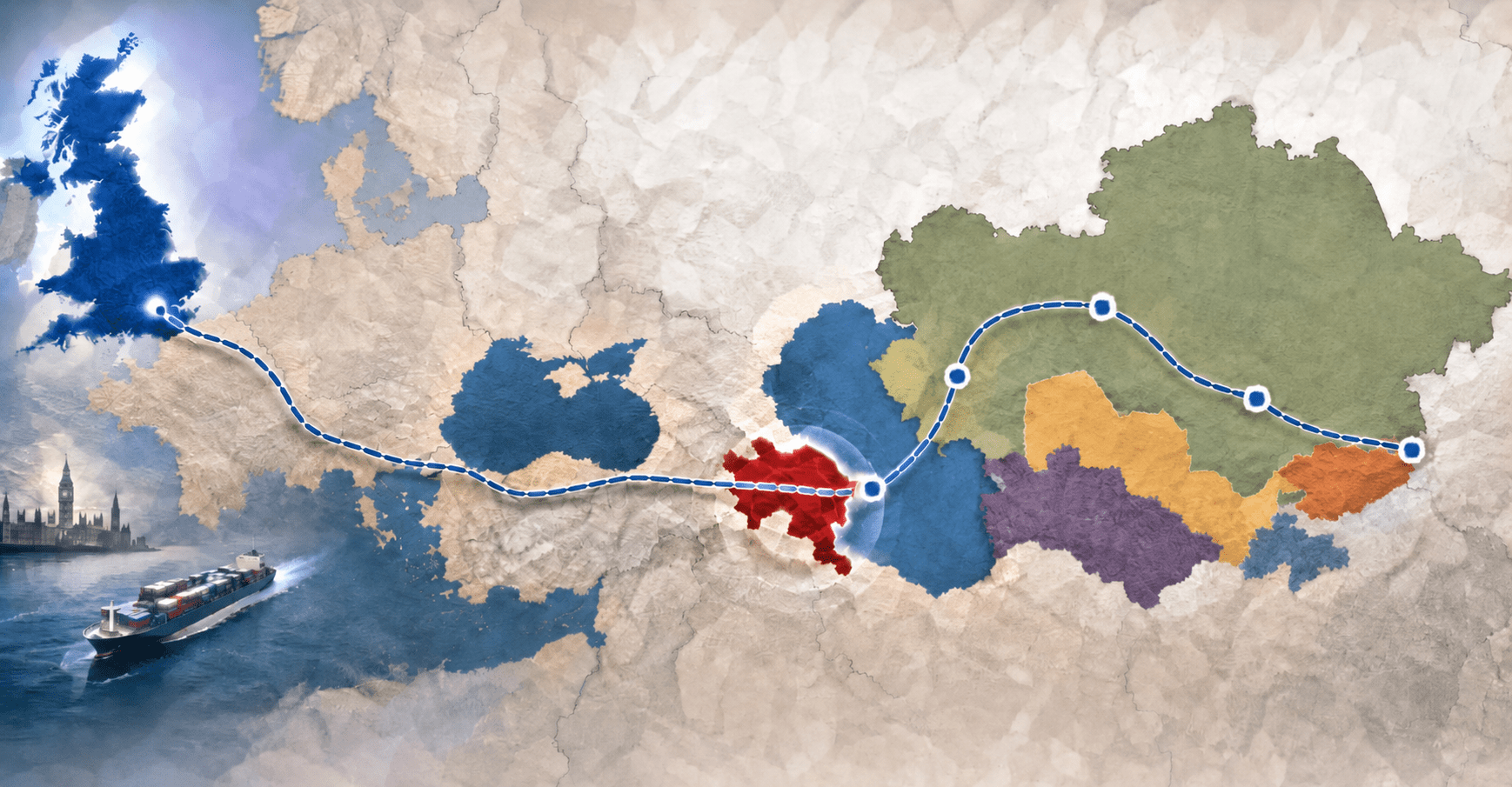
Although it is outside Central Asia, in November 2025, at the Seventh Consultative Meeting of the Heads of State in Central Asia, C5 Presidents agreed to the accession of Azerbaijan into this regional grouping, expanding the grouping to a C6 format. Azerbaijan is a key part of the Trans-Caspian International Trade Route (TITR), and shares a border with the Caspian Sea with Kazakhstan and Turkmenistan, plus Iran. Brzezinski commented that “Azerbaijan, with its vast energy resources, is also geopolitically critical. It is the cork in the bottle containing the riches of the Caspian Sea basin and Central Asia.”
On March 18, Israel, as part of its war against Iran, hit several Iranian naval assets in the Caspian, including warships and port infrastructure at Bandar Anzali, showing that the region is not insulated from the spillover effects of conflict in the Middle East. The Caspian is also reportedly a key transport route for war supplies (such as drones) from Iran to Russia, clearly demonstrating the interconnectedness between security in the Middle East, Central Asia, and the Euro-Atlantic.
Furthermore, the region is a key hub for land trade. The TITR – also called the Middle Corridor – links markets in Southeast Asia to those in Western Europe via Kazakhstan, the Caspian Sea, Azerbaijan, and the Black Sea, importantly offering an alternative route avoiding Russia (the Northern Corridor) and Iran (the Southern Corridor). The Islamic Republic’s disruption of energy exports out of the Strait of Hormuz clarifies Europe’s need to secure trade routes beyond the immediate reach of adversarial states. In 2021, 586,000 tons of cargo volume travelled through the Middle Corridor. In the first 11 months of 2024 alone, 4.1 million tons of cargo passed through the TITR, a year-over-year increase of 63%. This clearly demonstrates the importance of the Middle Corridor, a trend which will only continue and intensify if the world becomes more contested and volatile.
The Trump Administration has paid particular attention to Central Asia. Later this year, Secretary Rubio plans to visit the region, following the visit of the U.S. Secretary of the Army to Turkmenistan in January 2026. The United States’ geostrategic interest in preventing the regional domination of Central Asia by Russia and/or China is shared by the United Kingdom.
In April 2024, then-British Foreign Secretary (and former Prime Minister) Lord Cameron visited the C5 countries plus Mongolia, becoming the first ever Foreign Secretary to visit Turkmenistan, Tajikistan, and Kyrgyzstan. In addition, Cameron was the first Foreign Secretary to visit Uzbekistan since 1997. Cameron’s visit followed a House of Commons Foreign Affairs Committee report that warned Britain’s high-level engagement with the C5 was “persistently inadequate and interpreted by our partners as demonstrating a lack of seriousness from Government.”
Cameron explained that “Central Asia is at the epicenter of some of the biggest challenges we face, and it’s vital for the UK and the region that we drive forward its future prosperity.” Central Asia is emerging as a high-growth region, with economic growth recorded at above 6% in 2025. Recently, the Middle Corridor was of vital importance as conflict in Iran and ongoing concerns regarding Russian airspace rerouted air traffic to Central Asia.
Cameron announced a £ 50 million increase in development funding for Central Asia, designed to support the sovereignty and independence of the C5. Cameron doubled the funding for Chevening scholarships offered to Central Asian students to study at UK universities and launched a new British Council program to support the teaching of the English language in the region, demonstrating Britain’s soft power capabilities.
The Foreign Minister of Uzbekistan, Bakhtiyor Saidov, described Britain as a “time-tested, long-standing and reliable partner of the Republic of Uzbekistan. Our relations are built on mutual respect and the principles of transparency”. In Uzbekistan, Cameron signed a memorandum of understanding plus a Joint Declaration on Comprehensive Cooperation that promotes cooperation on defense and security, counterterrorism, climate, and trade and investment.
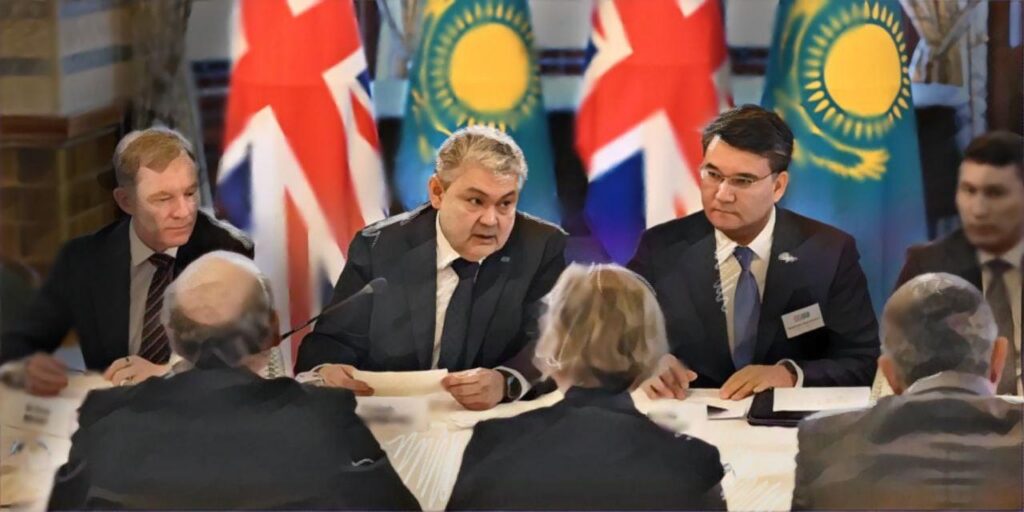
Most significantly, in Astana, Cameron signed the Strategic Partnership and Cooperation Agreement with Kazakhstan, a critical minerals powerhouse, which included broadening and deepening cooperation on critical minerals mining and supply chains. Cameron underscored the purpose of his visit by presenting Britain as an alternative partner for Central Asia, arguing “we are not saying to Kazakhstan or any other country that you have to make a choice, or we’re asking you not to choose your partnership and trade with Russia or China, or with anyone else. We’re here because we believe you should be able to make a choice to partner with us in the way that is good for both our security and our prosperity”.
Cameron’s visit to the region was the most proactive geopolitical initiative conducted by a British statesman toward the region since the end of the Soviet era.
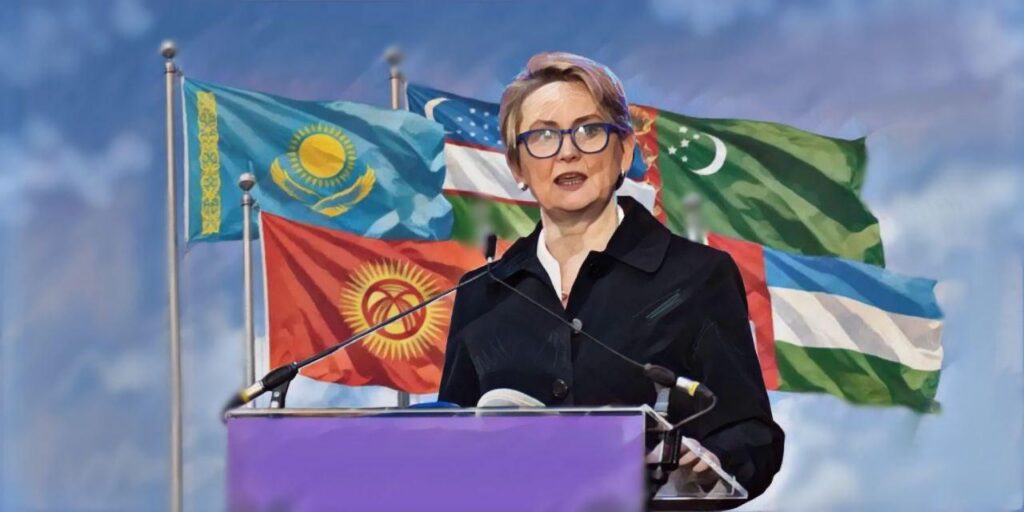
This engagement has continued following the change of government in the UK. In February 2026, Labour Foreign Secretary Yvette Cooper hosted the first-ever CA5+UK Foreign Ministers meeting in London, creating a formal CA5+UK ministerial track. At this meeting, Cooper and the Foreign Minister of Kazakhstan, Yermek Kosherbayev, signed a critical minerals deal to diversify UK supply chains from China. This continuance of Cameron’s effort is particularly important given, as Kosherbayev himself noted, Kazakhstan produces 22 of the 36 critical minerals identified in Britain’s Critical Minerals Strategy, published in November 2025. These minerals include titanium, silicon, rhenium, and uranium (Kazakhstan supplies over 40% of the world’s uranium).
This deep bilateral engagement produces economic and security benefits for all parties, and should be a consistent theme in British geostrategy.
Britain ought to go one step further and include Azerbaijan in this diplomatic grouping, upgrading the CA5 to a C6-UK Ministerial Track. The UK is Azerbaijan’s largest source of FDI, accounting for almost 26% of all FDI inflows. Six hundred British companies operate in Azerbaijan, in particular oil companies such as BP, which has invested $35bn into the oil and gas sector in Azerbaijan.
To build on Cameron’s initiative, greater attention ought to be paid to the C6 amongst British policymakers. The strategic objective of Britain’s engagement in Central Asia ought not to be wildly overambitious, but should focus on continuing to deepen diplomatic, economic, and security ties within the context of the C6 regional architecture and the C6’s strategic diversification push to Western partners. Britain should continue to deepen these ties to present itself as an alternative partner, with an alternative market, to Russia and China. Future U.S.-C6 summits could involve Britain, and Anglo-American initiatives in the region could also include the GCC. Britain should, however, not wait for U.S. leadership, but should use its established relationship with Azerbaijan and its growing ties with the C5 to offer itself as a partner of choice in the region, creating an architecture for continued future engagement in Central Asia and Azerbaijan.
As Central Asian states and Azerbaijan pursue a multi-vector, balanced foreign policy, Britain should present itself as a new network node, complicating Chinese and Russian efforts to dominate Central Asia’s external options. This approach to the C6 would also offer the U.S.-UK relationship a template – akin to AUKUS – for addressing shared challenges, jointly working with regional blocs to counter Russia and China, whilst soliciting the involvement of other interested allies to sustain favorable balances and counter unfavorable balances of power in geopolitically vital and contested areas.
A revitalized British approach to geostrategy would be a welcome development in addressing structural competition in the international system. Consulting the works of Mackinder and Brzezinski would be ideal – pivotal, even – places to start.
The views expressed in this article are those of the author and do not necessarily reflect the official policy or position of the publication, its affiliates, or any other organizations mentioned.