• KGS/USD = 0.01144 0%
  • KZT/USD = 0.00203 0%
  • TJS/USD = 0.10707 0%
  • UZS/USD = 0.00008 0%
  • TMT/USD = 0.28530 0%
  • KGS/USD = 0.01144 0%
  • KZT/USD = 0.00203 0%
  • TJS/USD = 0.10707 0%
  • UZS/USD = 0.00008 0%
  • TMT/USD = 0.28530 0%
  • KGS/USD = 0.01144 0%
  • KZT/USD = 0.00203 0%
  • TJS/USD = 0.10707 0%
  • UZS/USD = 0.00008 0%
  • TMT/USD = 0.28530 0%
  • KGS/USD = 0.01144 0%
  • KZT/USD = 0.00203 0%
  • TJS/USD = 0.10707 0%
  • UZS/USD = 0.00008 0%
  • TMT/USD = 0.28530 0%
  • KGS/USD = 0.01144 0%
  • KZT/USD = 0.00203 0%
  • TJS/USD = 0.10707 0%
  • UZS/USD = 0.00008 0%
  • TMT/USD = 0.28530 0%
  • KGS/USD = 0.01144 0%
  • KZT/USD = 0.00203 0%
  • TJS/USD = 0.10707 0%
  • UZS/USD = 0.00008 0%
  • TMT/USD = 0.28530 0%
  • KGS/USD = 0.01144 0%
  • KZT/USD = 0.00203 0%
  • TJS/USD = 0.10707 0%
  • UZS/USD = 0.00008 0%
  • TMT/USD = 0.28530 0%
  • KGS/USD = 0.01144 0%
  • KZT/USD = 0.00203 0%
  • TJS/USD = 0.10707 0%
  • UZS/USD = 0.00008 0%
  • TMT/USD = 0.28530 0%
09 February 2026

Viewing results 1 - 6 of 24

Kazakhstan’s Cement Exports to Uzbekistan Plunge Amid Customs Dispute

Cement exports from Kazakhstan to Uzbekistan have fallen sharply in recent months, with industry officials blaming a sudden change in Uzbek customs policy. According to Yerbol Akimbayev, head of the Cement and Concrete Producers Association of Kazakhstan (QazCem), new customs rules imposed by Tashkent are significantly disrupting cross-border trade. Speaking to Forbes Kazakhstan, Akimbayev said Uzbek authorities now require Kazakh cement imports to be declared at $300 per ton, ten times the actual sale price of roughly $30 per ton. “Taxes should reflect the real import price. Setting the customs declaration at $300 has made exports economically unfeasible,” he stated. The new pricing rule comes at a difficult time for Kazakhstan’s cement industry, which is already grappling with overcapacity and shrinking export opportunities. The country currently operates 16 cement plants with a combined annual capacity of 18 million tons, while domestic demand has stagnated between 11.5 and 12 million tons over the past five years. Even with demand growing by 15-20% this year, roughly 2 million tons, production still far exceeds consumption. “Operating plants can already produce 17 million tons, and our technical capacity is around 18.5 million tons,” Akimbayev explained. “With new facilities under construction, we could soon reach 22 million tons. That leaves us with about 6 million tons in excess capacity, exports are essential for industry viability.” While Russia remains Kazakhstan’s top cement supplier, followed by Iran, Uzbekistan has become an increasingly important export market in recent years. However, Akimbayev argues that the recent policy shift undermines fair competition and could destabilize the regional cement market. “This isn’t about competition, it’s about clear and objective rules,” he said. “Our producers meet strict quality and safety standards. It’s only fair that importers face similar conditions. When we addressed this imbalance in 2019, the number of import certificates issued dropped by 95%, exposing the scale of shadow trade.” The impact is already being felt across Kazakhstan’s cement sector. A plant in the Kostanay region declared bankruptcy earlier this year, and another in the Akmola region is facing financial strain. At the same time, three new factories are under construction, adding further pressure to an oversupplied market. “Foreign investment is welcome, but it should target sectors that align with the country’s actual needs, like data centers or airports, not industries already in crisis,” Akimbayev warned. Industry leaders in Kazakhstan are urging both governments to resolve the dispute and reestablish stable trade conditions for cement exports.
Kyrgyzstan Begins Construction of Plant to Produce Innovative Canal-Lining Material

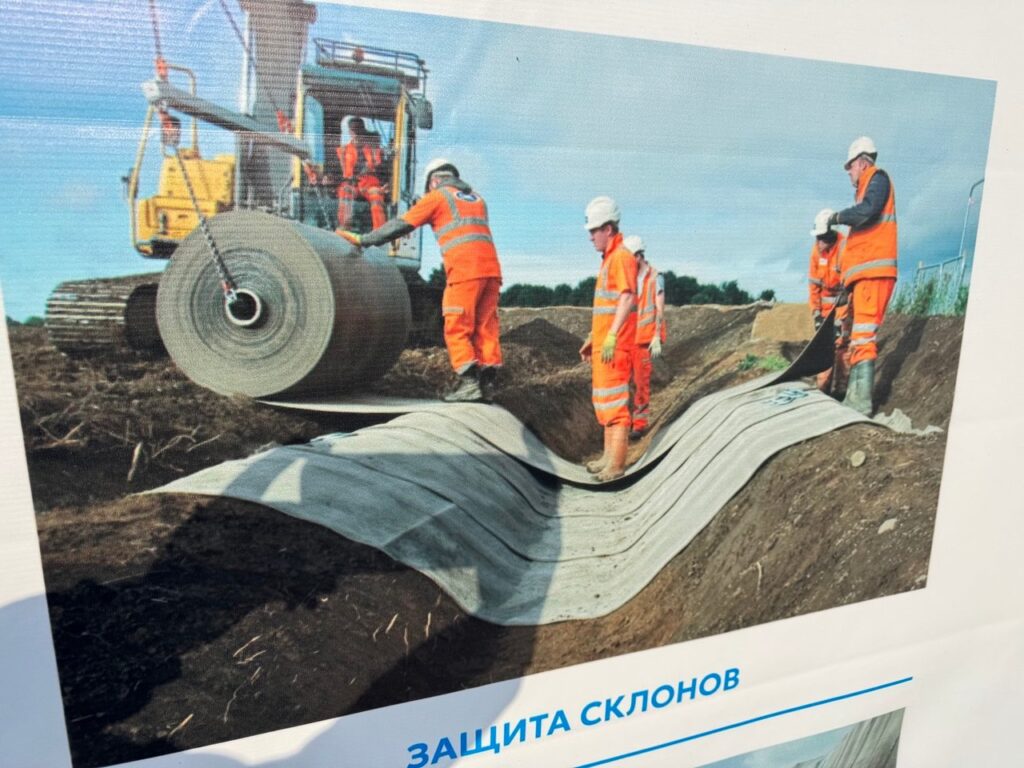
Kyrgyzstan has launched construction of a facility to manufacture concrete canvas, a flexible, cement-based material designed to line irrigation canals, reduce water loss, and prevent erosion. The groundbreaking ceremony was held on October 10. According to the Ministry of Water Resources, Agriculture, and Processing Industry, the €20 million project is a joint initiative between the Kyrgyz government and UK-based Concrete Canvas Ltd. The plant’s first production line, scheduled for commissioning in 2027, will have an annual capacity of 7 million square meters of concrete canvas. A second line with the same capacity is planned to come online five years later. Sixty percent of the output will be allocated for domestic use, with the remaining 40% destined for export. The project is part of a broader national strategy to modernize Kyrgyzstan’s aging irrigation infrastructure amid increasing water shortages. At the launch event, Minister Bakyt Torobayev emphasized the project’s strategic importance. “Thanks to this plant, Kyrgyzstan will reduce its reliance on imports, create jobs, and open new export channels,” he said. “The country has over 30,000 kilometers of irrigation canals, 19,000 km of which are unsurfaced and 11,000 km in need of major repairs. Our goal is to upgrade the irrigation system, reduce water losses, and bring nearly 37,000 hectares of new irrigated land into cultivation.” Torobayev added that the use of concrete canvas could extend the service life of canals to between 50 and 100 years, speed up the construction of new systems, and contribute to greater food security by ensuring stable water access for farmers. By 2030, Kyrgyzstan aims to expand its irrigated farmland by 36,900 hectares. The country currently has approximately 1.023 million hectares of irrigated agricultural land.

With Major Plant Modernization, Kyrgyzstan Seeks To End Construction Woes

Kyrgyzstan’s construction sector received a significant boost on June 16 with the launch of a new production line at the Kant cement plant, the country’s largest cement producer. Located in the city of Kant, about 20 kilometers east of Bishkek, the plant has been in operation since 1964 and remains a cornerstone of the national construction materials industry. Its modernization was carried out in partnership with China’s Beijing Triumph Engineering and the Eurasian Development Bank, with total investments exceeding $60 million. In 2024, the plant produced 1.156 million tons of cement. The new production line is expected to add 800,000 tons of clinker capacity annually, enhancing the plant’s output and improving cement quality to better meet domestic demand. At the launch ceremony, President Sadyr Japarov emphasized the rapid growth of Kyrgyzstan’s construction sector, citing a surge in infrastructure development across the country. “In just the first three months of 2025, 3,300 residential buildings totaling 419,000 square meters were commissioned, 32.2% more than during the same period last year,” Japarov stated. Despite this expansion, Kyrgyzstan has recently faced a cement shortage due to soaring demand driven by the construction of homes, schools, roads, and social infrastructure. The surge has also led to price hikes, prompting government action. The Times of Central Asia previously reported that the Ministry of Economy and Commerce has proposed designating cement as a “socially significant good,” a status that allows the state to regulate the prices of essential materials. The ministry argued that unchecked pricing has inflated housing costs and impeded the timely completion of social projects. The modernization of the Kant cement plant is expected to help ease these pressures by increasing supply, stabilizing prices, and supporting Kyrgyzstan’s continued infrastructure development.

Kyrgyz Authorities Seek to Classify Cement as Socially Significant

The Ministry of Economy and Commerce of the Kyrgyz Republic has released a justification for its decision to include cement on the list of socially significant goods, a designation that allows the government to regulate prices for essential items, including construction materials. According to the ministry, the absence of state oversight has led to unjustified increases in cement prices, placing upward pressure on housing costs and hindering the construction of social and infrastructure projects. “This situation limits the population's access to quality, affordable housing and slows the country’s socio-economic development,” the ministry stated. By classifying cement as a socially significant good, the government gains the authority to regulate its price. The move aims to stabilize the construction market, lower building costs, and improve housing affordability for the public. Officials at the ministry expressed confidence that the measure would not cause any significant negative consequences. The only potential downside, they noted, would be a reduction in profits for cement manufacturers and intermediaries, primarily in conditions of market volatility where price ceilings may be imposed. Kyrgyz economists support the move, arguing that state price regulation will help stabilize the domestic cement market, stimulate the construction industry, and improve the broader socio-economic outlook. They also believe it will bolster regulatory oversight of the construction sector. The ministry further warned that the lack of effective pricing mechanisms poses risks of shortages or sudden price spikes during periods of heightened demand. In contrast, stable cement prices would boost confidence among construction firms, enabling better planning and project implementation. To ease supply constraints, the Kyrgyz cabinet previously lifted a temporary ban on cement imports, aiming to satisfy a growing demand from construction companies and the general population through additional foreign supply.

Kyrgyzstan Lacks Cement Amid Booming Construction

Kyrgyzstan is experiencing a cement shortage as new high-rise residential buildings and thousands of one- and two-story houses are being erected nationwide. This booming construction requires a large amount of cement, which has caused huge demand for the product. Local media quoted Syrgak Omorov, a representative of the Anti-monopoly Regulation Service, as saying that domestic producers are not capable of meeting the growing need. The Kant cement plant, the country’s largest cement producer, typically produces 600,000 tons of cement annually, but this year the production volume has already exceeded a million tons. According to Omorov, the Kant cement plant can produce up to 4,000 tons daily, but market demand is 5,000 tons. The official attributes the shortage to the unprecedented scale construction of housing and social facilities, such as schools. Earlier this month, the Chairman of the Cabinet of Ministers of the Kyrgyz Republic, Akylbek Japarov, announced that the number of new schools and residential buildings constructed in Kyrgyzstan has exceeded Soviet-era figures. Japarov cited data from the National Statistical Committee, saying that 1.560 million square meters of residential housing were built in Kyrgyzstan when it was part of the Soviet Union in 1990. In 2023, independent Kyrgyzstan constructed 1.587 million square meters of housing. The highest numbers of secondary schools were built in 1968 and 1987 — 50 in each of those years, while in 2023, Kyrgyzstan built 105 new schools. Last week, TCA reported that Kyrgyzstan is also suffering from a shortage of laborers, with the head of the construction agency in the Kyrgyz Republic stating that the construction industry alone urgently needs at least 10,000 workers.

New Chinese-Kazakh cement plant starts operation in Kazakhstan

NUR-SULTAN (TCA) — A new Chinese-Kazakh cement plant with designed daily production capacity of 2,500 tons of clinker cement was officially put into operation last Friday in southwest Kazakhstan's Kyzylorda region, Xinhua news agency reported. Continue reading