
• KZT/USD = 0.00220
  • TJS/USD = 0.10800
  • UZS/USD = 0.00009
  • TMT/USD = 0.29850
  • KZT/USD = 0.00220
  • TJS/USD = 0.10800
  • UZS/USD = 0.00009
  • TMT/USD = 0.29850
  • KZT/USD = 0.00220
  • TJS/USD = 0.10800
  • UZS/USD = 0.00009
  • TMT/USD = 0.29850
  • KZT/USD = 0.00220
  • TJS/USD = 0.10800
  • UZS/USD = 0.00009
  • TMT/USD = 0.29850
  • KZT/USD = 0.00220
  • TJS/USD = 0.10800
  • UZS/USD = 0.00009
  • TMT/USD = 0.29850
  • KZT/USD = 0.00220
  • TJS/USD = 0.10800
  • UZS/USD = 0.00009
  • TMT/USD = 0.29850
  • KZT/USD = 0.00220
  • TJS/USD = 0.10800
  • UZS/USD = 0.00009
  • TMT/USD = 0.29850
  • KZT/USD = 0.00220
  • TJS/USD = 0.10800
  • UZS/USD = 0.00009
  • TMT/USD = 0.29850
07 September 2026

Viewing results 1 - 6 of

Afghanistan Critical Minerals: Can Central Asia Help Unlock Them?

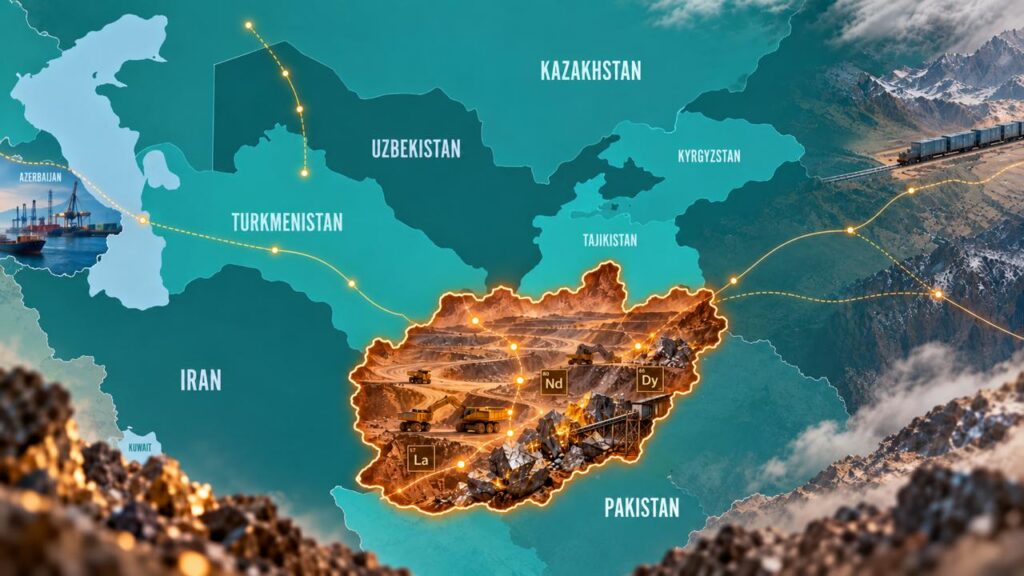
Central Asia is increasingly being drawn into the global competition for critical minerals. To the south lies Afghanistan, where much of the country’s substantial mineral wealth remains undeveloped. Kabul is now trying to turn those resources into an economic and diplomatic asset. Amir Khan Muttaqi, foreign minister in the Taliban government, told the Financial Times that Afghanistan would “definitely” welcome U.S. investment in mining, infrastructure, agriculture, and trade. Relations between the two countries, he said, should be viewed through the opportunities for future cooperation rather than the lens of 20 years of war. At the same time, Muttaqi invited the United States to reopen its embassy in Kabul while ruling out a return of U.S. control over Bagram Air Base. This was not an isolated overture. In mid-August, Muttaqi told The New York Times that the United States could reopen its embassy and invest in Afghanistan’s mineral resources, dams, and roads. On August 30, he told Kyodo News that Kabul was seeking to normalize relations with the United States on the basis of mutual respect and shared interests, while formal recognition remained “a matter for the next stage.” Taken together, these statements amount to a consistent diplomatic approach. Mineral resources are becoming one of the enticements the Taliban is using to offer Washington a new basis for bilateral relations: economic interests could open the way to broader engagement. Kabul Offers Resources, Washington Rejects the Pitch The timing of the offer is no coincidence. The Trump administration has significantly increased its focus on critical minerals and the resilience of supply chains. On July 30, the White House described U.S. dependence on foreign sources of critical materials as a growing risk to national security and authorized the use of Defense Production Act powers to restrict exports of certain recoverable critical minerals and materials. Ten days earlier, Trump signed an executive order aimed at strengthening defense supply chains and increasing reliance on critical materials and components sourced domestically or from allied countries. Kabul is trying to make itself relevant to this debate by presenting Afghanistan as a potential source of minerals and a destination for U.S. investment. The U.S. response, however, immediately demonstrated the limits of that strategy. On September 2, the State Department said in a written response to Voice of America that it had no plans to engage with the Taliban on developing critical mineral resources. The department pointed to the Taliban’s sanctions status and said U.S. investment could increase the financial resources available to Afghanistan’s current authorities. For Washington, the attractiveness of Afghanistan’s mineral resources cannot, for now, be separated from the political status and policies of those who control them. "$1 Trillion in Mineral Wealth" In 2007, the U.S. Geological Survey (USGS), working with the Afghanistan Geological Survey, conducted a major assessment of the country’s mineral resources. Researchers compiled data on known deposits and assessed the potential for undiscovered resources, covering commodities including copper, iron, gold, lithium, and rare earth elements. In 2010, a Pentagon task force put the gross value of Afghanistan’s mineral...

Five Years Without Recognition: How Central Asia Is Building Relations with Afghanistan

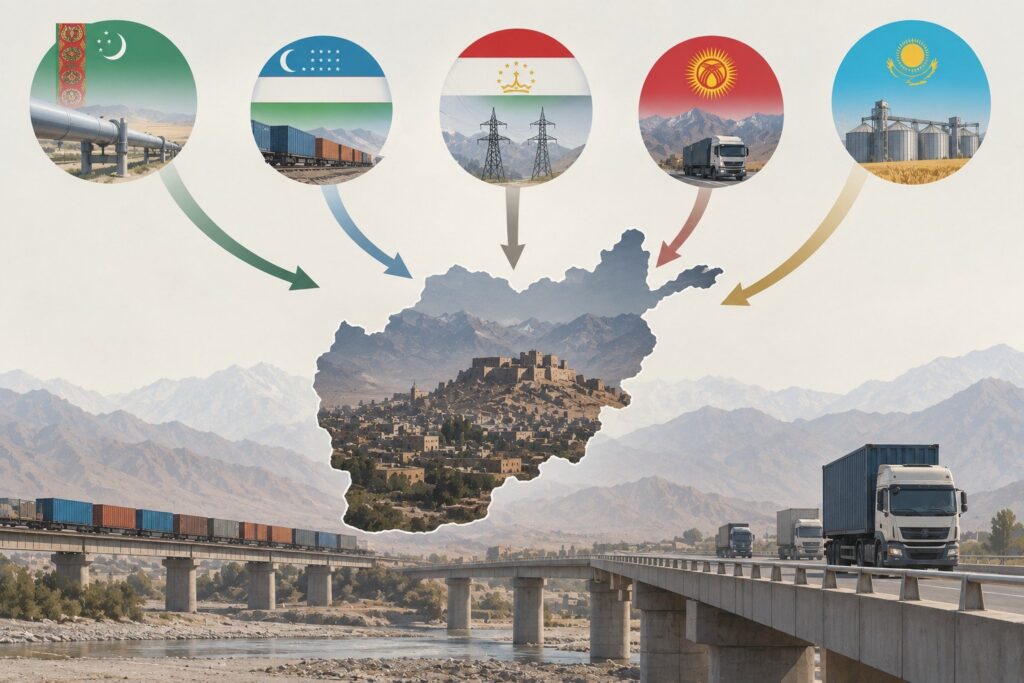
Five years of Taliban rule have shown that international relations with an unrecognized government can go much further than many imagined after the fall of Kabul in August 2021. Russia remains the only country to have formally recognized Afghanistan’s current authorities, yet the complete isolation some expected has not materialized. Afghanistan receives foreign diplomats and participates in regional talks, while neighboring states pursue trade and infrastructure projects with Kabul. Over the past five years, the Taliban have signed mining agreements worth billions of dollars, including projects involving Chinese and Iranian capital. This diplomatic arrangement has become possible because international approaches toward Afghanistan have diverged. Restrictions on the rights of women and girls continue to block broader international legitimization of the Taliban. In August, the UN described the situation facing Afghan women as the world’s most severe women’s rights crisis. At the same time, neighboring states have practical issues to address involving trade, security, water, energy, and transportation. Central Asia has gone particularly far in developing practical engagement. Afghanistan is gradually being integrated into regional economic ties without any formal change in its international status. Engagement Without Recognition On April 5, 2026, Kabul hosted the first dedicated Central Asia-Afghanistan Consultative Dialogue, attended by representatives of all five Central Asian states. The participants discussed economic ties and regional connectivity. The format itself was presented as a multilateral political mechanism for regular engagement between Afghanistan and Central Asia. This is already more than a collection of separate contacts with Kabul. The region is gradually developing its own model for dealing with the Taliban, driven by issues that cannot simply be left unresolved. Trade and transportation continue regardless of diplomatic status. In the first quarter of 2026 alone, rail freight between Kazakhstan and Afghanistan reached 1 million tons, up 77% year over year. Tajikistan, which long maintained the toughest stance toward the Taliban among Afghanistan’s Central Asian neighbors, has also expanded working contacts with Kabul, although border security remains a serious concern. Tajik officials say five Chinese citizens were killed in two attacks launched from Afghan territory in late 2025, while Dushanbe has long warned about militant groups operating in Afghanistan, including Islamic State Khorasan Province (ISKP). So far, this model has allowed political recognition to remain separate from practical cooperation. But the region is gradually moving beyond trade and diplomatic contacts toward proposed infrastructure projects with multibillion-dollar price tags. From Trade to Long-Term Bets Afghanistan’s economy is growing, but it remains too weak to finance major infrastructure projects on its own. The World Bank estimated real GDP growth at 4.8% in 2025, but the return of around 3.7 million Afghans and rapid population growth contributed to a 5.6% decline in GDP per capita. Investment remains weak, while businesses have limited access to financing. The financial system also maintains connections with the outside world through narrow channels. The World Bank has noted limited correspondent banking relationships, a lack of direct access to accounts in the United States, and the significant role of the informal hawala...