• KZT/USD = 0.00220
  • TJS/USD = 0.10850
  • UZS/USD = 0.00008
  • TMT/USD = 0.29850
  • KZT/USD = 0.00220
  • TJS/USD = 0.10850
  • UZS/USD = 0.00008
  • TMT/USD = 0.29850
  • KZT/USD = 0.00220
  • TJS/USD = 0.10850
  • UZS/USD = 0.00008
  • TMT/USD = 0.29850
  • KZT/USD = 0.00220
  • TJS/USD = 0.10850
  • UZS/USD = 0.00008
  • TMT/USD = 0.29850
  • KZT/USD = 0.00220
  • TJS/USD = 0.10850
  • UZS/USD = 0.00008
  • TMT/USD = 0.29850
  • KZT/USD = 0.00220
  • TJS/USD = 0.10850
  • UZS/USD = 0.00008
  • TMT/USD = 0.29850
  • KZT/USD = 0.00220
  • TJS/USD = 0.10850
  • UZS/USD = 0.00008
  • TMT/USD = 0.29850
  • KZT/USD = 0.00220
  • TJS/USD = 0.10850
  • UZS/USD = 0.00008
  • TMT/USD = 0.29850
01 November 2026

Viewing results 1 - 6 of 4

Citibank Kazakhstan Chairperson Sees Opportunities for U.S.-Central Asia Collaboration

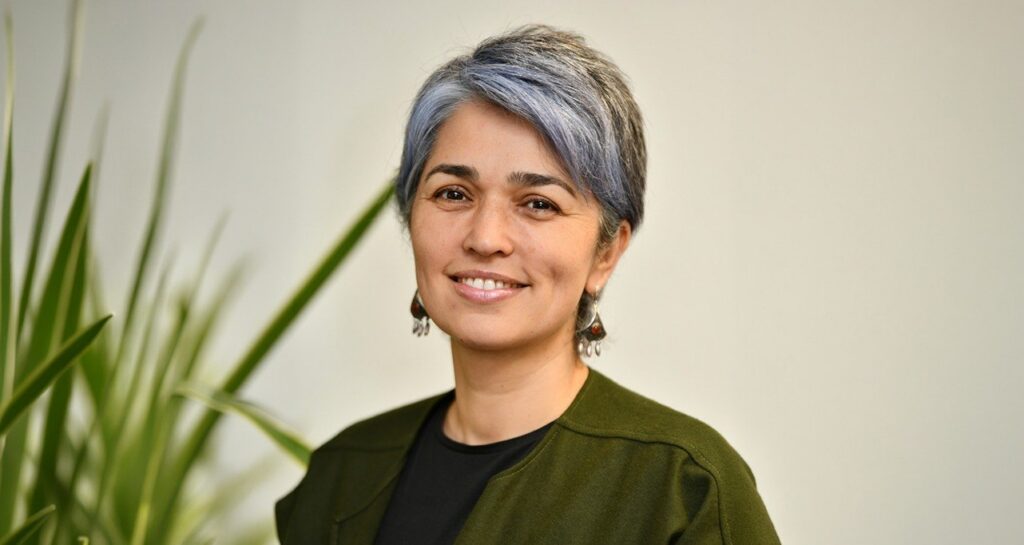
Foreign investors are looking outside Kazakhstan’s oil and gas sector. But turning that interest into investment will require predictable regulations and stronger cross-border connections, according to Saule Zhakayeva, chairperson of Citibank Kazakhstan’s management board and president of the American Chamber of Commerce in Kazakhstan (AmCham). Citi has operated in Kazakhstan since 1994, when it opened a representative office in Almaty. In an interview with The Times of Central Asia, Zhakayeva discussed the country’s investment climate and its role as a regional business hub. She also addressed the future of economic relations between the United States and Kazakhstan. TCA: How is foreign investor interest in Central Asia evolving, and which of Kazakhstan’s strengths are already translating into investment? Where do you see the strongest commercial opportunities over the next three to five years, and what would help turn untapped potential into committed capital? Zhakayeva: Investors today are looking for markets that combine economic stability, access to natural resources, strategic geography, and long-term growth potential. Kazakhstan offers each of these attributes. The country has established itself as the largest economy in Central Asia, maintains a relatively strong institutional framework, and continues to pursue reforms aimed at improving the investment climate. Most notably, investor interest is becoming increasingly diversified. Historically, foreign investment was concentrated primarily in oil and gas. Today, we see growing interest in transportation and logistics, renewable energy, critical minerals, digital infrastructure, financial services, manufacturing, and data-related investments. This growing interest is also reflected in the increasing level of engagement between international investors and Kazakhstan. As President of the American Chamber of Commerce in Kazakhstan, I have seen firsthand the strong momentum in U.S.-Kazakhstan business relations. Throughout 2026, Kazakhstan has hosted a growing number of high-level business engagements involving senior representatives of American companies and institutions, including the U.S. Chamber of Commerce Business Mission to Kazakhstan and other executive-level dialogues focused on investment, trade, digital transformation, energy, and infrastructure. AmCham Kazakhstan also led its first business delegation to Washington, D.C., bringing member companies together to strengthen bilateral economic ties, promote Kazakhstan's investment opportunities, and advocate for deeper economic cooperation. These activities underscore the growing recognition of Kazakhstan and Central Asia as strategically important destinations for long-term investment and commercial cooperation. More importantly, they are beginning to translate into tangible outcomes. For example, in 2026, the U.S. International Development Finance Corporation announced plans to explore up to $700 million in financing opportunities to support the development of Kazakhstan's critical minerals sector. Kazakhstan's location at the crossroads of Europe and Asia has become increasingly important as global companies diversify supply chains and seek alternative trade routes. The development of the Trans-Caspian International Transport Route is further strengthening Kazakhstan's role in regional and global commerce, creating opportunities far beyond traditional sectors. Similar dynamics are being observed across the region, where alternative trade routes, logistics investments, and infrastructure development are becoming increasingly important to global investors. We are also seeing growing international interest in strategic sectors linked to global energy security and the energy transition....

Uzbekistan Confirms Cancellation of Saneg Oil Licenses

Uzbekistan has revoked some oil-field licenses held by Sanoat Energetika Guruhi (Saneg), a major Uzbek private oil and gas producer, after the company failed to develop deposits and meet licensing conditions. The move is another setback for the company, formerly known as Jizzakh Petroleum, following the collapse of its $100 million agreement to purchase the Fergana Oil Refinery. When the refinery sale was announced in 2022, Saneg was reported to account for approximately 80% of Uzbekistan's oil production and hold development rights to 103 oil and gas fields. Officials have not said how many licenses have been canceled, which fields are affected, or what impact the decision will have on the company's operations. Speaking at an October 8 press conference, Sohibjon Murodov, director of the State Assets Management Agency, said the affected deposits had not been developed and licensing conditions had not been met. He did not disclose when the licenses were canceled. The Ministry of Mining Industry and Geology is now preparing measures for the affected fields. Asked why Saneg had originally received development rights without competitive auctions, Murodov explained that under the previous system, the first applicant could obtain a license after paying the prescribed fees. Auctions for hydrocarbon licenses were introduced in 2023–2024. He stressed that the deposits themselves had remained state property. A Privatization Reversed The government transferred management of the Fergana refinery to Saneg, then operating as Jizzakh Petroleum, in 2020. In May 2022, it announced the $100 million sale, accompanied by a separate commitment to invest $380 million in modernization. The transaction was intended to address longstanding problems. Reporting at the time described shortages of raw materials and said the refinery had not undergone major modernization or reconstruction for two decades. Saneg's investment commitments covered improvements to fuel production and processing facilities. Despite the announced sale, the state still held 58.5% of the refinery in May 2026, while Saneg owned 41.5%. By June, the State Assets Management Agency was its sole owner, according to registry information reported by Interfax. Explaining the termination in October, Murodov said financial difficulties in the investor's other projects had prevented it from making purchase payments on time. The contract allowed termination if payments were three months overdue, he said. The agency consulted international legal advisers and notified Saneg before ending the agreement. Saneg had previously maintained that it had fulfilled its payment and investment obligations, according to Interfax's June report. However, the amount of the overdue payments remains unclear, as does how earlier payments and investments will be treated and how much modernization work was completed. State-Directed Debt Recovery The state had already intervened in January to address financial problems at Saneg, oilfield services company Eriell, and engineering contractor Enter Engineering. Uzbek reporting has linked all three businesses to businessman Bakhtiyor Fozilov. A January 22 government resolution recorded combined unpaid wages of approximately $131 million owed to 38,700 employees across the three companies, according to reporting by Spot in March. The government ordered the sale of non-core assets to...

Kazakhstan Expands Technology Agenda, Inviting Investors into Space and Artificial Intelligence

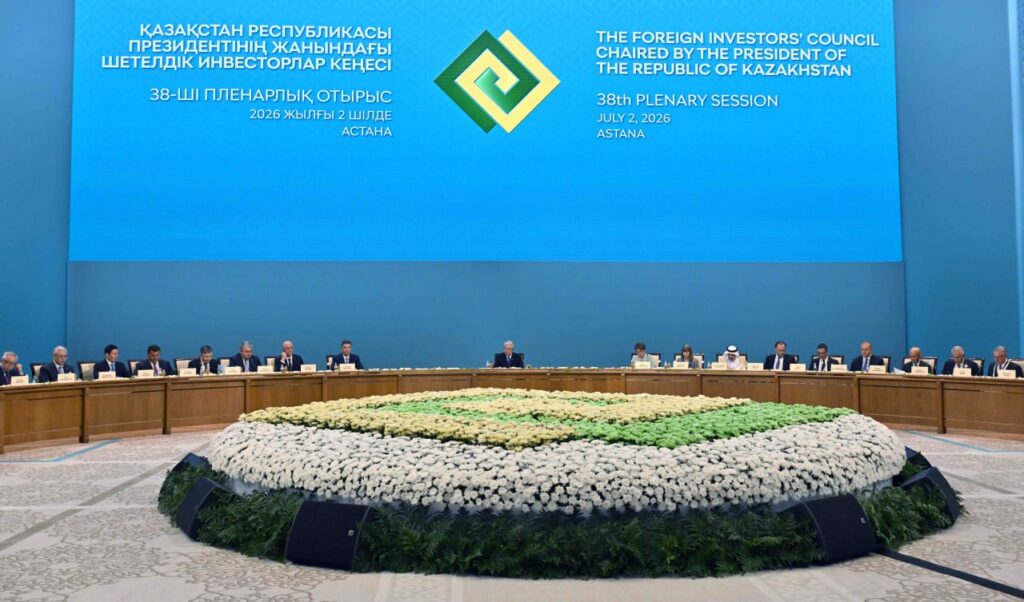
Kazakhstan is stepping up its focus on the digital economy and high technology, expanding its investment agenda beyond the resource sector. At a meeting of the Foreign Investors’ Council on July 2, officials presented several areas they see as potential new growth drivers: artificial intelligence, digital infrastructure, space technology, and the innovation hub of Alatau City. For Astana, the push is part of a broader economic development strategy. President Kassym-Jomart Tokayev said Kazakhstan’s economy grew by 6.5% in 2025, while GDP has exceeded $300 billion. According to Tokayev, accumulated net foreign direct investment has surpassed $150 billion, making Kazakhstan Central Asia’s largest recipient of foreign investment. Against this backdrop, the government is increasingly focused on the next stage of development: building digital industries that could help shape the region’s economic architecture in the coming years. Artificial intelligence is central to this strategy. Tokayev described AI as one of the key drivers of the global economy and confirmed that 2026 has been declared the Year of Artificial Intelligence and Digital Development in Kazakhstan. The country has adopted a new package of sector-specific legislation, including the Digital Code and the Law on Artificial Intelligence, and has created the Ministry of Artificial Intelligence and Digital Development. One of the most prominent projects in this sector is Data Center Valley, an infrastructure cluster intended to host large-scale computing and data-processing facilities. According to the president, the project has already attracted interest from Amazon, G42, and other international technology companies. For Kazakhstan, the development of data centers has strategic importance. As global demand for computing power and AI infrastructure grows, countries with access to energy, favorable logistics, and clear regulation are becoming increasingly attractive destinations for international capital. A separate part of the strategy focuses on the space sector. Deputy Prime Minister and Minister of Artificial Intelligence and Digital Development Zhaslan Madiyev invited foreign investors to participate in building a joint space ecosystem. According to Madiyev, Kazakhstan sees the sector as broader than traditional satellite infrastructure, viewing it as a technological platform that can combine spacecraft manufacturing, launches, maintenance, Earth observation, and AI-driven analytics. This approach reflects a wider global trend. The space technology market is entering a new phase of growth, driven by private investment, satellite communications, geo-analytics, and big data services. For Kazakhstan, this creates an opportunity to use its accumulated expertise and infrastructure, including its space-sector legacy at Baikonur, which remains leased to Russia until 2050. Another pillar of the digital strategy is Alatau City, an innovation hub being built near Almaty. The authorities view it as an experimental platform for digital assets, fintech, autonomous transport, and artificial intelligence technologies. According to Madiyev, Alatau City is expected to become one of the first sites in the region for testing autonomous vehicles, drones, and tokenized solutions. Tokayev said the city will be built on a “digital by default” principle, meaning that administrative and public services will be designed in digital form from the outset. The Times of Central Asia previously reported that Astana...

Uzbekistan-Born Mansurova Named EBRD Regional Head for Kyrgyzstan, Tajikistan, and Turkmenistan

The European Bank for Reconstruction and Development (EBRD) has named Nodira Mansurova as its next regional head for Kyrgyzstan, Tajikistan, and Turkmenistan, putting her in charge of operations in three Central Asian markets where the bank has invested more than €2.5 billion combined. Mansurova will be based in Bishkek and is expected to take up the post on September 1, 2026. She will replace Ayten Rustamova, who has led the regional office since 2021. The appointment gives Mansurova oversight of one of the EBRD’s more varied regional portfolios in Central Asia. As of March 31, 2026, the bank’s cumulative investment stood at €1.177 billion in Kyrgyzstan, €1.059 billion in Tajikistan, and €327 million in Turkmenistan. The three countries present different operating environments for the bank. In Kyrgyzstan and Tajikistan, EBRD activity has included infrastructure, private-sector development, financial services, and energy-related projects. In Turkmenistan, the bank’s work has been more limited and has focused mainly on private businesses and financial-sector activity. Mansurova has worked for the EBRD since 2001. Born in Uzbekistan and now a British citizen, she has held roles in London and in several countries where the bank operates. Her previous posts included regional head of SME Finance and Development for Central Asia, based in Almaty, and head of the EBRD’s operations in Tunisia. Her new role comes as international financial institutions continue to focus on infrastructure, energy transition, private-sector growth, and regional connectivity in Central Asia.