• KGS/USD = 0.01144 0%
  • KZT/USD = 0.00201 0%
  • TJS/USD = 0.10433 -0.19%
  • UZS/USD = 0.00008 0%
  • TMT/USD = 0.28571 0.28%
  • KGS/USD = 0.01144 0%
  • KZT/USD = 0.00201 0%
  • TJS/USD = 0.10433 -0.19%
  • UZS/USD = 0.00008 0%
  • TMT/USD = 0.28571 0.28%
  • KGS/USD = 0.01144 0%
  • KZT/USD = 0.00201 0%
  • TJS/USD = 0.10433 -0.19%
  • UZS/USD = 0.00008 0%
  • TMT/USD = 0.28571 0.28%
  • KGS/USD = 0.01144 0%
  • KZT/USD = 0.00201 0%
  • TJS/USD = 0.10433 -0.19%
  • UZS/USD = 0.00008 0%
  • TMT/USD = 0.28571 0.28%
  • KGS/USD = 0.01144 0%
  • KZT/USD = 0.00201 0%
  • TJS/USD = 0.10433 -0.19%
  • UZS/USD = 0.00008 0%
  • TMT/USD = 0.28571 0.28%
  • KGS/USD = 0.01144 0%
  • KZT/USD = 0.00201 0%
  • TJS/USD = 0.10433 -0.19%
  • UZS/USD = 0.00008 0%
  • TMT/USD = 0.28571 0.28%
  • KGS/USD = 0.01144 0%
  • KZT/USD = 0.00201 0%
  • TJS/USD = 0.10433 -0.19%
  • UZS/USD = 0.00008 0%
  • TMT/USD = 0.28571 0.28%
  • KGS/USD = 0.01144 0%
  • KZT/USD = 0.00201 0%
  • TJS/USD = 0.10433 -0.19%
  • UZS/USD = 0.00008 0%
  • TMT/USD = 0.28571 0.28%

Viewing results 1 - 6 of 29

EDB Estimates Central Asia-China Transport Connectivity Projects at $9 Billion

China has emerged as the principal investor in regional transport infrastructure, with analysts from the Eurasian Development Bank (EDB) estimating that cross-border projects linking Central Asia and China will require $9 billion in funding through 2035. According to the EDB, 12 projects valued at more than $9 billion are either underway or in the planning stages. These account for 17% of the $52.8 billion allocated to 90 transport corridor projects across Central Asia. The initiatives are expected to significantly boost trade and cargo flows with China, already the region’s largest trading partner. China-Kyrgyzstan-Uzbekistan Railway The most ambitious among them is the long-anticipated China-Kyrgyzstan-Uzbekistan (CKU) railway, a $4.7 billion project that will establish the first direct rail link between China and these two Central Asian states. Half of the funding will come from a Chinese concessional loan, while the remainder will be provided by a joint venture created to build and operate the railway. China will hold a 51% stake in the venture, while Kyrgyzstan’s contribution is valued at $575.75 million. On August 31 in Tianjin, Kyrgyz President Sadyr Japarov met with Chinese President Xi Jinping. Following the meeting, officials signed a letter of intent regarding China’s preferential loan to finance Kyrgyzstan’s share, according to the Kyrgyz presidency. The 523-kilometer railway officially broke ground on December 27, 2024, in Jalal-Abad, Kyrgyzstan. Once completed, the CKU will link Kashgar (China) with Torugart, Makmal, and Jalal-Abad (Kyrgyzstan), and Andijan (Uzbekistan). The line is projected to carry up to 15 million tons of cargo annually, significantly reshaping regional trade flows. Currently, Kazakhstan is the only Central Asian country with a direct railway connection to China. Kazakhstan’s Leading Role Kazakhstan leads Central Asia in cross-border infrastructure investment with China, accounting for $3.4 billion or 37% of the total. Key projects include: The modernization of the Dostyk-Moiynty railway section (836 km), scheduled for completion in 2025, which will increase freight capacity fivefold. Construction of the Ayagoz-Bakhty railway line and the launch of a third border crossing with China, aimed at further diversifying transit corridors. Regional Impact The scale and scope of these initiatives underscore the strategic importance of transport connectivity in China-Central Asia relations, particularly under the Belt and Road Initiative. By 2035, upgraded infrastructure is expected not only to enhance regional logistics and reduce transport bottlenecks but also to strengthen Central Asia’s position as a vital transit corridor between China and Europe, fostering deeper economic integration across the Eurasian continent.

Rails Through the Mountains: Kyrgyzstan Expanding Network in All Directions

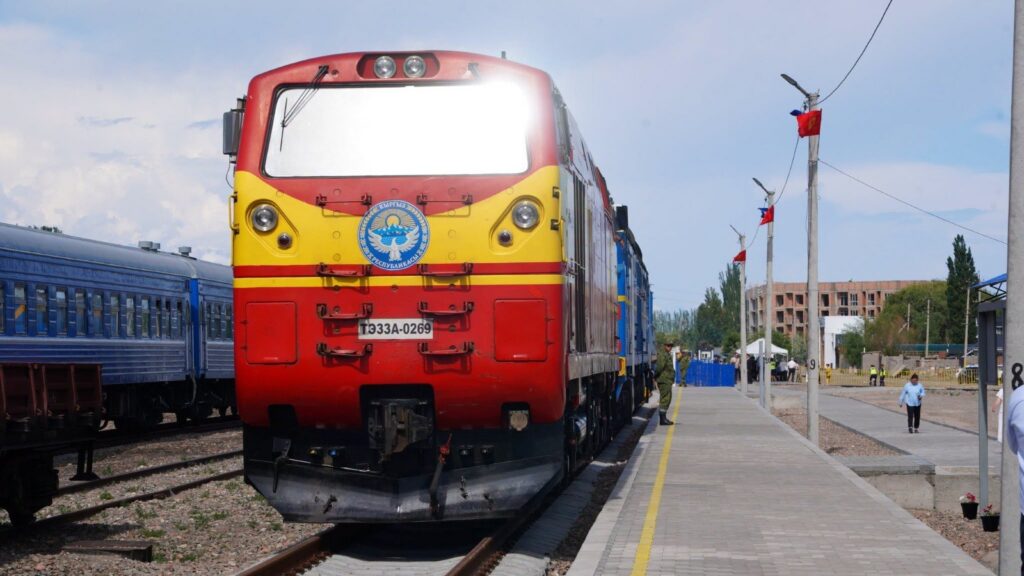
On August 25, in the remote village of Kosh-Dobo in central Kyrgyzstan, construction finally started on Kyrgyzstan’s section of a railway that will connect the country to China and Uzbekistan. It is one of the most important projects in Kyrgyzstan’s 34 years of independence. And it is not the only railway project in Kyrgyzstan, as the country is at last moving to better connect by rail, both internally and with its neighbors. Three Dormant Decades For the first 30 years of independence, no new railway tracks were laid in Kyrgyzstan, but that is now changing. Kyrgyzstan is about 90% mountainous. When Kyrgyzstan became independent in late 1991 after the collapse of the Soviet Union, there were two railways leading into Kyrgyzstan. Both came from Uzbekistan to the west. A northern line connected Uzbekistan’s capital, Tashkent, through southern Kazakhstan to Kyrgyzstan’s capital, Bishkek, and from there continued eastward to Issyk-Kul, a large lake and tourist area in the northeastern corner of the country. The other railway extended only a few dozen kilometers from the Uzbek border to Osh in southern Kyrgyzstan. The length of the two railways combined amounted to some 320 kilometers. Work started on the 186-kilometer Balykchy-Kochkor-Kara-Keche railway at the end of March 2022. Balykchy is located at the western tip of Issyk-Kul. Since Soviet times, it has been the last stop on the train that originates in Uzbekistan and travels through Bishkek. Kochkor is a village in Naryn Province, about 63 kilometers southwest of Balykchy. Some 120 kilometers further to the southwest is Kara-Keche, one of Kyrgyzstan’s primary coal-mining sites and the source of much of the coal used in the thermal power plant that supplies heat and electricity to Bishkek. Chairman of Kyrgyzstan’s Cabinet of Ministers Adylbek Ksaymaliyev said in May 2025 that there are already plans to connect this railway line to the China-Kyrgyzstan-China line being built through southern Naryn Province. The Eurasian Development Bank recently agreed to fund a feasibility study for extending the railway from Balykchy to the town of Cholpon-Ata, the main tourist town on the north shore of Issyk-Kul, with a stop at the Issyk-Kul airport at Tamchy. As it stands now, people headed to Cholpon-Ata by rail must switch from the train to car or bus at Balykchy to travel the remaining 80 kilometers to Cholpon-Ata. In May 2024, President Sadyr Japarov called for that railway line to eventually reach the town of Karakol, at the eastern end of Issyk-Kul, some 140 kilometers from Cholpon-Ata. Naryn is the biggest province in Kyrgyzstan in terms of territory, but its connections to the rest of the country are tenuous, particularly in the northeastern part of the province where Kochkor and Kara-Keche are located. Kosh-Dobo is in the southern part of Naryn Province, near the borders of the Jalal-Abad and Osh provinces. The village is located on the route of the long-awaited China-Kyrgyzstan-Uzbekistan (CKU) railway that will run from Kashgar in China’s Xinjiang region to Andijan, Uzbekistan. The project was first proposed some 30...

Kyrgyzstan Advances New Cross-Border Transport Corridor with China via Bedel Pass

Kyrgyzstan is advancing plans to develop a new international transport corridor through the Bedel checkpoint on the Chinese border, aiming to boost cross-border trade and reduce reliance on high-altitude routes that are often impassable in winter. Bedel Corridor Gains Momentum The proposed corridor was a central focus during Deputy Chairman of the Cabinet of Ministers Bakyt Torobaev’s July 8 visit to Beijing. Torobaev met with Chinese corporate leaders to discuss the construction of the Barskoon-Uchturfan-Aksu highway, which would link Kyrgyzstan’s Issyk-Kul Region with China’s Aksu Prefecture in Xinjiang via the Bedel Pass. The Bedel checkpoint, located in a remote mountainous region of southeastern Kyrgyzstan, was first opened under a simplified regime in September 2024. It lies roughly equidistant from Karakol and Aksu and currently operates with temporary infrastructure. According to the Kyrgyz government, the route’s full-scale development, including a modern highway and internationally compliant border facilities, is scheduled for completion by 2027. Bedel will become Kyrgyzstan’s third automobile crossing point with China, alongside the Irkeshtam (Osh Region) and Torugart (Naryn Region) passes. These older routes are frequently disrupted by severe winter weather. The new corridor is expected to offer a more reliable and time-efficient alternative for cargo moving between Xinjiang and Kyrgyzstan, reducing dependence on the longer Kashgar-Torugart-Naryn-Bishkek route. In Beijing, Torobaev and Chinese officials agreed to organize reciprocal business visits and establish joint working groups with representatives from both governments to coordinate the project. The corridor is expected to strengthen Kyrgyzstan’s role as a regional transit hub, facilitating the re-export of Chinese goods to third countries. Bilateral trade between Kyrgyzstan and China reached $23 billion in 2024, an eightfold increase in recent years. Progress on China-Kyrgyzstan-Uzbekistan Railway During his Beijing visit, Torobaev also attended the 12th World Congress on High-Speed Rail, where he emphasized the strategic importance of the China-Kyrgyzstan-Uzbekistan (CKU) railway project. The 523-kilometer line includes 304 kilometers running through Kyrgyz territory. Construction officially began on December 27, 2024, in Jalal-Abad. Once complete, the railway will link China’s Kashgar with the Kyrgyz cities, Torugart, Makmal, and Jalal-Abad, before continuing to Andijan in Uzbekistan. The project is designed to handle up to 15 million tons of cargo annually and carries an estimated investment of $4.7 billion. Torobaev noted that the Makmal transshipment station will serve as the core logistics hub on the Kyrgyz side, featuring customs infrastructure, storage facilities, and multimodal services to ensure smooth cargo transit between China and Uzbekistan. “The CKU railway is the shortest route between East and West,” he said. “It will connect China to European and Middle Eastern markets, forming a vital transport artery.” Torobaev also announced a proposed rail extension between Aksu in China and Balykchy in Kyrgyzstan via the Bedel checkpoint, which would further enhance the regional transport network.

Tajikistan Seeks to Join China-Kyrgyzstan-Uzbekistan Railway Project

Tajikistan has officially expressed interest in joining the China-Kyrgyzstan-Uzbekistan (CKU) railway construction project, an ambitious regional transport initiative designed to enhance connectivity across Central and South Asia. The proposal was raised during a meeting between Tajik Minister of Transport Azim Ibrahim and Chinese Minister of Transport Liu Wei on July 2 in Tianjin, on the sidelines of the 12th Meeting of Transport Ministers of the Shanghai Cooperation Organization (SCO) Member States. According to the Tajik Ministry of Transport, the two sides discussed potential Chinese support for Tajikistan’s accession to the CKU railway project, as well as participation in the development of a broader multimodal corridor linking China, Tajikistan, Uzbekistan, Turkmenistan, Iran, Turkey, and Europe. The CKU railway, a strategically vital infrastructure project, spans 523 kilometers. Construction officially began on December 27, 2024, in Jalal-Abad, Kyrgyzstan. Once completed, the route will connect Kashgar in China with Torugart, Makmal, and Jalal-Abad in Kyrgyzstan, and Andijan in Uzbekistan. The railway is projected to handle up to 15 million tons of cargo annually. Currently, neither Kyrgyzstan nor Uzbekistan has a direct rail link with China, the only such connection in Central Asia runs through Kazakhstan. At the SCO ministerial meeting, Minister Ibrahim noted that the SCO region already functions as a strategic bridge between East and West, North and South. He also outlined key emerging challenges, including the need to strengthen transport chain resilience, accelerate digitalization, reduce carbon emissions, and promote green logistics solutions. To that end, Ibrahim proposed the establishment of a Unified SCO Digital Platform for managing multimodal transportation. This platform would harmonize customs, border, and transport procedures, enable real-time cargo tracking, streamline documentation, and enhance operational transparency. The minister further emphasized the need to advance and integrate several major international corridors: China - Kyrgyzstan - Tajikistan - Afghanistan - Pakistan - Indian Ocean China - Tajikistan - Uzbekistan - Turkmenistan - Iran - Turkey - Europe Trans-Caspian International Transport Route (TITR) He also underscored the importance of attracting international partners to help restore and expand transport infrastructure through Afghanistan, describing it as key to unlocking new regional trade routes.

Kyrgyzstan Breaks Ground on First Tunnel of China-Kyrgyzstan-Uzbekistan Railway

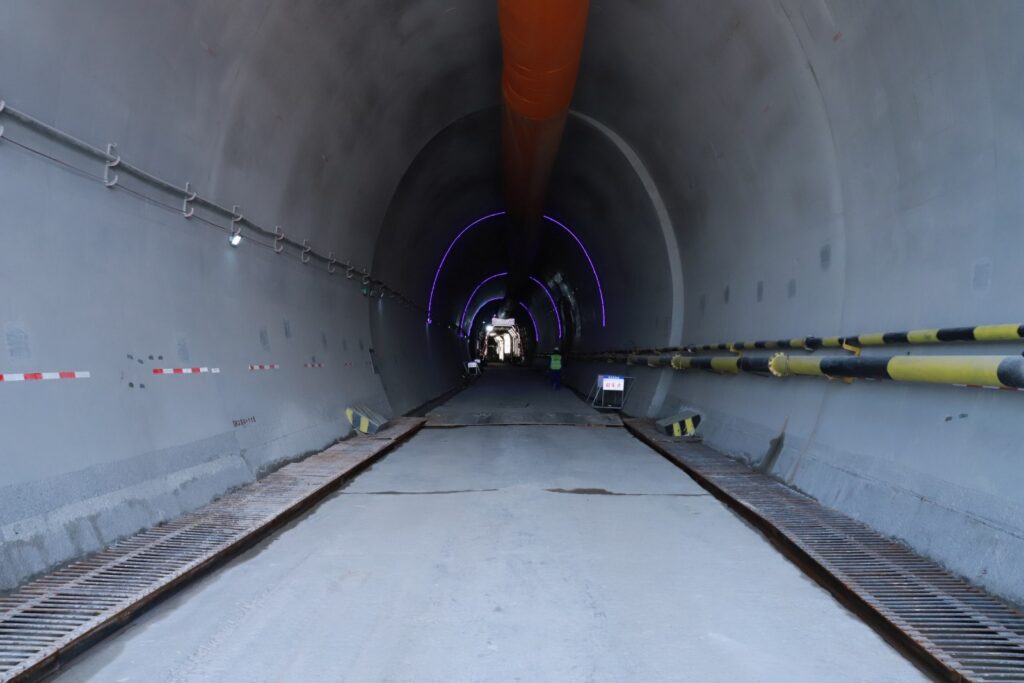
Construction of a 12-kilometer tunnel has commenced in Kyrgyzstan’s Jalal-Abad region, marking a significant milestone in the development of the China-Kyrgyzstan-Uzbekistan railway, a strategically important transport corridor aimed at linking East and West. At the groundbreaking ceremony on April 29, Kyrgyz Deputy Chairman of the Cabinet of Ministers Bakyt Torobayev emphasized the railway's broader significance. “This project is not only of infrastructural importance. It opens the way to improving the quality of life, economic growth, and strengthening ties between regions and peoples. It will create new opportunities for trade, investment, industrial development and logistics, provide thousands of jobs, and give a powerful impetus to the economies of our countries,” he said. A Major Infrastructure Undertaking The railway will span 523 kilometers, with over 300 kilometers passing through Kyrgyzstan. In addition to the current tunnel project, two more large tunnels are planned in the Naryn and Jalal-Abad regions. The project involves challenging terrain and extensive engineering work, including the construction of 46 bridges and 27 tunnels. The China-Kyrgyzstan-Uzbekistan railway was officially launched during a ceremony in Jalal-Abad on December 27, 2024. Once completed, the route will connect Kashgar (China), Torugart, Makmal, and Jalal-Abad (Kyrgyzstan), and Andijan (Uzbekistan). The railway is expected to have an annual cargo capacity of up to 15 million tons. Currently, neither Kyrgyzstan nor Uzbekistan has a direct railway connection with China. At present, Central Asia’s only rail link to China passes through Kazakhstan, underscoring the significance of this long-anticipated trilateral project.

First PPP Project to Build Major Railway Launched in Kyrgyzstan

On February 19, a public-private partnership (PPP) agreement was signed in Bishkek for the "Trans-Eurasian Route" railway project, marking Kyrgyzstan’s first PPP initiative in the railway sector. The agreement was signed between the National Investment Agency under the President of the Kyrgyz Republic, Kyrgyzstan’s national railway company Kyrgyz Temir Zholu, and the U.S.-based consortium All American Rail Group Global Infrastructure Partner LLC. The project involves constructing a railway across central Kyrgyzstan, traversing mountainous terrain from east to west, and connecting Karakol in the northeastern Issyk-Kul region with Makmal in the southwestern Jalal-Abad region. According to the National Investment Agency, the railway will be a key step in modernizing Kyrgyzstan’s transport infrastructure, enhancing regional connectivity and economic development. National Investment Agency Director Talantbek Imanov stated that the project represents an investment of approximately $3 billion, expected to create new jobs, improve the national transport network, and generate long-term economic benefits. Additionally, the railway will enhance Kyrgyzstan’s connectivity with neighboring countries, particularly through its link to the China-Kyrgyzstan-Uzbekistan railway, which will pass through Makmal. The China-Kyrgyzstan-Uzbekistan (CKU) railway project, officially launched in December 2024, aims to serve as a major East-West trade route. Construction of the CKU railway is already underway. The 523-kilometer CKU railway will connect Kashgar (China), Torugart, Makmal, Jalal-Abad (Kyrgyzstan), and Andijan (Uzbekistan). Once completed, it is expected to transport up to 15 million tons of cargo annually, facilitating trade between China, Central Asia, the Middle East — including Turkey — and the European Union.