• KGS/USD = 0.01144 0%
  • KZT/USD = 0.00203 0%
  • TJS/USD = 0.10569 -0.38%
  • UZS/USD = 0.00008 0%
  • TMT/USD = 0.28571 0%
  • KGS/USD = 0.01144 0%
  • KZT/USD = 0.00203 0%
  • TJS/USD = 0.10569 -0.38%
  • UZS/USD = 0.00008 0%
  • TMT/USD = 0.28571 0%
  • KGS/USD = 0.01144 0%
  • KZT/USD = 0.00203 0%
  • TJS/USD = 0.10569 -0.38%
  • UZS/USD = 0.00008 0%
  • TMT/USD = 0.28571 0%
  • KGS/USD = 0.01144 0%
  • KZT/USD = 0.00203 0%
  • TJS/USD = 0.10569 -0.38%
  • UZS/USD = 0.00008 0%
  • TMT/USD = 0.28571 0%
  • KGS/USD = 0.01144 0%
  • KZT/USD = 0.00203 0%
  • TJS/USD = 0.10569 -0.38%
  • UZS/USD = 0.00008 0%
  • TMT/USD = 0.28571 0%
  • KGS/USD = 0.01144 0%
  • KZT/USD = 0.00203 0%
  • TJS/USD = 0.10569 -0.38%
  • UZS/USD = 0.00008 0%
  • TMT/USD = 0.28571 0%
  • KGS/USD = 0.01144 0%
  • KZT/USD = 0.00203 0%
  • TJS/USD = 0.10569 -0.38%
  • UZS/USD = 0.00008 0%
  • TMT/USD = 0.28571 0%
  • KGS/USD = 0.01144 0%
  • KZT/USD = 0.00203 0%
  • TJS/USD = 0.10569 -0.38%
  • UZS/USD = 0.00008 0%
  • TMT/USD = 0.28571 0%
19 February 2026

Viewing results 1 - 6 of 24

Kazakh Producer Yulia Kim: “We Are Closing the Gap Between Central Asia and World Cinema”

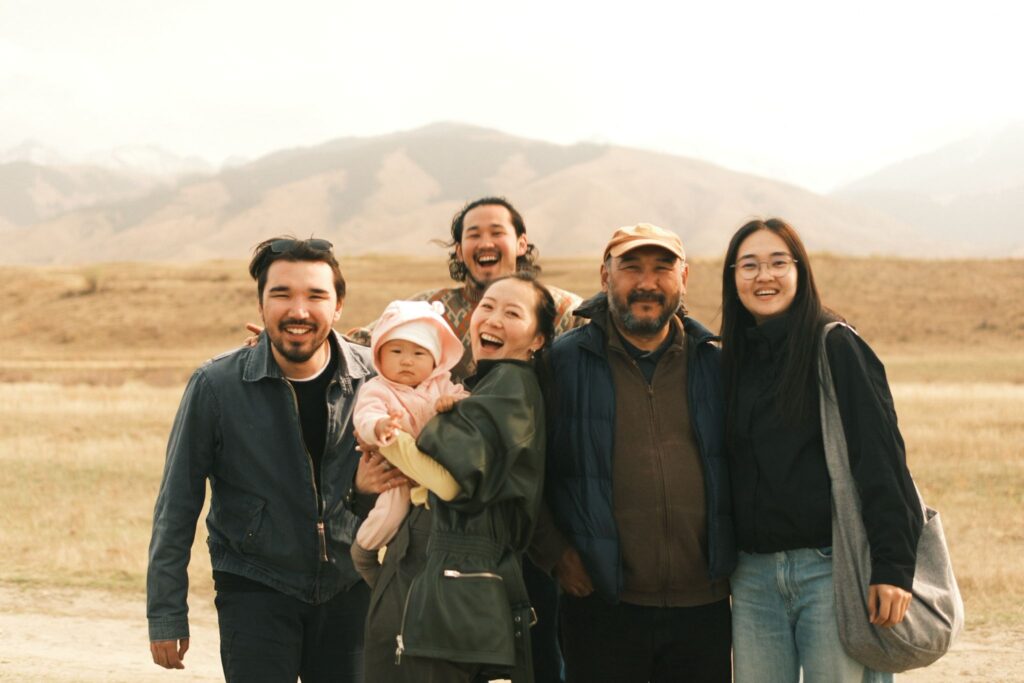
Central Asia is increasingly being recognized as a bright new spot on the global cinema map. Films by regional directors are now regularly featured in major festival programs, and international curators are paying closer attention to the area’s filmmaking talent. One of the key platforms fostering these connections is the Post Space film camp in Kyrgyzstan, a space where emerging directors present their work directly to global festival decision-makers. The Times of Central Asia spoke with Post Space co-founder and Kazakh producer Yulia Kim about how this format works, why bridging the gap between the region and the global film industry is vital, and how campfire songs can forge creative collaborations. [caption id="attachment_42621" align="aligncenter" width="1060"] @PostSpace[/caption] TCA: Yulia, you’re one of the founders of Post Space, widely considered the most influential film camp in Central Asia. You’ve been organizing it for four years now. Has it yielded results? Yulia: Many. In 2024, the Locarno Film Festival invited two Kazakh directors, including Aruan Anartay, a Post Space participant. Last year, we had another Kazakh participant. The Lisbon Film Festival even curated a program specifically dedicated to Central Asian cinema. Its director, Portuguese producer Paulo Branco, visited Post Space for the first time in 2024 and fell in love with our filmmakers. I believe that for the festival curators we invited, Central Asia has opened up in new ways. They now approach our films with a deeper understanding and, hopefully, greater interest. TCA: Would you say international interest is growing? Yulia: Yes, but Post Space aims for more than just professional development. We also strive to create a friendly, supportive atmosphere. The connections formed here often become lasting collaborations. For instance, we ran a screenwriting lab, and soon several films developed during that project will be released. One participant, Diaz Bertis, refined his script with the help of an international mentor we brought in. These are vital steps for our industry. TCA: Many local initiatives fizzle out quickly. Are you planning for the long term? Yulia: Absolutely. Our project is just gaining momentum. But we’re working with a minimal budget and little external support, which limits what we can do. We'd like to offer more grants and long-term support to the projects emerging from Post Space, but for now, it’s mostly moral support. Still, we’re pushing forward, and young filmmakers are eager to grow with us. We focus on giving a voice to emerging artists who aren’t even recognized at local festivals, let alone international ones. TCA: So Post Space is a launchpad for debut filmmakers? Yulia: For many, yes. There’s so much talent in the region, but a lot of it has no connection to the film industry. We want to be the space where they gain confidence, present their work, and receive feedback. Many participants hadn’t shown their films anywhere before Post Space, often due to fear or inexperience. They were thrilled to screen their work here. TCA: What stood out about Post Space 2025? Yulia: Each year has its...

Jackie Chan to Film New “Armour of God” Sequel in Kazakhstan

Legendary actor and filmmaker Jackie Chan is set to return to Kazakhstan to work on the latest installment of his iconic action franchise, Armour of God: Ultimatum. The project will be produced in partnership with Kazakhstan’s Salem Entertainment, which officially confirmed its involvement. “We can now officially reveal details of Jackie Chan’s visit to Almaty. He will be working on the new film Armour of God: Ultimatum. The fourth installment of this legendary saga will be filmed here in Kazakhstan,” the studio said in a statement. Chan visited Almaty in late September, prompting speculation in local media, including rumors he might attend a football match between Real Madrid and FC Kairat. However, the visit turned out to be professional: he was scouting filming locations with the Kazakh production team. “During his stay in Almaty, Jackie Chan joined our team in selecting filming sites. Most of the production will take place in Kazakhstan. We can’t reveal details yet, but it’s going to be something truly spectacular,” Salem Entertainment added. The original Armour of God premiered in 1986 and became an international box office success, cementing Chan’s status as a global star. A sequel followed in 1991, and the franchise was revived two decades later with Armour of God 3: Chinese Zodiac. For Kazakhstan, the production presents a rare opportunity to showcase its cinematic potential and diverse filming locations to a global audience. Chan remains famous for performing all his own stunts. In an interview with Haute Living, he confirmed that this principle still guides his work, even after six decades in the industry. “I always do my own stunts. It’s part of who I am, part of my profession and my identity. That won’t change until I retire. And retirement doesn’t interest me,” Chan said. He added that staying in peak physical condition has become instinctive: “I don’t need special preparation anymore. It’s already inside, in my heart, my mind, and my muscles. It’s just a habit I’ve never lost.”

Two Duishens: 60 Years of a Seminal Soviet Kyrgyz Film

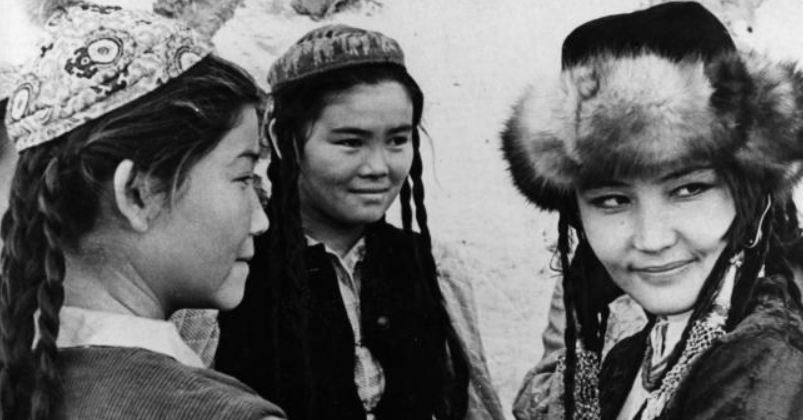
Andrei Konchalovsky’s First Teacher, an adaptation of Chingiz Aitmatov’s famous work of the same name about an educator who undertakes the task of tutoring the kids in a remote Kyrgyz village, re-tailors the protagonist and the plot to convert a coming-of-age symphony into a triumph over tragedy while maintaining the book’s core values. In one of the earlier frames of First Teacher (Konchalovsky, 1965), the well-meaning beggar-turned-Komsomol member Duishen tears into a young student who suggests that the impermanence of life might also apply to, besides everyone else, Lenin. Duishen’s God-like reverence for the father of the Soviet experiment is also present in Chingiz Aitmatov’s novel of the same name. And yet, unlike the reserved and understanding protagonist of the book, who has the qualities if not qualifications of an educator and would’ve perhaps counselled the young one in the situation mentioned above, Konchalovsky’s teacher is an obstinate simpleton who is almost always on the edge and yearning for the village’s respect. Inna Merkoulova and Marina Merkoulova, in their brilliant essay ‘The first teacher: A case of intersemiotic translation. When Chingiz Aitmatov’s short story becomes Andrei Konchalovsky’s film’ discuss how the movie adaptation is a case of intersemiotic translation by the director, wherein the work transforms from Aitmatov’s drama into Konchalovsky’s tragedy through the usage of various film techniques. In fact, I believe that Duishen’s character undergoes a severe reinterpretation, from a Leninist disciple trying to do his bit for the Proletarian dictatorship by educating the kids in the book to a hot-headed agitator eager to force the Soviet will on the local populace in the film. In this work, we’ll analyse how the ‘two Duishens’ manage to achieve their objectives and meet at a similar end despite existing in vastly different frameworks. The ‘first Duishen’ from Chingiz Aitmatov’s book is sketched by an older Altynai, the Red Army soldier’s favourite disciple, who after achieving success as an academician in Moscow, looks back fondly at the bold Duishen of her childhood in the 1920s. A man who used the meagre resources at his disposal to become the village’s first educator. Someone who helped her achieve her potential. Duishen’s teachings have an importance that is much greater than the bookish knowledge that the soldier imparts. Duishen’s education is an act of courage, for they come from a man who is barely literate himself, his teachings restricted to basic numerals, letters and political wordings. But it assumes significance in the fact that Duishen shows the fortitude to overcome his circumstances, and becomes more than what fate had assigned him. Further, he indoctrinates the other illiterates, especially the weakest sections of a conservative society: women and children, to follow suit and take first steps towards their emancipation. Aitmatov’s hero is moulded as a Soviet ideal, and sits closer to the cinematic Duishen’s imagination of ‘hundreds and thousands’ steel-like party members who would keep the revolution alive after Lenin’s demise. He shows balanced wisdom in judgments, the heart of a soldier in peril, and...

Kyrgyzstan: Film Festival Showcases Central Asian Talent, New and Old

An international film festival in Kyrgyzstan this week is celebrating the past, present, and future of Central Asian cinema. The Bishkek International Film Festival features a retrospective of the work of Kyrgyz director Tolomush Okeev, whose films include The Ferocious One, The Red Apple, and The Descendant of the Snow Leopard; a presentation of ten film projects by emerging directors in Central Asia; and a competition among nine films whose directors are from Kyrgyzstan, Kazakhstan, Uzbekistan, and Tajikistan. The June 11-15 festival also has master classes for those who really want to dig into the craft of making films. Hosts of some of the classes include actor and educator Olesya Gribok, who will talk about working with emotions, self-presentation, and other core actor values; designer Alex Rosno, who will discuss using AI tools to create scenes and build storyboards; and Andrzej Bartkowiak, a cinematographer and director with decades of experience with lighting, movement, and composition. Films from India, Mongolia, Germany and other countries will vie for an international prize. A separate contest involves nine films from Central Asia, seeking to highlight the region’s movie-making talent. There’s also “KyrgyzBox” - a competition just for movies, including box office standouts, from Kyrgyzstan. In another contest, film project contenders are “accepted only from citizens from Central Asian countries – Kyrgyzstan, Kazakhstan, Uzbekistan, Turkmenistan and Tajikistan - with strong potential for international distribution,” according to the film festival. The project must be a feature film that is at least 75 minutes long and filming must be planned in Central Asia or have a “close connection” to the region. The retrospective of Okeev, who died in 2001 at age 66, showcases a screenwriter and director who made films over several decades of the Soviet era and was known for filming in the majestic mountains and deserts of Kyrgyzstan. The Bishkek festival, the third edition of the event, will screen several of Okeev’s films, including The Descendant of the Snow Leopard, a 1984 film that draws inspiration from Kyrgyz tales about hunters who follow ancient laws. “When a young chief, Kojozhash, breaks a sacred ancestral taboo, it leads to tragic consequences for the entire tribe,” the festival says in a description of the film. The snow leopard is a national symbol of Kyrgyzstan, which is taking steps to protect the vulnerable species.

Kazakhstan’s Cinema Sees Record Growth in Attendance and Revenue

Cinema attendance in Kazakhstan grew by 11% in 2024, reaching a record 23 million viewers, according to the Bureau of National Statistics. This surpasses the previous year’s record of 21 million, reflecting a sustained recovery and growth in the country’s film industry. Of the total visits, foreign films accounted for 53%, approximately 12.2 million admissions, while domestic films drew 43% of the audience. Co-produced films made up the remaining 4%. Revenues from cinema screenings also hit a new high, reaching 43.9 billion tenge ($84.1 million) in 2024, up from 37.3 billion tenge ($71.5 million) the previous year. Domestic productions contributed 17.8 billion tenge ($34.1 million), marking a 19.3% increase from 2023. That year, revenue from Kazakhstani films grew by an impressive 58.5% compared to 2022. Foreign films generated 24.2 billion tenge ($46.3 million), showing a 17.8% increase over the previous year. Kazakhstan currently has 113 cinemas, with the largest concentrations in major cities: Almaty (22), Astana (11), and Shymkent (7). These cities also led in audience numbers, with Almaty recording 7.8 million visits, Astana 4 million, and Shymkent 1.9 million​. In 2024, the Kazakh film industry produced 514 films, 127 more than in 2023. The breakdown includes 175 feature films, 215 documentaries, 83 animated films, and 41 newsreel-style chronicles. Feature-length films accounted for 18% of this output, with the rest being short films. However, despite increased production, the number of operational film studios fell from 98 in 2023 to 80 in 2024. This contraction highlights ongoing structural challenges in the sector, even amid growing output and audience engagement. As previously reported by The Times of Central Asia, Kazakhstan is leveraging its cinematic revival to reinforce national traditions and cultural identity​.

Unveiling the Magic: Behind the Scenes of “Baikonur”

Space continues to capture our imagination and inspire our stories, as we try to make sense of this vast final frontier. In the last part of our series on Baikonur, we explore its depiction within cinema. In 2011, German filmmaker, Veit Helmer released Baikonur, a story about space, scavenging and misguided love that was shot within the region. TCA spoke to him about filming in this heavily restricted landscape.   TCA: What was the inspiration behind your film, Baikonur? What drew you to this subject matter? Helmer: I was fascinated by the actual place, or what I knew about it; a hidden city with such a glorious past. Whilst researching, I found out about the scavengers who collect the pieces which fall on the steppe when the rockets are heading to space. To tell both stories at the same time intrigued me: space exploration and hunting for scrap metal. TCA: Given you also directed Absurdistan and Tuvalu, would it be fair to say you’re drawn to far-flung places? Helmer: Yes, I love to explore and find locations which haven’t been filmed before. But compared to the locations of my previous films - Tuvalu, which was shot in Bulgaria, and Absurdistan, which was shot in Azerbaijan - to travel to Baikonur was a much longer journey. [caption id="attachment_21684" align="aligncenter" width="2560"] Still from the film, "Baikonur," Alexander Asochakov as "Gagarin" leaving, villagers standing near yurt; image: Veit Helmer[/caption]   TCA: As stated in the tagline of your film, “Whatever falls from heaven, you may keep. So goes the unwritten law of the Kazakh seppe. A law avidly adhered to by the inhabitants of a small village, who collect the space debris that falls downrange from the nearby Baikonur space station.” The village scavengers portrayed in your film are based in reality; how did you find out about them, and what was your experience with them? Helmer: It was very funny reading the first review from Kazakhstan, where a young journalist wrote that the film is based on the old Kazakh law “Whatever falls from heaven, you may keep,” which in reality was an invention by my screenwriter, Sergey Ashkenazy. But as this fable seems to feel so real, I never tried to dispel that myth. When writing the screenplay, Sergey and me went to Zheskaskan and the surrounding steppe, talking to the hunters of the scrap metal. It was not an ideal moment, because Roscosmos started to collect the debris themselves and the local villagers’ activity became illegal. The new reality was not villages against each other, but villagers against Roscosmos. [caption id="attachment_21685" align="aligncenter" width="2560"] Still from the film, "Baikonur," Alexander Asochakov as "Gagarin" (center) cleaning assembly hall in Baikonur ; image: Veit Helmer[/caption]   TCA: As a Western filmmaker you were granted a unique opportunity to film within Baikonur - what did you observe of the landscape? What were the highlights of this experience? Helmer: There was a saying among the early cosmonauts that the Central Asian steppe was for them...