
• KZT/USD = 0.00215
  • TJS/USD = 0.10810
  • UZS/USD = 0.00008
  • TMT/USD = 0.29760
  • KZT/USD = 0.00215
  • TJS/USD = 0.10810
  • UZS/USD = 0.00008
  • TMT/USD = 0.29760
  • KZT/USD = 0.00215
  • TJS/USD = 0.10810
  • UZS/USD = 0.00008
  • TMT/USD = 0.29760
  • KZT/USD = 0.00215
  • TJS/USD = 0.10810
  • UZS/USD = 0.00008
  • TMT/USD = 0.29760
  • KZT/USD = 0.00215
  • TJS/USD = 0.10810
  • UZS/USD = 0.00008
  • TMT/USD = 0.29760
  • KZT/USD = 0.00215
  • TJS/USD = 0.10810
  • UZS/USD = 0.00008
  • TMT/USD = 0.29760
  • KZT/USD = 0.00215
  • TJS/USD = 0.10810
  • UZS/USD = 0.00008
  • TMT/USD = 0.29760
  • KZT/USD = 0.00215
  • TJS/USD = 0.10810
  • UZS/USD = 0.00008
  • TMT/USD = 0.29760
12 August 2026

Viewing results 1 - 6 of 3

Central Asian Music Takes the Stage in Berlin

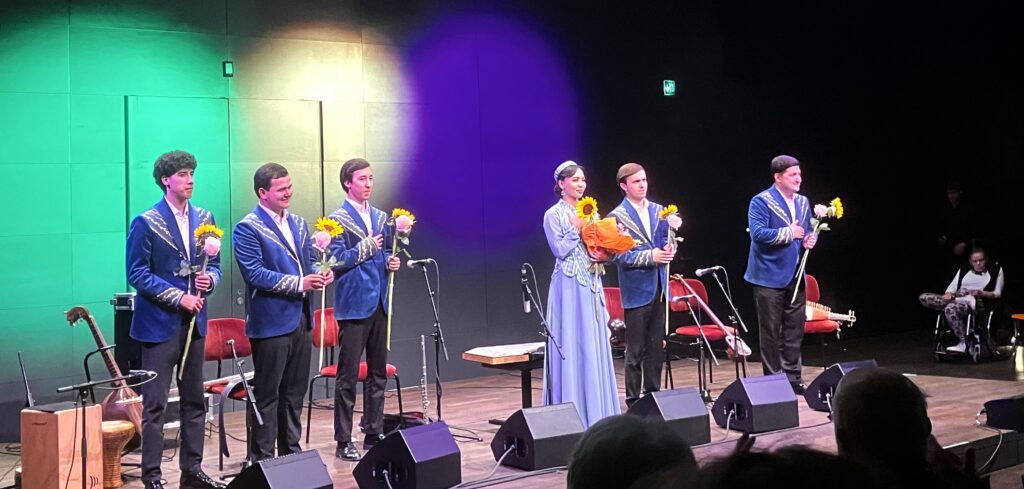
Young Central Asian musicians have featured at the ongoing Young Euro Classic festival in Berlin. Since its beginnings in 2000, the festival has brought youth orchestras from around the world to the German capital, while the later addition of the Future Now series as a “festival within the festival” opened it to smaller experimental ensembles. It was not the first time that orchestras and smaller groups from Central Asia had performed at Young Euro Classic. Kazakh musicians had appeared before, including at the 2024 festival. Turkmen musicians also performed in Berlin later that year as part of the separate FUTURE NOW – Central Asia festival. However, this year’s performances introduced two new groups to Young Euro Classic audiences. On August 1, Mohiron from Dushanbe opened the Future Now series. The six Tajik musicians played traditional Tajik melodies, their own compositions, and arrangements of Western music at their sold-out concert. Their interpretations of Vivaldi’s “Escala Palladio” and Zequinha de Abreu’s “Tico-Tico” drew particularly enthusiastic responses from the audience. On August 9, the Youth Symphony Orchestra of Turkmenistan made its Young Euro Classic debut in Berlin. The orchestra traces its roots to a chamber ensemble founded by conductor Rasul Klychev in 2007, which had previously performed elsewhere in Germany. Klychev and his musicians introduced the audience to Turkmen orchestral classics alongside contemporary works by American composer Aidan Gold and French composer Pierre Thilloy, both receiving German premieres. Highlights included the demanding piano concerto by Turkmen composer Chary Nurymov, performed by the young pianist Shaislam Komildjanov, and the final “Danzón No. 2” by Mexican composer Arturo Márquez. The audience gave the performance a standing ovation. As much of Central Asia remains relatively unfamiliar to many German audiences, the concerts offered a chance to introduce the region and its musical traditions. The appearances may also create further opportunities for the musicians to represent their countries elsewhere in Germany and Europe.

Kazakh Violinist Dinara Bazarbayeva-Sakhaman on Sound, Identity, and the Demands of the Stage

Dinara Bazarbayeva-Sakhaman, a soloist at the Zhambyl Kazakh State Philharmonic, spends much of her time moving between countries and concert halls, performing with international orchestras and collaborating with musicians from different traditions. Behind these appearances lies not only a demanding touring schedule, but also rigorous discipline: long hours of rehearsal, complete dedication on stage, and a constant search for the right sound. Speaking to The Times of Central Asia, she reflects on the Kazakh violin school, the nature of talent, and the enduring pull of her instrument. TCA: Dinara, your career has taken you to many countries. What has that experience been like? Dinara: Not the entire world, of course, but I’ve visited many countries thanks to my profession. The only time I traveled without my violin was when I went to Thailand, and throughout the trip, I felt as if something was missing. It was unusual, waking up on the plane and thinking, “Where is my violin?” TCA: Do you usually travel with an orchestra? Dinara: It varies, but more often I travel alone. There are projects where orchestras are assembled from musicians from different countries. For example, the renowned violinist and now conductor Marat Bisengaliev does this in India. For the Symphony Orchestra of India, he invites musicians from around the world. I have been collaborating with this orchestra for quite some time; it is an excellent ensemble. Working in such groups, sharing cultures, performing for diverse audiences, and collaborating with musicians from different parts of the world is one of the most fascinating aspects of our profession. TCA: Are there any distinctive features of the Indian violin school? Dinara: I performed in Mumbai, where there are several schools. One was founded by Marat Bisengaliev at the National Centre for the Performing Arts, and another by Mehli Mehta. In Bisengaliev’s school, classical violin is taught based on our educational system while incorporating elements of Indian tradition. What surprised me most was the number of self-taught violinists. TCA: And how do they play? Dinara: Surprisingly well. Their path is very different, yet the results are impressive. In our system, if you don’t start learning the violin at the age of five or six, seven at the latest, it is believed that you will not catch up and will likely remain an amateur. However, I know someone who began playing at 33 and now performs in a professional orchestra, knowing first violin parts almost by heart. He has a beautiful tone and excellent intonation. For me, this is a unique case. TCA: At what age did you start playing? Dinara: At five. That means I’ve spent 36 years with the violin and cannot remember life without it. I often joke that it is my lifelong implant—an inseparable part of me, with only its size changing as I grew. TCA: How would you describe the Kazakh violin school? Dinara: The foundation of our school lies in the Russian-Soviet tradition. During World War II, many teachers were evacuated to Kazakhstan and remained...

Uzbek Pianist Delivers “Blazing” Performance with National Symphony Orchestra in DC

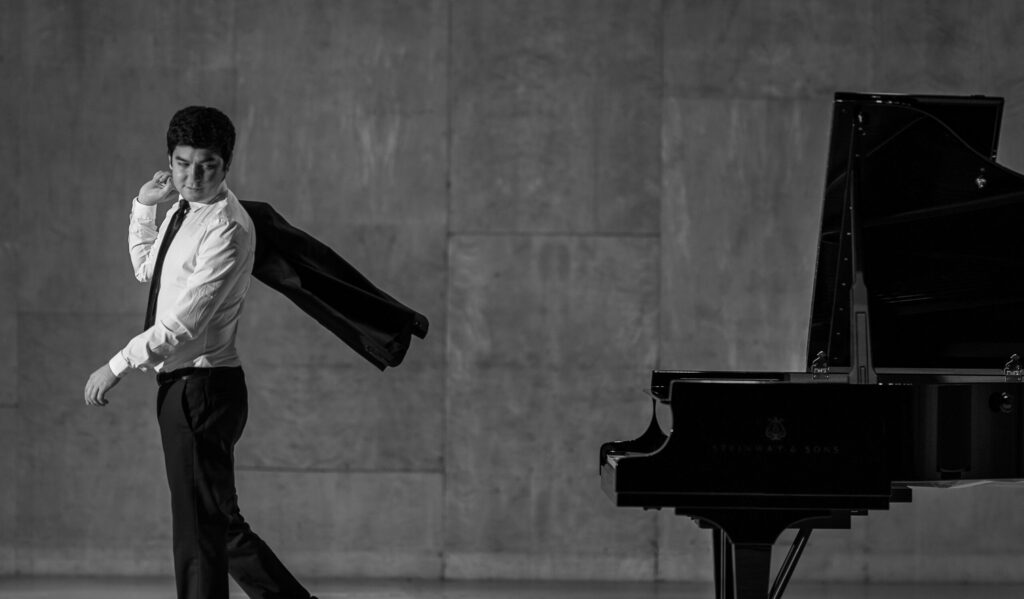
Uzbek pianist Behzod Abduraimov has performed with the National Symphony Orchestra at the Kennedy Center in Washington, D.C., in the American orchestra’s first performance there since President Donald Trump said he was closing the performing arts venue for two years starting in July. Abduraimov joined Italian conductor Gianandrea Noseda and the orchestra at the center on Thursday night, with performances scheduled on Friday and Saturday. The pianist delivered a “blazing” debut with the orchestra - also known by its acronym NSO – with his performance of Tchaikovsky’s Piano Concerto No. 1, the Washington Classical Review reported. “The display of technical acumen and musical sensitivity measured up to the expectations set by the Uzbek pianist’s astounding performance of this concerto with the Baltimore Symphony Orchestra in 2023,” the review said. “Throughout the three movements, Noseda and his soloist seemed entirely in sync with one another, and the NSO likewise exuded confidence.” “Proud to see Uzbek talent shine on the global stage!” Furqat Sidiqov, Uzbekistan’s ambassador to the United States, said on X. Trump said on February 1 that he would close the Kennedy Center for construction, in a decision that followed cancellations by performers after the president replaced trustees on the center’s board and added his name to the building. The new board members voted for the addition of Trump’s name, though critics and some lawmakers say that only Congress can legally change the name of the federal institution. The center is the main performing venue for the National Symphony Orchestra, so the plan to close it is of particular concern for its musicians. Still, with Abduraimov’s support, the orchestra performed with professionalism, starting out with a rendition of the national anthem for the big crowd. Born in Tashkent, 35-year-old Abduraimov has performed with many leading orchestras and at top international festivals.
