• KGS/USD = 0.01143 0%
  • KZT/USD = 0.00205 0%
  • TJS/USD = 0.10724 0.09%
  • UZS/USD = 0.00008 0%
  • TMT/USD = 0.28571 0%
  • KGS/USD = 0.01143 0%
  • KZT/USD = 0.00205 0%
  • TJS/USD = 0.10724 0.09%
  • UZS/USD = 0.00008 0%
  • TMT/USD = 0.28571 0%
  • KGS/USD = 0.01143 0%
  • KZT/USD = 0.00205 0%
  • TJS/USD = 0.10724 0.09%
  • UZS/USD = 0.00008 0%
  • TMT/USD = 0.28571 0%
  • KGS/USD = 0.01143 0%
  • KZT/USD = 0.00205 0%
  • TJS/USD = 0.10724 0.09%
  • UZS/USD = 0.00008 0%
  • TMT/USD = 0.28571 0%
  • KGS/USD = 0.01143 0%
  • KZT/USD = 0.00205 0%
  • TJS/USD = 0.10724 0.09%
  • UZS/USD = 0.00008 0%
  • TMT/USD = 0.28571 0%
  • KGS/USD = 0.01143 0%
  • KZT/USD = 0.00205 0%
  • TJS/USD = 0.10724 0.09%
  • UZS/USD = 0.00008 0%
  • TMT/USD = 0.28571 0%
  • KGS/USD = 0.01143 0%
  • KZT/USD = 0.00205 0%
  • TJS/USD = 0.10724 0.09%
  • UZS/USD = 0.00008 0%
  • TMT/USD = 0.28571 0%
  • KGS/USD = 0.01143 0%
  • KZT/USD = 0.00205 0%
  • TJS/USD = 0.10724 0.09%
  • UZS/USD = 0.00008 0%
  • TMT/USD = 0.28571 0%

Viewing results 1 - 6 of 12

CAREC Ministers Approve Climate Action Plan and Launch Regional Climate Fund

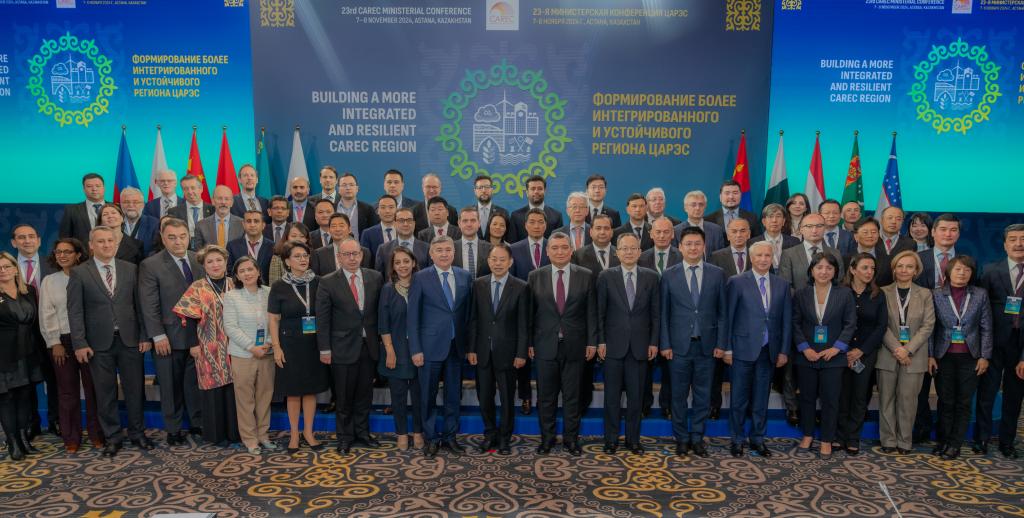
At the 23rd CAREC Ministerial Conference held in Astana on November 8, member countries of the Central Asia Regional Economic Cooperation (CAREC) Program—Afghanistan, Azerbaijan, China, Georgia, Kazakhstan, Kyrgyzstan, Mongolia, Pakistan, Tajikistan, Turkmenistan, and Uzbekistan—endorsed a new Climate Change Action Plan (CCAP) and launched the CAREC Climate and Sustainability Project Preparatory Fund (CSPPF). These initiatives aim to strengthen regional collaboration on climate resilience, low-carbon growth, and sustainable development. The CAREC Program is a partnership of 11 countries and development partners that promotes sustainable development through regional cooperation, with the Asian Development Bank (ADB) hosting the CAREC Secretariat. In his address at the conference, ADB President Masatsugu Asakawa stated, “The approval of the CAREC Climate Change Action Plan and the establishment of the Climate and Sustainability Project Preparatory Fund are significant milestones in our collective efforts to address climate change. By working together, we can build resilient infrastructure, develop early warning systems, and create a greener future powered by renewable energy.” The CCAP, covering the period from 2025 to 2027, prioritizes initiatives aligned with the CAREC Climate Change Vision and focuses on four main areas to address climate challenges in the region. It aims to enhance climate risk preparedness, strengthen the water-energy-food nexus, promote low-carbon growth by reducing emissions and expanding renewable energy, and create a CAREC climate platform. The CSPPF will support CAREC countries in developing viable regional climate projects that align with their commitments under the Paris Agreement. On November 8, ADB signed fund contribution agreements with China’s Ministry of Finance and South Korea’s Ministry of Economy and Finance, generating an initial $5 million in funding for the CSPPF. Speaking at the Ministerial Conference, Kazakhstan’s Prime Minister Olzhas Bektenov highlighted the CAREC Program’s significance for Central Asia, noting that over the past 20 years, it has mobilized about $51 billion for the region, with more than $9 billion invested in Kazakhstan. During his visit to Kazakhstan, ADB’s Asakawa met with President Kassym-Jomart Tokayev to discuss ongoing cooperation and future initiatives. From 1994 to 2024, ADB financed projects in Kazakhstan valued at approximately $7 billion. Notably, ADB participated in the construction of the Western Europe–Western China highway corridor and the reconstruction of the Aktobe–Kandyagash road.

Climate Crisis May Drastically Reduce Production in Central Asia

Central Asia may face serious economic losses due to climate change, which may reach a 6.5% annual decline in production by 2060. These figures were announced by Bo Li, Deputy Managing Director of the International Monetary Fund (IMF), at the “New Economic Challenges for Long-Term Development” forum. According to Bo, the Caucasus and Central Asia region is particularly vulnerable to climate change. Soaring temperatures and increasing frequency of droughts and floods are reducing crops, destroying infrastructure, and lowering living standards. “According to IMF estimates, if no action is taken to slow down climate change, Central Asia will lose up to 6.5% of its output annually by 2060,” Bo said. He noted that possible losses could be reduced with joint actions such as reducing carbon emissions, transitioning to a green economy, and adapting to changing climate conditions. As an example, Bo noted the efforts of Kyrgyzstan, that has already started to increase electricity tariffs and reduce energy subsidies, allowing the country to adapt to climate challenges and create new jobs in the “green” sector. Many Central Asian countries are taking steps to reform the energy sector and introduce “green” technologies. For example, Kazakhstan is actively cooperating with several countries to develop renewable energy and reform the energy sector. One key example is the partnership with the United States under the USAID Power Central Asia program. This initiative supports Kazakhstan and other Central Asian countries in modernizing energy markets, introducing clean energy, and encouraging private investment in renewable energy. Uzbekistan is undergoing a major reform of its energy system to reduce subsidies and promote renewable energy. The country plans to increase the share of renewable energy to 25% by 2030, which includes solar and wind energy projects. These measures will help Uzbekistan improve energy efficiency and reduce carbon dioxide emissions. In Tajikistan, USAID is implementing the Power Central Asia program, which supports energy cooperation in the region and encourages using renewable energy to help reduce dependence on fossil fuels and modernize energy systems.

CAREC Think Tank Development Forum to Focus on Climate Solutions

The 8th CAREC Think Tank Development Forum (CTTDF) will be held on August 27 and 28 in Almaty. Themed “The Climate Challenge: Thinking Beyond Borders for Collective Action,” the forum aims to address regional climate challenges by fostering collaborations for policy recommendations and joint research. The CAREC Institute, the Eurasian Development Bank, the Asian Development Bank, and other partners will organize the forum, which will bring together policymakers, experts, and leaders from across Asia to advance regional cooperation on climate action. Headquartered in Urumqi in China’s Xinjiang, the CAREC Institute is an intergovernmental organization contributing to the Central Asia Regional Economic Cooperation (CAREC) Program through knowledge generation and capacity building. The Institute is jointly shared and governed by the CAREC's eleven member countries: Afghanistan, Azerbaijan, China, Georgia, Kazakhstan, Kyrgyzstan, Mongolia, Pakistan, Tajikistan, Turkmenistan, and Uzbekistan. The forum participants will engage in meaningful policy discourse to identify solutions for a climate-resilient region, explore joint research opportunities, and facilitate innovative climate studies beyond mainstream agendas. Representatives from international organizations, high-level government officials, esteemed university scholars, and experts from leading think tanks will be key speakers. The Director of the CAREC Institute and the Vice President of the Asian Development Bank will address the opening ceremony. The forum will include a research presentation by Arman Akhunbaev, Eurasian Development Bank’s head of the Center for Infrastructure and Industrial Research, with insights into the financial solutions to close the investment gap in Central Asia's drinking water and sanitation infrastructure. The forum will also feature presentations, panel discussions, case studies, and interactive sessions designed to foster dialogue and develop actionable strategies for climate resilience in the CAREC region.

UN Launches Projects to Improve Health and Environment in the Aral Sea Region

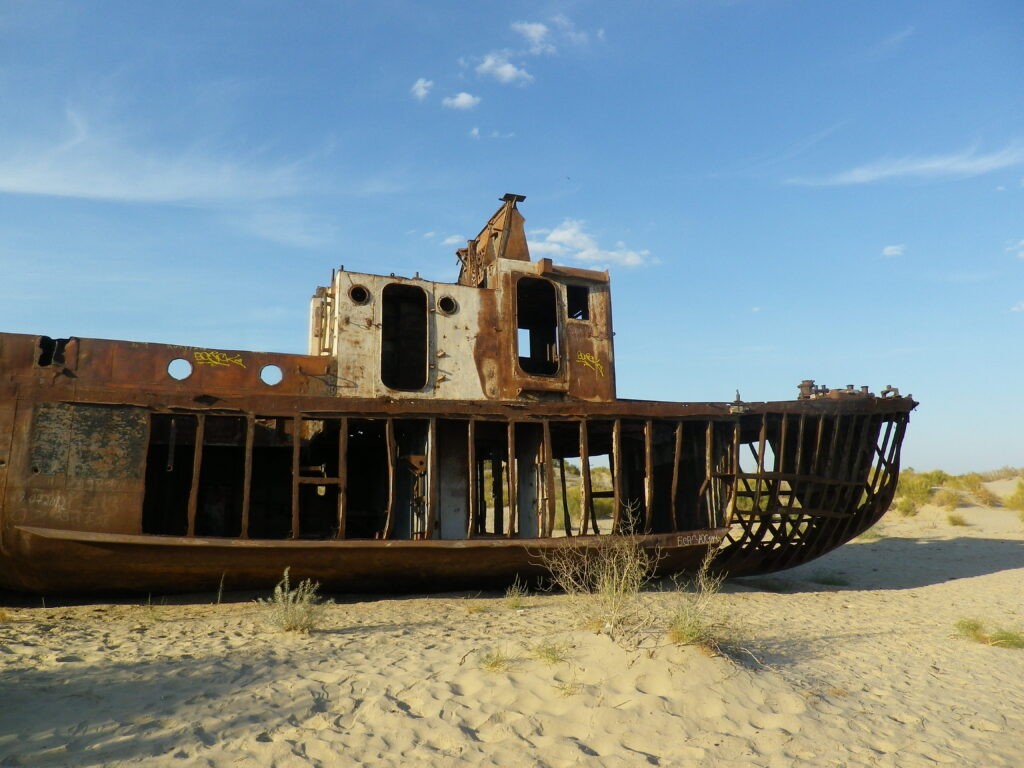
The UN has launched two new projects to address environmental and health issues in Karakalpakstan, Uzbekistan. These projects are “Enhancing Climate-Resilient and Safe Water, Sanitation, Hygiene, and Health Services for the Most Affected Communities in Four Districts of Karakalpakstan,” and the joint project between its development programme (UNDP) and its food and agriculture organization (FAO), "Building Knowledge and Skills of Local Partners and Communities to Address Environmental Insecurities through Innovative Air, Land, and Water Management Solutions in the Aral Sea Region.” “The launch of these projects marks a significant milestone in our collective efforts to address the Aral Sea Region's profound environmental and health challenges," said Sabine Machl, the UN's Resident Coordinator in Uzbekistan. "By fostering resilience through innovative solutions in water management, health services, and community empowerment, we are laying the groundwork for a sustainable future in Karakalpakstan.” The project between the UNDP and FAO aims to increase the knowledge and skills needed by local partners and communities to solve environmental security problems. It also aims to develop practical solutions for managing air, land and water, enabling communities to adapt to and mitigate climate change. In addition, within the project's framework, special attention will be paid to introducing new approaches to water treatment, forest restoration, and soil stabilization in the region. These activities have the potential to directly benefit over 376,000 residents of the three northern districts of Moynaq, Kungrad, and Takhtakupir in Karakalpakstan, particularly women in at-risk communities. The indirect impact will extend to 200,000 more people and build on the results of the previous projects. On 16 August, the UN programme “Laying the Foundations for People-Centered, Climate-Resilient Primary Health Care and Water, Sanitation, and Hygiene Practices at Healthcare Facilities and Schools” was officially completed. During his visit to Karakalpakstan on August 19, Uzbek President Shavkat Mirziyoyev announced the establishment of the Aral Sea Region International Innovation Center to improve the ecosystem and create new varieties and seeds in a saline, water-less environment. $80 million will be allocated to mitigate the consequences of climate change in the Aral Sea region. The Times of Central Asia has published several articles about the problems arising from the drying up the Aral Sea and the work being done to combat this.

Tajik President: Accelerated Melting of Glaciers Threatening Central Asia’s Water Resources

Over the past few decades, more than a thousand of Tajikistan’s 13,000 glaciers have completely melted—a threatening trend given that Tajikistan's glaciers are the main source of up to 60% of Central Asia’s water resources. Tajik President Emomali Rahmon announced this on August 17 at the third Voice of Global South Summit, which was held virtually under the chairmanship of Prime Minister of India, Narendra Modi. In his speech, Rahmon said that Tajikistan's initiative to declare 2025 the International Year of Glacier Preservation has received the full support of the international community. According to a UN General Assembly resolution, March 21 will be celebrated annually as World Glaciers’ Day from next year. Based on this resolution, in 2025, Tajikistan will host the International High-Level Conference on Glaciers’ Preservation. President Rahmon continued that with 93% of its territory covered by mountains, Tajikistan is considered one of the most vulnerable countries of the Global South in terms of adverse climate change impacts. Every year, the country faces floods, landslides, avalanches, and other natural disasters that cause great material damage, and, in many cases, human casualties. Earlier this month TCA reported that the head of Tajikistan’s committee for emergency situations and civil defense, Rustam Nazarzada, said at a press conference that the economic damage caused by natural disasters in the country this year has amounted to over $12 million. The government of Tajikistan is therefore implementing a National Strategy for Adaptation to Climate Change until 2030, with the goal of reducing the negative impacts of climate change on the country's social and economic spheres. Regarding green energy production, Rahmon stated that Tajikistan currently produces 98% of its electricity from hydropower. “We have decided to increase this figure to 100% by 2032, that is, to produce electricity entirely from green energy resources, and to turn Tajikistan into a ‘green country’ by 2037,” the Tajik leader stated.

Almaty Hosts Conference on Tackling Climate Change in Central Asia

On 27 May, delegations from Central Asian countries and international experts convened in Almaty, Kazakhstan to discuss pressing issues of sustainable water and land management, energy, food security, and environmental sustainability in the context of climate change in the region. Held annually, the Central Asia Climate Change Conference provides a platform to advance regional cooperation in addressing the impact of climate change and transboundary climate risks. This year’s event, CACCC-2024, attracted over 400 participants, including policy and decision makers from Central Asian countries, international development partners, and representatives from civil societies, the private sector, and academia. Addressing the delegates, Zafar Makhmudov, Executive Director of the Regional Environmental Centre for Central Asia (CAREC) announced: “Central Asia is vulnerable to the adverse effects of a rapidly changing climate, given its agricultural economy, aging infrastructure, and rapid population growth. The need to improve regional cooperation in energy and water resources management alongside approaches to adaptation to climate change is obvious. The conference aims to strengthen this cooperation to increase the region's resilience.” Regarding funding, Tatiana Proskuryakova, World Bank Regional Director for Central Asia, stated, “Climate change is an urgent challenge, and the countries of Central Asia can only address it if they work together. This means tackling a broad set of issues simultaneously, from adopting and implementing green policies to deploying green financing and investing in renewable energy, sustainable agriculture and natural resource management. We will continue working hand in hand with our government counterparts, sharing our analysis and advice, but also providing finance for priority investment projects for the benefit of people in Central Asia.” On an encouraging note, Dr. Caroline Milow, Programme Manager for the Green Central Asia Initiative, GIZ added: “With the adoption of the Regional Climate Change Adaptation Strategy, Central Asia is one step ahead of many other regions in the world. It helps further cooperation and coordination to strengthen adaptation and mitigation to climate change, which is ever more felt in the region. I am positive that these joint efforts among the countries will bear fruit for the entire population of the Aral Sea Basin.”