• KGS/USD = 0.01143 0%
  • KZT/USD = 0.00216 0%
  • TJS/USD = 0.10684 -0.28%
  • UZS/USD = 0.00008 0%
  • TMT/USD = 0.28571 0%
  • KGS/USD = 0.01143 0%
  • KZT/USD = 0.00216 0%
  • TJS/USD = 0.10684 -0.28%
  • UZS/USD = 0.00008 0%
  • TMT/USD = 0.28571 0%
  • KGS/USD = 0.01143 0%
  • KZT/USD = 0.00216 0%
  • TJS/USD = 0.10684 -0.28%
  • UZS/USD = 0.00008 0%
  • TMT/USD = 0.28571 0%
  • KGS/USD = 0.01143 0%
  • KZT/USD = 0.00216 0%
  • TJS/USD = 0.10684 -0.28%
  • UZS/USD = 0.00008 0%
  • TMT/USD = 0.28571 0%
  • KGS/USD = 0.01143 0%
  • KZT/USD = 0.00216 0%
  • TJS/USD = 0.10684 -0.28%
  • UZS/USD = 0.00008 0%
  • TMT/USD = 0.28571 0%
  • KGS/USD = 0.01143 0%
  • KZT/USD = 0.00216 0%
  • TJS/USD = 0.10684 -0.28%
  • UZS/USD = 0.00008 0%
  • TMT/USD = 0.28571 0%
  • KGS/USD = 0.01143 0%
  • KZT/USD = 0.00216 0%
  • TJS/USD = 0.10684 -0.28%
  • UZS/USD = 0.00008 0%
  • TMT/USD = 0.28571 0%
  • KGS/USD = 0.01143 0%
  • KZT/USD = 0.00216 0%
  • TJS/USD = 0.10684 -0.28%
  • UZS/USD = 0.00008 0%
  • TMT/USD = 0.28571 0%

Viewing results 1 - 6 of 217

Melting Glaciers Threaten Tajik Agriculture

Climate change in Tajikistan is no longer a future concern, it is an immediate crisis. Farmers across the country are grappling with the effects of melting glaciers, prolonged heatwaves, and dust storms that are disrupting traditional agricultural cycles. In Vahdat district, the Usto Murod farm has adopted a dual-harvest strategy to mitigate risk. “If one crop fails, the second helps cover the costs,” says farmer Galatmo Alieva. But increasingly rapid glacier melt has doubled irrigation needs from three rounds per season to six. Heatwaves and dust storms have further damaged crops, while honey yields have plummeted from 25 kilograms per hive to just five. To cope, Alieva’s family installed a biogas plant with support from the United Nations Development Programme (UNDP), saving between $550 and $1,100 annually. However, broader adaptation measures remain financially out of reach. Loan interest rates hover around 31%, and water-efficient drip irrigation is used only in greenhouses. Unequal Access, Dwindling Resources Other farmers face even harsher realities. Rain-fed plots deliver meager returns, pastures are drying up, and water distribution remains inequitable. “Those at the canal head take all the water,” laments farmer Bakhtiyor. Engineer Alexander Pirov warns that accelerating glacier melt threatens not only agriculture but also the country’s hydropower sector. By 2080, Tajikistan is expected to experience 12 additional days per year with temperatures exceeding 40°C, compared to the 1986-2005 average. Already, 70% of Tajikistan’s arable land is considered degraded. High Costs, Limited Support Water-saving technologies could significantly improve crop yields and farmer incomes, yet the upfront costs, estimated at $5,000 or more, remain prohibitive for most rural families. As climate risks intensify, Tajikistan’s rural population is increasingly vulnerable. Without targeted investments in adaptation, infrastructure, and equitable resource distribution, the country’s agricultural backbone may begin to fracture under the weight of a rapidly changing environment.

Pamir Loses Its “Ice Shield”: Scientists Confirm End of Glacier Stability Anomaly

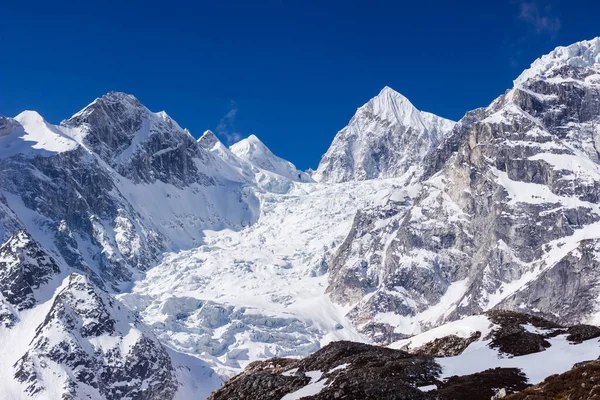
For years, the Pamir-Karakoram anomaly stood as a rare outlier in global climate trends: a region where glaciers remained relatively stable despite accelerating global warming. Now, new research from the Institute of Science and Technology Austria (ISTA) confirms that even these “last strongholds” have begun to lose mass at an alarming rate. Snow Deficit and Rising Heat Data collected from a climate monitoring station on the Kyzylsu glacier in the northwestern Pamirs, active from 1999 to 2023, reveals a sharp shift. According to an international research team led by Francesca Pelliccotti, the tipping point came in 2018, when a significant decline in snow cover and precipitation irreversibly altered the glaciers’ mass balance. Once past this "point of no return," glaciers began rapidly depleting their own reserves to compensate for the lack of new snowfall, a process accelerating their melt. Since 2018, the region has experienced a persistent snow deficit. Snow depth has fallen by approximately 40 cm, and annual precipitation has declined by 328 mm, about one-third of the historical average. Seasonal snow melts earlier, is less stable in spring, and is no longer sufficient to replenish glacier mass. July 2022 was the hottest month on record, and during this period, the Kyzylsu glacier recorded unprecedented mass loss, melting at a rate eight times faster than the 1999-2018 average. Scientists identify increasingly hot summers and a lack of precipitation as the primary causes. Even the intensified ice melt has not made up for reduced snowfall: water inflow into rivers dropped by roughly 189 mm in water equivalent. The contribution of glacial runoff to total river flow rose from 19% to 31%, but this increase was still insufficient to offset the overall decline in water volume. The situation is most severe at altitudes above 4,000 meters, where solid precipitation has declined sharply. Snow from avalanches, which previously helped sustain the glaciers, has dropped nearly threefold from 0.21 to 0.08 m per year. Implications for Central Asia Experts warn that this is not a localized issue. The Pamir and Karakoram glaciers feed the Amu Darya and Syr Darya rivers, lifelines for millions across Central Asia. Diminishing glacial mass threatens freshwater availability, agriculture, hydropower generation, and overall socio-economic stability. “Due to the lack of accurate forecasts, we cannot yet say definitively whether the Pamir glaciers have passed the point of no return. However, since 2018, the processes have changed dramatically, and the reduction in precipitation has had a critical impact on their stability,” said ISTA researcher Achille Joubert. Data Gaps and New Monitoring Efforts Following the collapse of the Soviet Union, glacier monitoring in the region was largely suspended for nearly two decades. Systematic observations resumed only in 2021, when international researchers reinstalled instruments on the Kyzylsu glacier, one of the Vakhsh River’s primary sources. These new measurements confirmed a drastic drop in precipitation and snow thickness starting in 2018, with consistently unfavorable conditions persisting since. Compared to the late 1990s, spring and summer snow now melts much faster, and the "cold reserves"...

Tajik Scientists Turn to Mountain Agriculture to Combat Climate Challenges

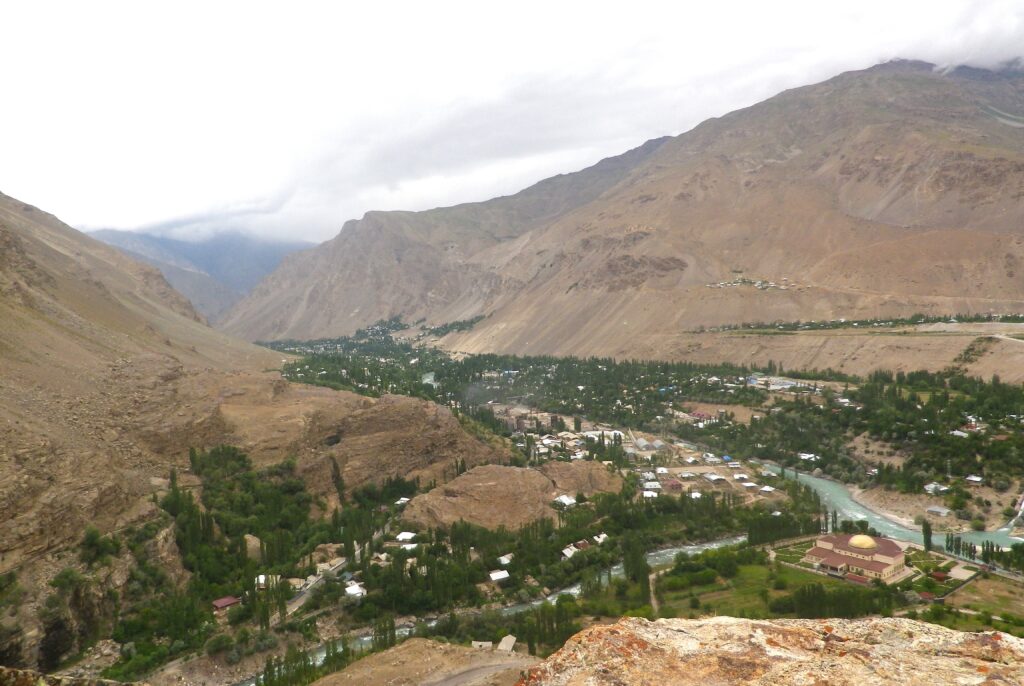
In Tajikistan’s remote Yagnob Valley, at more than 2,300 meters above sea level, scientists have launched a pioneering agricultural experiment to adapt to the realities of a changing climate. For the first time, experimental fields have been established in this high-altitude region to test the viability of dozens of crop varieties under mountain conditions. The research, carried out by the Institute of Botany, Physiology, and Plant Genetics of the National Academy of Sciences of Tajikistan, has yielded promising results. All tested crops took root successfully, and new potato varieties produced harvests of up to 400 centners per hectare. Testing Crops in the High Mountains “Climate change forces us to seek unconventional solutions,” said Dr. Kurbonali Partoev, Doctor of Agricultural Sciences. “High-altitude zones with cooler temperatures, clean water, and fertile soils offer unique prospects for agricultural innovation.” This spring, scientists delivered seeds of potatoes, corn, sunflowers, chickpeas, peas, wheat, pumpkins, sorghum, tomatoes, and cucumbers to a plot maintained by local farmer Nekmakhmad Safarov. The objective was to observe how common lowland crops respond to high-altitude growing conditions. Following strict agronomic practices, applying fertilizers, watering, weeding, and monitoring plant development, researchers carefully tracked growth patterns and morphological changes. Potato Yields Surpass Expectations By August, the experimental site had become a thriving green expanse. Potato trials proved particularly fruitful, with more than 20 varieties from Tajikistan, Russia, and the Netherlands under evaluation. New Tajik varieties, named Tajikistan, Faizi Istiklol, Akademiya Milli1, Mastcho, Faizobod, Rasht, and Nilufar, achieved yields of 300-400 centners per hectare. “This is a significant indicator confirming their potential,” said agricultural scientist Mavlon Kurbonov. Russian varieties Sadon, Ariel, and Fasko yielded between 280 and 390 cwt/ha and were notably early-maturing, ripening 10 to 12 days ahead of others. Dutch varieties Picasso and Aladdin also performed well, reaching yields of up to 370 cwt/ha. Genetic Potential in a Mountain Laboratory Beyond yield, researchers observed an unusual abundance of flowering and the formation of seed berries among potato plants, traits enhanced by Yagnob’s cool, pest-free environment. “This is an extremely valuable genetic trait that opens up wide possibilities for breeding,” Partoev explained. “Yagnob offers ideal conditions, clean air, spring water, and fertile soil. It is a natural laboratory.” A Resource for the Future of Tajik Agriculture Encouraged by the initial success, researchers plan to expand their trials, introduce new crop varieties, and deepen their scientific studies. They believe the Yagnob Valley could evolve into both a research hub and a model for climate-resilient agriculture. “All the crops showed positive results. This encourages us to expand and innovate further,” Kurbonov concluded. “Yagnob has the potential to become a true natural laboratory for Tajikistan’s agricultural future.”

The Forgotten Aral Sea That Holds the Key to Our Planet’s Future

The drying of the Aral Sea is the worst environmental tragedy I have ever seen with my own eyes. Once a vast inland sea, shimmering and alive, it has now withered into patches of salt-crusted desert, where rusting ships lie stranded and winds carry toxic dust across the land. For me, the Aral’s decline is not just a local crisis but a mirror of our broader failures to protect nature. And as I look at the globe today, I see another unfolding catastrophe of equal or even greater scale: the rise of the seas, the surge in tsunamis and cyclones, and the slow drowning of coastal cities. What connects these tragedies is our failure to understand the balance of water on this planet, and our inability to act before the damage becomes irreversible. The Aral Sea was once the world’s fourth-largest inland lake, covering over 68,000 square kilometers. Situated between northern Uzbekistan and southern Kazakhstan, it supported millions of people with its fisheries, fertile lands, and unique ecosystem. The Amu Darya and Syr Darya rivers sustained it for centuries. But during the Soviet era, these rivers were diverted on a massive scale to irrigate cotton fields. At first, the shrinking of the Aral was gradual. Then, over the decades, it became catastrophic. More than 90% of the Aral Sea has disappeared. Today, the once-mighty expanse has been reduced to just 3,500 square kilometers, scattered into four smaller lakes. The consequences are heartbreaking. The fishing economy collapsed, agricultural land turned barren, and the rich biodiversity of the region has been pushed to the edge of extinction. The exposed seabed, laced with salt and pesticides, has become a toxic dust bowl, carried by winds across Central Asia, poisoning crops and human lungs alike. Villages that once lived by the water’s edge are now stranded dozens of kilometers from the shore. I have walked across that dead seabed and seen children playing where fishing boats once floated. It is a ghostly, painful reminder of how quickly human choices can destroy nature’s gifts. The Aral is often described as one of the world’s greatest environmental tragedies, yet so few people outside the region even know it happened. In the global imagination, it is almost forgotten, and that silence is itself a tragedy. For me, however, it has remained a wound, a constant reminder that ecological damage once done is almost impossible to undo. Restoration projects exist, but they move slowly, too slowly for a sea that once teemed with life. While I mourn the Aral, I cannot ignore the other side of the planet’s water crisis. Even as one great body of water has disappeared, the oceans are swelling. Sea levels are rising at an accelerating rate, fueling tsunamis and cyclones that now strike more often and with greater intensity. Where the Aral vanished through human mismanagement of rivers, the oceans rise because of another kind of mismanagement: decades of greenhouse gas emissions and our failure to protect glaciers and ice sheets. Throughout most...

Kyrgyzstan Draws International Attention to Glacier Meltdown

Kyrgyzstan is intensifying efforts to combat climate change and safeguard its rapidly melting glaciers through continued collaboration with the United Nations and international partners. Officials emphasize that glacier preservation is key to ensuring long-term water security for the region. On August 15, Deputy Chairman of the Cabinet of Ministers Edil Baisalov and UN Resident Coordinator in the Kyrgyz Republic Antje Grawe visited the Tien-Shan High-Altitude Physical and Geographical Station of Kyrgyzstan’s National Academy of Sciences. The joint expedition aimed to raise both domestic and global awareness of the alarming retreat of Kyrgyz glaciers, particularly the Kara-Batkak glacier, a vital source of freshwater for Kyrgyzstan and the broader Central Asian region. Located in the Terskey Ala-Too range of the Inner Tien Shan mountains, south of Lake Issyk-Kul, the Kara-Batkak glacier has long served as a key indicator of climate change. At the research station, Baisalov and Grawe reviewed decades of scientific observations and discussed policies for climate adaptation, biodiversity protection, and water resource management. “Kyrgyzstan is a land of glaciers, and it is our duty to safeguard this unique resource,” Baisalov said. “The shrinking of our glaciers is not just an environmental concern, it is a matter of national security, water stability, and the country’s future development.” Grawe underscored the broader global significance of Kyrgyz scientific research and stressed the urgency of climate finance for mountain nations: “Research on the Kara-Batkak glacier matters far beyond Kyrgyzstan. It guides national strategies and strengthens global climate action. Protecting glaciers also preserves biodiversity and sustains the ecosystems communities rely on. Therefore, climate finance must reach mountain countries like Kyrgyzstan to scale up adaptation, safeguard nature, and secure the water future of millions in Kyrgyzstan and beyond.” Also present was Rysbek Satylkanov, Director of the Institute of Water Problems and Hydropower, who presented the latest scientific data on glacial retreat and its impact on national water systems. Established in 1957, the Tien-Shan station is a unique high-altitude research facility conducting glaciological, meteorological, and hydrological monitoring. The Kara-Batkak glacier, within its observation zone, remains a crucial barometer of climate change in Central Asia. According to the World Meteorological Organization and the World Glacier Monitoring Service, five of the past six years have witnessed the fastest glacier retreat ever recorded. The years 2022-2024 marked the most significant three-year loss of glacier mass in history. Glaciers once considered “eternal ice” may not survive the 21st century. There are over 275,000 glaciers worldwide, covering approximately 700,000 square kilometers and storing about 70% of the Earth’s freshwater. Their disappearance poses a severe threat to water supplies for hundreds of millions of people. In response, the UN General Assembly has declared 2025 the International Year of Glaciers’ Preservation and designated March 21 as the annual World Day for Glaciers. The initiative aims to raise awareness of the essential role glaciers play in global climate and hydrological systems, and their significance to ecological and economic stability.

Climate Study’s Dire Forecast Undermined by Faulty Uzbekistan Data

A widely publicized climate study predicting severe global economic losses from climate change is under scrutiny following the discovery of a critical data error involving Uzbekistan. As reported by The Washington Post on August 7, the error significantly skewed the study’s projections, prompting renewed debate over the reliability of economic modeling in climate science. Published in Nature in 2023, the original study warned that unchecked climate change could reduce global GDP by 19% by 2050 and by an alarming 62% by 2100, nearly three times higher than earlier forecasts. The study attracted substantial media attention and became the second-most-cited climate paper in 2024, according to CarbonBrief. Its projections were used by U.S. government agencies and the World Bank in financial planning. However, a new commentary in Nature, led by Solomon Hsiang, director of Stanford University’s Global Policy Laboratory, revealed that the study’s extreme forecasts were largely driven by distorted GDP data from Uzbekistan. Once researchers excluded Uzbekistan from the model, the projected global GDP losses dropped sharply from 62% to 23% by 2100, and from 19% to 6% by 2050. The flawed dataset suggested that Uzbekistan’s GDP plummeted by nearly 90% in 2000, then rebounded by over 90% in certain regions by 2010, figures inconsistent with historical records. According to the World Bank, Uzbekistan’s actual annual growth between 1980 and 2020 ranged between -0.2% and +7.7%. “These extreme swings warped the study’s model, creating the illusion that global GDP was far more sensitive to climate than it really is,” Hsiang told The Washington Post. The original study’s authors, based at Germany’s Potsdam Institute for Climate Impact Research, acknowledged the error but stood by their conclusions. After revising the Uzbekistan data and adjusting the model, they reduced their 2050 forecast from a 19% to a 17% GDP loss. “We’re grateful for the scrutiny,” said co-author Leonie Wenz of the Technical University of Berlin. “But the main conclusions still hold.” Still, critics argue that retroactive methodological adjustments raise concerns about scientific integrity. “Science doesn’t work by adjusting experiments to get the answer you want,” Hsiang cautioned. The incident highlights both the power and the fragility of large-scale climate modeling and the importance of validating every data point, regardless of a country's size.