S&P Global Energy Executive Says Kazakhstan Can Move Toward Mining’s Top Tier
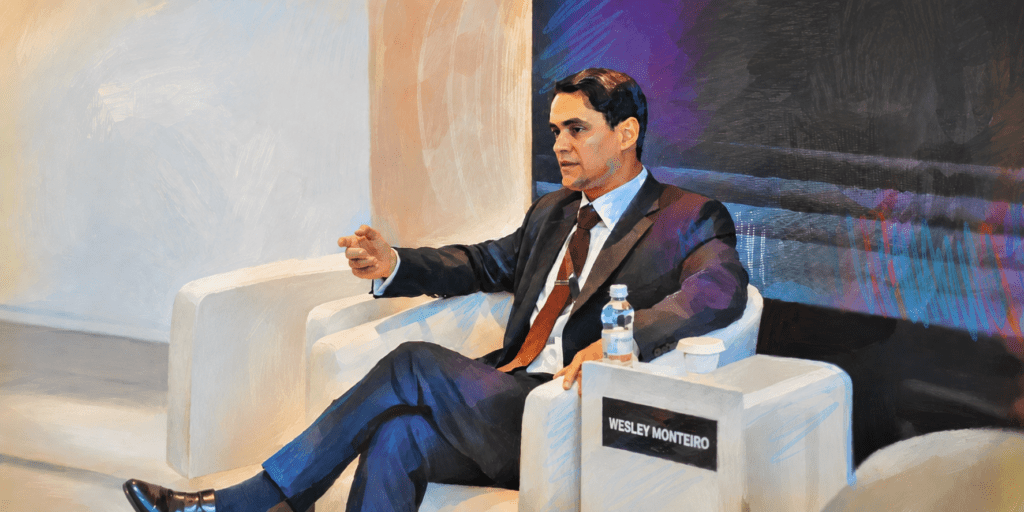
Wesley Monteiro, Global Market Engagement Lead at S&P Global Energy/Platts, said Kazakhstan has one of the strongest chances among mining jurisdictions to move from tier-two toward tier-one, speaking to The Times of Central Asia on June 12 on the sidelines of the Astana Mining & Metallurgy Congress in Astana. “This is the country with a big chance to move from tier-two to tier-one,” Monteiro said. He developed that argument around five factors: mineral breadth, scalable copper production, uranium, legacy mining waste, and Kazakhstan’s diplomatic architecture. “Actually, this is the only country in the world that has this combination,” he said. Monteiro used Canada and Australia as reference points for established first-tier mining countries. Kazakhstan is not yet in that category, he said, but the combination he described gives the country a credible path toward it. Monteiro was speaking from the S&P Global Energy/Platts side of the company, which provides market information, price benchmarks, supply-demand analysis, and commodity-sector intelligence, rather than from S&P Global Ratings. Kazakhstan, in his view, is being reassessed as part of a new global commodity framework shaped by energy security and flexibility, and materials security and flexibility. In that environment, Kazakhstan’s position could help reduce investor risk perception and support new or increased investment in the region. “We can see in the short to medium term a reduction in the risk perception that can trigger new investments or can increase the investments in the region,” Monteiro said. He then expanded on each of the five factors. Mineral Breadth The first pillar was mineral breadth. Monteiro pointed to copper, aluminum, zinc, uranium, and other minerals. He described this range as “mineral breadth” or “mineral range,” distinguishing Kazakhstan from mining jurisdictions built around a single resource. For Monteiro, that range was the starting point for the tier-one argument. Scalable Copper Production Within that mineral breadth, Monteiro singled out copper as the second pillar. Copper is central to the infrastructure behind electrification, power grids, data centers, and AI computing, and Monteiro said the demand is not distant or theoretical. “Now everyone needs copper, not 15 years from now — yesterday, actually,” he said. For Monteiro, Kazakhstan’s copper position is therefore not only about reserves. He distinguished between having the resource, having the capacity to produce it, and being able to develop it quickly. “One thing is to have,” he said. “Another thing is the capacity to have the production. The third thing is how fast you can develop this.” Uranium Uranium was the third pillar in Monteiro’s account of Kazakhstan’s mining position. He framed it through the renewed global debate over nuclear power, saying the sector has returned to strategic relevance after years in which some governments moved away from it following the Fukushima accident in 2011. Germany, he said, became the clearest example of that retreat, while France maintained a large nuclear base and, in his view, emerged in a stronger position. “Nuclear is back in the game,” Monteiro said. He said the renewed interest in nuclear power is...