• KGS/USD = 0.01144 0%
  • KZT/USD = 0.00213 0%
  • TJS/USD = 0.10699 0%
  • UZS/USD = 0.00008 0%
  • TMT/USD = 0.28571 0%
  • KGS/USD = 0.01144 0%
  • KZT/USD = 0.00213 0%
  • TJS/USD = 0.10699 0%
  • UZS/USD = 0.00008 0%
  • TMT/USD = 0.28571 0%
  • KGS/USD = 0.01144 0%
  • KZT/USD = 0.00213 0%
  • TJS/USD = 0.10699 0%
  • UZS/USD = 0.00008 0%
  • TMT/USD = 0.28571 0%
  • KGS/USD = 0.01144 0%
  • KZT/USD = 0.00213 0%
  • TJS/USD = 0.10699 0%
  • UZS/USD = 0.00008 0%
  • TMT/USD = 0.28571 0%
  • KGS/USD = 0.01144 0%
  • KZT/USD = 0.00213 0%
  • TJS/USD = 0.10699 0%
  • UZS/USD = 0.00008 0%
  • TMT/USD = 0.28571 0%
  • KGS/USD = 0.01144 0%
  • KZT/USD = 0.00213 0%
  • TJS/USD = 0.10699 0%
  • UZS/USD = 0.00008 0%
  • TMT/USD = 0.28571 0%
  • KGS/USD = 0.01144 0%
  • KZT/USD = 0.00213 0%
  • TJS/USD = 0.10699 0%
  • UZS/USD = 0.00008 0%
  • TMT/USD = 0.28571 0%
  • KGS/USD = 0.01144 0%
  • KZT/USD = 0.00213 0%
  • TJS/USD = 0.10699 0%
  • UZS/USD = 0.00008 0%
  • TMT/USD = 0.28571 0%

Viewing results 1 - 6 of 283

Former Head of Astana Metro Project Detained in Turkey

Kazakhstan’s National Security Committee (KNB) has confirmed the detention of Talgat Ardan, the former head of the Astana Light Rail Transit (LRT) project, in Turkey. Ardan, who had been placed on an international wanted list, is accused of embezzling significant budgetary funds allocated for the capital’s metro system. Legal proceedings against Ardan stem from a major corruption case that surfaced in 2020. A criminal trial launched in Astana that autumn revealed the alleged embezzlement of billions of tenge earmarked for the LRT’s construction. In May 2021, seven individuals were sentenced to prison terms ranging from seven to ten years. Two key figures, Ardan and former Astana deputy mayor Kanat Sultanbekov, were named as the scheme’s organizers and subsequently added to Interpol’s red notice list. “In September 2019, the General Prosecutor’s Office of the Republic of Kazakhstan submitted an extradition request to Turkey’s Ministry of Justice. Following this, Turkish authorities initiated a search. This year, the KNB confirmed Ardan’s whereabouts, and he was detained by law enforcement in Antalya,” the committee’s press service reported. On May 9, a court in Antalya approved his deportation to Kazakhstan, where he remains in custody pending extradition proceedings. An Astana court had previously found Ardan guilty in absentia under Articles 189, Part 4, and 361, Part 4 of the Criminal Code, covering the embezzlement of budget funds and abuse of office. He was sentenced to nine years in prison. Investigators reported that KZT 5.8 billion (approximately $11 million) was misappropriated during the construction of the LRT line. Ardan led the project from 2014 to 2017. The Astana LRT was originally slated for completion before the Expo 2017 exhibition but suffered repeated delays due to financial shortfalls. In 2022, President Kassym-Jomart Tokayev questioned the viability of the project, pointing to its 22-kilometer route and limited utility. He suggested repurposing the already-installed infrastructure. Nevertheless, city authorities opted to continue construction. Then-Mayor Altai Kulginov argued that dismantling the partially built system would cost more than completing it. As previously reported by The Times of Central Asia, the city’s current mayor, Zhenis Kasymbek, has pledged to open the first phase of the LRT by the end of this year.
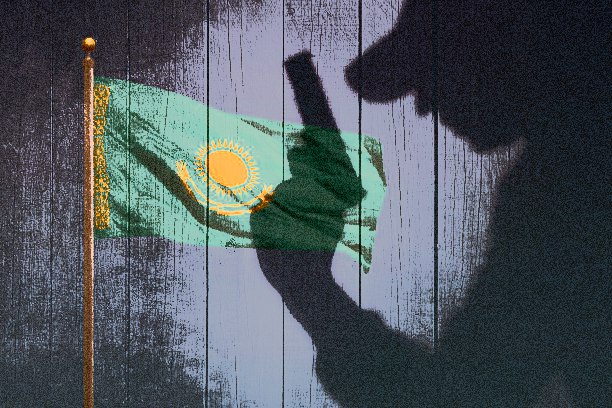
Shadows of Power: Assassination Attempt Exposes Kazakhstan’s Turbulent Past

The assassination attempt on the deputy akim (head of the local government) in Shymkent, Kazakhstan’s third-largest city with a population exceeding one million, has drawn intense public attention. Shymkent, designated a city of republican significance, rarely sees violence of this nature targeting high-ranking officials. Ruslan Berdenov, the official in question, was wounded by shotgun fire from a smoothbore weapon on the steps of the city administration building, which struck him in the thigh and the shoulder. The attack appears less like a calculated contract killing and more like an act of personal retribution. Despite its entrenched presence in Russian criminal culture, the phenomenon of contract killings has not firmly taken root in Kazakhstan or the broader Central Asian region. Nonetheless, several contract-style assassinations have left a deep imprint on the public consciousness. The following cases are among the most significant. Alexander Svichinsky On December 28, 1992, Alexander Svichinsky, the general director of the Karaganda Metallurgical Plant, was gunned down in Temirtau. This was the first confirmed contract killing in post-Soviet Kazakhstan. Svichinsky, who had risen through the ranks at Karmet Combine from mechanic to general director, had recently succeeded Oleg Soskovets, who later served in both the Kazakh and Russian governments. He was shot in the back of the head at the plant’s gatehouse. President Nursultan Nazarbayev took personal control of the investigation. Gabdrakhim Mendeshev, a veteran criminal investigator, eventually uncovered the truth: the hit was arranged by a demoted former deputy of Svichinsky. The intermediary, a driver at the plant, enlisted three Lithuanian nationals staying at a local hotel to carry out the murder. Following Svichinsky’s death, the plant’s fortunes declined. It was eventually sold to Indian industrialist Lakshmi Mittal’s Ispat Corporation. Iosif Milgram A year later, in December 1993, Almaty saw its first major contract killing. Iosif Milgram, the head of the Almatygorstroy construction firm, and his driver Dmitry Tarasov were murdered in the courtyard of Milgram’s home. The case went unsolved until 1998 when a traffic stop led to the arrest of Zakir Salakhutdinov. After killing a police officer during the stop, Salakhutdinov was detained and eventually confessed to the murder of Milgram. Investigators discovered that Milgram had accused his business partner, Valentin Li, of embezzlement. Li allegedly paid Salakhutdinov $20,000 to carry out the killing. In 1999, Salakhutdinov was sentenced to death and Li received a 15-year sentence, although he was released early due to illness. Nurlan Turysov In 2002, businessman Nurlan Turysov and his wife Bayan Atabaeva were murdered in their Almaty apartment. Turysov was the son of Karatay Turysov, a prominent political figure in Soviet Kazakhstan who had served as vice-premier of the republic’s Council of Ministers. Investigators believe Turysov was acquainted with the killers, as he let them in himself. He was shot twice in the temple and once in the back of the head. Hearing the shots, his wife attempted to flee and was attacked at the window, stabbed, and then shot in the head. The apartment was ransacked, suggesting the killers...

Swiss Bank Investigated Over Ties to Central Asian Elites

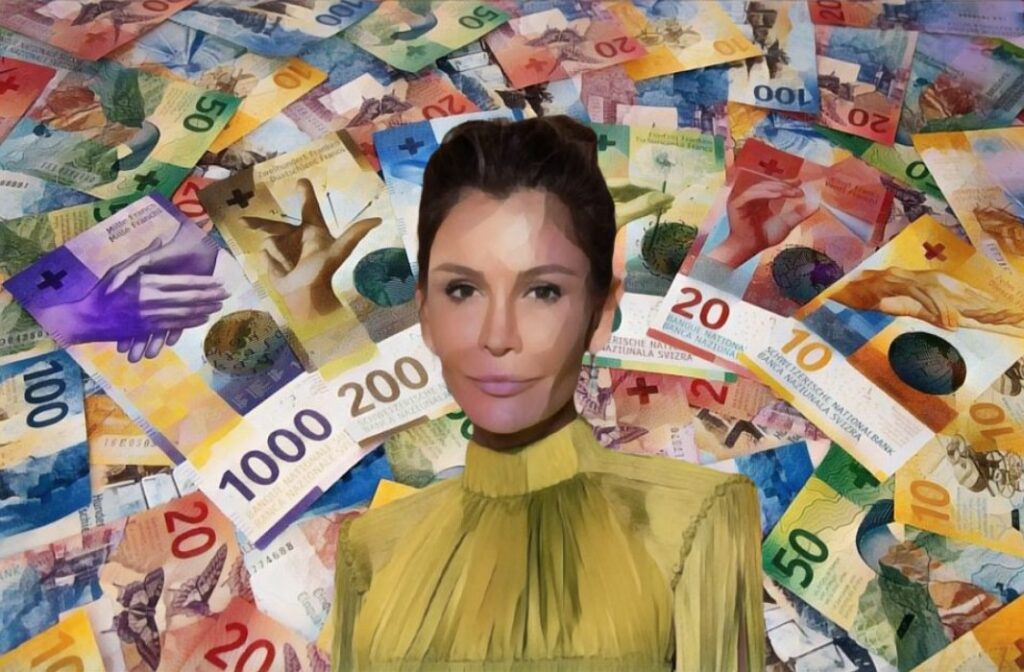
Swiss bank Reyl, part of Intesa Sanpaolo Group, is under investigation by Switzerland’s financial regulator FINMA for allegedly failing to prevent money laundering and mishandling accounts belonging to high-risk clients, including relatives of prominent former Central Asian leaders. The investigation stems from confidential correspondence reviewed by the Organized Crime and Corruption Reporting Project (OCCRP) and Le Monde. High-Risk Clients from Central Asia Among the individuals named are the daughters of the former presidents of Uzbekistan and Kazakhstan. OCCRP also identified the bank’s connections with the son-in-law of a powerful Central Asian leader. One such client is Lola Karimova, daughter of the late Uzbek president Islam Karimov, and her husband, Timur Tillyaev. The couple, known for their lavish lifestyle, relocated to Geneva by 2013. In 2012, Swiss regulators warned another financial institution, Fidurhône, that the couple posed a high compliance risk. By 2014, Fidurhône was instructed to sever ties with them after account balances surged to 190 million Swiss francs. The bank faced the threat of losing its license for non-compliance, and one partner was fined for failing to report suspicious transactions. In 2020, Tillyaev’s company became a client of Reyl, which was followed by the opening of his personal account. By late 2023, one of these accounts held 83 million francs (approximately $97 million). In January 2024, FINMA requested full disclosure of all Reyl accounts linked to Uzbekistan, including Tillyaev’s. The bank stated it was re-evaluating its relationship with him due to reputational concerns amid renewed media focus on his sister-in-law, Gulnara Karimova. The eldest daughter of Islam Karimov, Gulnara Karimova was once a prominent public figure in Uzbekistan, known for her ventures in business, fashion, and music under the name Googoosha. She also served in diplomatic roles. Her fall from grace began in 2014 with her house arrest, followed by a series of legal proceedings after her father’s death in 2016. In 2017, she was sentenced to nine years for corruption, which was later increased to over 13 years. Kazakhstan Connection Kazakhstan’s former president Nursultan Nazarbayev, who ruled for nearly three decades, oversaw the emergence of a wealthy inner circle. OCCRP has previously reported that he established private foundations controlling assets worth approximately $8 billion. His daughter, Dinara Kulibayeva, moved to Switzerland in 2007 and entrusted Reyl with managing part of her wealth. For years, bank CEO François Reyl personally oversaw her accounts. However, in 2023, FINMA launched an inquiry into the origin of the large deposits in her accounts. In May 2024, the bank was ordered to provide comprehensive documentation on her financial holdings and those of her Luxembourg-based company, which had secured a €25 million loan from Reyl to purchase real estate in France. The investigation was prompted by a suspicious activity report filed by Reyl and the opening of a criminal case in Switzerland. A lawyer representing Kulibayeva stated she had fully cooperated with authorities and that her wealth derives from shares in Halyk Bank, one of Kazakhstan’s largest financial institutions. The bank confirmed that her...

Belgium Transfers $108 Million in Seized Assets to State Treasury Following Uzbek Corruption Probe

On March 28, 2025, the Brussels Public Prosecutor instructed Belgium’s Central Office for Seizure and Confiscation (COSC) to transfer $108 million in confiscated assets to the Belgian state treasury. The funds, now officially the property of the Belgian government, were seized in connection with an international corruption investigation linked to Uzbekistan. The case stems from a years-long probe into illicit payments and bribes tied to telecom contracts in Uzbekistan. The funds were allegedly laundered and routed through various jurisdictions before being frozen in Belgium at the request of Uzbek authorities. The investigation, based on international legal cooperation and the UN Convention Against Corruption, initially led to the freezing of approximately $200 million. A Dutch-language court in Brussels later ruled that the full amount, including accrued interest, should be permanently confiscated. The court also ordered the funds to be split between Belgium and Uzbekistan, applying a restitution model similar to those used among European Union member states. As a result, another $108 million is expected to be transferred to Uzbekistan in the near future. In 2022, Uzbekistan’s Deputy Minister of Justice Muzraf Ikramov publicly stated that assets worth $240 million, linked to a criminal group associated with Gulnara Karimova, had been located in Belgium. He noted that cooperation between Uzbek and Belgian law enforcement agencies had been established to facilitate their return. When contacted by Kun.uz for comment, Uzbekistan’s Ministry of Justice said that details of the investigation remain classified. “Since the investigation process in Belgium is not over, and due to the confidentiality rules, it is not possible to disclose much information about these assets,” a ministry official said.

Uzbekistan Ratchets Up Drive Against “Evil” of Corruption

Uzbek President Shavkat Mirziyoyev announced a major shakeup of Uzbekistan’s campaign against corruption on Wednesday, ordering the dismissal of the heads of anti-corruption bodies in 117 ministries and departments and saying many officials had fostered mistrust by failing to deliver clean government as promised. Mirziyoyev, who took office in 2016, described corruption as an obstacle to Uzbekistan’s efforts to reform its economy. He said that, while there had been progress toward transparency, virtually every sector in the nation, including the media, schoolteachers, non-governmental groups and neighborhood authorities, should mobilize alongside the state to fight the scourge.  “Corruption is such an evil that it undermines people's trust in the state, the Constitution and laws, and becomes a serious threat to sustainable development and security,” Mirziyoyev said at a meeting of the National Anti-Corruption Council, which was established in 2020 to lead efforts to curb graft.  International groups that study corruption have long said that autocratic tendencies, opaque bureaucracy and weak justice systems in Central Asia make it hard for those countries to get a comprehensive grip on the problem and hold the powerful – regardless of their political allegiances - to account for any wrongdoing.  Even so, Kazakhstan has taken some notable steps, expanding its outreach to other countries in an effort to recover stolen assets and considering the establishment of a public register of officials convicted of corruption-related offenses.  Uzbekistan has similarly made advances, while falling short on enforcement and other pledges. A 2024 report by the Organisation for Economic Co-operation and Development noted that prosecution of corruption offenses in Uzbekistan “is generally ensured, but more efforts should be directed at countering high-level corruption;” that there is no specialized legislation related to the protection of whistleblowers; and that while Uzbekistan has a business ombudsman institution, “companies do not report cases of corruption for fear of negative repercussions from the state.” Mirziyoyev’s remarks, which included scathing criticism of the alleged passivity of some officials, appeared designed to give new momentum to the kind of openness that his government deems essential to a successful, diversified economy.   “The Prime Minister was instructed to dismiss the heads of the "internal anti-corruption control" structures in 117 ministries and departments and replace them with honest, dedicated and professional personnel, and to set clear tasks for them,” Sherzod Asadov, the presidential press secretary, said in an account of the meeting that he posted on Facebook. Ministers will directly employ regional compliance officers and “take political responsibility and personally answer for corruption in the entire system,” according to the account.  Uzbekistan’s Minister of Emergency Situations, Abdulla Kuldashev, was recently fired because of fire safety bureaucracy and legal violations, the president said. He also expressed frustration that he had to personally instruct measures against wasteful spending in investment and healthcare programs last year, resulting in the saving of several hundred million dollars.   "But why should these works begin after the president gives an order?" he said.   One measure that Uzbekistan previously introduced is an index that rates the openness of...

Recovering Assets: Kazakhstan’s Prosecutors Expand Network to Moldova, Bulgaria

Kazakh prosecutors who focus on reclaiming national assets are sharing ideas and experiences with counterparts from Moldova and Bulgaria, two eastern European countries where anti-corruption investigators have faced big challenges. The Asset Recovery Committee of the Prosecutor General’s Office of Kazakhstan signed agreements in those nations in February, increasing the international collaboration that is essential to tracking down stolen wealth. Kazakhstan is building ties with foreign jurisdictions and institutions such as Interpol as it seeks to get back illegally acquired assets valued in the billions of dollars, much of it funneled out of the Central Asian country by powerful business and political figures over many years. “Strengthening partnerships in asset recovery plays a crucial role in combating illicit enrichment and ensuring transparency and accountability in financial systems worldwide,” said the Kazakh committee, which held a ceremony with the National Anti-Corruption Center of Moldova in Chișinău, the Moldovan capital. The Moldovan side discussed its national digital platforms, legal framework, and procedures for asset seizure, freezing, and management. The Kazakh side explained Kazakhstan’s asset recovery law and how recovered funds are being reinvested in social projects. Some money has been earmarked for facilities such as schools and medical facilities. Kazakh prosecutors also signed a deal with the Commission for Illegal Asset Forfeiture of Bulgaria in Sofia, the Bulgarian capital, allowing for “active collaboration in the tracing, identification, seizure, and repatriation of assets,” the Kazakh asset recovery committee said. Kazakhstan’s 2023 asset recovery law, described by the government as in line with “international standards,” has aided the country in successful efforts to repatriate some lost wealth. Partners such as the United Nations Office on Drugs and Crime have encouraged Kazakhstan to be transparent about how the recovered funds are used as a way to build confidence among Kazakh citizens who are worried about corruption. There have also been concerns that the law could be used selectively, targeting some suspects and sparing others, but Kazakhstan’s international outreach has received high marks in many circles. Bulgaria has made some progress against graft, but still has a lot of work ahead. In a report published last month, the Council of Europe’s anti-corruption body said Bulgaria had fully implemented seven of its 28 recommendations to prevent corruption and promote government integrity. Of the other 21 recommendations, 11 have been partly implemented and 10 have not been implemented. Moldova´s chief anti-corruption prosecutor, Veronica Dragalin, announced her resignation last month because of a governing party bill that would merge her office with the office of organized crime prosecutors. Dragalin, who previously worked as a U.S. federal prosecutor, said the change would undermine national security and benefit people involved in crime. Bulgaria is in the European Union; Moldova has applied for membership. A 2024 index compiled by Transparency International ranks countries by perceived levels of public sector corruption – 0 is very corrupt and 100 is very clean. Kazakhstan scored 40, up one point since 2023; Bulgaria scored 43 points, down two points since 2023; and Moldova also scored 43, up...