• KGS/USD = 0.01144 0%
  • KZT/USD = 0.00216 0%
  • TJS/USD = 0.10698 0%
  • UZS/USD = 0.00008 0%
  • TMT/USD = 0.28530 0%
  • KGS/USD = 0.01144 0%
  • KZT/USD = 0.00216 0%
  • TJS/USD = 0.10698 0%
  • UZS/USD = 0.00008 0%
  • TMT/USD = 0.28530 0%
  • KGS/USD = 0.01144 0%
  • KZT/USD = 0.00216 0%
  • TJS/USD = 0.10698 0%
  • UZS/USD = 0.00008 0%
  • TMT/USD = 0.28530 0%
  • KGS/USD = 0.01144 0%
  • KZT/USD = 0.00216 0%
  • TJS/USD = 0.10698 0%
  • UZS/USD = 0.00008 0%
  • TMT/USD = 0.28530 0%
  • KGS/USD = 0.01144 0%
  • KZT/USD = 0.00216 0%
  • TJS/USD = 0.10698 0%
  • UZS/USD = 0.00008 0%
  • TMT/USD = 0.28530 0%
  • KGS/USD = 0.01144 0%
  • KZT/USD = 0.00216 0%
  • TJS/USD = 0.10698 0%
  • UZS/USD = 0.00008 0%
  • TMT/USD = 0.28530 0%
  • KGS/USD = 0.01144 0%
  • KZT/USD = 0.00216 0%
  • TJS/USD = 0.10698 0%
  • UZS/USD = 0.00008 0%
  • TMT/USD = 0.28530 0%
  • KGS/USD = 0.01144 0%
  • KZT/USD = 0.00216 0%
  • TJS/USD = 0.10698 0%
  • UZS/USD = 0.00008 0%
  • TMT/USD = 0.28530 0%

Viewing results 1 - 6 of 280

Ilyas Khrapunov Found in Contempt by U.S. Federal Court

The U.S. District Court for the Southern District of New York has ruled in favor of the city of Almaty and BTA Bank, finding Ilyas Khrapunov guilty of contempt of court. New Verdict in Ongoing Legal Battle Federal Judge John G. Koeltl ruled that Khrapunov had violated a prior court order requiring him to report regularly on his assets. He had previously been ordered to pay $221,285.31 in sanctions. “After an independent review, the Court adopts the Magistrate Judge’s findings, which are well-founded and support a finding of civil contempt,” the judge’s statement reads. “Although Khrapunov has demonstrated an inability to pay the $221,285.31 judgment against him at this time, Khrapunov has failed to comply with the clear and unambiguous court order to submit quarterly declarations regarding his financial status.” The latest ruling reaffirms Khrapunov's obligation to fully disclose assets and make efforts to satisfy court judgments. It also includes provisions for further financial penalties in the event of non-compliance. Additionally, Khrapunov has been ordered to reimburse Almaty and BTA Bank for legal costs arising from his misconduct. A Central Figure in Corruption Scandals Ilyas Khrapunov is the son of former Almaty mayor Viktor Khrapunov and the son-in-law of fugitive banker Mukhtar Ablyazov, figures long entangled in corruption investigations. The Kazakh authorities have accused members of both families of large-scale embezzlement and money laundering. Viktor Khrapunov fled Kazakhstan in 2008 and has resided in Switzerland ever since. He was sentenced in absentia in 2018 to 17 years in prison for corruption-related offenses, a judgment he disputes. Ilyas Khrapunov also left Kazakhstan shortly beforehand. Almaty and BTA Bank continue to pursue legal action in U.S. and European courts, alleging that Ablyazov and his associates siphoned billions of dollars through offshore entities. Investigators assert that Khrapunov Jr. played a direct role in the schemes. Pattern of Legal Violations In December 2022, the Southern District Court in New York ruled against Ablyazov and his associates in the amount of $218 million. In June 2024, the U.S. District Court for the Southern District of New York awarded over $32 million in damages to BTA Bank and the City of Almaty, following a jury verdict against Khrapunov and Ablyazov’s associates, Felix Sater, Bayrock Group Inc., Global Habitat Solutions, and MeM Energy Partners LLC. The jury found the defendants liable for misappropriation of property, unjust enrichment, and money had and received, affirming fraud and money laundering schemes impacting Kazakh institutions. The plaintiffs estimated the total damage caused by Viktor Khrapunov and his wife, Leila, at over $300 million, including stalled development of city land and the "alienation of properties." In a related case, in September 2018, a UK court fined Ilyas Khrapunov $500 million for violating an asset freeze order in connection with Ablyazov’s fraudulent activities.

Tackling Corruption in Kazakhstan: The Latest Trends

As previously reported by The Times of Central Asia, anti-corruption efforts are a cornerstone of President Kassym-Jomart Tokayev’s agenda. Court-ordered funds confiscated from corrupt officials have been used to finance public infrastructure: over the past three years, 150 billion tenge have been allocated to build 89 schools. On June 30, Tokayev signed a decree dissolving the country’s standalone Anti-Corruption Agency and transferring its functions to the National Security Committee (NSC), in what officials described as a move to modernize and streamline public administration. A recent analysis by Ranking.kz sheds light on the latest trends, identifying the institutions most often entangled in scandals and criminal investigations. Corruption Reaches Across All Levels Between January and May 2025, the Kazakh authorities charged 640 individuals with corruption-related offenses, representing a 3% decrease compared to the same period in 2024. However, the number of identified offenders rose to 464, up 4.3% from 445 last year. During the same period, 405 individuals were referred to the courts, an increase of 9.2% year-on-year. The largest number of defendants were employees of Akimats and their subordinate departments, totaling 66 individuals, though this figure is one-third lower than in 2024. In addition, 49 police officers, 16 employees from the Ministry of Finance, 11 from the Ministry of Agriculture, and 7 from the Criminal Executive Committee under the Ministry of Internal Affairs were brought to court. Notably, three regional akims were among those referred to court this year, compared to just one in the same period last year. One judge was also prosecuted. In total, 57 individuals from 12 different ministries faced judicial proceedings, up slightly from 54 last year. However, the data does not encompass all divisions; for instance, the figures for the Ministry of Internal Affairs include only selected departments. Bribery Remains the Most Common Offense Bribery continues to be the most prevalent form of corruption, with 167 recorded cases in the first five months of 2025, a 27.5% increase from the previous year. Internal affairs personnel were the most frequently detained for bribery (22 cases), followed by local government officials (13 cases) and employees of the Ministry of Finance (9 cases). In terms of the number of individuals involved, bribery accounted for 99 people. Corruption-related fraud followed, with 71 cases documented, rounding out the top three categories of offenses. Kazakhstan in Global Perspective Kazakhstan ranked 88th out of 180 countries in the 2024 Corruption Perceptions Index published by Transparency International, scoring 40 out of 100. This position is shared with North Macedonia, Suriname, and Vietnam. The index, based on assessments from organizations such as the World Bank and the World Economic Forum, ranks countries from 0 (most corrupt) to 100 (least corrupt). According to the same report, 17% of Kazakhstani citizens who accessed public services in the previous year admitted to paying bribes. By way of comparison, in Denmark and Finland, the top-ranked countries, only 1% of citizens reported such experiences. Within the Commonwealth of Independent States (CIS), Kazakhstan ranks third, behind Armenia (63rd) and Moldova (77th)....

Former Justice Minister From ‘Old Kazakhstan’ Sentenced to Nine Years in Prison

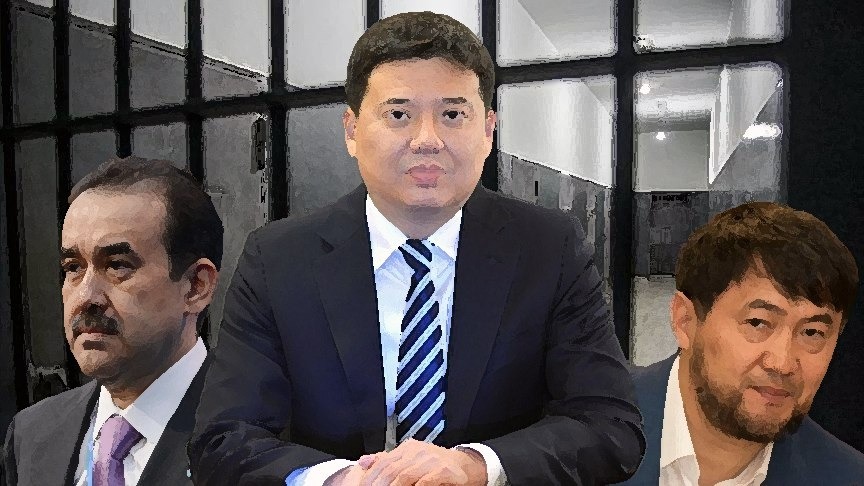
Former Minister of Justice Marat Beketayev has been sentenced to nine years in prison with confiscation of property for crimes linked to large-scale corruption. Beketayev is widely regarded as a representative of the "Old Kazakhstan" of the first president, Nursultan Nazarbayev, a term widely used to describe officials removed from power in the wake of the January 2022 unrest and associated with systemic corruption. Verdict Handed Down The Anti-Corruption Service of Kazakhstan announced on June 30 that Beketayev was convicted of fraud, embezzlement on an especially large scale, and illegal participation in entrepreneurial activities. Details of the case remain classified. The charges were formally submitted to the court in March 2025. Beketayev served as Minister of Justice from 2016 until early 2022. Following the January unrest, he was appointed as an advisor to the Prime Minister but was quietly dismissed in December 2022, a fact that only became public knowledge in February 2023. He was detained in October 2023 while allegedly attempting to flee the country. According to investigators, he abused his office by lobbying for the interests of an affiliated company and awarding it annual contracts for unnecessary services, actions that reportedly inflicted significant financial damage on the state. Fallout from the January Events Beketayev’s dismissal came immediately after the events known in Kazakhstan as "Bloody January" (Qantar), when protests initially triggered by rising liquefied gas prices escalated into nationwide unrest. From January 3-7, 2022, major cities were engulfed in chaos. Government buildings, law enforcement agencies, and military units were attacked; 238 people were reportedly killed, including children and police officers. The worst violence occurred in Almaty, where protesters stormed the city administration, the president’s residence, and the airport. Order was restored on January 8 with the intervention of the Collective Security Treaty Organization (CSTO), at the request of President Kassym-Jomart Tokayev. Open-source information and official investigations suggest the unrest was orchestrated by supporters of former president Nursultan Nazarbayev, who had stepped down in 2019 after nearly 30 years in power. In the aftermath, many high-ranking officials were removed or prosecuted. Among them was former Prime Minister and National Security Committee (KNB) Chairman Karim Massimov, who was sentenced to 18 years in prison for orchestrating what authorities describe as a coup attempt. Nazarbayev’s nephews, Samat Abish and Kairat Satybaldy, also faced charges. Abish received an eight-year suspended sentence due to his "sincere repentance," while Satybaldy, accused of economic crimes, paid approximately 700 billion tenge ($1.5 billion) in restitution and was released. The post-Qantar purge extended to numerous grassroots organizers and ordinary citizens involved in the unrest. In political discourse, the divide between Tokayev's supporters and the remnants of Nazarbayev’s influence is often described as a split between "New Kazakhstan" and "Old Kazakhstan." Beketayev’s Legacy and Links to Major Scandals Beketayev is considered an ally of Massimov and thus part of the old power structure. He was also involved in one of Kazakhstan’s most controversial international legal disputes, the case involving Moldovan businessmen Anatol and Gabriel Stati. In 2017, $22...

Kazakhstan’s Youth Face Barriers to Entrepreneurship

A recent analysis by the analytical portal Ranking.kz reveals a concerning stagnation in youth entrepreneurship in Kazakhstan. Despite government rhetoric promoting innovation and small business, the number of young individual entrepreneurs has remained nearly flat over the past two years. Youth Entrepreneurship by the Numbers As of the end of Q1 2025, Kazakhstan recorded 736,100 individual entrepreneurs (IE) under the age of 35. Of these, 698,900 are active. The growth rate over two years is just 0.2%, signaling stagnation rather than progress. The decline in young entrepreneurs' share of the total business landscape underscores this trend. In 2023, they made up 50.9% of all active IEs; by 2025, that figure dropped to 47.3%. According to the National Statistics Bureau, today’s young entrepreneur in Kazakhstan is more likely to be a woman (55.4%) than a man (44.6%). Urban residents dominate the demographic, comprising about 75.3% of the total, while rural entrepreneurs represent only 24.7%. Sectoral Growth and Decline Trade remains the leading sector for young entrepreneurs, employing 303,300 individuals, though it saw no growth over the past year. The most significant expansion occurred in transportation and logistics, which grew by 90.1% to 49,700 entrepreneurs. Construction also showed positive movement, with a 10.7% increase, totaling 21,000 entrepreneurs. In contrast, other sectors experienced contraction: agriculture dropped by 25.1%, manufacturing by 11.9%, and real estate by 2.8%. These declines suggest a shift away from traditionally accessible sectors for new entrepreneurs. Geographically, growth was concentrated in major urban centers. Almaty leads with 121,200 active young entrepreneurs, followed by Astana (89,500) and Shymkent (62,100). Modest gains were also observed in the Almaty, Kostanay, Pavlodar, and North Kazakhstan regions. The Ulytau region registered the lowest number, with just 6,700 young individual entrepreneurs. Barriers to Growth The Atameken National Chamber of Entrepreneurs' 2024 "Business Climate" rating provides insight into regional variations in the ease of doing business. Entrepreneurs in Shymkent, Kyzylorda, and Ulytau reported the most favorable conditions. Conversely, Astana, Pavlodar, and North Kazakhstan ranked lowest. Key challenges cited by entrepreneurs include: High tax burdens (44% of respondents) Excessive bureaucracy and a complex licensing system (43.1%) Frequent inspections by regulatory authorities (42.4%) Corruption, especially in land allocation and public procurement These issues are reflected in the National Bank's 2025 Q1 business sentiment survey, where 31.4% of respondents cited taxes as the primary obstacle, while 30% pointed to broader economic conditions and high competition. Despite a vibrant and youthful potential workforce, Kazakhstan’s business environment continues to present structural challenges that deter innovation and sustainable growth. Addressing these barriers will be critical if the country is to harness its demographic dividend and support the next generation of entrepreneurs.

New York Mayor Eric Adams Under Scrutiny for Ties to Uzbek Businessman

New York City Mayor Eric Adams is facing renewed federal scrutiny over alleged ties to a Brooklyn-based businessman with close links to the Uzbek government. As The Times of Central Asia reported last year, the investigation centers on whether Adams helped improve Uzbekistan’s public image in exchange for campaign contributions. According to court documents reviewed by THE CITY, the businessman, Tolib Mansurov, a dual citizen of the United States and Uzbekistan, allegedly served as an intermediary for the Uzbek government while also helping to fund Adams’ mayoral campaigns. In return, Adams is said to have provided favorable public exposure that enhanced Uzbekistan’s reputation, despite the country’s record of human rights abuses. Prosecutors describe Mansurov as a well-connected figure who maintained frequent communication with officials at Uzbekistan’s mission to the United Nations. He organized multiple events involving Adams and the Uzbek-American community in New York. One notable event was a flag-raising ceremony at Bowling Green on September 2, 2023, during which Adams became the first New York City mayor to raise the Uzbek flag in the financial district. “Happy Uzbekistan Independence Day!” Mansurov posted on social media. “Mayor Eric Adams made history by being the first to raise the Uzbek flag on Wall Street!” Mansurov also arranged a roundtable at City Hall and hosted various cultural gatherings, including Ramadan dinners and community meetings, through the Silk Road Foundation, a nonprofit he founded. Prosecutors allege the foundation coordinated closely with Uzbekistan’s UN mission. Alongside his community engagement, Mansurov reportedly funneled illegal straw donations into Adams’ campaign. In one instance, he allegedly reimbursed four employees who made individual contributions. He later arranged ten more donations of $1,000 each, again reimbursing at least one donor, according to investigators. In private messages, Adams reportedly referred to Mansurov as “my strongest go-to person.” In May 2024, months after the FBI had seized Adams’ electronic devices, the mayor used a new phone and the encrypted app Signal to ask Mansurov for a favor. He requested that Mansurov quickly gather 20 donations of $250 each to meet the threshold for matching public campaign funds. Mansurov has not been charged but is cooperating with investigators. He has denied any involvement in money laundering, though prosecutors say he received over $11 million from a Cyprus-based entity, which he allegedly used to purchase real estate in Brooklyn. This is not the first time Adams’ campaign financing has come under legal scrutiny. Federal prosecutors have previously accused him of accepting illicit donations and perks from Turkish interests. The FBI is also examining his fundraising ties to individuals connected to China. Commenting on the broader implications, exiled Uzbek journalist Shahida Yakub said, “The regime is trying to gain legitimacy in the West. They always want to be liked by the U.S. The mayor of New York is important.” Federal investigators continue to probe Adams’ relationships with foreign governments and the role of campaign donations in potentially influencing his political conduct.

Former Head of Astana Metro Project Detained in Turkey

Kazakhstan’s National Security Committee (KNB) has confirmed the detention of Talgat Ardan, the former head of the Astana Light Rail Transit (LRT) project, in Turkey. Ardan, who had been placed on an international wanted list, is accused of embezzling significant budgetary funds allocated for the capital’s metro system. Legal proceedings against Ardan stem from a major corruption case that surfaced in 2020. A criminal trial launched in Astana that autumn revealed the alleged embezzlement of billions of tenge earmarked for the LRT’s construction. In May 2021, seven individuals were sentenced to prison terms ranging from seven to ten years. Two key figures, Ardan and former Astana deputy mayor Kanat Sultanbekov, were named as the scheme’s organizers and subsequently added to Interpol’s red notice list. “In September 2019, the General Prosecutor’s Office of the Republic of Kazakhstan submitted an extradition request to Turkey’s Ministry of Justice. Following this, Turkish authorities initiated a search. This year, the KNB confirmed Ardan’s whereabouts, and he was detained by law enforcement in Antalya,” the committee’s press service reported. On May 9, a court in Antalya approved his deportation to Kazakhstan, where he remains in custody pending extradition proceedings. An Astana court had previously found Ardan guilty in absentia under Articles 189, Part 4, and 361, Part 4 of the Criminal Code, covering the embezzlement of budget funds and abuse of office. He was sentenced to nine years in prison. Investigators reported that KZT 5.8 billion (approximately $11 million) was misappropriated during the construction of the LRT line. Ardan led the project from 2014 to 2017. The Astana LRT was originally slated for completion before the Expo 2017 exhibition but suffered repeated delays due to financial shortfalls. In 2022, President Kassym-Jomart Tokayev questioned the viability of the project, pointing to its 22-kilometer route and limited utility. He suggested repurposing the already-installed infrastructure. Nevertheless, city authorities opted to continue construction. Then-Mayor Altai Kulginov argued that dismantling the partially built system would cost more than completing it. As previously reported by The Times of Central Asia, the city’s current mayor, Zhenis Kasymbek, has pledged to open the first phase of the LRT by the end of this year.